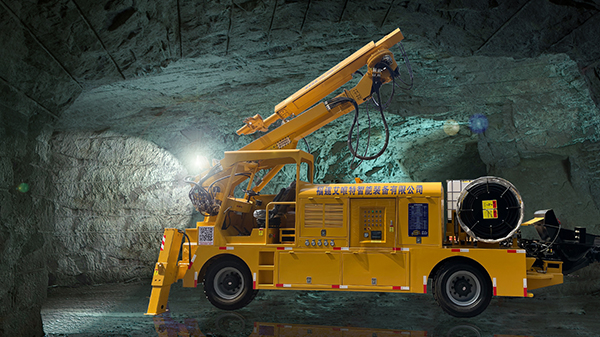
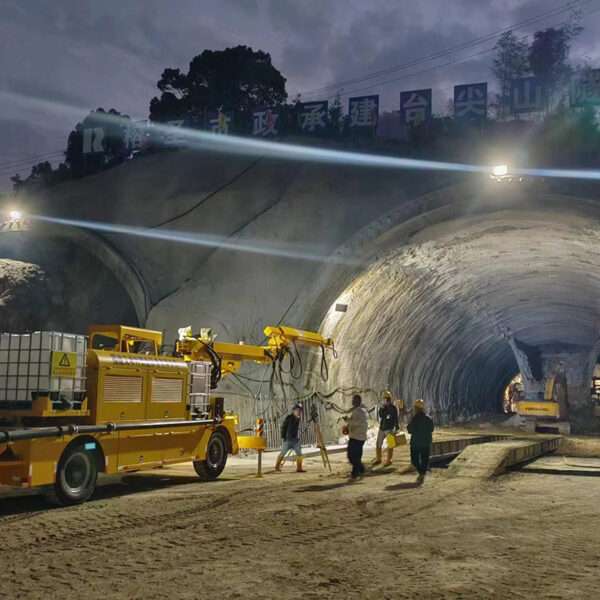
As mining operations extend beyond 2,500 m depth and tunneling projects face increasingly fractured geologies, the specifications of underground drill rig manufacture become the limiting factor for advance rates and operational cost. Unlike surface equipment, underground drill rigs must deliver precision, reliability, and safety within confined spaces while enduring vibration, dust, and humidity. This article dissects seven non-negotiable aspects of modern rig production—from metallurgical choices to digital integration—using data from active operations and the engineering practices of leading manufacturers such as Aivyter.
1. Structural integrity: material selection and fatigue life
The carrier and boom of an underground drill rig endure cyclical loads that exceed 10⁷ stress cycles during a five‑year service life. High‑strength fine‑grained structural steel (e.g. S500–S700MC) is now standard in underground drill rig manufacture because it offers a superior strength‑to‑weight ratio while maintaining weldability. However, fatigue resistance depends equally on design details: laser‑cut and robot‑welded joints with smooth transitions reduce stress concentration factors (Kt) by up to 40 % compared to manual arc welds.
- LSI terms: high‑cycle fatigue, FEA optimisation, anti‑corrosion coatings, Hardox wear plates.
- Industry data: A study of jumbo drill frames showed that using cast nodes instead of welded joints increased mean time between structural failures from 8 000 h to over 15 000 h.
Leading manufacturers now apply shot peening to critical welds and use stainless steel inserts in hydraulic tank partitions to avoid contamination. These metallurgical decisions are invisible to the operator but dictate the rig’s availability in block‑caving environments.
2. Drifter and hydraulic system efficiency
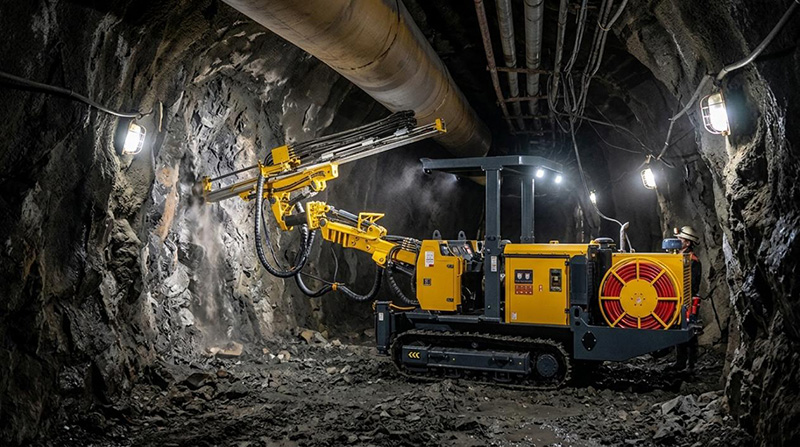
At the heart of any rock‑drilling rig is the hydraulic drifter – a high‑frequency percussive mechanism that converts fluid power into impact energy. Modern underground drill rig manufacture focuses on optimising the pressure‑flow balance to achieve high penetration rates without damaging the drill string. For example, variable‑displacement piston pumps combined with load‑sensing hydraulics reduce energy consumption by 15–20 % compared to constant‑flow systems.
- Key metrics: impact power (kW), rotation torque (Nm), dampening stroke accuracy.
- LSI terms: hydraulic drifters, shank adapter wear, shock‑absorbing systems, anti‑jamming automation.
Aivyter integrates intelligent pressure‑compensated controls that adapt to rock hardness changes within milliseconds, a feature that extends drifter rebuild intervals to 4 000 h in granite formations.
3. Automation and tele‑remote capabilities
Automation is no longer an option but a baseline requirement in underground drill rig manufacture. Today’s rigs are equipped with PLC‑based drill‑pattern navigation, automatic rod handling, and proximity detection. The shift toward full tele‑remote operation (operator on surface) demands redundant communication protocols and fail‑safe logic. Manufacturers embed accelerometers and flow meters at every joint to provide real‑time feedback to the control loop.
- Long‑tail phrases: “automated drill rig cycle time reduction”, “remote‑controlled face drilling”, “MWD data integration for geological mapping”.
- Efficiency gain: automated bolt installation reduces re‑positioning time by 30 % in development headings.
Rigs produced with a fully wired CAN‑bus architecture allow seamless integration with mine‑wide automation platforms such as Newtrax or Mobilaris, giving operations managers a live view of the face.
4. Safety‑by‑design: FOPS/ROPS and ergonomics
While productivity drives purchase decisions, safety compliance governs the engineering blueprint. Underground drill rig manufacture must meet ISO 3449 (FOPS – falling object protection) and ISO 3471 (ROPS – roll‑over protection) even on compact machines. Beyond structural certification, modern cabs feature pressurisation systems to keep dust ingress below 0.5 mg/m³ and noise levels under 80 dB(A).
- LSI terms: operator‑protective structures, visibility zones, vibration‑damped seats, emergency‑escape routes.
- Regulatory note: MSHA and EU directives now require collision‑avoidance systems as standard.
Manufacturers who design the cab around the operator’s reach envelope – minimising twisting motions – reduce long‑term injury claims. For example, joystick layouts with haptic feedback decrease repetitive strain incidents.
5. Modularity for rapid underground assembly
Transporting a complete rig through a 3 m × 3 m shaft is often impossible. Hence, underground drill rig manufacture increasingly relies on modular design: the carrier, power pack, and boom are separate modules that can be disassembled, transported, and reconnected underground within a shift. Hydraulic quick‑couplers and centralised lubrication points are pre‑routed to minimise re‑assembly errors.
- LSI terms: split‑frame design, plug‑and‑play hydraulics, sub‑assembly testing, underground commissioning.
- Cost impact: modular construction reduces underground installation labour by 60 % compared to one‑piece designs.
This approach also simplifies major overhauls: a worn boom can be swapped with a refurbished unit while the carrier remains in production.
6. On‑board digitalisation and predictive analytics
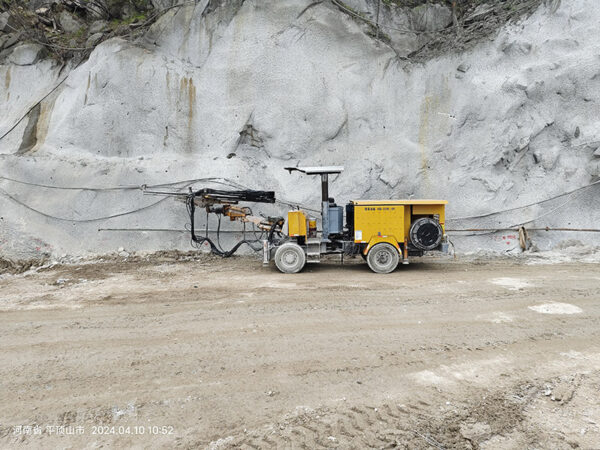
The fusion of IoT and equipment manufacturing has transformed after‑sales support. In advanced underground drill rig manufacture, every rig leaves the factory with a digital twin and edge‑computing capability. Vibration signatures, oil particle counts, and thermal images are continuously compared to baseline models. When a deviation exceeds 5 %, the system alerts the mine maintenance team and the manufacturer’s cloud.
- LSI terms: condition‑based monitoring, remaining‑useful‑life algorithms, wireless data upload, OEM performance portals.
- ROI example: A mine in Chile reduced unplanned downtime by 27 % after implementing predictive analytics on production drills.
Aivyter rigs include embedded 5G‑ready gateways, allowing real‑torque data to be used for blast‑hole optimisation directly from the driller’s cabin.
7. Sustainable power and emissions control
With ventilation representing up to 40 % of a deep mine’s energy cost, electrically powered rigs are gaining preference. Diesel‑electric hybrids and battery‑electric drivetrains are now part of underground drill rig manufacture roadmaps. Lithium‑iron‑phosphate battery packs with fast‑swap cassettes enable zero‑emission development headings, while variable‑frequency drives on conveyors and pumps cut total harmonic distortion.
- LSI terms: flameproof diesel engines, Tier 5 emission compliance, regenerative braking, energy storage systems.
- Future trend: fuel‑cell integration for auxiliary power is being tested in Canadian hard‑rock mines.
Modern manufacturing also considers end‑of‑life recyclability: 98 % of the steel in a rig can be reclaimed if design for disassembly is implemented from the first CAD drawing.
Conclusion: selecting a partner, not just a supplier
The complexity of today’s underground environment means that underground drill rig manufacture is a discipline that combines structural mechanics, fluid power, software engineering, and safety science. When evaluating manufacturers, mine operators should audit not only the specification sheet but also the engineering rigour behind welds, the software update policy, and the availability of field service engineers. Companies like Aivyter exemplify this holistic approach, offering underground drill rig manufacture that aligns with the productivity and safety targets of modern mines. Explore their product range to see how these seven parameters are translated into tangible drilling solutions.
frequently asked questions
Q1: What are the most common causes of structural failure in underground drill rigs?
A1: Fatigue cracking at weld joints, often accelerated by residual stresses and corrosion. Premium underground drill rig manufacture uses stress‑relieved frames and full‑penetration welds, together with anti‑corrosion primers, to extend the frame life beyond 40 000 operating hours.
Q2: How does automation affect the required skill level for drill operators?
A2: Automation shifts the role from manual lever control to supervisory oversight. Operators need training in drill plan design and data interpretation rather than handling levers. Modern rigs from specialised manufacturers include intuitive HMIs that shorten the learning curve by 50 %.
Q3: What safety certifications should a buyer look for in a new drill rig?
A3: Mandatory certifications include FOPS (ISO 3449), ROPS (ISO 3471), and brake performance (ISO 3450). For electrical rigs in potentially explosive atmospheres, IECEx or ATEX certification is required. Always verify that the manufacturer’s quality system follows ISO 9001:2015.
Q4: Can existing drill rigs be retrofitted with modern automation kits?
A4: Yes, many components—such as angle sensors, auto‑stop systems, and data loggers—can be retrofitted. However, full automation (rod handling, pattern drilling) is easier and more reliable when integrated during original underground drill rig manufacture, because the structural mounts and hydraulic circuits are designed for those loads from the start.
Q5: How does the choice of drilling method (rotary vs. percussive) influence rig design?
A5: Rotary drilling requires high torque and thrust, leading to heavier feed beams and rotation units. Percussive drilling demands a high‑pressure hydraulic system with a powerful accumulator. Manufacturers like Aivyter offer modular feeds that can be configured for either method, but the carrier and boom dimensions must match the weight and reaction forces of the chosen drifter.
Q6: What is the typical lead time for a custom‑engineered underground drill rig?
A6: Depending on complexity, lead times vary from 8 to 14 months. This includes finite‑element analysis, custom boom lengths, and specific automation packages. During that period, reputable manufacturers provide monthly design reviews and virtual commissioning simulations.
Q7: How do environmental regulations affect underground drill rig manufacture today?
A7: Stricter diesel particulate matter limits are pushing manufacturers toward electrification. Additionally, noise directives in Europe require encapsulated engine compartments and silenced cooling fans. Biodegradable hydraulic oils are becoming standard in environmentally sensitive areas.
about
Aivyter
We provides trusted air compressors and mining equipment, engineered for durability, efficiency, and demanding industrial applications.