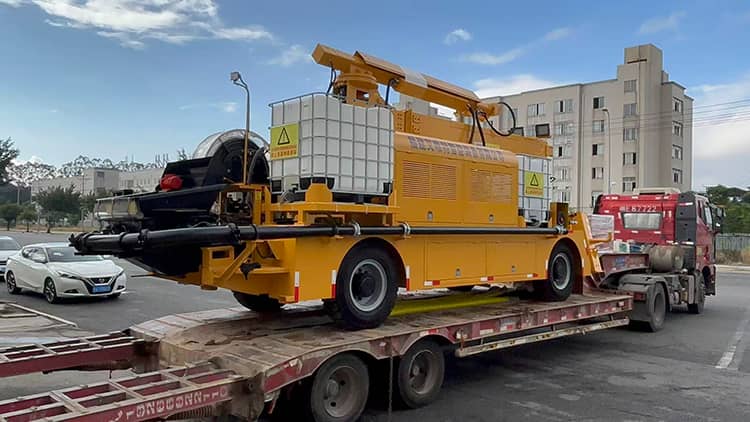
In the demanding world of civil tunneling and underground mining, the scale of excavation directly dictates project timelines and economic viability. When facing tunnel faces exceeding 100 square meters or large-scale drift development, the single-boom drilling rig reaches its operational limit. The solution lies in the application of a multi boom jumbo rig, a piece of heavy engineering designed to maximize advance rates through simultaneous, multi-point drilling. This analysis delves into the technical architecture, operational advantages, and strategic value of these powerful machines, drawing on field data and engineering principles that define modern hard-rock excavation.
1. Defining the Multi Boom Jumbo Rig: Beyond Multiple Drills
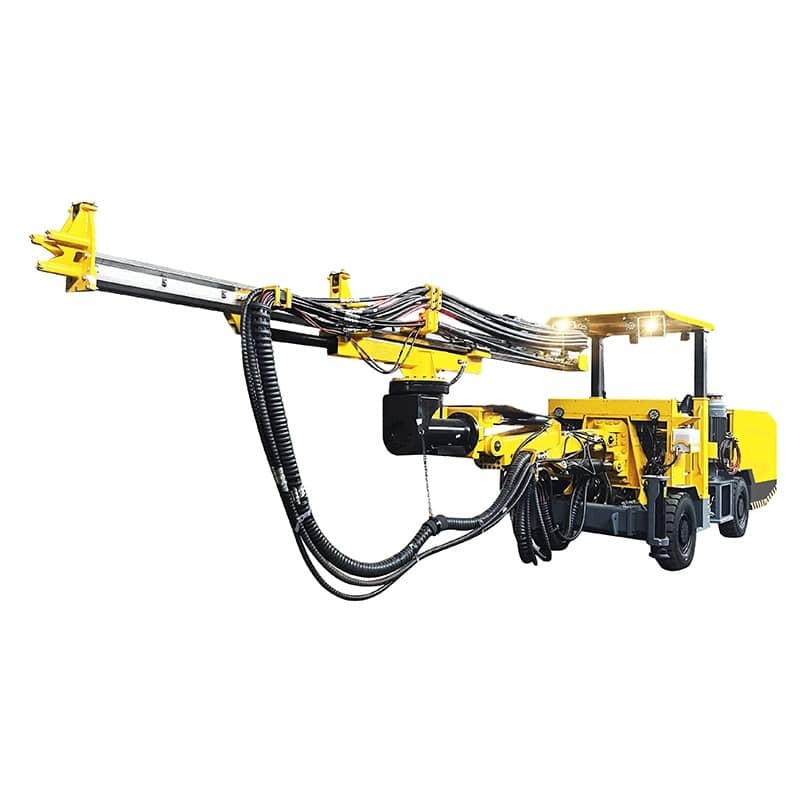
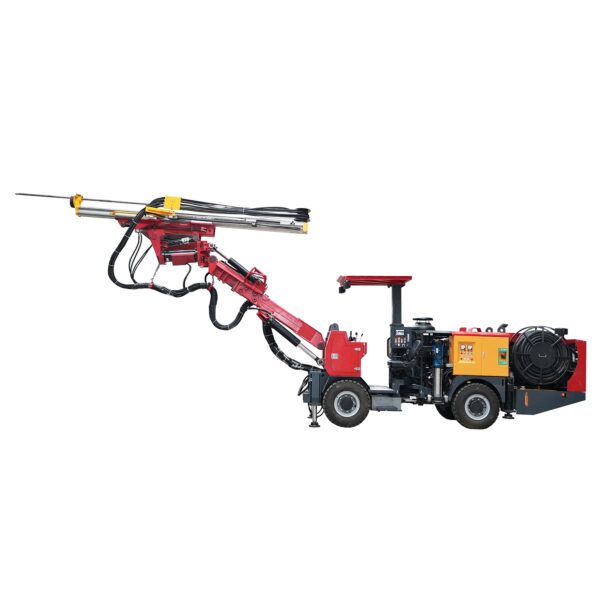
A multi boom jumbo rig is not merely a single-boom machine with an additional arm attached. It represents a complex, integrated system engineered for parallel processing. These rigs, typically equipped with two or three drilling booms mounted on a heavy-duty articulated or rail-bound chassis, are purpose-built for high-speed development in mines and large-diameter tunnels. The core engineering challenge lies in boom articulation—ensuring each drill can operate within a shared work envelope without collision, while covering the entire face pattern efficiently. Manufacturers like Aivyter address this through advanced hydraulic systems and robust boom designs that prioritize both reach and rigidity, allowing for precise drilling even at the outer limits of the tunnel profile.
2. Technical Anatomy: Hydraulics, Control, and Drilling Power
The operational efficacy of a multi-boom configuration hinges on three critical subsystems: the carrier, the boom hydraulics, and the rock drill itself. Understanding these components is essential for any procurement or operations manager.
2.1 Full Hydraulic Technology and Precision Control
Modern multi-boom rigs, such as those in the Aivyter lineup, rely exclusively on full hydraulic technology. This provides distinct advantages over pneumatic or hybrid systems. The hydraulic circuit delivers smooth, proportional control for boom movements, which is paramount when maneuvering a heavy drifters into position against a uneven rock face. This precision minimizes bit breakage and ensures the drill collars exactly at the marked point, directly impacting pull length and blast quality. Furthermore, closed-loop hydraulic systems contribute to energy efficiency and reduced heat generation during prolonged drilling cycles.
2.2 Rotary Percussive Drilling and Rock Interaction
The “business end” of the multi boom jumbo rig is the rock drill. For tunneling and mining applications, hydraulic rotary-percussive drifters are the industry standard. These units combine impact energy, rotation speed, and feed force to fracture rock. In a multi-boom setup, the ability to independently adjust these parameters for each drifter is vital. For instance, while one boom drills a burn cut hole requiring maximum penetration, another might be drilling easier production holes. This independent control, managed by onboard PLCs, optimizes the total drill cycle time. High-torque rotation systems and robust shank adapters ensure reliability even in highly abrasive rock masses like granite or quartzite.
3. Strategic Applications: Solving Industry Pain Points
The decision to deploy a multi boom jumbo rig is driven by specific project requirements where single-boom productivity is insufficient. Below are the primary application domains and the associated operational challenges they address.
3.1 Large-Profile Civil Tunneling
For road or railway tunnels with cross-sections exceeding 80-100 m², drill and blast cycles become a bottleneck. A twin or triple-boom jumbo can cover the entire face in a single setup, drastically reducing positioning time. Key benefits include:
- Reduced Cycle Time: Simultaneous drilling of the complete round pattern cuts the drilling phase by 40-60% compared to sequential single-boom operation.
- Improved Overbreak Control: Precise boom positioning allows for smoother perimeter blasting, reducing the need for shotcrete and lowering overall support costs.
- Ergonomic Operation: Operators work in safe, air-conditioned cabins, controlling joysticks away from the immediate face, which reduces fatigue during long production shifts.
3.2 High-Volume Underground Mining (Development and Production)
In mines, development drifts must be advanced rapidly to access ore bodies. Multi-boom jumbos are standard for ramp and level development. They also play a role in production drilling in certain methods like sublevel stoping. The challenges solved here include:
- Capitalizing on Face Availability: When ventilation and mucking are cleared, the face must be drilled immediately. High drilling capacity ensures the development cycle stays on schedule.
- Consistency in Ground Support: After the blast, the same rig (if equipped with a bolting module or followed by a dedicated bolter) enables consistent pattern drilling for rock bolts, crucial for ground stability in stressed ground conditions.
- Handling Cross-Cuts and Intersections: The flexibility of multiple booms allows for efficient drilling of complex geometries at tunnel intersections, ensuring structural integrity.
4. Operational Efficiency and ROI Analysis
Investing in a multi-boom solution requires a clear understanding of the return on investment, which is realized through tangible gains in productivity and reductions in operational costs.
4.1 Quantifying Productivity Gains
Consider a typical railway tunnel round of 5 meters in length with 120 holes. A single-boom rig might take 3-4 hours to complete the drilling. A modern multi boom jumbo rig can accomplish the same task in 1.5-2 hours. This saving of 1.5-2 hours per cycle allows for an additional complete cycle per day in many operations, directly translating to meters advanced per day and reduced time to project completion. This productivity directly lowers the overhead costs per meter, including labor, power, and site management.
4.2 Addressing Hidden Costs: Drilling Accuracy and Steel Wear
Beyond speed, accuracy is a significant economic factor. Inaccurate drilling leads to poor burden distribution, resulting in fly rock, overbreak, and suboptimal fragmentation. This, in turn, increases loading and crushing costs. High-precision booms with anti-jamming automation and collation features, standard on advanced rigs from manufacturers like Aivyter, ensure consistent hole placement. Furthermore, by maintaining optimal feed force and rotation, these systems minimize stress on drill steel and bits, reducing consumable costs by an estimated 10-15% in abrasive ground conditions.
5. Safety and Maintenance: The Non-Negotiable Factors
In underground environments, safety and machine availability are paramount. Multi-boom rigs incorporate multiple layers of protection and design for serviceability.
5.1 Integrated Safety Architecture
Modern jumbos are equipped with sophisticated safety systems. These include:
- Automatic Boom Interlocks: Prevent boom movements that could crush personnel or collide with other equipment.
- Dust Suppression Systems: Integrated water mist systems capture respirable silica dust at the source, protecting operator health.
- FOPS/ROPS Certified Cabs: Falling Object Protective Structure and Roll-Over Protective Structure cabins ensure operator survival in the event of rock falls or vehicle rollover.
5.2 Designing for Uptime and Serviceability
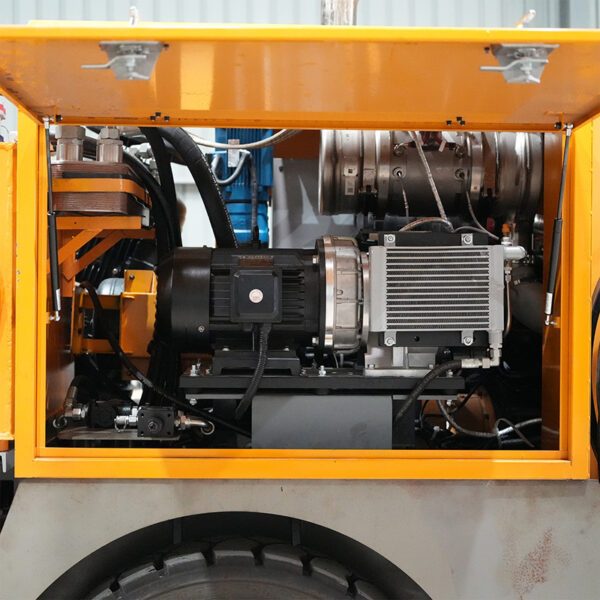
Planned maintenance is critical for maximizing uptime. The layout of hydraulic pumps, valves, and filters on a well-designed multi boom jumbo rig allows for easy access. Centralized lubrication systems reduce daily service tasks and ensure pins and bushings are adequately greased, extending component life. The use of durable, high-quality steel in the boom construction and heavy-duty undercarriages ensures the machine can withstand the constant shock and vibration of operating at the tunnel face.
6. Future Trends: Automation and Digital Integration
The evolution of the multi-boom jumbo is increasingly tied to digitalization. We are seeing the integration of:
- Computer-Aided Drilling: Systems that follow a pre-programmed drilling pattern uploaded via a tablet, ensuring every hole is drilled exactly to plan without manual marking.
- Tele-remote Operation: Allowing operators to control the rig from a safe distance, particularly useful in unstable ground or when scaling loose rock.
- Data Logging and Analytics: Onboard sensors record drilling parameters (penetration rate, torque, pressure) per hole, providing geological data and helping optimize future blast designs.
These advancements position the multi-boom jumbo not just as a drilling tool, but as a central data node in the digital mine or smart tunnel project.
Frequently Asked Questions (FAQ)
- Q1: What is the primary advantage of a multi boom jumbo rig over a single-boom unit?A1: The primary advantage is productivity through parallel operation. In large-profile tunnels or mines, a multi boom jumbo rig can drill multiple holes simultaneously, significantly reducing the total drilling time per round. This directly translates to faster excavation advance rates, making them essential for projects with tight schedules.
- Q2: What are the main factors to consider when choosing between a two-boom and a three-boom jumbo?A2: The decision depends on tunnel cross-section and project scale. A two-boom jumbo is typically optimal for tunnels up to 80-100 m², offering a good balance of coverage and maneuverability. A three-boom rig is necessary for larger profiles (over 100 m²) to cover the entire face efficiently without extensive repositioning. Logistical factors like tunnel width and turning radius for the carrier are also critical considerations.
- Q3: Can a multi boom jumbo rig be used for rock bolting as well as production drilling?A3: Yes, many modern multi-boom rigs are designed for versatility. While they are primarily production drills, they can be fitted with bolting equipment on one boom, allowing them to drill bolt holes and install ground support. However, for dedicated high-volume bolting, a specialized multi-boom bolting rig is often more efficient. Some operations use a multi boom jumbo rig for drilling the blast round and then switch to a bolting configuration for the subsequent support cycle.
- Q4: What geological conditions are best suited for multi-boom drilling operations?A4: Multi-boom jumbos are most effective in competent to moderately competent rock where the drill and blast method is applicable. They excel in hard rock environments like granite, basalt, and massive limestone, where the hydraulic drifters can deliver high impact energy. In very poor, blocky, or squeezing ground, the focus shifts to rapid support, and the drilling cycle might be shorter, potentially underutilizing the full capacity of a multi-boom machine.
- Q5: What maintenance practices are most critical for ensuring the longevity of a multi-boom jumbo?A5: Critical maintenance includes regular inspection and lubrication of the boom pivot pins and bushings to prevent wear and slop. Maintaining hydraulic oil cleanliness through scheduled filter changes is paramount for valve and pump reliability. Additionally, daily checks of the drill steel guides, shank adapters, and the feed system are essential to prevent unplanned downtime and ensure drilling accuracy.
In conclusion, the selection and operation of a multi boom jumbo rig represent a significant strategic decision for any large-scale underground project. By focusing on the integration of robust hydraulics, precise control, and comprehensive safety systems, contractors and miners can achieve new levels of efficiency. As automation and data integration continue to advance, these machines will become even more central to the intelligent, safe, and productive excavation of the future.
about
Aivyter
We provides trusted air compressors and mining equipment, engineered for durability, efficiency, and demanding industrial applications.