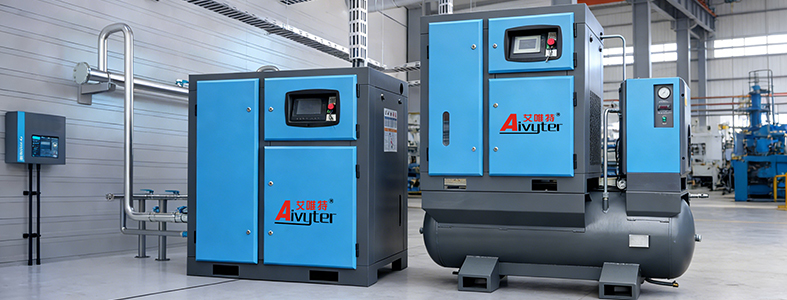
For project managers and procurement teams in mining, tunneling, and large-scale construction, compressed air is a production-critical utility. The choice of a screw air compressor supplier directly influences equipment reliability, maintenance costs, and operational continuity. Unlike standard industrial compressors, machines deployed in underground drifts, high-altitude mines, or desert construction sites must endure abrasive dust, wide temperature swings, and often 24/7 duty cycles. This article provides a structured, engineering-based framework for evaluating potential suppliers—focusing on manufacturing quality, technical documentation, field support, and component traceability.
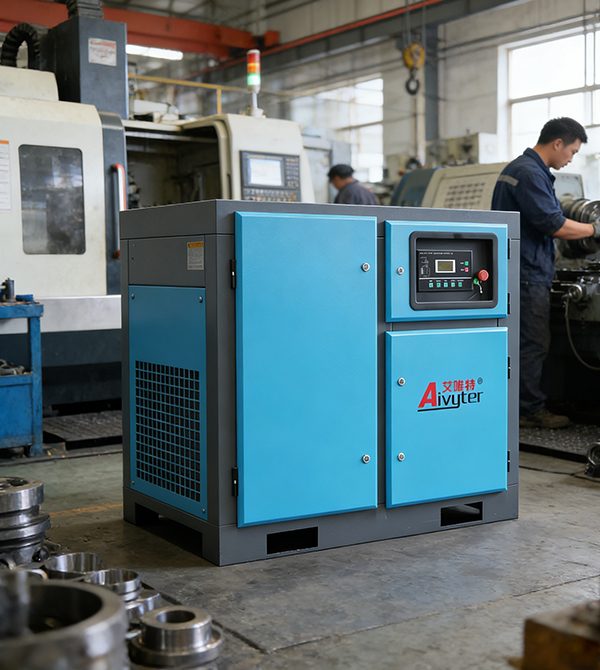
1. Defining Your Operational Profile Before Contacting a Screw Air Compressor Supplier
A clear technical specification is the foundation of any successful procurement. Without it, different suppliers will propose mismatched solutions. Start by collecting:
- Required free air delivery (FAD) – Measured at site altitude and expected ambient temperature (ISO 1217 annex C correction).
- Pressure range – Typical mining pneumatics work at 7–10 bar, but long distribution lines may need 12–13 bar at the discharge flange.
- Duty cycle – Continuous (100%) or intermittent? Rotary screw airends handle continuous loads, but cooling margins differ.
- Power source – Electric motor (fixed-speed or VSD) or diesel engine for portable units.
- Environmental hazards – Presence of explosive gas (methane), high humidity, or silica dust – each demands specific certifications (ATEX, MSHA, IP ratings).
With this data, a competent screw air compressor supplier can propose a unit with appropriate airend coating, cooler sizing, and filtration stages. For example, Aivyter requires clients to complete a site condition form before quoting, ensuring that the offered machine matches real-world demands rather than generic catalog specifications.
2. Core Technical Capabilities to Assess in a Supplier
Not all suppliers manufacture their own airends or have in-house engineering. For heavy industries, you need a partner that controls the critical components and can provide performance verification data.
2.1 Airend Manufacturing and Bearing Technology
The airend is the heart of any screw compressor. Ask potential suppliers:
- Are the rotors precision ground or milled? Ground rotors (with 2-5 micron accuracy) deliver higher volumetric efficiency and lower internal leakage.
- What bearing arrangement is used? Heavy-duty tapered roller bearings or angular contact ball bearings? For mining, large-diameter roller bearings with C4 clearance handle shock loads better.
- What is the rotor coating? Stainless steel, cast iron, or PTFE? For humid mines, nickel-chrome plating resists corrosion.
Reputable suppliers publish mean time between overhauls (MTBO) data based on ISO 8573-1 tests. A reliable screw air compressor supplier will provide wear limits and acceptance test reports from their assembly line.
2.2 Cooling System Design for Harsh Climates
Over 40% of premature compressor failures in hot environments are due to undersized coolers or poor airflow management. Evaluate:
- Separate oil and air coolers vs. combined cooler block – separate units allow easier cleaning and replacement.
- Fan drive type – direct electric fan or hydraulic? For portable compressors, variable-speed hydraulic fans reduce energy use and noise.
- Corrosion protection – aluminum fins with epoxy coating or copper-brass cores for high salinity (coastal mines).
Aivyter offers cooler packages with reversible fans that automatically blow out debris – a feature validated in coal handling plants and aggregate quarries.
3. Quality Management Systems and Certifications
For B2B buyers, supplier certifications are not paperwork – they are evidence of process control. Minimum requirements:
- ISO 9001:2015 (quality management) – mandatory.
- ISO 1217:2009 (performance testing standard) – ensures published FAD and specific power figures are reproducible.
- Pressure vessel certification – PED (CE) or ASME Section VIII, depending on your jurisdiction.
- Electrical safety – IEC 60034 for motors, and ATEX/IECEx for hazardous zones.
A supplier that cannot produce recent test certificates for their compressor models should be disqualified. Additionally, request a sample factory acceptance test (FAT) protocol – it should include measurements of oil temperature, vibration levels, and specific energy (kW per m³/min).
4. After-Sales Support and Spare Parts Logistics
In remote mining locations, a compressor downtime of 24 hours can cost hundreds of thousands in lost production. Therefore, evaluate the supplier’s service network and parts availability before purchase.
4.1 Spare Parts Availability
Ask for a commitment on:
- Maximum lead time for common wear parts (air filters, oil filters, separator elements, belts) – acceptable is 48-72 hours to major mining regions.
- Availability of main components (airend, cooler core, control board) – ideally, regional stock in warehouses near key industrial zones.
- Cross-reference parts – can they provide OEM part numbers for off-the-shelf components (e.g., SKF bearings, Siemens motors)? This avoids proprietary traps.
4.2 Field Service Capabilities
Direct factory technicians or certified local partners? Check:
- Average response time for emergency repairs (e.g., 12 hours in-contract).
- Mobile service units equipped with diagnostic tools (thermal imaging, vibration analyzer, oil testing kit).
- Remote monitoring options – many modern controllers support Modbus TCP/RTU for integration into site SCADA.
A competent screw air compressor supplier will present a service-level agreement (SLA) template before the order is placed. This document should define penalties for missed response times and procedures for warranty claims.
5. Application-Specific Requirements: Mining, Tunneling, and Civil Engineering
Each sector imposes unique constraints. A supplier’s experience in your specific field matters as much as their hardware.
5.1 Underground Mining
Low-headroom, flameproof (FLP) enclosures, and automatic condensate drains are mandatory. Also, many mines require the compressor to operate on 1000V or 1100V electric systems – not all suppliers offer these voltages. Verify that the screw air compressor supplier has delivered units with MSHA (USA) or DGMS (India) approvals. For coal mines, methane detection interlocks that automatically shut down the compressor are a safety requirement.
5.2 Tunneling (TBM Backup Systems)
In tunnel boring machine (TBM) operations, compressors are often placed in the backup train, where space is limited and temperatures can exceed 40°C. Water-cooled screw compressors using tunnel service water are preferred over air-cooled to avoid overheating. Suppliers should be able to provide compact, skid-mounted designs with water-oil heat exchangers and automatic cleaning cycles.
5.3 Surface Construction and Quarries
Portable diesel screw compressors are standard. Key factors: fuel efficiency at part load (VSD portable models), sound level (below 85 dBA for residential areas), and towing compliance (DOT or local regulations). A supplier that offers telematics (GPS, fuel monitoring, remote diagnostics) adds value for fleet managers.
6. Avoiding Common Procurement Mistakes
Based on field failure analysis, these are the most frequent errors when selecting a supplier:
- Focusing only on initial purchase price: Low-cost suppliers often use substandard bearings, thin-wall coolers, and uncontrolled rotor tolerances. The result is higher specific energy (more electricity per cfm) and shorter rebuild intervals.
- Ignoring altitude correction: A compressor that delivers 20 m³/min at sea level will only produce around 17 m³/min at 2000m. Insist on a performance curve corrected for your site elevation.
- Not verifying oil compatibility: Some suppliers use generic mineral oils that degrade quickly in high humidity. Request synthetic ester-based lubricants (PAO or diester) with 4000-hour drain intervals.
- Skipping the pre-dispatch inspection: Always arrange a third-party inspection or request a full test report including vibration spectrogram, thermal image, and flow measurement.
A transparent screw air compressor supplier will welcome such inspections and provide access to their production floor. Aivyter, for instance, publishes test videos for each unit upon request, showing measured parameters against nameplate values.
7. Evaluating Supplier Stability and Long-Term Partnership Potential
Industrial compressors have a typical service life of 10–15 years. The supplier you choose today will support your equipment for that entire period. Assess:
- Years in business and annual production volume – a minimum of 500 units per year indicates stable manufacturing processes.
- Engineering team size – ideally, at least 5-10 mechanical/electrical engineers who can customize control logic or cooling arrangements.
- Financial references – request bank or trade references to confirm the supplier is not facing liquidity issues that could disrupt parts supply.
- Client retention rate – a supplier with many repeat orders from mining companies is a positive signal.
Ask for references from operations similar to yours, and call those clients to ask about response times, warranty handling, and documentation quality.
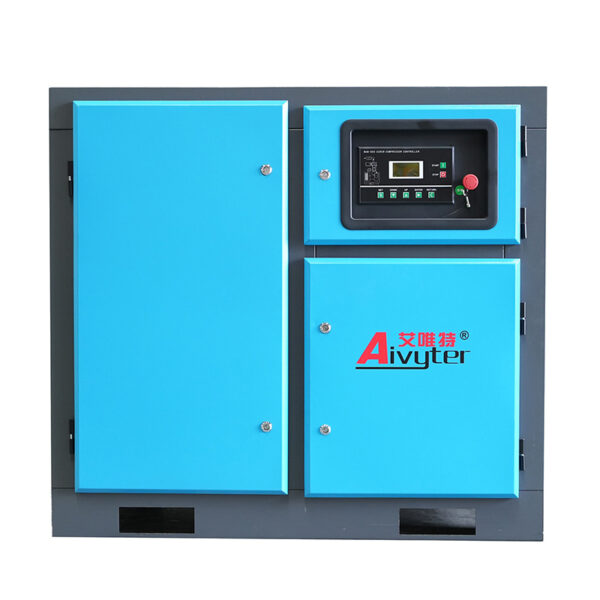
8. Final Checklist Before Issuing a Purchase Order
When you have shortlisted one or two suppliers, use this checklist for the final decision:
- ☐ Supplied a full technical datasheet with tolerances (±5% for flow, ±3% for specific power).
- ☐ Provided a 2D/3D drawing with all connection points (air inlet, discharge, electrical entry, cooling water if water-cooled).
- ☐ Warranty terms: minimum 24 months or 10,000 operating hours on the airend and bearings.
- ☐ Spare parts price list for the first three years (filters, oil, separator, belts).
- ☐ Certification copies (ISO 9001, pressure vessel, CE/ATEX if needed).
- ☐ Service schedule and recommended lubricant specification (viscosity grade, base oil type).
If the supplier meets all criteria, you can proceed with confidence. Avoid suppliers that refuse to share test data or try to push a “generic” model without site-specific adjustments.
Frequently Asked Questions (FAQs) About Screw Air Compressor Suppliers
Q1: What documents should a screw air compressor supplier provide before shipping?
A1: At minimum: performance test certificate (ISO 1217), dimensional drawing, electrical schematic, lubrication chart, certificate of origin for the airend, and warranty registration form. For export, also require a commercial invoice, packing list, and any export license if the compressor uses controlled technology.
Q2: How long does it typically take to receive a custom-configured screw compressor for a mining project?
A2: Standard units (common pressure and flow, standard voltages) ship in 4–6 weeks. Custom orders with special coatings, non-standard voltages, or ATEX certification take 10–14 weeks, including certification lead time. Always ask for a firm delivery schedule with milestone dates (assembly, testing, packing, shipment).
Q3: Can a supplier offer a variable speed drive (VSD) retrofit on an existing fixed-speed compressor?
A3: Yes, but not all suppliers provide this service. Retrofitting requires a compatible motor (IE3/IE4 rated for VFD operation), new controller software, and often a larger oil cooler because VSD changes thermal dynamics. It is more cost-effective to purchase a factory-built VSD unit. However, specialized suppliers like Aivyter do offer field retrofit kits with full validation.
Q4: What is the industry standard for oil carryover in a screw compressor supplied for mineral processing?
A4: For standard oil-injected rotary screws, oil carryover should be below 3–5 ppm (parts per million by weight) at the discharge. For processes sensitive to oil contamination (e.g., flotation circuits or instrument air), specify a high-efficiency coalescing filter downstream, or choose an oil-free compressor. The supplier’s separator element efficiency data should be provided.
Q5: How can I verify that the supplier’s claimed flow (CFM or m³/min) is accurate?
A5: Request the original test report from a calibrated orifice plate or nozzle test stand, not just a computer simulation. Also ask for the specific power (kW per m³/min) at the rated pressure – any value above 7.5 kW per m³/min at 7 bar indicates poor efficiency for a modern unit. You can also hire an independent lab to perform an on-site measurement after installation.
Need to source a rugged screw air compressor for your next project?
Our engineering team at Aivyter is ready to review your site conditions, provide a detailed proposal with performance curves, and arrange a factory visit. Send your inquiry through the official contact form or request a quote directly from our screw air compressor supplier page. Include your required pressure (bar), flow (m³/min), power source, and any special certifications. Expect a technical response within 24 hours.
about
Aivyter
We provides trusted air compressors and mining equipment, engineered for durability, efficiency, and demanding industrial applications.