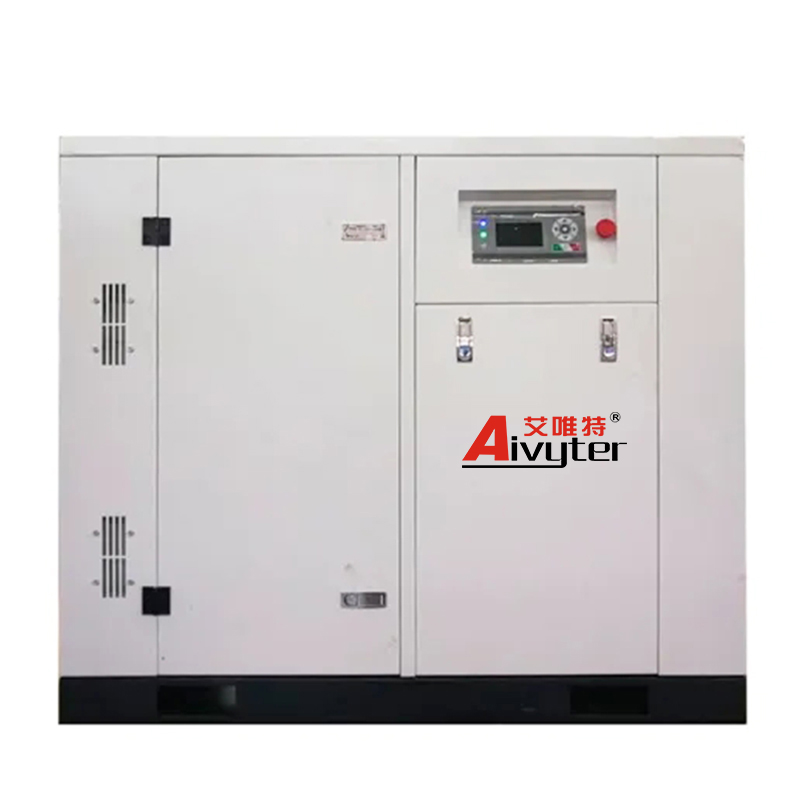
For plant managers, project engineers, and procurement specialists in the industrial, engineering, and mining sectors, understanding the operational principles, maintenance protocols, and certification standards of oil-free screw compressors is vital. We will examine rotor dynamics, sealing systems, thermal management, and compliance with ISO 8573-1 Class 0 – without relying on marketing jargon. Instead, this guide follows the Google E-E-A-T framework, delivering actionable insights from a practitioner’s perspective.
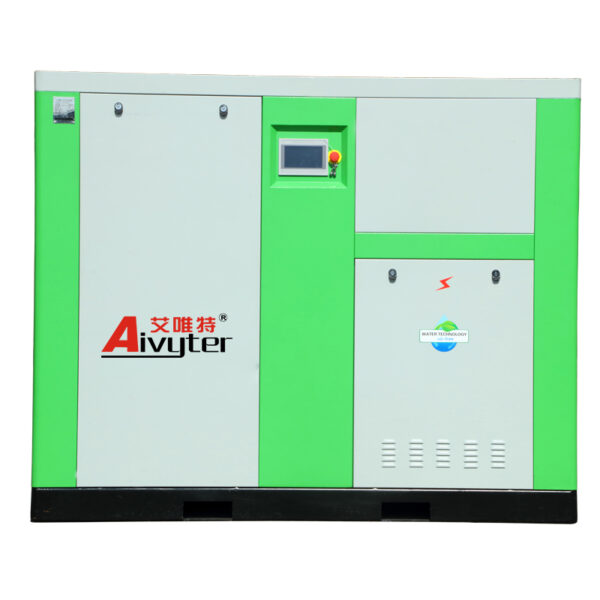
Why Oil-Free Technology is Non-Negotiable in Sensitive & Severe Environments
Conventional oil-injected screw compressors rely on compressor oil for lubrication, cooling, and sealing. However, even with high-efficiency separators, residual oil content typically ranges from 3 to 5 mg/m³. For many industrial processes this is unacceptable. Consider the following failure scenarios:
- Mining automation: Oil mist can clog pneumatic sensors, valve actuators, and air logic controls in underground longwall mining systems, causing unplanned downtime and safety risks.
- Engineering & construction: In sandblasting or shot peening operations, oil-contaminated air leads to surface defects, compromising coating adhesion and accelerating corrosion.
- Critical manufacturing: Electronics assembly, pharmaceutical production, and food packaging demand total oil-free air – any hydrocarbon residue results in batch rejection.
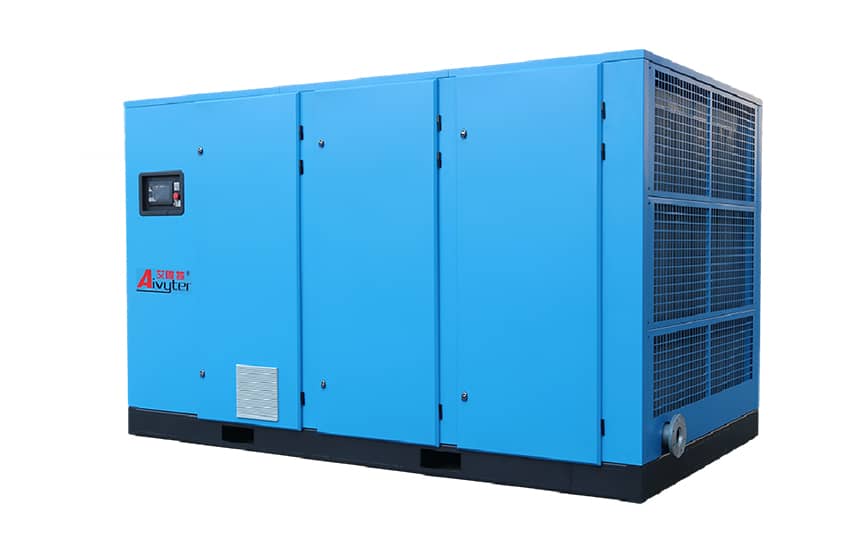
The oil free screw air compressor eradicates these risks by removing oil from the compression chamber entirely. Two main design philosophies exist: dry-running (oil-free rotary screw) and water-injected screw compressors. Dry-running versions use precision-machined rotors with non-contact timing gears, while water-injected units use water as the sealing and cooling medium. Both achieve ISO 8573-1 Class 0 certification – the highest standard for contaminant-free air.
Deep Technical Analysis: Rotor Profiles, Coatings, and Air Seals
The core of any oil-free screw compressor is the airend. Without oil to fill internal clearances, the mechanical design must overcome leakage paths and thermal expansion. Let’s break down the critical engineering elements:
1. Rotor Geometry and Material Selection
Oil-free screw rotors typically feature asymmetric profiles with very tight clearances (0.03–0.08 mm). These rotors are manufactured from ductile cast iron or hardened stainless steel, then coated with anti-friction layers such as PTFE, molybdenum disulfide (MoS₂), or epoxy-based materials. The coating ensures low friction without liquid lubricant while resisting wear from particulate ingestion in dusty sites. Aivyter uses a multi-layer coating system that maintains dimensional stability even under peak discharge temperatures up to 220°C, extending the overhaul interval in continuous-duty operations.
2. Synchronous Timing Gears – The Heart of Oil-Free Operation
Unlike oil-injected screws where one rotor drives the other through an oil film, oil-free designs rely on external timing gears. These helical or spur gears precisely synchronize the male and female rotors, preventing any metal-to-metal contact. Gear backlash is set to compensate for thermal expansion during start-up and load cycles. High-quality compressors incorporate vibration monitoring ports near the timing gear housing, allowing predictive maintenance without disassembly.
3. Labyrinth and Carbon Ring Seals
To prevent atmospheric contamination from entering the compression chamber and to keep compressed air from leaking out, oil-free screw compressors use advanced seal arrangements. On the air inlet side, labyrinth seals with PTFE tips create a tortuous path for any oil vapor migrating from the bearing housing. On the discharge side, carbon ring seals or segmented graphite seals withstand high differential pressure while operating dry. These seals require precise axial runout – typically within 0.02 mm – and are inspected during every major service.
Application Deep Dive: Mining, Construction & Industrial Engineering
Each sector presents unique challenges that influence the selection of an oil free screw air compressor. Below we examine real-world scenarios and technical countermeasures.
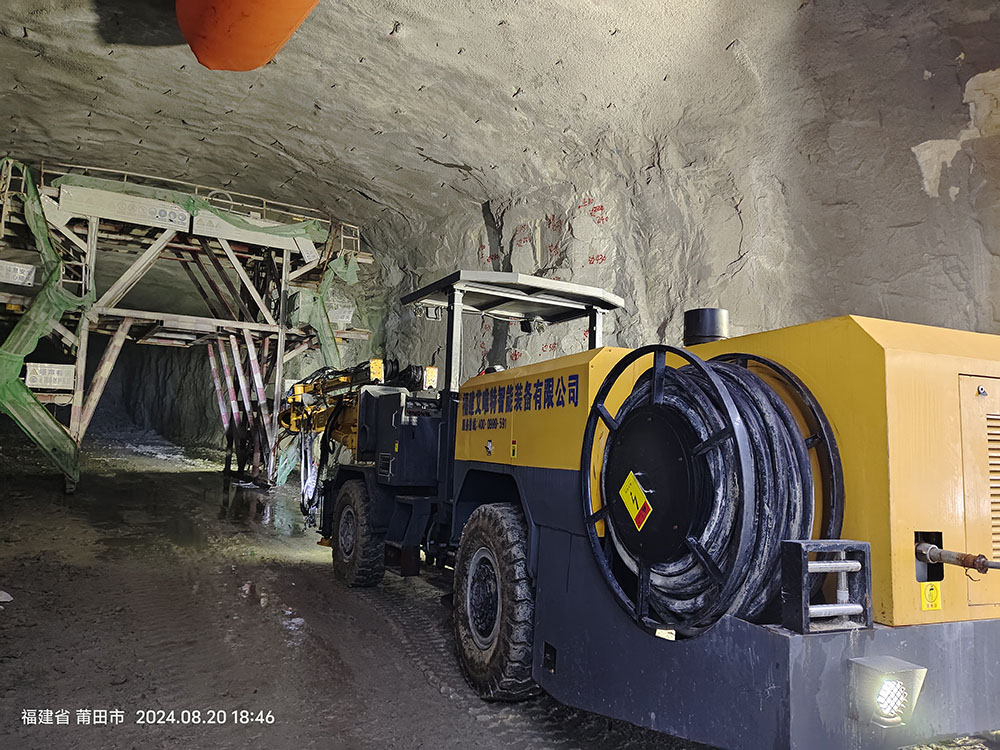
Underground Mining – Hazardous Zones & Condensation Risk
Mines require compressed air for pneumatic drills, refuge chambers, ventilation controls, and material conveying. Oil-free compressors eliminate the risk of diesel-like odors or explosive oil mists in confined tunnels. However, high humidity and abrasive dust demand specific features:
- Stainless steel coolers with hydrophobic coatings to resist acid mine water corrosion.
- IP54 or higher motor enclosures with derated output for high altitudes (2,000–4,000 m).
- Dual-stage air filtration (pre-filter + high-efficiency particulate absolute (HEPA) equivalent) to protect the airend.
In one typical longwall mining application, a 160 kW oil-free screw air compressor provides Class 0 air to 23 automated roof supports. Any oil carryover would cause the proportional valves to stick within 200 operating hours. The switch to dry-running screw technology increased mean time between failures (MTBF) from 3 months to over 18 months.
Heavy Construction – Mobile & Portable Oil-Free Solutions
Large-scale civil engineering projects (tunnel boring, dam construction, bridge foundations) use portable oil-free screw compressors. The key engineering adaptation is the undercarriage and cooling system design. Portable oil-free units must handle extreme ambient temperatures from -20°C to 50°C. Aivyter’s portable series integrates a thermostatically controlled bypass valve that recirculates compressed air during warm-up to prevent condensation inside the airend – a common failure mode in oil-free machines operating in humid climates.
Industrial Manufacturing – Continuous Duty & VSD Integration
In automotive paint shops, pharmaceutical granulation, and electronics cleanrooms, the demand profile varies. Variable Speed Drive (VSD) oil-free screw compressors adjust motor RPM to match air demand, reducing energy waste and maintaining discharge pressure within ±0.1 bar. The absence of oil simplifies VSD control because there is no risk of oil foaming or viscosity changes at low speeds. For factories running three shifts, a centralized monitoring system calculates rotor coating wear based on accumulated running hours and differential pressure, scheduling overhauls during planned shutdowns.
Maintenance Excellence – Maximizing Uptime of Oil-Free Screw Compressors
While oil-free designs eliminate oil changes and separator replacements, they introduce specific maintenance tasks that cannot be ignored. A robust maintenance program focuses on:
- Air filter replacement: Every 1,000–2,000 hours or when restriction indicator shows ≥50 mbar. Silica-laden air accelerates rotor coating erosion.
- Cooler cleaning: Oil-free compressors run hotter due to the absence of oil’s cooling effect. Annual chemical cleaning of aftercoolers and intercoolers prevents thermal tripping.
- Timing gear backlash check: Recommended every 8,000 hours using dial gauges. Excessive backlash (>0.15 mm) leads to rattling and premature rotor contact.
- Seal replacement: Carbon ring seals typically last 12,000–16,000 hours in clean environments. High-altitude mines may require 50% shorter intervals.
Leading suppliers like Aivyter provide condition-based monitoring kits that measure vibration on the non-drive end bearings. Spectral analysis identifies developing gear mesh harmonics or bearing raceway defects, enabling scheduled repairs rather than catastrophic failures.
Environmental & Operational Advantages Beyond Purity
The move toward oil-free compression is also driven by sustainability goals and regulatory pressures. An oil free screw air compressor offers quantifiable benefits:
- No hazardous waste: Eliminates spent oil and oily condensate disposal – a significant cost in many jurisdictions.
- Reduced fire risk: In oxygen-enriched environments (e.g., hospitals, chemical plants), oil-free compressors remove a potential ignition source.
- Simpler downstream filtration: Without oil aerosols, coalescing filters are unnecessary; only particulate and activated carbon filters for taste/odor remain.
- Consistent air quality: Performance does not degrade with filter saturation or oil degradation over time.
Compliance & Certification: ISO 8573-1 Class 0 and Beyond
ISO 8573-1 specifies maximum contaminant levels for solid particles, water, and total oil (including aerosol, liquid, and vapor). Class 0 is the most stringent – meaning no measurable oil contamination using current analytical methods. However, not all oil-free claims are equal. Reputable manufacturers submit their oil free screw air compressor models to independent testing (e.g., TÜV, BV) to verify Class 0 compliance under real load/unload cycles. When evaluating equipment, request the actual test report showing oil concentration measured by gas chromatography with flame ionization detection (GC-FID), with a detection limit below 0.01 mg/m³.
Additionally, for global mining projects, certifications like ATEX for potentially explosive atmospheres, or IECEx for electrical components, are mandatory. Aivyter offers zone-compliant oil-free screw compressors with spark-resistant rotors and thermistor temperature monitoring integrated into the control logic.
Selecting the Right Oil Free Screw Air Compressor for Your Operation
Matching compressor specifications to actual demand prevents oversized, inefficient machines. Key selection parameters include:
- Free Air Delivery (FAD): Measured at defined inlet conditions (e.g., 1 bar, 20°C). Account for future expansion and leakage.
- Maximum working pressure: Most industrial applications operate at 7–8 bar, while some mining drills require 10–13 bar.
- Ambient temperature range: Choose high-temperature package (>46°C) for outdoor installations in hot climates.
- Control system: On-load/off-load, VSD, or dual-mode. For fluctuating demand, VSD yields 20–35% energy reduction.
- Integration: Ensure the compressor’s communication protocol (Modbus, Profibus, Ethernet/IP) matches plant automation systems.
Engineering teams should perform a system audit including piping layout, storage receiver sizing, and condensate drainage before finalizing the compressor model. Many premature failures originate from poor quality air intake (high humidity, nearby exhaust stacks) rather than compressor design itself.
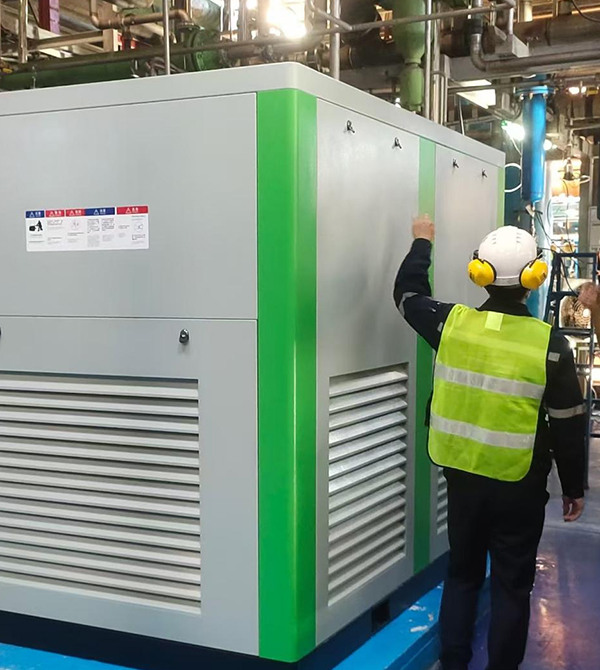
Conclusion – Future-Proofing with Oil-Free Screw Compression
The transition from oil-lubricated to oil-free screw technology is no longer a niche choice but a requirement for industries where quality, safety, and environmental compliance intersect. Understanding the engineering nuances – from rotor coatings to timing gear tolerances – empowers buyers to specify compressors that deliver decades of reliable, contaminant-free operation. With proper maintenance and real-time monitoring, the oil free screw air compressor offers the lowest risk profile for critical processes.
Aivyter provides a full portfolio of dry-running and water-injected oil-free screw compressors, each factory-tested to ISO 8573-1 Class 0 standards. Whether you operate a deep-level gold mine, a cross-country tunnel boring project, or a pharmaceutical manufacturing plant, Aivyter’s engineering support team customizes solutions for your specific duty cycle and environmental conditions.
Frequently Asked Questions (FAQs)
Q1: What is the actual difference between an oil-free screw air compressor and an oil-injected model?
A1: An oil-injected screw compressor uses oil for sealing, cooling, and lubrication. The oil inevitably mixes with compressed air and requires separators to remove most – but not all – oil content (typical residual 3–5 mg/m³). An oil-free screw air compressor employs timing gears to synchronize rotors without contact, and non-oil bearing housings isolate lubricant from the compression chamber. The result is absolutely oil-free compressed air (ISO Class 0), vital for sensitive processes like semiconductor fabrication or chemical synthesis.
Q2: How often do oil-free screw compressors require major overhaul of the airend?
A2: The recommended overhaul interval for a dry-running oil-free screw airend ranges from 25,000 to 40,000 operating hours, depending on inlet air quality, ambient dust concentration, and operating pressure. In clean industrial environments, 35,000 hours is typical. In mining applications with high silica dust, intervals may drop to 20,000 hours. Overhaul includes rotor coating renewal, timing gear inspection/replacement, and new bearing sets. Many operators schedule overhauls during major plant shutdowns every 5–7 years.
Q3: Can an oil free screw air compressor be used outdoors in extreme cold (-30°C)?
A3: Yes, but requires cold-weather packages. Key modifications include oil-free starter lubricant (synthetic grease for bearings that remains pliable at low temperature), thermostatically controlled electric heaters on the airend housing, and crankcase ventilation heaters to prevent condensation. Additionally, the control panel and motor must have heaters rated for -30°C. Some manufacturers like Aivyter offer arctic-grade enclosures with heated inlet air filters to prevent ice formation inside the rotors during standstill periods. Consult the engineering team for site-specific low-temperature data.
Q4: Is the energy efficiency of oil-free screw compressors comparable to oil-injected units?
A4: Modern oil-free screw compressors have significantly narrowed the efficiency gap. While oil-injected units historically had higher isothermal efficiency due to better internal cooling, water-injected oil-free designs now achieve specific power as low as 6.5 kW/(m³/min) at 7 bar, nearly matching premium oil-injected models. Additionally, oil-free compressors avoid pressure drop from coalescing filters (typically 0.2–0.4 bar), which can save 2–3% in energy. For VSD-controlled systems, the absence of oil viscosity issues at low speeds gives oil-free designs an advantage in partial-load efficiency.
Q5: What is the typical payback period for switching from oil-injected to oil-free screw technology?
A5: While the initial capital cost of an oil-free screw air compressor is higher (approximately 30–50% premium), the return comes from eliminated product rejection, reduced downtime, and no costly oil disposal. Many food/pharma and electronics manufacturers see payback within 12–24 months due to avoidance of batch failures. For mining and construction, where oil contamination leads to safety incidents or regulatory fines, the justification is risk mitigation rather than direct ROI. A proper life cycle assessment should include the value of ISO Class 0 certification as a market differentiator.
Need a custom-engineered oil free screw air compressor for your industrial or mining project?
Contact the Aivyter engineering team for detailed specifications, site compatibility assessment, and real-time quotation. We provide full documentation including ISO 8573-1 Class 0 certificates, dimensional drawings, and performance curves.
Send your inquiry to [email protected] or use the official request form on our website. For urgent projects, request a virtual walkthrough of our manufacturing process and test benches.
about
Aivyter
We provides trusted air compressors and mining equipment, engineered for durability, efficiency, and demanding industrial applications.