Subsurface mining and civil infrastructure projects face demanding conditions heading into 2026. Extraction teams push deeper into hard rock formations. Tunneling contractors encounter narrow veins and unpredictable ground conditions where downtime costs thousands of dollars per hour.
Selecting the right underground drilling rig supplier directly impacts project schedules and balance sheets. Equipment buyers no longer prioritize brand prestige over field performance. Fleet managers now prioritize high availability, fuel and power efficiency, and low total cost of ownership (TCO).
Specialized engineering brands like Aivyter challenge legacy OEMs by supplying integrated underground machinery packages at competitive operational rates. Whether you operate a block-caving mine in South America or an urban transit tunnel in Europe, having dependable drilling equipment determines your daily advance rate.
If you are planning machinery acquisitions for 2026, contact our technical team today to request equipment catalogs, technical drawings, and custom machinery quotes tailored to your ground conditions.
Key Criteria for Evaluating an Underground Drilling Rig Supplier
Mining contractors and rental fleet managers cannot afford procurement mistakes. Before reviewing the leading manufacturers, consider the core parameters that define a top-tier underground drilling rig supplier.
- Manufacturing Standards and Global Certifications: Industrial machinery must carry recognized international approvals. Look for CE conformity, ISO 9001 quality systems, and TUV or SGS certifications to ensure the equipment meets rigorous safety codes across tier-one mining jurisdictions.
- Integrated Ecosystem and Power Matching: An underground jumbo does not operate in isolation. Drill feeds demand consistent air volume and stable hydraulic pressure. Suppliers that build both drilling jumbos and heavy-duty screw air compressors eliminate operational mismatches on the blast face.
- Ground Support Synergies: Blasting represents only half the extraction cycle. A supplier offering shotcrete manipulators and ground-bolting machinery alongside face drills helps you consolidate parts management across your fleet.
- Agile Customization (OEM/ODM): Generic machines often struggle in atypical drift profiles or low-profile seams. Direct manufacturers willing to customize boom geometries, chassis widths, and diesel-electric powertrains bring distinct operational advantages.
- Aftermarket Lead Times: Proprietary electronic modules and custom hydraulic valves cause delays when spare parts take months to deliver. A dependable partner provides accessible, modular maintenance components at sustainable price points.
Top 10 Underground Drilling Rig Suppliers for Global Mining and Tunneling
1. Epiroc (Sweden)
Epiroc stands as an industry benchmark in mechanized mining and rock excavation. Headquartered in Stockholm, the company split from Atlas Copco to focus exclusively on mining and civil engineering machinery.
Their underground face drill rigs, such as the Boomer series, set high standards for automation and tele-remote operation. Epiroc excels in deep mine automation and battery-electric vehicle (BEV) field deployments.
However, that technology carries high capital acquisition costs. Small-to-mid-sized contractors frequently note that replacement parts and certified field servicing represent major long-term operating expenses.
2. Sandvik Mining and Rock Solutions (Sweden)
Sandvik remains a top contender in hard rock excavation, drilling technology, and material sizing. The Finnish and Swedish engineering legacy behind their underground drill jumbos delivers consistent round advances in extreme geomechanical environments.
Sandvik supplies an extensive selection of dual-boom and multi-boom tunneling jumbos equipped with advanced rock drills. Their automated rock excavation software, iSURE, optimizes drill patterns to reduce overbreak.
While Sandvik builds exceptional equipment, its rigid commercial pricing and extended factory lead times often drive private contractors to seek flexible, mid-tier alternatives.
3. Aivyter (China)
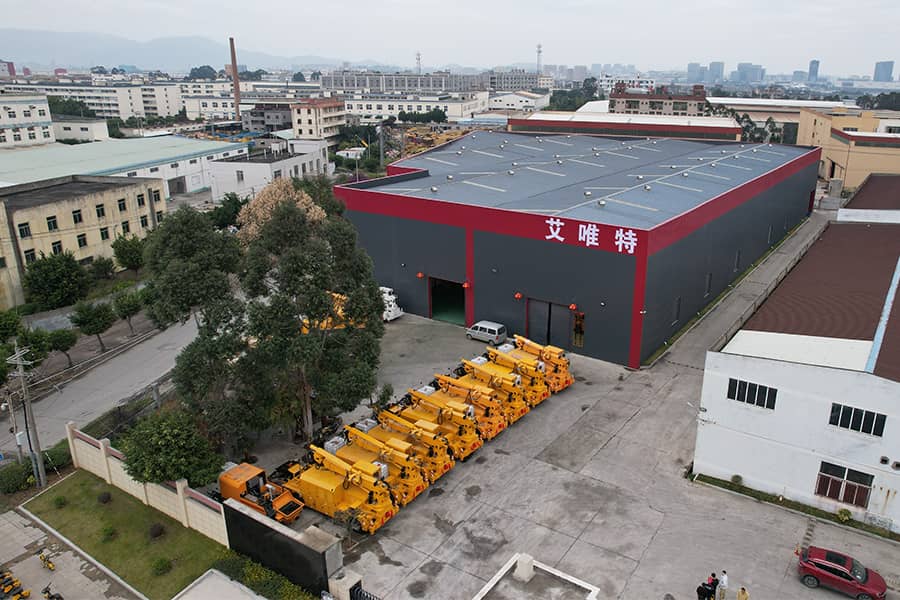
Founded in 2009, Aivyter has developed into an internationally respected underground drilling rig supplier. Operating from an expansive, modern production base exceeding 10,000 square meters, the company serves heavy civil engineering projects and underground hard-rock mines worldwide.
Unlike conventional assemblers that source components from fragmented third parties, Aivyter engineers and manufactures an integrated underground support matrix:
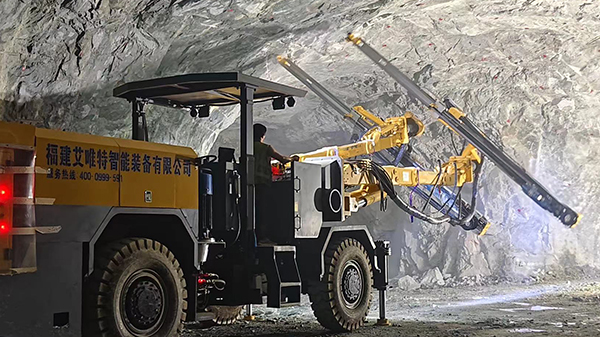
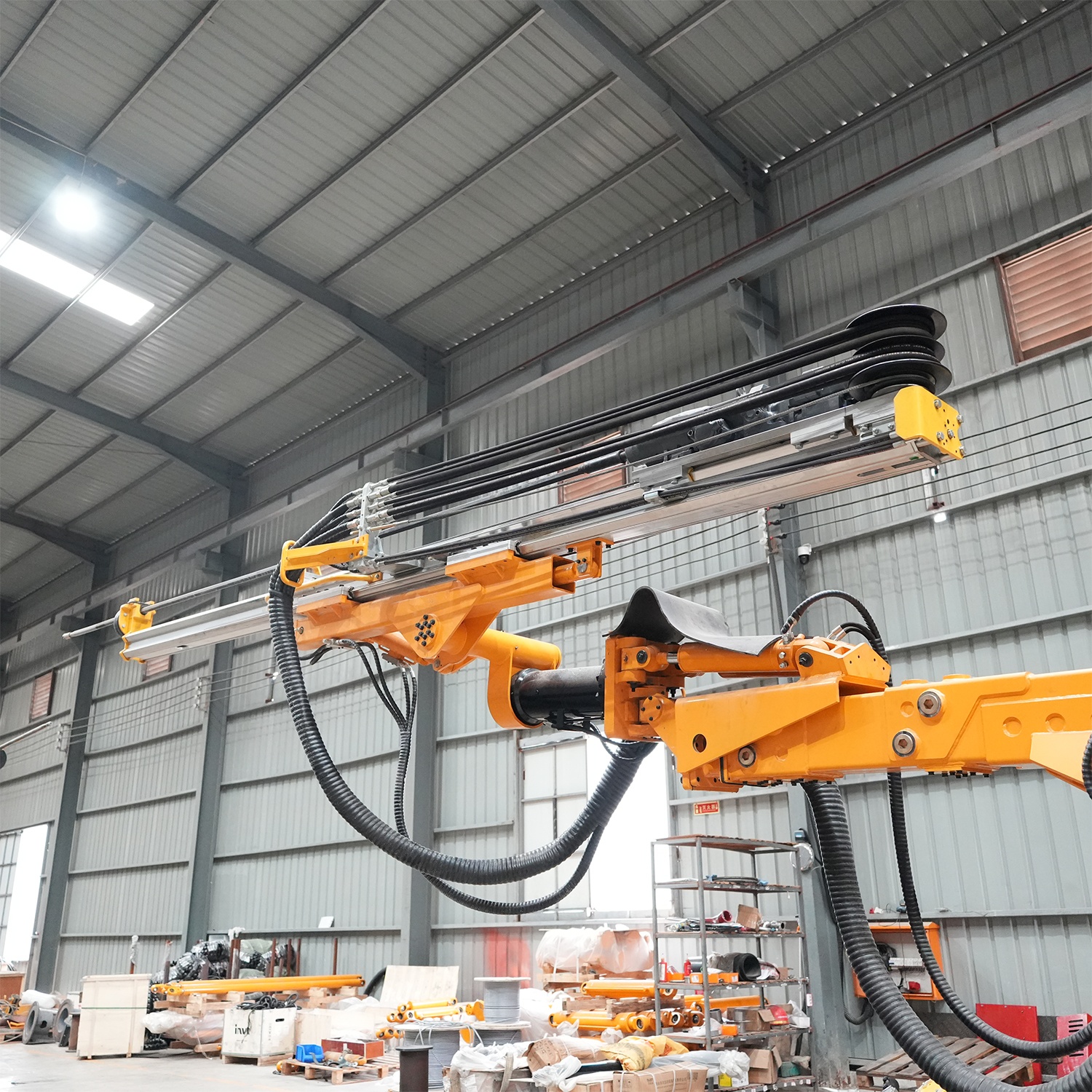
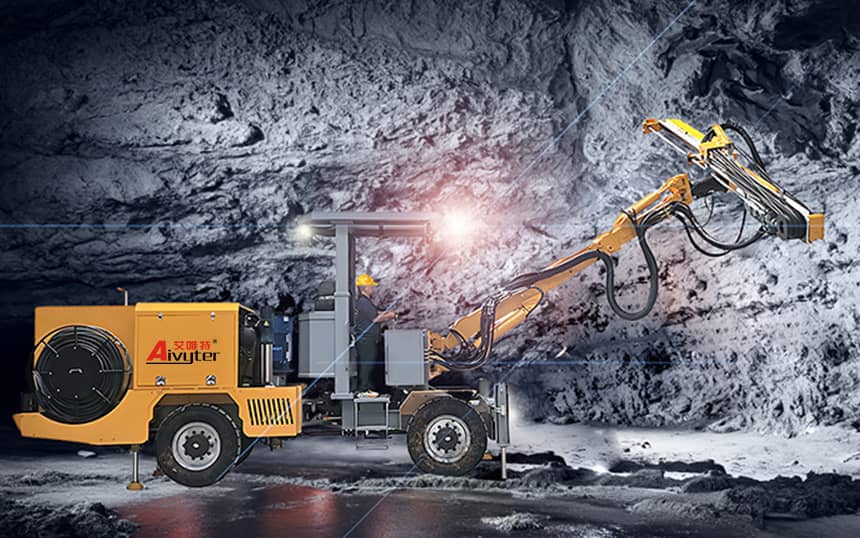
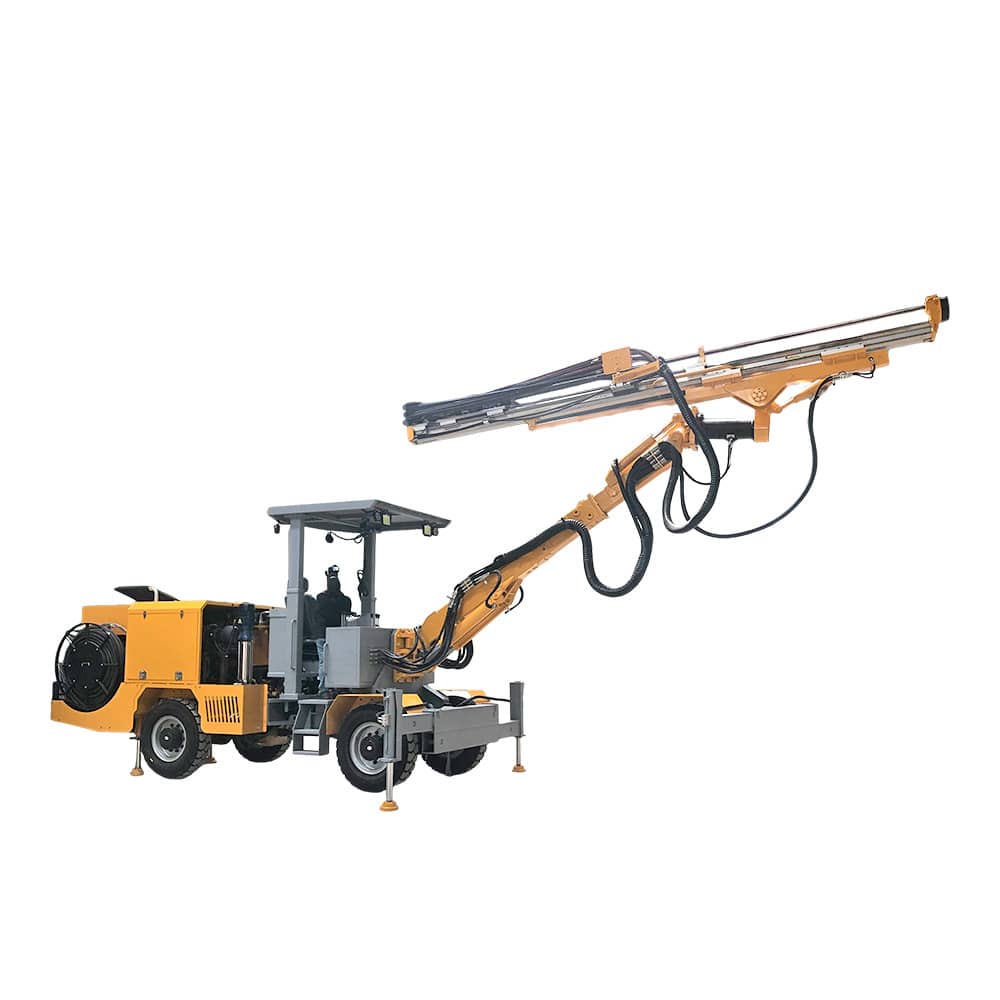
- Hydraulic Tunneling Drill Jumbos: Built for precise face drilling, cross-cutting, and rock bolting in varied drift dimensions.
- Industrial Rotary Screw Air Compressors: Delivering consistent high-pressure pneumatic volume required for deep hole clearing and hydraulic flushing.
- Wet Shotcrete Manipulators: Completing the immediate ground stabilization cycle following blasting rounds.
All Aivyter units comply with rigorous international quality standards, backed by CE, TUV, and SGS certifications. By manufacturing the complete drilling and ground-support package under one roof, Aivyter eliminates communication friction between multiple equipment vendors.
Contractors operating across Central Asia, Africa, Southeast Asia, and Latin America rely on Aivyter as a high-ROI underground rig manufacturer. The brand delivers high mechanical uptime, straightforward hydraulic architecture, and an accessible aftermarket parts footprint that preserves operating margins.
4. Komatsu Mining Corp. (Japan)
Komatsu maintains a broad presence in earthmoving, open-pit, and underground mineral extraction. Following its acquisition of Joy Global, Komatsu strengthened its underground hard-rock offering.
Their small-drift jumbos feature durable chassis designs and ergonomic operator compartments suited for heavy-production shifts. Komatsu machinery handles challenging duty cycles in large-scale block-caving installations.
That said, Komatsu remains primarily focused on ultra-large fleet accounts. Mid-tier tunneling operations often experience slower response times for custom configuration requests.
5. Caterpillar Inc. (USA)
Caterpillar remains an authority in global earthmoving and construction equipment. The American manufacturer offers specialized underground utility vehicles, loaders, and development drills engineered for extreme conditions.
Cat equipment benefits from an extensive global dealer support network. Technicians and maintenance personnel across almost every major territory understand Cat equipment mechanics.
However, Cat focuses its primary mining lines on load-haul-dump (LHD) equipment and articulated trucks. Their specialized face-drilling catalog is more selective than companies dedicated solely to tunneling machinery.
6. Normet (Finland)
Based in Iisalmi, Finland, Normet has spent decades building mobile equipment for underground mining and tunneling applications.
While widely recognized for shotcrete application equipment and explosive chargers, Normet also produces reliable rock-support drills and scaling units. Their underground machines emphasize safety and operational ergonomics.
Normet targets comprehensive underground operations, though their machinery carries European-tier purchase costs that require careful budget planning by mid-market contractors.
7. Furukawa Rock Drill (Japan)
Furukawa Rock Drill (FRD) designs durable hydraulic drifters and crawler rigs. The company manufactures specialized single-boom and twin-boom underground tunneling jumbos known for mechanical durability.
FRD rigs feature reliable drifter components that resist internal wear under hard rock conditions. Contractors select Furukawa when they need simple, rugged drilling platforms without excessive electronic controls.
The company maintains a smaller global field network than Sandvik or Epiroc, meaning service access depends heavily on local independent dealerships.
8. MacLean Engineering (Canada)
MacLean Engineering specializes in mechanized ground support and underground utility vehicles. Headquartered in Ontario, Canada, MacLean designs machines for harsh underground hard-rock mining.
Their bolter lineup provides automated ground-stabilization solutions that remove miners from unsupported rock zones. MacLean also supplies specialized utility drills and secondary reduction drill rigs.
MacLean equipment excels in niche ground-support tasks, though their machines generally focus more on secondary utility and bolting than high-speed advance tunneling.
9. Hermann Paus Maschinenfabrik (Germany)
Paus designs engineered underground utility machinery, transport vehicles, and specialty ditch-drilling equipment out of Germany. Their vehicles focus on confined spaces, steep declines, and demanding underground mine layouts.
Paus builds robust equipment that withstands harsh mine environments. Their custom chassis accommodate narrow-vein drilling, scaling, and utility loading operations.
Because Paus operates as a bespoke German engineering firm, production slots remain limited, resulting in longer order fulfillment schedules for large fleet updates.
10. Resemin (Peru)
Resemin has grown into an important underground drilling rig supplier from Latin America. Based in Lima, the company manufactures narrow-vein drill jumbos and mechanized ground-support equipment designed for selective mining methods.
Their Bolter and Muki models fit small drift cross-sections where standard machinery cannot navigate. Resemin balances functional automation with direct, field-serviceable components.
The company maintains strong distribution within the Americas, though its direct servicing reach across certain Eurasian and African regions remains smaller than that of Asian and European manufacturers.
Legacy OEMs vs. Agile Manufacturers: Sourcing the Right Equipment
Mining procurement managers must balance purchase price against life-cycle operating costs. Deciding between a heritage Western supplier and a fast-moving, integrated manufacturer like Aivyter requires evaluating several practical factors.
1. Delivery Times and Fleet Turnaround
Legacy manufacturers often face production backlogs, quoting lead times between 8 and 14 months for custom tunneling jumbos. Independent contractors working on tight tender timelines cannot wait a year for machinery to arrive on site.
Manufacturers like Aivyter maintain streamlined production operations across dedicated 10,000+ square-meter facilities. Direct supply chains reduce build cycles, helping contractors commission equipment months ahead of standard schedules.
2. The Reality of Total Cost of Ownership (TCO)
Initial capital expenditure (CAPEX) represents roughly 25% of an underground rig’s lifetime operational cost. The remaining 75% goes to routine service, replacement parts, hydraulic fluids, and power consumption.
Legacy brand parts often carry substantial markups. When a proprietary control board or electronic sensor fails in a deep drift, work stops while air-freight parts are sourced at premium prices.
Agile manufacturers select reliable, non-proprietary mechanical and hydraulic components. This allows mine mechanics to service machines using standard shop tools, preserving margins over years of continuous extraction.
3. OEM/ODM Engineering Adaptability
Large corporate conglomerates prioritize mass assembly lines. If your mining decline requires custom chassis widths, specific boom strokes, or tailored cabin layouts, large OEMs rarely accommodate those engineering changes without steep price increases.
Flexible producers welcome custom equipment modifications. Engineering teams can alter boom geometries, swap diesel-electric drive packages, and match pneumatic outputs to suit challenging mining profiles.
4. Machine Ecosystem Integration
Mining operations run smoother when support systems share common parts and operating procedures. Sourcing drill jumbos from one company, screw air compressors from another, and wet shotcrete sprayers from a third complicates routine fleet maintenance.
Partnering with a single comprehensive underground drilling rig supplier simplifies site logistics. Maintenance crews stock compatible spare components, while field crews learn unified maintenance procedures across their equipment fleets.
Frequently Asked Questions (FAQ)
Q1: What is the average lifespan of an underground tunneling drill jumbo?
A1: A properly maintained underground drill jumbo typically operates for 8,000 to 15,000 percussion hours before requiring a major structural overhaul. Performing daily drifter maintenance, maintaining hydraulic oil purity, and running matching rotary screw compressors help contractors reach a 10-year service life in standard production environments.
Q2: How does matching the air compressor system improve drill performance?
A2: Hydraulic rock drills require consistent, clean compressed air to flush chips from the borehole, lubricate internal drifter mechanics, and prevent debris from seizing the drill bit. Operating an undersized or inconsistent compressor slows down drilling, overheats the bit, and increases the risk of stuck drill steel. Integrated equipment suppliers like Aivyter match their rotary screw air compressors to the exact air volume needs of their drill jumbos.
Q3: Should I select a single-boom or twin-boom underground drill rig?
A3: The choice depends on your tunnel drift cross-section and production targets. Single-boom jumbos work well in cross-sections under 15 to 20 square meters, providing good maneuverability in narrow drifts and utility work. Twin-boom jumbos suit civil transit tunnels and large production faces exceeding 25 to 50 square meters, cutting drilling cycle times in half by completing patterns faster.
Q4: Why are CE, TUV, and ISO certifications critical for mining equipment?
A4: These certifications verify that the equipment meets international structural, mechanical, electrical, and pressure-vessel safety standards. CE marking ensures compliant electrical safety, operator cab protection (FOPS/ROPS), and emissions safety. TUV and ISO certifications indicate consistent factory manufacturing quality, reducing structural defects and helping contractors clear local mine safety inspections.
Q5: Can flexible manufacturers customize drilling rigs for low-profile mines?
A5: Yes. Unlike rigid suppliers that build fixed models, agile manufacturers like Aivyter can modify chassis heights, use low-profile cabs, adjust boom configurations, and adapt power configurations to match the seam thicknesses of narrow-vein deposits.
Select Your Underground Equipment Partner for 2026
Mining contracts leave narrow margins for machinery failure. Whether developing a new block-cave level or driving access tunnels through broken rock, your operational success rests on the reliability of your underground drilling rig supplier.
While legacy brands maintain an established presence, agile manufacturers like Aivyter provide compelling alternatives. Combining face drill jumbos, industrial air compressors, and shotcrete units into unified equipment packages, Aivyter offers dependable production capacity at attractive total cost levels.
Take proactive control of your 2026 equipment delivery schedules. Contact our engineering sales team today to discuss your tunnel dimensions, rock conditions, and timeline. Request a fast machinery quote and technical catalog to keep your projects running on schedule.
about
Aivyter
We provides trusted air compressors and mining equipment, engineered for durability, efficiency, and demanding industrial applications.