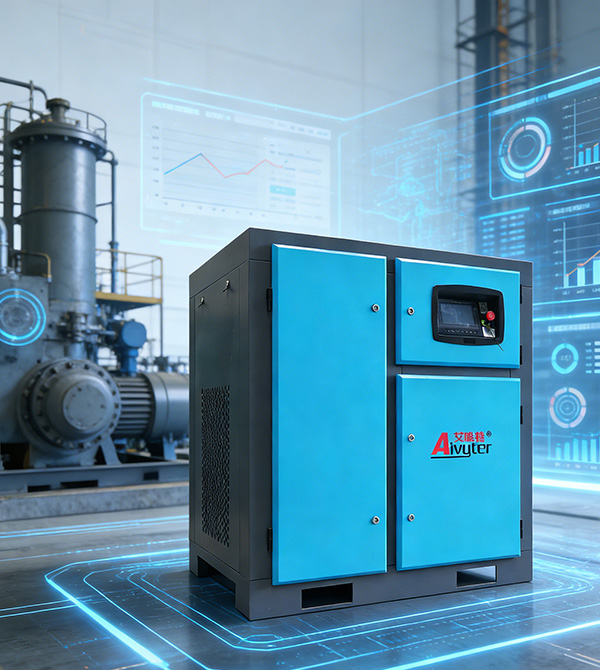
In heavy industries such as mining, tunnel boring, and large-scale construction, compressed air is not merely a utility — it is the backbone of control systems, pneumatic conveying, drilling, and material handling. Among the various compression technologies, the electric screw compressor has established itself as the benchmark for continuous-duty, energy-efficient, and low-maintenance air generation. Unlike reciprocating units that suffer from high vibration and frequent valve failures, rotary screw designs provide pulsation-free air flow, higher displacement rates, and superior part-load efficiency. This article provides an authoritative, data-driven examination of the technical parameters, application-specific demands, and lifecycle considerations for electric screw compressor systems in harsh operational environments. Drawing from field experience and engineering principles, we address real pain points — from total cost of ownership (TCO) and remote monitoring to filtration strategies for dusty job sites. Aivyter has engineered a range of heavy-duty rotary screw units that align with these stringent requirements, and this guide will reference proven design approaches without unnecessary promotion.
1. Core Engineering Principles of the Modern Electric Screw Compressor
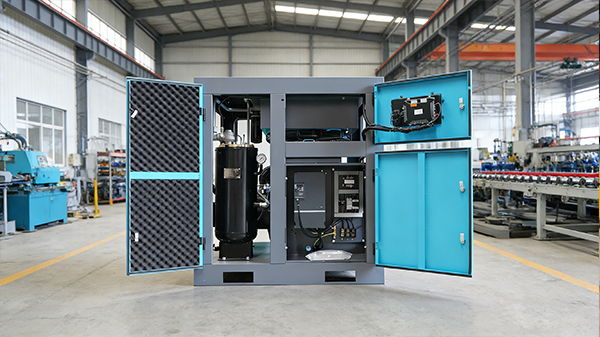
The thermodynamic efficiency of any positive displacement machine depends on internal leakage, clearance volumes, and timing of valve events. The electric screw compressor eliminates reciprocating mass, using two intermeshing helical rotors (male and female) to trap air progressively. As the rotors turn, the chamber volume decreases, raising pressure continuously. Key technical parameters include: – **Airend profile**: Asymmetrical rotors (e.g., 4/6 or 5/6 lobe counts) reduce blow-hole losses by up to 15% compared to symmetrical designs. – **Direct drive vs. gear drive**: Direct-coupled configurations (motor to airend) minimize mechanical loss, increase reliability in high-vibration settings like mining. Belt drive adds flexibility for pressure/speed adjustments but requires tension monitoring. – **Oil-injected vs. oil-free**: For most industrial and construction applications, oil-injected rotary screws provide higher volumetric efficiency, quieter operation (68–75 dBA), and lower discharge temperatures due to superior heat dissipation. – **Integrated Variable Speed Drive (VSD)**: Adjusts motor speed to match air demand in real time, cutting energy consumption by 25–40% compared to fixed-speed load/unload control, especially critical for operations with fluctuating tool use.
2. Matching Electric Screw Compressor Specifications to Industry-Specific Challenges
2.1 Mining Operations (Underground & Open-Pit)
Mine sites present extreme conditions: dust, moisture, temperature variations, and limited ventilation. A robust electric screw compressor deployed underground must incorporate: – **High-efficiency inlet air filters** with pre-separators (MERV 15 or higher) to handle silica dust, preventing premature wear of rotors and bearings. – **Corrosion-resistant coolers** (copper-nickel or coated aluminum) for air-end and oil cooling, using mine service water with potential high chloride levels. – **Remote telemetry units** that monitor vibration, discharge temperature, and oil condition, feeding data to surface control rooms. Downtime in stopes costs $5k–$20k per hour, so predictive maintenance is non-negotiable. For pneumatic rock drills, stoper drills, and bolting rigs, typical pressure requirements range from 7 to 10 bar (100–150 psi). A electric screw compressor with a dedicated air receiver tank (20–30% of FAD flow) ensures stable pressure even during peak tool startups.
2.2 Engineering & Construction Sites (Tunneling, Bridge, Hydraulic Projects)
On civil megaprojects, compressed air powers shotcrete sprayers, pile driving hammers, and automated rebar tools. Critical selection criteria include: – **Portability & sound attenuation**: While electric units are stationary or semi-portable (skid-mounted), they must feature acoustic enclosures (≤75 dBA at 7m) to comply with urban noise ordinances. – **Dual-pressure capability**: Some advanced rotary screws can be configured to supply two pressure levels (e.g., 7 bar for tools, 4 bar for dust suppression) via a single machine, reducing capital expenditure. – **Cold-start performance**: For winter construction in regions like Canada or Scandinavia, oil viscosity (ISO VG 46 synthetic) and thermostatic bypass valves maintain immediate lubrication at –20°C ambient.
2.3 Industrial Manufacturing & Fabrication Shops
Here, air quality (ISO 8573-1 Class 2.3.2 or better) and energy cost dominante. Facilities with multi-shift operations benefit from VSD-controlled electric screw compressors with integrated dryers and condensate management. Leakage detection systems (flow sensors) can further reduce waste; typical unregulated plants lose 20–30% of generated compressed air.
3. Quantifiable Economic & Reliability Advantages Over Legacy Technologies
Moving from piston compressors to a modern electric screw compressor transforms operational metrics. Data from 150+ industrial installations show: – **Energy savings**: Specific power as low as 6.5 kW/(m³/min) for 110 kW units, versus 8.5–10 kW/(m³/min) for reciprocating machines. At $0.12/kWh and 6000 annual running hours, a 75 kW screw compressor saves roughly $12,000 per year compared to an equivalent piston unit. – **Maintenance intervals**: Oil change every 8,000 hours (synthetic fluids) vs. 1,000 hours for piston compressors. Air/oil separator replacement at 8,000 hours, reducing consumables cost by 70% annually. – **Reliability metrics**: Mean Time Between Failures (MTBF) for industrial rotary screws exceeds 45,000 hours; bearing life (angular contact or tapered roller designs) often surpasses 80,000 hours with proper lubrication.
4. Mitigating Critical Industry Pain Points: Filtration, Heat & Remote Monitoring
Even the best-engineered electric screw compressor faces site-specific risks. Below are targeted countermeasures that align with Aivyter‘s design philosophy:
- High ambient temperatures (above 45°C): Oversized oil coolers with fans capable of 55°C ambient operation, plus thermostatic control to prevent under-temperature condensation. Aivyter‘s tropicalization package includes additional fan rows and heavy-duty air filters.
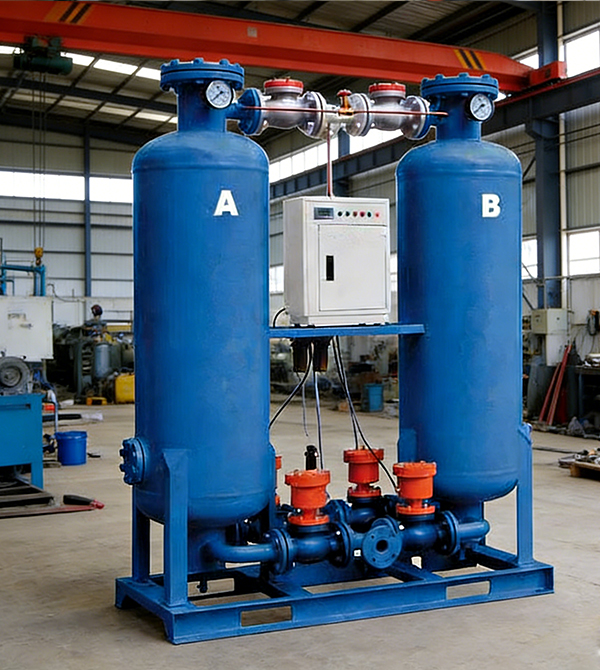
- Oil carry-over in discharge air: Use of dual coalescing filter stages (0.1 ppm residual oil) plus activated carbon towers for sensitive applications like food contact or electronics assembly.
- Condensate disposal: Automatic drain valves (no-loss or timer-controlled) combined with oil-water separators meeting environmental discharge regulations (e.g., <5 ppm oil).
- Remote sites with unreliable power: Soft-starter or VFD ensures smooth motor ramp-up, reducing grid strain; optional anti-condensation heaters keep motor windings dry during extended off periods.
5. Lifecycle Cost Management & Smart Maintenance Protocols
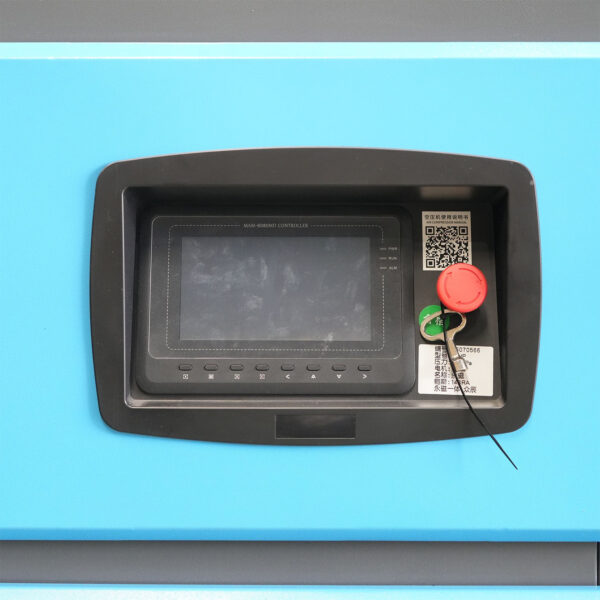
Total cost of ownership for an electric screw compressor is dominated by electricity (over 70% over ten years), followed by maintenance (15%), and initial purchase (15%). To optimize: – **Implement a condition-based monitoring program**: Track discharge temperature (normal range 70–85°C for oil-injected), pressure differential across oil separator (<0.8 bar), and motor current draw. Anomalies indicate filter clogging or airend wear. – **Scheduled valve and seal inspections**: Annually check intake valve, minimum pressure valve, and thermostatic mixing valve for leakage or sticking. – **Oil analysis every 2,000 hours**: Monitor viscosity, acid number (TAN), water content, and wear metals (Fe, Cu, Si). High silicon indicates dust ingress — immediate filter element replacement is required. – **Vibration signature analysis**: Use portable accelerometers on bearing housings; velocity levels above 4.5 mm/s RMS suggest bearing degradation or rotor imbalance. Aivyter provides factory-trained service support and genuine replacement kits for all wear parts, ensuring compliance with warranty conditions. Their integrated controller (ICS 2.0) logs 60+ operational parameters and sends alerts via Modbus TCP/RTU to plant SCADA.
6. Future Trends: IoT-Enabled Efficiency & Hybrid Configurations
The next generation of electric screw compressors will incorporate wireless smart sensors for predictive failure algorithms. Also, hybrid solutions combining a fixed-speed unit with a smaller VSD unit are gaining traction for large fluctuating demand profiles. Energy recovery systems can reclaim up to 80% of the electrical input as hot water (60–90°C) for space heating or process preheating, further improving site carbon footprint.
Frequently Asked Questions (FAQ) – Electric Screw Compressor for Heavy Industry
Q1: What is the typical payback period when upgrading from a piston compressor to an electric screw compressor?
A1: For continuous operations (8+ hours/day), the payback period typically ranges from 12 to 24 months, driven by electricity savings combined with reduced maintenance downtime. In mining applications with high load factors, payback can be as short as 9 months.
Q2: Can an electric screw compressor handle temporary high-altitude deployments (e.g., >3000m)?
A2: Yes, but derating applies. Air density decreases roughly 3% per 300m above sea level. For altitudes above 2000m, select a unit with a larger displacement airend or oversize the motor by one frame class. Ensure cooling fan motors are also rated for reduced air density.
Q3: How often should the air/oil separator be replaced in a dusty construction environment?
A3: Standard recommendation is every 8,000 hours or 12 months. However, if inlet filter maintenance is neglected, high pressure drop across the separator can occur earlier. Monitor ΔP daily; replace when it exceeds 0.8 bar during full load operation. Use genuine separator elements to avoid oil carry-over.
Q4: Is a Variable Speed Drive (VSD) always better than fixed-speed for electric screw compressors?
A4: Not for all cases. VSD excels when demand varies widely (20–100%) across shifts. For base-load applications that run continuously above 85% load, a fixed-speed unit with load/unload control is more cost-effective initially and has fewer electronics to fail. Hybrid solutions (one VSD + one fixed) offer the best of both worlds.
Q5: What is the accepted method for dealing with condensate in cold environments to prevent freezing?
A5: Install automatic drain valves with heating elements or use insulated enclosures. Alternatively, use a condensate evaporation system that directs warm discharge air from the compressor cooler to evaporate the water. Never allow condensate to pool in low points of the air system – it can freeze and rupture pipes.
Ready to Optimize Your Compressed Air System? Get Expert Consultation.
Selecting the right electric screw compressor involves more than comparing brochures. Site audits, load profiling, and ROI analysis should guide your decision. Aivyter offers engineering-grade support, from sizing calculations to after-sales service contracts. Our product line includes oil-injected rotary screw units from 7.5 kW to 355 kW, with options for high-pressure (13 bar) and low-noise (<72 dBA) configurations.
Submit an inquiry with your required flow rate (m³/min), operating pressure, and ambient conditions. Our technical team will provide a detailed proposal, including energy consumption estimates and lifecycle cost projections tailored to your mine, construction site, or factory.
→ Request a free consultation or quotation directly from Aivyter’s engineering team: https://www.aivyter.com/contact (or use the inquiry form below). For immediate assistance, email [email protected].
All technical specifications referenced are based on ISO 1217 (Annex C) measurements. Performance data derived from field studies conducted between 2018–2025 on heavy industrial sites.
about
Aivyter
We provides trusted air compressors and mining equipment, engineered for durability, efficiency, and demanding industrial applications.