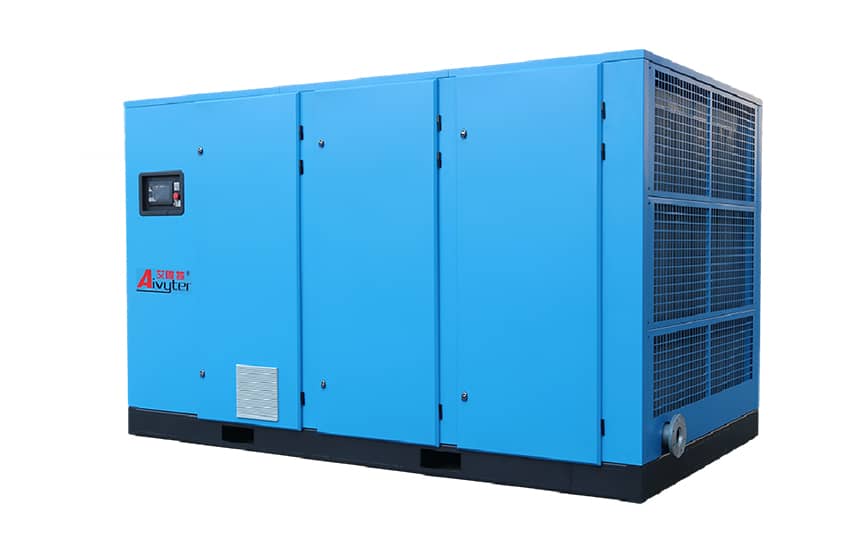
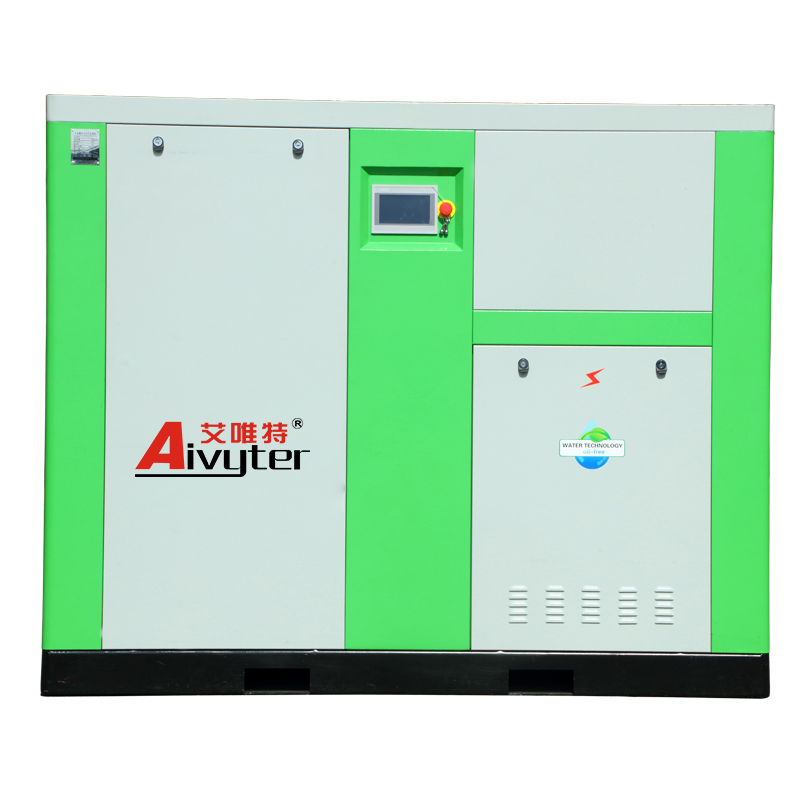
Industries requiring high-purity compressed air face strict operational demands. Contaminants in the air supply can compromise product quality, damage sensitive laboratory instrumentation, or ruin delicate electronic components. To address these risks, many facilities have transitioned to oil-less compression systems. A primary solution for low-to-medium flow requirements is the oil free scroll air compressor.
By eliminating lubricating oil from the compression chamber, this design guarantees 100% oil-free air delivery under ISO 8573-1 Class 0 standards. Companies like Aivyter design these systems to meet the rigorous demands of pharmaceutical, dental, and laboratory environments where even a single microgram of oil aerosol can halt production. Understanding how these systems operate and their functional benefits is key to optimizing clean-air production environments.
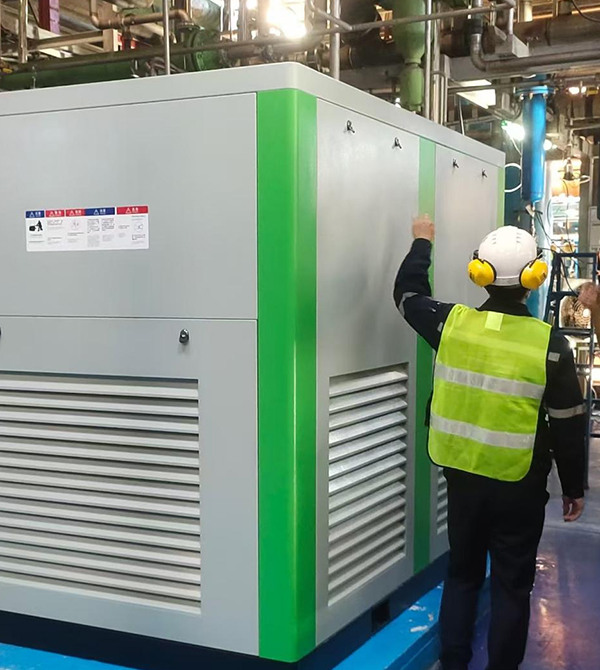
Mechanical Principles of the oil free scroll air compressor
To understand the reliability of this technology, one must examine its mechanical structure. Unlike reciprocating pistons or rotary screws, a scroll compressor utilizes two interleaving spiral-shaped scrolls to compress air. One scroll remains stationary (the fixed scroll), while the second scroll moves in an eccentric orbit (the orbiting scroll) without rotating. This geometric path is defined as the involute of a circle.
As the orbiting scroll moves, it draws atmospheric air into the outer pockets of the scroll set. The continuous orbital motion seals the pockets and progressively pushes them toward the center of the assembly. During this path, the volume of the pockets decreases, compressing the air. Once the air reaches the center point, it discharges through a central port. This movement is continuous, resulting in a smooth, pulse-free discharge of compressed air.
Since the two scrolls never make physical contact, there is no friction-induced wear on the scroll profiles themselves. This eliminates the need for liquid lubrication in the compression chamber. PTFE or specialized composite tip seals are utilized at the apex of the scroll wraps to prevent air leakage between the pockets. This dry-running design is the foundational reason why these compressors achieve true oil-free operation, mitigating any risk of downstream contamination.
Where High-Purity Air is Required
The choice to deploy an oil free scroll air compressor is often driven by regulatory requirements and the sensitivity of the end application. Several sectors depend on this technology to maintain process integrity:
- Pharmaceutical and Biotechnology: In drug synthesis, dry powder conveying, and pill pressing, air comes into direct contact with the product. Any trace of oil can alter chemical compositions, degrade batch quality, or lead to regulatory non-compliance.
- Laboratory and Research Facilities: Analytical instruments, such as gas chromatographs and mass spectrometers, require high-purity carrier gases. Trace hydrocarbons from lubricated air compressors can skew test results and damage sensitive detectors.
- Food and Beverage Packaging: Compressed air is utilized for product sorting, bottling, and conveying raw ingredients. Pure air ensures food products remain free from chemical contamination and off-odors, preserving flavor and shelf life.
- Electronics and Semiconductor Assembly: Modern microelectronics are highly susceptible to microscopic dust and oil droplets. Dry, oil-free air is utilized in pneumatic actuator systems and cleanroom air handling to protect silicon wafers during fabrication.
- Dental and Medical Practices: Patients expect clean, contaminant-free air during dental procedures and medical ventilation. Scroll compressors operate quietly in these environments, delivering reliable medical-grade air without risking exposure to oil fumes.
Operational Advantages of Scroll Technology
Integrating scroll compressors into industrial setups offers several key advantages over alternative designs. Manufacturers like Aivyter optimize these features to provide high performance under continuous operation.
1. Whisper-Quiet Operation
Due to the continuous compression process, scroll units operate with minimal pulsation. They produce significantly lower noise levels compared to reciprocating models, typically ranging from 48 to 65 dB(A). This allows them to be installed directly at the point of use, eliminating the need for separate compressor rooms and long pipe runs that introduce pressure drops.
2. Minimal Moving Parts
The absence of intake and discharge valves—common failure points in piston compressors—reduces the risk of mechanical breakdown. The smooth orbital movement minimizes structural vibration, which extends the operational lifespan of the bearings, drive systems, and connected piping.
3. Continuous Duty Cycle
Unlike piston units that require cooling intervals, scroll compressors are capable of continuous, 100% duty cycle operation. The continuous air delivery ensures a steady system pressure, supporting automated assembly lines and critical lab processes without interruption.
4. Simplified Maintenance
Because there is no lubricating oil to monitor, change, or dispose of, scheduled maintenance is straightforward. Operators do not need to replace oil filters, coalescing filters, or air-oil separators. Maintenance is largely limited to regular inlet air filter changes and periodic tip seal replacements, keeping maintenance downtime to a minimum.
5. Modular Design and Redundancy
Advanced scroll systems often utilize a multi-module configuration. By housing multiple scroll pumps within a single canopy, a central controller can cycle individual heads on or off based on real-time air demand. This modularity provides built-in redundancy; if one module requires servicing, the remaining modules continue to operate, preventing complete production shutdowns.
Optimizing the Compressed Air Network
While an oil free scroll air compressor prevents oil carryover, complete air quality depends on the design of the entire downstream network. Ambient air drawn into the compressor contains water vapor and particulate matter, which must be addressed to protect downstream equipment.
To maintain dry, stable air, a system should incorporate a desiccant or refrigerated dryer. In sensitive applications, sterile inline filters should be positioned downstream of the dryer to trap any microscopic dust or biological contaminants. High-quality piping materials, such as aluminum or stainless steel, are recommended to prevent rust and scaling inside the distribution lines.
Aivyter provides integrated air solutions that combine scroll compressors with matched air dryers and filtration systems, ensuring that the air reaching your production line meets the highest standards of cleanliness and consistency.
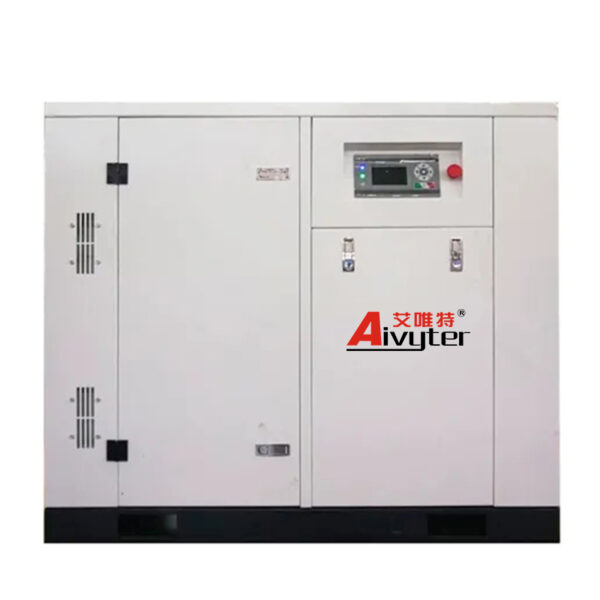
Comparing Scroll and Tooth Compressors
For low-to-medium flow ranges, scroll technology is often compared with tooth-type compressors. While both are oil-free, their designs cater to different requirements. Tooth compressors utilize claw-shaped rotors that rotate in opposite directions. While efficient at slightly higher flow rates, tooth compressors generate higher noise levels and more pulsation.
The scroll design remains the preferred choice for applications requiring whisper-quiet operation, compact footprints, and precise flow control. The seamless transition of air through the concentric wraps provides a smoother discharge pressure, making the scroll configuration ideal for point-of-use installations in laboratories, dental offices, and cleanrooms.
Frequently Asked Questions
Q1: What does ISO 8573-1 Class 0 certification mean?
A1: ISO 8573-1 Class 0 is the highest standard of air purity. It certifies that the compressed air contains zero oil aerosols, liquid oil, or oil vapor. An oil-free scroll compressor naturally meets this standard because it does not use oil within the compression chamber.
Q2: How often do tip seals need to be replaced in a scroll compressor?
A2: Tip seal lifespan varies based on operating conditions, temperature, and duty cycles. Typically, tip seals require replacement every 5,000 to 10,000 operating hours to maintain optimal compression efficiency.
Q3: Can an oil-free scroll air compressor run continuously?
A3: Yes, these systems are designed for a 100% continuous duty cycle. The balanced, low-vibration orbital movement prevents the excessive heat generation common in reciprocating compressors, allowing for steady operation.
Q4: Is a refrigerated dryer necessary with an oil-free scroll system?
A4: Yes, compressing air naturally concentrates ambient water vapor. To prevent moisture from condensing in your piping and equipment, a refrigerated or desiccant air dryer is recommended downstream of the compressor.
Q5: Why is scroll technology quieter than reciprocating systems?
A5: Reciprocating compressors rely on rapid piston strokes and mechanical valves that slam open and shut, creating high noise and vibration. Scroll compressors compress air in a continuous, smooth orbital motion without valves, resulting in near-silent operation.
Request Expert Advice
Selecting the correct air compressor is a pivotal decision for clean-air industries. An oil free scroll air compressor offers the necessary reliability, silent operation, and high-purity air required to protect your processes and maintain regulatory compliance.
For expert advice on configuring the ideal oil-free compressed air system for your industrial, laboratory, or dental application, please contact our engineering team. We are ready to assist you with tailored engineering solutions. Send an inquiry today to discuss your specific clean air requirements.
about
Aivyter
We provides trusted air compressors and mining equipment, engineered for durability, efficiency, and demanding industrial applications.