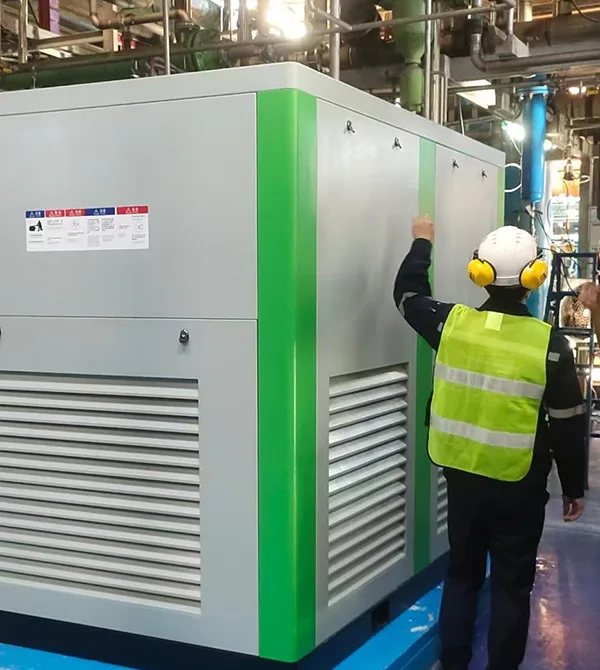
In heavy industries—mining, large-scale construction, chemical processing, and precision manufacturing—compressed air contamination is a direct threat to production integrity. One microliter of carryover oil can foul sensitive pneumatic controls, ruin catalyst beds, or void pharmaceutical batch certifications. The engineering response to this risk is the industrial oil free air compressor, a machine designed to deliver compressed air with zero hydrocarbon ingress. This article examines the technology, economic justification, and application-specific demands of true oil-free compression, referencing field data and industry standards. For operators managing critical air networks, understanding the distinction between “technically oil-free” and Class 0 certification is not a matter of marketing—it is a matter of process reliability.
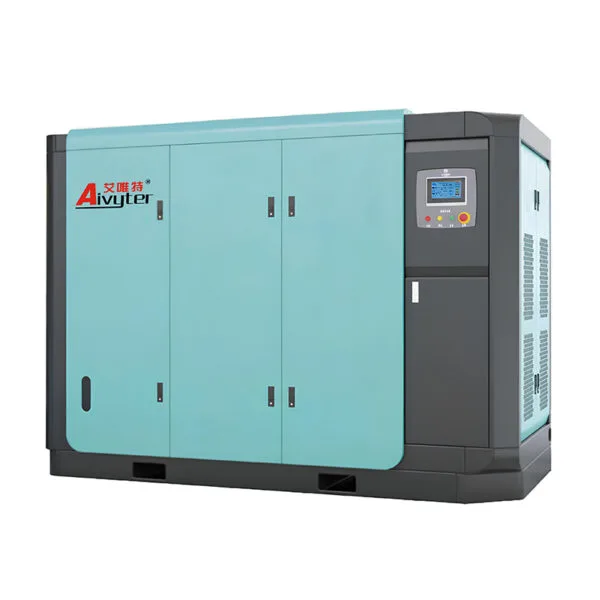
Technical Architecture of Modern Oil-Free Compression
Eliminating lubricant from the compression chamber requires fundamental design departures from standard oil-flooded rotary screws. Three dominant architectures have proven themselves in continuous heavy-duty service:
Dry-Type Rotary Screw (Oil-Free Screw)
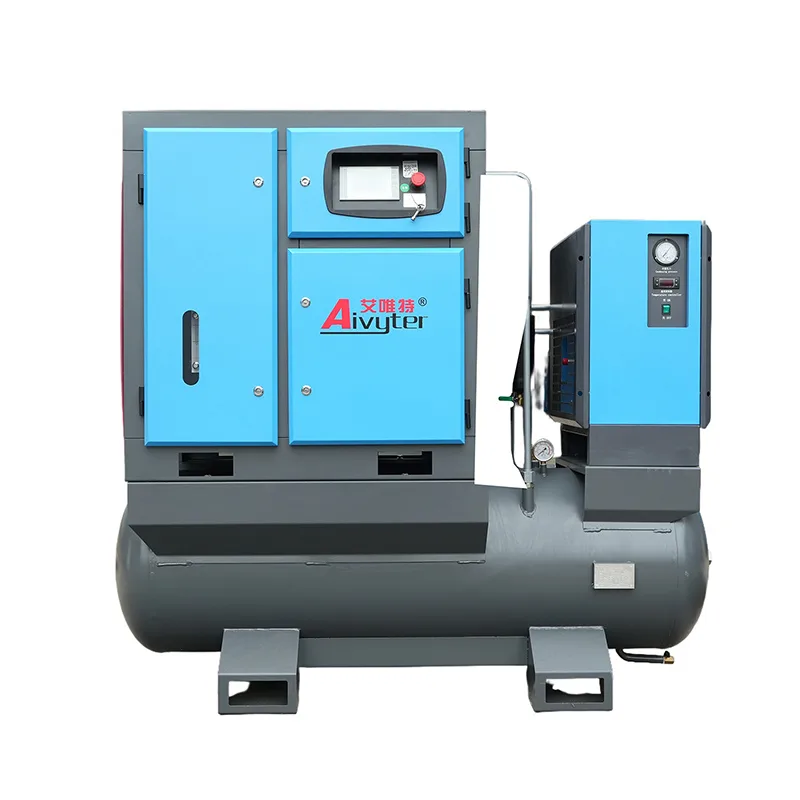
Two precision-machined rotors operate within a timing gear housing, maintaining microscopic clearances without contact. Air ends are coated with permanent anti-friction layers such as PTFE or MoS₂. Since no oil seals the internal gaps, industrial oil free air compressor screws run at higher speeds to reduce leakage losses. Modern units achieve volumetric efficiencies above 82% at 8 bar, close to oil-flooded counterparts. The absence of oil separation systems also means lower pressure drop across downstream components.
Water-Injected Single-Stage Compression
For applications requiring isothermal compression and extreme discharge temperatures (below 50°C), water-injected technology uses treated water as both coolant and sealing medium. The water absorbs heat of compression, reduces specific energy consumption by up to 15%, and is subsequently removed via mechanical separators and drying stages. This configuration is common in PET blow molding and humidity-sensitive processes.
Centrifugal Compressors for High-Volume Needs
Above 80 m³/min (2800 CFM), centrifugal or turbo compressors become economically viable. Using high-speed impellers and diffusers, these dynamic machines produce completely oil-free air inherently—no seals or timing gears required. However, they are sensitive to inlet conditions and perform best at constant full load. Many large mining complexes use a hybrid system: centrifugal for base load and industrial oil free air compressor screw units for trim control.
Economic Consequences of Oil Contamination
Field studies across 120 industrial sites show that hidden oil carryover costs average 4-7% of annual compressed air operating budgets. Specific failure modes include:
- Pneumatic instrumentation failure: Oil vapor accumulates in I/P transducers and valve positioners, causing drift or seizure. Replacing a single modulating valve in a mining concentrator can exceed $18,000 in downtime and parts.
- Catalyst poisoning: In chemical plants, oil aerosols as low as 0.1 mg/m³ degrade palladium or platinum catalysts within 200 operating hours.
- Product rejection: Food and pharmaceutical lines experiencing oil-related contamination face batch destruction costs averaging $45,000 per incident.
- Increased filtration expenditure: Coalescing filters rated for 0.01 ppm oil carryover require replacement every 1000 hours when fed by oil-lubricated compressors with worn separators. With a certified oil-free source, the same filters last 8000+ hours.
These risks drive the specification of true industrial oil free air compressor systems, particularly where human safety or environmental release is involved.
ISO 8573-1 CLASS 0: The Definitive Standard
Many manufacturers claim “oil-free” output, but only ISO 8573-1 CLASS 0 guarantees that total oil content (aerosol, liquid, vapor) is undetectable by current analytical methods—typically below 0.01 mg/m³. Achieving this requires not only an oil-free compression element but also vapor adsorption systems and high-temperature-resistant seals. Third-party certification (e.g., TÜV, DNV) verifies that every production unit meets the threshold. For industries such as lithium-ion battery manufacturing or semiconductor fabrication, Class 0 is not optional—it is a procurement prerequisite. Aivyter offers a full range of compressors bearing TÜV-certified Class 0 compliance, documented per serial number.
Sector-Specific Applications Requiring Absolute Oil-Free Air
Underground and Surface Mining
Mine automation systems rely on pneumatic control loops for conveyor brakes, ventilation dampers, and rock drill sequencing. Oil-contaminated air leads to sticking spools and false limit switch signals, creating safety hazards. Additionally, diesel-powered mobile compressors are being replaced by electric industrial oil free air compressor skids to eliminate hydrocarbon vapors in confined headings. A large copper mine in Chile reported a 92% reduction in pneumatic valve replacement after switching to a centralized oil-free plant.
Heavy Construction and Civil Engineering
For bridge jacking, post-tensioning, and concrete spraying (shotcrete), compressed air contacts hydraulic fluids and fresh concrete. Any oil residue compromises bond strength and accelerates rubber seal degradation. Leading contractors now mandate oil-free compressors for all tunnel boring machine auxiliary systems.
Chemical & Petrochemical Processing
Nitrogen generation via membrane or PSA systems is highly sensitive to compressor oil, which coats membrane fibers and reduces separation efficiency. An industrial oil free air compressor feeding the nitrogen skid ensures consistent purity and extends membrane life by 300%.
Total Cost of Ownership (TCO) Analysis: Oil-Free vs. Oil-Lubricated
A 5-year TCO model for a 250 kW air system (7 bar, 6000 annual hours) reveals:
- Initial capital: Oil-free screw system costs 30-40% more upfront.
- Energy consumption: Modern oil-free compressors with IE4 motors and VSD achieve 6.2 kW per 100 CFM—only 8% higher than premium oil-flooded units. The gap narrows further at part load.
- Maintenance: Oil-free units eliminate oil changes (120 liters/year), disposal costs, and separator element replacements. Annual service labor drops 35%.
- Filtration & drying: No need for activated carbon towers or frequent coalescer changes. Annual filter savings: $2,800.
- Downtime risk: One oil-caused production stoppage (average 6 hours) in five years adds $15,000–$50,000 depending on industry.
Net present value (NPV) typically crosses parity in year 3, with oil-free systems showing a 12-18% lower TCO by year 5. For facilities with sensitive processes, the ROI is even faster.
System Integration and Reliability Engineering
To maximize the benefits of an industrial oil free air compressor, auxiliary components must match its purity class. Recommended practices include:
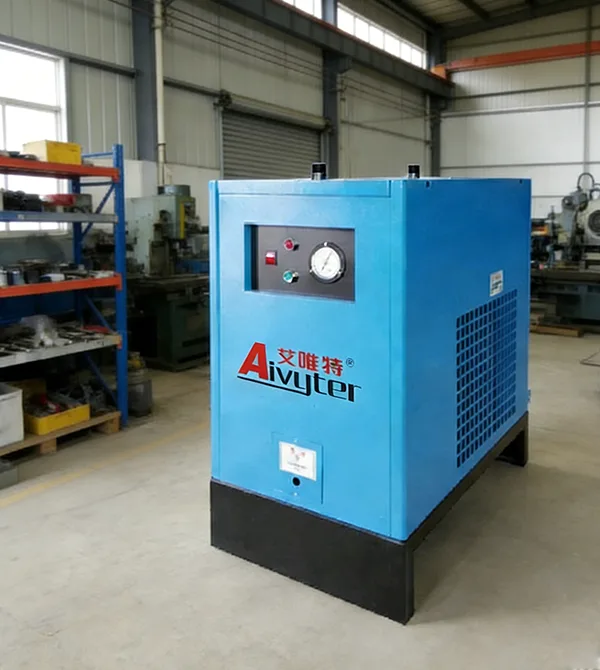
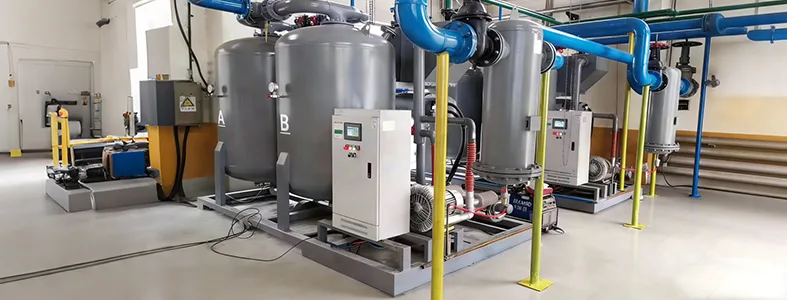
- Stainless steel dryers (refrigerated or desiccant) to prevent downstream rust particles.
- High-efficiency particulate filters (0.01 micron) installed 1.5 meters after the aftercooler.
- Continuous condensate drains with oil detection sensors—any trace of hydrocarbon triggers an alarm.
- Remote monitoring of discharge temperature and vibration, integrated into the plant DCS.
Aivyter provides pre-engineered packages that include dry screw compressors, Class 0 dryers, and predictive analytics software. The company’s field service teams conduct quarterly air quality audits using ISO 8573 sampling kits.
Maintenance Protocols for Long-Term Oil-Free Operation
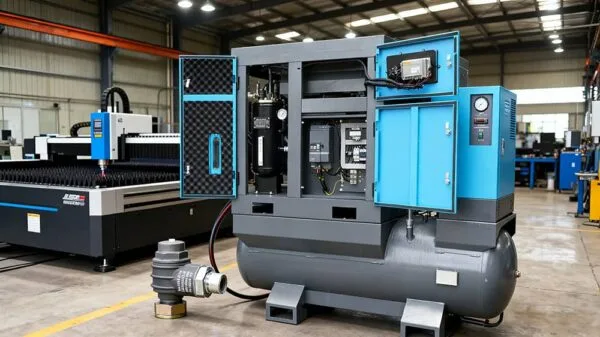
While oil-flooded machines degrade gradually, an oil-free compressor demands disciplined attention to clearances and coatings. Key actions:
- Air filter replacement: Every 1000 hours or when differential pressure exceeds 50 mbar. In dusty mining environments, pre-filters or inertial separators are mandatory.
- Rotor coating inspection: Annually via borescope. Any loss of PTFE layer increases leakage and reduces efficiency.
- Timing gear backlash check: Every 8000 hours. Excessive backlash allows rotor contact, causing catastrophic failure.
- Bearing temperature monitoring: Oil-free screws use grease-packed or oil-mist lubricated bearings (separate from air path). Bearing temperatures above 105°C indicate imminent failure.
Following these protocols ensures an operational life exceeding 80,000 hours for a well-designed industrial oil free air compressor.
Frequently Asked Questions (FAQ)
Q1: What is the difference between “technically oil-free” and ISO 8573-1 CLASS 0 certification?
A1: “Technically oil-free” often means the compression chamber uses no oil, but downstream components (dryers, pipes) may shed hydrocarbons, or the ambient air contains oil vapor. CLASS 0 requires that total oil content (liquid, aerosol, vapor) be below the detectable limit of the analytical method—typically <0.01 mg/m³—measured at the point of use. Class 0 certification involves third-party testing of each compressor model.
Q2: Can an industrial oil free air compressor handle the variable load demands of a mining operation?
A2: Yes, modern units are available with variable speed drives (VSD) that maintain efficiency from 25% to 100% load. For highly fluctuating demand (e.g., pneumatic tools on a construction site), a VSD oil-free screw paired with a small receiver tank provides stable pressure without blow-off losses.
Q3: How does water-injected oil-free compression compare to dry-screw technology for high humidity environments?
A3: Water-injected systems are less sensitive to inlet humidity because water injection suppresses condensation risks inside the air end. However, they require treated (demineralized) water and periodic water quality checks. Dry-screw units are simpler but need effective condensate removal in the intercooler. For tropical mines or outdoor installations, water-injected designs often yield lower life cycle costs.
Q4: What are the signs that my existing oil-lubricated compressor is allowing excessive oil carryover into the system?
A4: Key indicators: oily residue in filter bowls, frequent pneumatic valve sticking, a sharp drop in desiccant dryer efficiency (oil coats desiccant), and increased pressure drop across coalescing filters. An ISO 8573-1 sample test (cost ~$300) provides definitive evidence.
Q5: Does Aivyter offer custom packages for harsh environments like offshore platforms or desert installations?
A5: Yes, Aivyter engineers compressor skids with IP54/IP55 enclosures, stainless steel cooling cores, and high-temperature ambient kits (up to 55°C). Offshore units include salt-air filtration and vibration-isolation mounts. All custom packages retain full Class 0 certification.
Q6: What is the payback period when replacing an aging oil-flooded compressor with a new industrial oil free air compressor?
A6: Based on energy savings, reduced filter costs, and avoided downtime, most heavy industrial users see payback between 18 and 36 months. A cement plant in Germany achieved 22-month payback after eliminating oil-related baghouse filter blinding. For facilities that currently replace coalescing filters every three months, payback drops under 12 months.
Request a Technical Consultation and Quotation
Selecting the correct industrial oil free air compressor requires careful analysis of flow profiles, ambient conditions, and purity requirements. The engineering team at Aivyter provides site-specific simulations, including energy modeling and contamination risk assessments. For critical projects in mining, construction, or process industries, contact our application engineers directly. Provide your system parameters—pressure (bar), capacity (m³/min or CFM), duty cycle, and any third-party certification needs—to receive a detailed proposal and CAD layout within 48 hours.
Send your inquiry now: https://www.aivyter.com/contact or email [email protected]. Include “Oil-Free Project – [Your Industry]” in the subject line for priority handling.
about
Aivyter
We provides trusted air compressors and mining equipment, engineered for durability, efficiency, and demanding industrial applications.