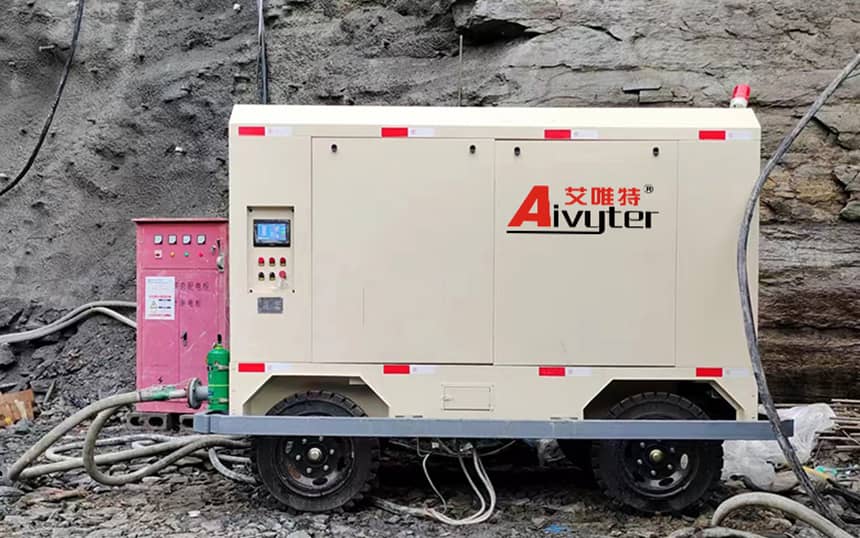
In remote mining exploration, cross-country pipeline maintenance, or disaster recovery operations, a fixed compressed air network does not exist. The solution is a ruggedized industrial portable air compressor that delivers pneumatic power where grid electricity and permanent foundations are absent. This article examines thermodynamic limits, filtration strategies for high-dust environments, real-world duty cycles, and lifecycle cost models specific to towable and skid-mounted units. Drawing from field data across African copper belts, Australian LNG projects, and Andean construction sites, we provide an engineering framework for selecting and operating mobile compressed air assets.
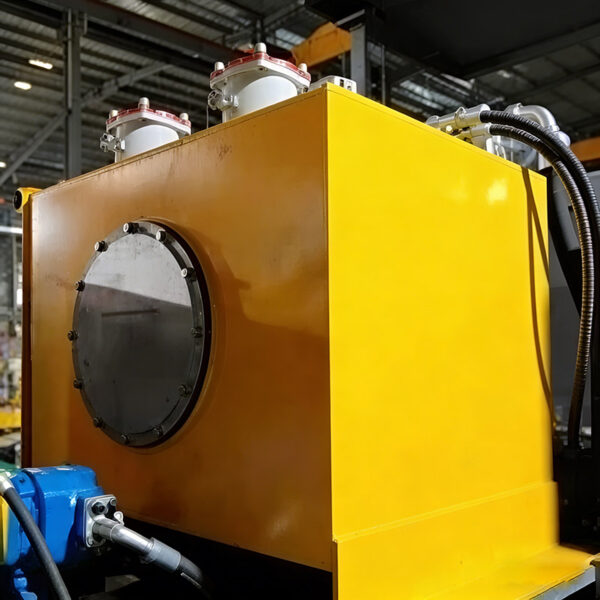
1. Core Architecture: Rotary Screw, Towing Chassis & Prime Mover Configurations
A true industrial portable air compressor integrates three subsystems: compression stage, prime mover, and mobility platform. Each choice carries direct implications for altitude performance, fuel consumption, and maintenance access.
1.1 Compression Element – Oil-Injected Rotary Screw Dominance
Over 95% of portable units above 5 m³/min use oil-injected rotary screw airends. Reasons: continuous 100% duty cycle, tolerance to inlet dust (with proper pre-filtration), and compact dimensions. Single-stage screws deliver pressures up to 17 bar (250 psi); two-stage configurations reach 25 bar for down-the-hole (DTH) hammer drilling. Key specifications to verify: rotor coating (cast iron with PTFE or chrome for abrasive environments) and bearing type (tapered roller vs. cylindrical – tapered handles axial thrust better during start/stop cycles).
1.2 Prime Mover – Diesel vs. Electric vs. Dual-Drive
Diesel-driven industrial portable air compressor units (Tier 4 Final / Stage V) dominate remote sites. At 1,500 rpm nominal, they produce 200–600 kW shaft power. Critical parameters: fuel tank autonomy (8–24 hours), cold-start capability (glow plugs or ether injection for -15°C ambient), and alternator sizing for auxiliary lighting. Electric portable compressors (cable-fed or generator-fed) are preferred in urban construction or tunnels where emissions are restricted. Dual-drive units (diesel + electric motor) offer flexibility but increase weight by 25%.
1.3 Mobility Platforms – Towable, Skid, and Track-Mounted
- Towable (2- or 4-wheel, highway-rated): Axle load ≤3,500 kg per axle; overrun or air brakes; LED lighting board. Drawbar pull capacity must match site terrain.
- Skid-mounted: For helicopter lifting or crane placement on offshore platforms. Lifting lugs certified to DNV 2.7-1.
- Track-mounted (crawler): Extremely soft ground (swamps, arctic tundra). Low ground pressure (<0.5 kg/cm²).
2. Performance Parameters Under Real-World Conditions
Factory performance data (ISO 1217 Annex C) assumes sea level, 20°C, 1 bar. In the field, altitude, humidity, and dust loading degrade output. A competent industrial portable air compressor specification must include derating factors.
- Altitude derating: Above 1,500 m, air density drops; diesel engine loses 3–4% power per 300 m. For compression, volumetric efficiency decreases by 1% per 100 m above 1,000 m. At 3,500 m (typical Andean mine), a sea-level-rated 30 m³/min unit delivers ~22 m³/min.
- High ambient temperature: Above 40°C, intercooler and radiator efficiency falls. Each +5°C reduces oil viscosity and increases discharge temperature by 8–10°C, risking varnish formation. Oversized cooling packages (35% larger core) maintain reliability.
- Inlet dust loading (mg/m³): Heavy construction sites can have 10–50 mg/m³. Standard air filters (10 µm) clog within 200 hours; heavy-duty cyclonic pre-cleaners (efficiency >90% for 5 µm) extend element life to 800–1,000 hours.
3. Application-Specific Engineering: Mining, Pipeline, Well Drilling
Each industry imposes distinct stress profiles on portable compressors. We analyze three high-demand cases.
3.1 Open-Pit and Underground Mining
In hard rock mining, the compressor feeds DTH hammers (pressure 15–25 bar, flow 20–50 m³/min), ventilation bags, and slurry pumps. Common failure modes: engine overheating due to dust-clogged radiators, airend seizure from degraded lubricant (acidic water ingress), and electrical harness damage from vibration. Solutions validated in Chilean copper operations:
- Reversing radiator fans: Automatically reverse flow every 30 minutes to blow off accumulated dust.
- Full-flow bypass oil filtration (1 µm absolute): Combined with oil sampling every 500 hours.
- Vibration-damped control panels (IP65 rating): Eliminate connector fretting.
3.2 Long-Distance Pipeline Construction (Gas/Oil/Water)
Pipeline projects require moving the compressor every 2–5 km for hydrostatic testing (15–30 bar) and pneumatic tools. Key issue: rapid coupling/uncoupling cycles causing pressure spikes and oil carryover. One Trans-Saharan gas pipeline contractor reduced coupling failures by 80% after specifying Aivyter units equipped with soft-start unloaders and integrated receiver tanks. The industrial portable air compressor also included a telemetry module transmitting location, fuel level, and discharge temperature to a central fleet management dashboard.
3.3 Geothermal and Water Well Drilling
Drilling rigs in remote basins require 24/7 compressed air for air-lift reverse circulation. Abrasive rock cuttings (quartz) enter the compressor if the intake is positioned downwind. Solution: elevated intake stacks (4 m height) with inertial separators and a secondary safety filter (99.9% at 2 µm). Additionally, discharge check valves must be heavy-duty spring-loaded type to prevent backflow of drilling mud during shutdowns.
4. Thermal Management & Cooling System Engineering
Portable compressors often operate at high loads in unshaded, dusty areas. A well-designed cooling system differentiates reliable units from chronic overheaters.
- Separated coolers: Engine radiator, oil cooler, and aftercooler arranged side-by-side (not stacked) to avoid heat cascade. Fan drive: hydraulic or belt-driven with a thermostatic clutch.
- High-temperature shutdown logic: Shutdown at 115°C discharge temperature (screw airend) and 105°C engine coolant. Alarm at 105°C / 95°C respectively.
- Coolant type: For diesel engines, use fully formulated OAT (organic acid technology) extended-life coolant. For the compressor oil cooler, brazed plate heat exchangers with 3 mm passage width to resist clogging.
Field data from Middle Eastern construction (50°C ambient, 20% humidity) shows that a portable unit with a 15% oversized fan and pulse-width modulated fan drive maintains discharge temperature below 100°C, while standard units exceed 110°C after 2 hours.
5. Filtration and Air Quality for Sensitive End-Uses
Although portable compressors are often associated with “rough” applications, many require ISO 8573-1 Class 3 or better air – for sandblasting (oil-free to prevent staining), food-grade container cleaning, or instrument air in temporary refineries. Solutions:
- Integrated coalescing filters (0.01 ppm residual oil): Mounted downstream of the aftercooler. Differential pressure gauge required.
- Activated carbon towers: For oil vapor removal (Class 1, ≤0.01 mg/m³).
- Refrigerated air dryers with condensate drains: Achieve +3°C pressure dew point. For -40°C dew point, desiccant dryers with purge regeneration are used but require external power for heaters.
Aivyter offers plug-and-play filtration packages that mount directly on the compressor frame, with quick-couplings for ISO 7241-1 B-series connectors.
6. Total Cost of Ownership (TCO) Model for Mobile Fleets
For a fleet of ten 25 m³/min, 12 bar diesel portable compressors operating 4,000 hours/year in mining, TCO analysis over 5 years reveals:
- Initial purchase (each): $38,000–$55,000 depending on Tier emission level and cooling package.
- Diesel fuel (5 years): Average consumption 12 L/hour at 70% load → 12 L/h × 4,000 h × 5 years = 240,000 L. At $0.85/L = $204,000 per unit. A 12% fuel efficiency difference between brands equals $24,480 over 5 years.
- Maintenance (oil, filters, engine service): $0.035 per m³ delivered → ~$14,000/year per unit → $70,000 over 5 years.
- Major overhaul (airend + engine rebuild at 20,000 hours): $12,000–$18,000.
Thus, selecting a unit with 8% lower specific fuel consumption and extended oil drain intervals (1,000 h vs 500 h) reduces total fleet cost by over $150,000 across five years. Always request fuel consumption maps at 50%, 75%, and 100% load – not just full load figures.
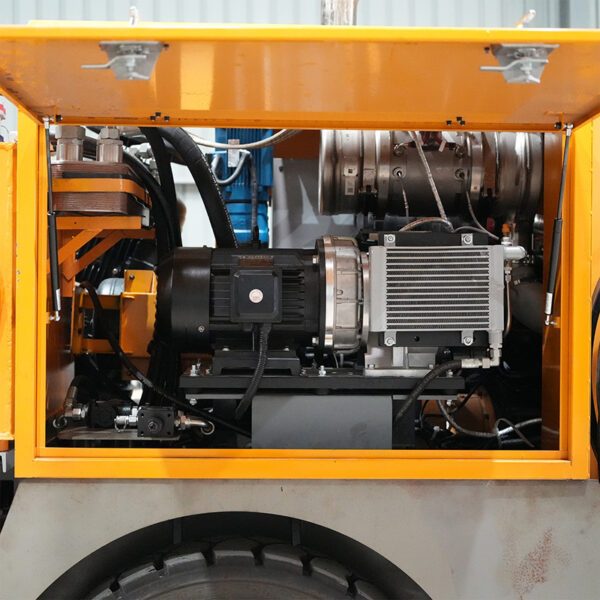
7. Safety & Regulatory Compliance for Portable Units
Mobile compressors must meet transportation and operational safety standards simultaneously.
- Road transport: UN ECE R55 (mechanical couplings), R13 (braking), and local weight limits. Overrun brakes mandatory above 750 kg gross weight.
- Operational safety: ASME Section VIII (receiver tanks), PED 2014/68/EU for Europe. Pressure relief valves set at 10% above maximum working pressure.
- Noise emission: EU 2000/14/EC limits portable compressors to 97 dB(A) at 7 m. Acoustical enclosures with foam-lined panels reduce levels to 85 dB(A).
- ATEX for hazardous areas: If used near flammable vapors (refineries, chemical plants), the compressor must have Ex II 2G (zone 1) certification. Diesel engines require air intake flame arrestor and exhaust spark arrestor.
Aivyter supplies CE, ASME, and ATEX-certified portable packages with full documentation for international projects.
8. Telematics, Remote Monitoring & Fleet Optimization
Modern industrial portable air compressor units are equipped with IoT gateways (4G/ satellite) transmitting real-time parameters: engine RPM, discharge pressure, airend temperature, fuel level, GPS location, and maintenance counters. Fleet managers benefit from:
- Predictive filter change alerts: Based on delta-P and runtime hours, not calendar time.
- Geofencing and anti-theft: Automatic shutdown if moved outside authorized zone.
- Utilization reports: Identify under-used assets to reduce fleet size by 15–20%.
One North Sea offshore contractor reduced unscheduled downtime by 60% after deploying telematics on 45 portable units.
Frequently Asked Questions (FAQ) – Industrial Portable Air Compressors
Q1: How do I size a portable compressor for DTH hammer drilling at 2,500 m altitude?
A1: First calculate required free air delivery (FAD) at sea level for the hammer (e.g., 30 m³/min at 20 bar). Apply altitude correction: at 2,500 m, air density factor ~0.74. Required FAD at sea level = 30 / 0.74 ≈ 40.5 m³/min. Choose a unit rated for 41 m³/min at 20 bar. Also derate diesel engine power by ~25% at that altitude; specify a turbocharged engine with altitude compensation.
Q2: Can I run a portable compressor continuously for weeks in heavy dust?
A2: Yes, with proper measures: (1) cyclonic pre-filter with automatic dust evacuation; (2) secondary safety filter element; (3) oil analysis every 500 hours – increase oil change frequency if silicon >15 ppm; (4) daily radiator cleaning with compressed air (reverse flow). Without these, dust ingestion will erode rotors and cause bearing failure within 2,000 hours.
Q3: What is the typical pressure drop in a 100-meter hose from a portable compressor?
A3: For 2-inch ID hose at 20 m³/min and 10 bar, pressure drop is ~0.3 bar per 100 m. For 1.5-inch ID, drop increases to 1.2 bar per 100 m. Always size hoses for <0.5 bar total drop. Use larger diameter or parallel runs for long distances.
Q4: How often should the airend oil be changed in a diesel-driven portable screw compressor?
A4: Standard mineral-based oil: 500 hours. Full synthetic (PAO-based) can reach 1,000–2,000 hours if oil temperature stays below 95°C and no fuel dilution. However, in high-sulfur fuel environments (diesel >500 ppm sulfur), change oil every 500 hours regardless of type due to acid formation. Always verify with oil analysis.
Q5: What is the advantage of a two-stage portable compressor over a single-stage?
A5: Two-stage compression (low-pressure + high-pressure cylinders) reduces discharge temperature and specific energy. At 20 bar, a two-stage rotary screw consumes 15–18% less fuel than a single-stage. Also, the intercooler removes moisture between stages, reducing load on the aftercooler. The drawback is higher initial cost (+25%) and more complex oil circuits.
Conclusion & Request for Project Inquiry
Selecting a reliable industrial portable air compressor requires matching the compression architecture, cooling capacity, and filtration grade to the specific site conditions – altitude, dust loading, duty cycle, and required air purity. Field data confirms that oversizing the cooling package and specifying telematics provides the lowest total cost of ownership. Aivyter offers engineering consultation, custom-built towable and skid-mounted compressors (diesel/electric, 5–100 m³/min, up to 25 bar), and global after-sales support with genuine parts availability.
For a detailed technical proposal, TCO simulation, or on-site assessment, send your inquiry to Aivyter’s industrial team today.
about
Aivyter
We provides trusted air compressors and mining equipment, engineered for durability, efficiency, and demanding industrial applications.