For plant engineers, procurement managers, and facility operators, the rotary compressor price is often the first figure scrutinized in a capital equipment purchase. However, focusing solely on the initial acquisition cost without analyzing operational expenditures—energy consumption, maintenance intervals, and system integration—leads to distorted lifecycle assessments. Across industries ranging from automotive assembly to chemical processing, the true cost of compressed air ownership reveals that a seemingly economical rotary compressor price can multiply into significant hidden expenses within the first 18 months of operation.
This technical guide dissects the engineering factors that determine rotary compressor price variations across fixed-speed, variable frequency drive (VFD), and oil-free platforms. We examine application-specific requirements, total cost of ownership (TCO) models, and how intelligent procurement—considering air quality class, duty cycle, and remote monitoring—drives long-term profitability. With reference to industry benchmarks and manufacturers like Aivyter, we provide a framework to evaluate quotes beyond the base equipment cost.
1. Deconstructing the Rotary Compressor Price: Core Components and Configurations
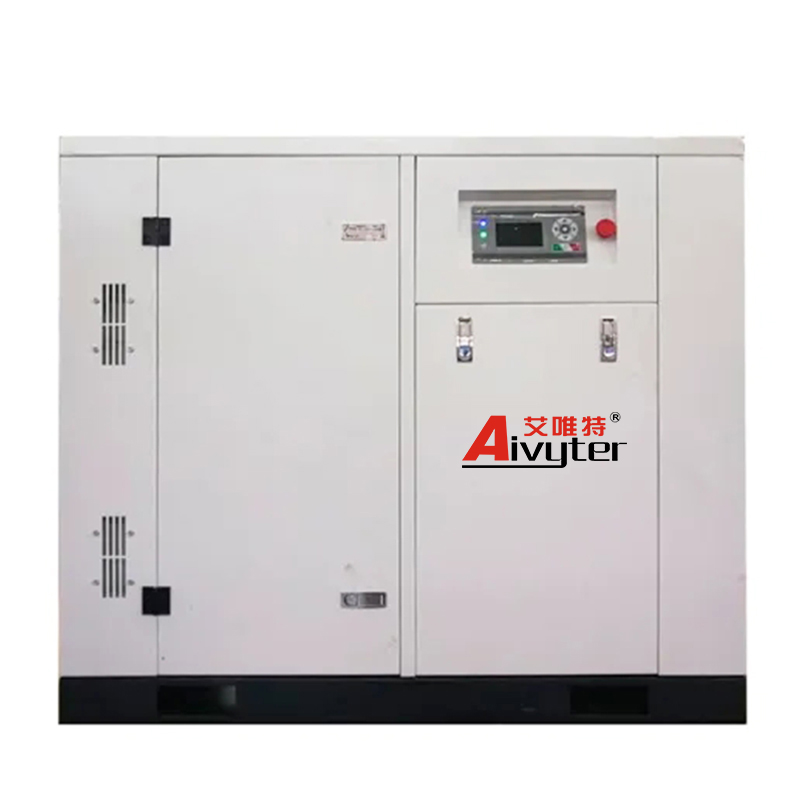
The quoted rotary compressor price for industrial screw units typically bundles several engineered subsystems, each with distinct cost drivers. A bare-ends compressor (air end, motor, and basic chassis) represents only 45–55% of the total package cost in most configurations. The remaining cost distribution includes:
- Drive system: Fixed-speed motors are capital-cost efficient but incur higher energy penalties. VFD-equipped units add 18–25% to the base rotary compressor price but reduce part-load energy consumption by up to 35% in variable demand applications.
- Air treatment integration: Refrigerated dryers, desiccant dryers, and filtration stages (particulate, coalescing, activated carbon) can increase total package cost by 20–40%, depending on the required ISO 8573-1 air purity class.
- Material construction: Stainless steel coolers, corrosion-resistant coatings, and high-grade cast iron air ends command a premium over standard materials but deliver extended service life in harsh environments such as mining or offshore platforms.
- Control interface: Advanced touchscreen controllers with predictive maintenance algorithms and connectivity to IIoT platforms add 5–8% to upfront cost but enable condition-based maintenance that reduces unscheduled downtime.
Procurement professionals should request itemized quotations to evaluate whether a low rotary compressor price reflects stripped-down specifications that will necessitate costly retrofits during installation.
2. Market Segmentation: Fixed-Speed, VFD, and Oil-Free Rotary Screw Compressors
While all rotary screw compressors share a similar operating principle, the choice between fixed-speed, VFD-regulated, and oil-free technologies dramatically alters both capital expenditure and operational economics.
2.1 Fixed-Speed Rotary Screw Compressors
Fixed-speed units dominate the entry-level segment. Their rotary compressor price ranges typically from $8,000 to $25,000 for 15–75 kW models. The lower upfront cost appeals to operations with stable, continuous air demand (e.g., 24/7 manufacturing lines). However, any demand fluctuation forces the compressor to load/unload inefficiently, creating energy waste. For a 55 kW unit operating at 60% average load, the additional energy cost over a VFD alternative can exceed $4,500 annually.
2.2 Variable Frequency Drive (VFD) Compressors
VFD-equipped rotary screw compressors adjust motor speed to match air demand precisely. While the initial rotary compressor price is 20–30% higher than fixed-speed equivalents, payback periods typically range from 12 to 24 months due to energy savings. Additionally, VFD units reduce mechanical stress on bearings and air ends, extending overhaul intervals. For operations with fluctuating demand—such as multiple shift schedules or pneumatic tool networks—VFD technology offers the lowest TCO.
2.3 Oil-Free Rotary Screw Compressors
For critical applications in pharmaceuticals, food processing, and electronics manufacturing, oil-free compressors are mandatory. Their rotary compressor price can be 2.5 to 4 times higher than lubricated equivalents due to precision-coated rotors, specialized bearing systems, and higher-grade materials. However, the cost of contamination-related batch rejection often justifies the premium.
3. Hidden Cost Drivers: Energy, Maintenance, and Downtime
Industry data from the Compressed Air & Gas Institute (CAGI) indicates that over a 10-year lifecycle, energy consumption accounts for 70–80% of total ownership costs, while the initial purchase price represents only 10–15%. Therefore, evaluating a rotary compressor price without analyzing specific power (kW per m³/min) and part-load efficiency is economically imprudent.
- Energy efficiency: A difference of 0.5 kW per m³/min between two similarly priced units translates to $3,000–$5,000 annual energy cost disparity for a 75 kW compressor running 6,000 hours per year.
- Maintenance intervals: Premium synthetic lubricants extend oil change intervals from 2,000 to 8,000 hours, reducing consumable costs and labor. Manufacturers offering extended warranties on air ends often justify a marginally higher rotary compressor price through reduced maintenance frequency.
- Downtime penalties: Unplanned compressor failures in continuous process industries can cost $10,000–$50,000 per hour in lost production. Compressors with redundant cooling systems, remote diagnostics, and rapid parts availability—features typically found in higher-tier equipment—provide insurance against such losses.
4. Application-Specific Selection: Matching Configuration to Demand Profile
The optimal rotary compressor price strategy varies significantly by industry and operational parameters. Below are three typical scenarios with appropriate technology recommendations:
- Automotive Assembly Plant (High Variability): VFD rotary screw compressors (150–300 kW range) with integrated heat recovery. The higher upfront cost is recouped within 18 months through energy savings and reduced peak demand charges. Remote monitoring platforms enable predictive maintenance, aligning with just-in-time production schedules.
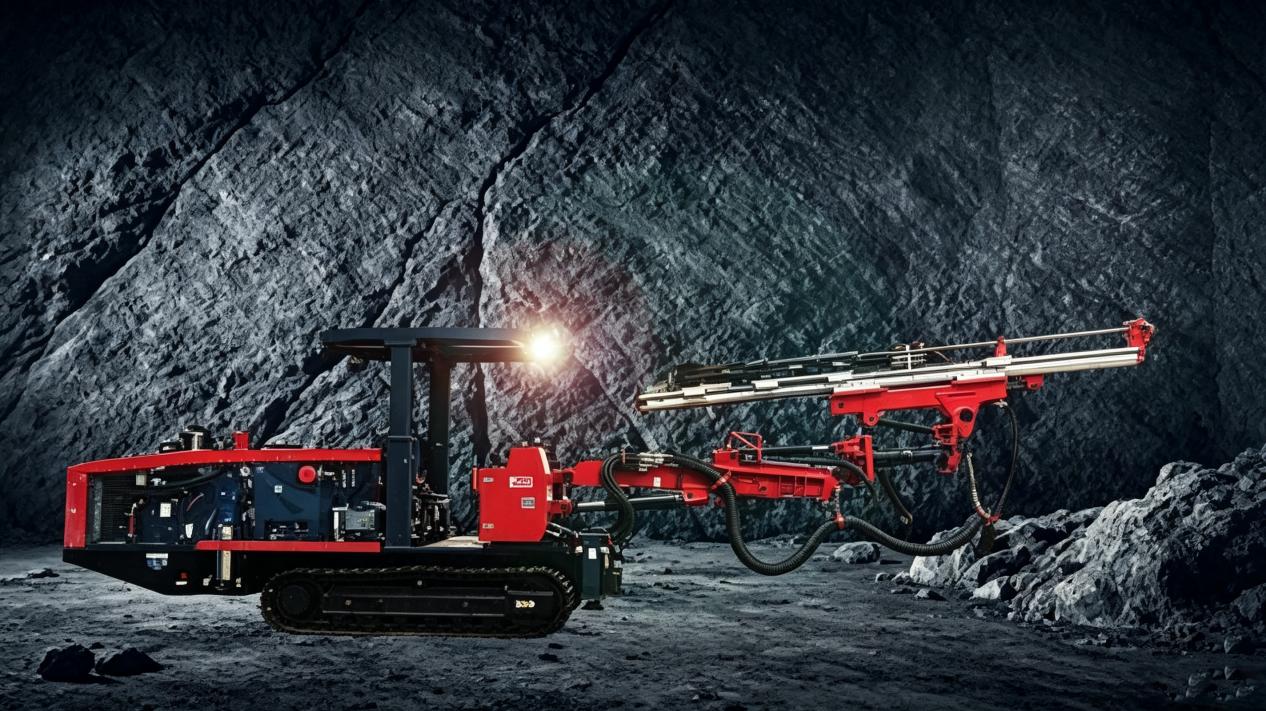
- Mining & Remote Operations (Harsh Conditions): Heavy-duty lubricated rotary screw units with oversized coolers, corrosion-resistant enclosures, and simplified controls. Here, reliability outweighs marginal efficiency gains. A modest increase in rotary compressor price for extreme-duty packages reduces field service costs by 40% over five years.
- Pharmaceutical Cleanroom (Critical Air Quality): Oil-free, Class 0 certified rotary screw compressors with integrated dryers and sterile filtration. The premium rotary compressor price is non-negotiable; however, lifecycle costs can be optimized through centralized system design that reduces redundant units.
Leading equipment suppliers like Aivyter provide application engineering support to model these trade-offs, ensuring that the selected compressor aligns with both short-term budget constraints and long-term operational goals.
5. Total Cost of Ownership (TCO) Model: A Quantitative Framework
A robust TCO analysis for rotary screw compressors considers five primary factors over a 10-year horizon:
- Capital cost: Base rotary compressor price plus installation (foundation, piping, electrical).
- Energy cost: Annual kWh consumption × local industrial rate × operating hours, accounting for part-load efficiency.
- Maintenance cost: Scheduled parts (filters, oil, separators) and labor, plus major overhaul intervals (air end rebuilds).
- Downtime cost: Estimated production loss per event × MTBF (mean time between failures).
- End-of-life residual value: Higher-quality units retain 10–15% residual value versus negligible value for entry-level models.
For a 75 kW compressor operating 6,000 hours annually at $0.10/kWh, a 5% difference in specific power translates to $22,500 in additional energy cost over a decade—far exceeding typical variations in initial rotary compressor price. Procurement teams should demand CAGI data sheets or ISO 1217 performance certifications to validate efficiency claims.
6. Procurement Best Practices: Avoiding Price Traps and Securing Value
To ensure that the selected rotary compressor price reflects true value, adopt the following practices during the sourcing process:
- Require itemized quotes that separate compressor unit, dryer, filters, controls, and installation. This prevents suppliers from obscuring costs.
- Specify efficiency requirements (e.g., IE3 or IE4 motor efficiency class) and demand verification of specific power at both full and 70% load.
- Include a 5- to 10-year maintenance cost projection in the evaluation, factoring in consumables and major overhaul intervals.
- Verify that the quoted rotary compressor price includes factory acceptance testing (FAT) and commissioning support—critical for ensuring warranty validity.
- Consider financing structures: lease or rental options may preserve capital while allowing operational expenditure treatment, though ownership typically yields lower long-term cost for continuous-use scenarios.
Reputable suppliers such as Aivyter provide transparent lifecycle cost calculators and aftermarket support agreements that align with lean manufacturing principles, ensuring that the rotary compressor price represents a strategic investment rather than a transactional expense.
Frequently Asked Questions (FAQs)
Q1: Why do two seemingly identical 75 kW rotary screw compressors have vastly different prices?
A1: Price differences stem from specification variations: motor efficiency class (IE3 vs. IE4), VFD inclusion, air treatment integration (dryer/filters), control sophistication (basic vs. IIoT-enabled), and material quality. Additionally, some quotes exclude essential components like inlet filters, oil, or commissioning, making direct comparison misleading. Always request an itemized scope of supply.
Q2: Is a higher rotary compressor price always justified by lower energy consumption?
A2: Not automatically. However, for compressors operating more than 4,000 hours annually, a VFD unit with a 5–8% higher initial price often delivers energy savings that recoup the difference within 18–24 months. The key is to calculate the payback period using your specific load profile and local electricity tariff. Third-party validation via CAGI performance data is essential.
Q3: How does oil-free technology affect rotary compressor price and maintenance costs?
A3: Oil-free rotary screw compressors typically cost 2–4 times more than lubricated equivalents due to precision engineering and exotic materials. However, maintenance costs are also higher because specialized coatings and bearing replacements require factory-trained technicians. For applications demanding ISO 8573-1 Class 0 air (zero oil carryover), this premium is unavoidable, but lifecycle cost can be optimized by right-sizing the system and incorporating variable speed.
Q4: What hidden costs should I look for beyond the quoted rotary compressor price?
A4: Key hidden costs include electrical installation (higher inrush current for fixed-speed units), foundation or vibration isolation requirements, condensate treatment systems (required for oil-water separation), and extended warranty terms. Also, verify whether the price includes a full set of spare filters and lubricant for the first year; many suppliers exclude these, adding 5–10% to first-year operating costs.
Q5: Can leasing or renting compressors offer a better financial outcome than purchasing?
A5: Leasing preserves working capital and shifts maintenance responsibility to the provider, which is beneficial for projects with uncertain duration or seasonal demand. However, for continuous 24/7 operations, outright purchase with a well-structured service agreement typically yields lower total cost over 7–10 years. Evaluate the net present value of lease payments versus ownership costs, factoring in residual value.
about
Aivyter
We provides trusted air compressors and mining equipment, engineered for durability, efficiency, and demanding industrial applications.