In underground infrastructure development—whether for rail tunnels, water conveyance, or mine development—the choice of a tunneling drill dictates advance rates, ground support requirements, and overall project economics. Unlike conventional surface drilling, tunnel excavation demands equipment that combines high precision in confined headings with the ability to adapt to rapidly changing rock mass conditions. Over the past decade, the convergence of electro-hydraulic control, real-time geotechnical sensing, and tele-remote operation has fundamentally changed how tunnel development is executed.
With extensive experience in hard-rock tunneling and underground construction, I have observed that projects failing to match the tunneling drill configuration to the specific ground conditions often face 20–30% cost overruns due to overbreak, slow cycle times, or excessive consumable wear. This article provides a technical deep-dive into modern tunnel drilling systems—covering equipment classes, automation maturity, ground interaction dynamics, and total cost of ownership (TCO) optimization. Industry solutions from manufacturers such as Aivyter are referenced as examples of integrated systems that address these engineering challenges.
1. Core Classification of Tunneling Drills: From Drill Jumbos to Specialized Bolters
A tunneling drill is not a single machine category but a family of equipment designed for distinct phases of tunnel excavation: face drilling, rock reinforcement, and probe/grout hole drilling. Understanding these functional classes is critical for fleet planning.
1.1 Face Drilling Jumbos (Boom Rigs)
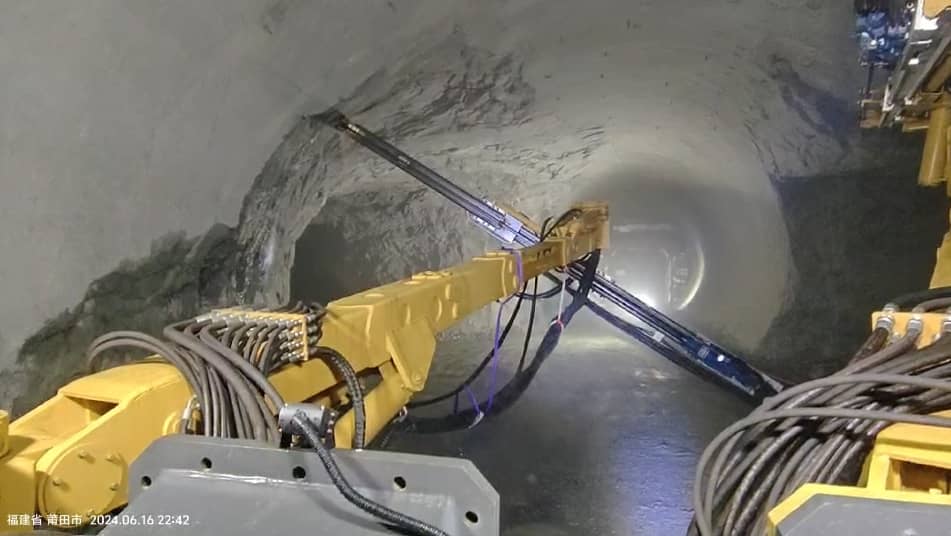
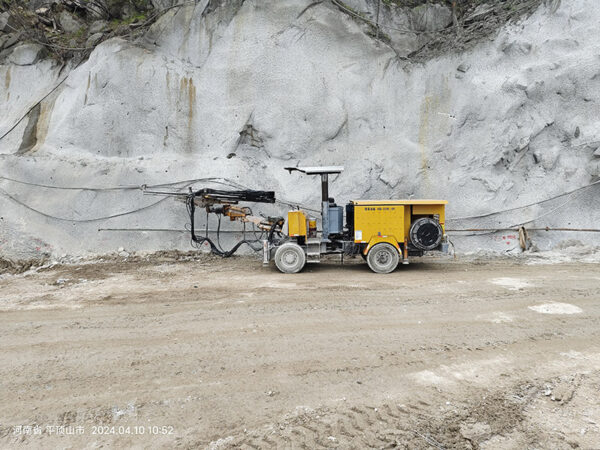
- Application: Drill blast holes in the tunnel face for drill-and-blast cycles. Typically equipped with one to three hydraulic booms carrying rock drills (drifters). Hole diameters range from 35 mm to 64 mm, with depths up to 5.5 meters per cycle.
- Key technical features: Boom positioning accuracy (±2 cm), automatic parallel holding, and pattern storage. Modern jumbos integrate laser-assisted alignment and drill navigation to maintain profile control even in poor ground.
- Productivity metrics: A two-boom jumbo can complete a 50-hole face pattern (3.5 m advance) in 2.5–3 hours, depending on rock hardness and operator skill.
1.2 Roof Bolting and Ground Support Rigs
- Dedicated platforms for installing rock bolts, mesh, and shotcrete. These rigs often feature telescopic booms, dual-purpose drill/bolting heads, and automated bolt carousels. Reliability directly impacts tunnel stability and worker safety.
- Emerging trend: Combination jumbos that switch between drilling blast holes and installing bolts in the same shift, reducing equipment movement and congestion in narrow headings.
1.3 Probe Drill and Grout Rigs
- Used for geotechnical exploration ahead of the face to detect water-bearing faults or weak zones. Equipped with long-feed extensions (up to 20–30 m) and real-time data logging of penetration rate, torque, and flushing return pressure.
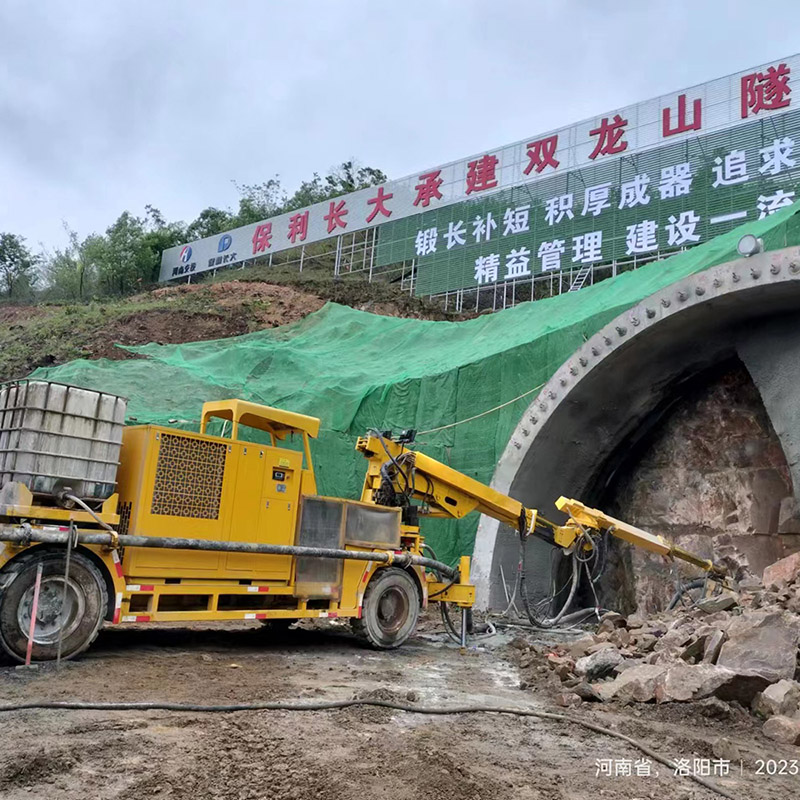
Leading OEMs like Aivyter have developed modular tunneling drill platforms that allow a single carrier to accept different booms and feeds—reducing capital cost and simplifying spare parts inventory.
2. Technical Selection Criteria: Geotechnical Matching and Automation Readiness
Selecting a tunneling drill based solely on drilling speed ignores the critical relationship between machine parameters and rock mass behavior. A geotechnical-driven approach reduces dilution and ensures round integrity.
2.1 Rock Hardness and Drifter Selection
- UCS 100–200 MPa (medium to very hard rock): Requires high-impact drifters (25–35 kW) with variable percussion frequency. Hydraulic drifters with independent rotation provide the best energy transfer.
- Abrasivity (Cerchar Abrasivity Index > 4.5): Demands tungsten-carbide bits with optimized flushing; automated flushing control that adjusts flow based on penetration rate prevents premature bit wear and hole deviation.
2.2 Tunnel Cross-Section and Boom Configuration
- For small cross-sections (< 20 m²), a single-boom rig offers the best maneuverability. For large road tunnels (80–120 m²), three-boom jumbos minimize cycle time by allowing simultaneous drilling in multiple zones.
- Boom coverage and articulation angles must allow drilling of corner holes without repositioning the carrier—a critical factor for round profiles and smoothwall blasting.
2.3 Automation Architecture and Data Integration
Modern tunnel projects increasingly require rigs capable of Level 2 (semi-automated drilling cycles) or Level 3 (remote operation with pattern management). Look for CANbus-based controllers, open protocols (OPC-UA), and pre-installed sensors for monitoring rotation torque, feed pressure, and impact pressure. The ability to store and recall face patterns reduces cycle time variability by 15–25% and ensures consistent profile control.
The tunneling drill platforms offered by Aivyter incorporate these automation features natively, allowing tunnels to transition from manual operation to semi-autonomous drilling without major hardware retrofits.
3. Automation and Remote Operation: Safety and Consistency in Tunnel Development
Automation in tunneling drilling is driven by two imperatives: removing operators from unsupported faces during the most hazardous phase of the cycle, and achieving consistent blast geometry to reduce overbreak and support costs.
3.1 Automation Levels in Tunnel Drilling
- Level 1 – Manual: Operator controls each function via joysticks. Still used in highly variable ground where human adaptation is essential.
- Level 2 – Semi-Automated / Single-Cycle: After positioning, the rig executes the full drilling cycle (collaring, drilling, retraction) automatically. Reduces operator fatigue and standardizes hole quality.
- Level 3 – Supervised Remote: Operator manages multiple rigs from a control cabin away from the face. Telemetry includes real-time penetration rates and consumable wear indicators. Collision avoidance and pattern execution are autonomous.
- Level 4 – Fully Autonomous: Rig navigates, positions, drills, and performs rod changes without human intervention. Currently deployed in high-volume mining tunnels and large infrastructure projects with standardized geology.
Field data from Norwegian and Canadian tunnel projects show that migrating from manual to Level 3 remote operation increases productive drilling time by 30–40% per shift, eliminates exposure to scaling-related hazards, and reduces overbreak by an average of 12% through consistent drilling angles.
4. Addressing Critical Industry Pain Points in Tunneling Drilling
Despite advances, tunnel drilling operations face persistent technical challenges. Each requires a combination of hardware robustness and data-driven countermeasures.
4.1 Overbreak and Profile Control
Overbreak (excavation beyond the designed profile) increases concrete lining volumes and support costs by up to 20%. Root causes include incorrect boom positioning, worn drill steels, and inconsistent collaring. Solutions:
- Laser-guided boom positioning with automatic parallel holding.
- Digital pattern storage that accounts for last round’s survey data.
- Real-time deviation monitoring using inclinometers on each boom.
4.2 Collaring in Fractured or Seamy Ground
Collaring in fault zones often leads to hole misalignment or bit pinning. Modern tunneling drills incorporate low-speed high-torque rotation for initial collaring and automated flushing pre-start routines. Some systems detect ground conditions by monitoring torque spikes and automatically reduce percussion energy until the bit is fully embedded.
4.3 Drill String Sticking and Rod Breakage
Sticking accounts for a significant portion of unplanned downtime. Advanced control systems with adaptive anti-jamming logic can reverse the drill string at micro-second speeds, reducing rod breakage by up to 35% in laminated or foliated rock formations. The tunneling drill platforms featuring such smart control algorithms have demonstrated lower consumable costs over extended tunnel drives.
4.4 Maintenance Accessibility and MTTR Reduction
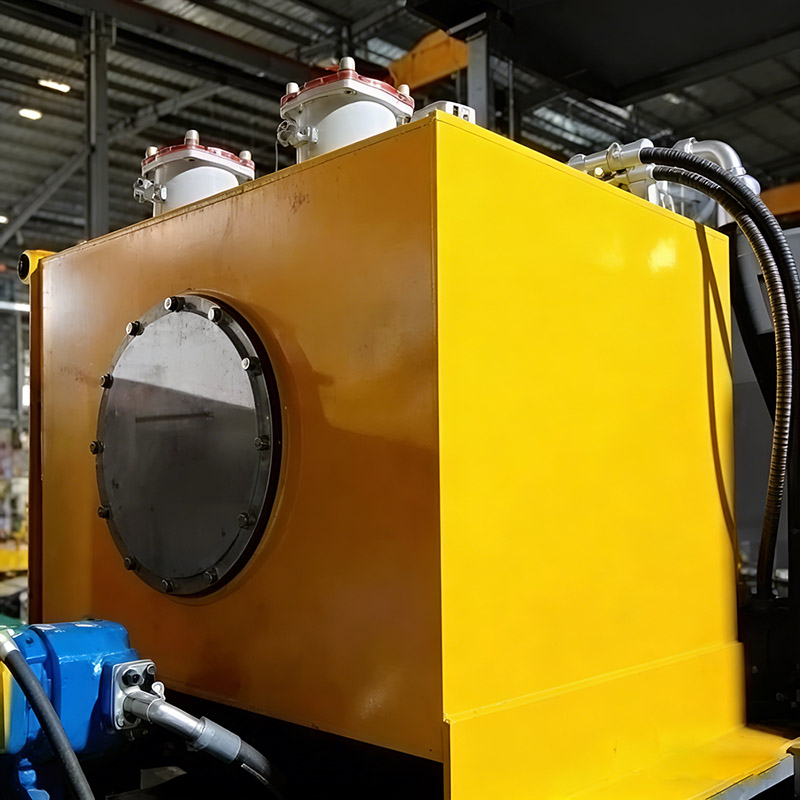
Congested engine bays and buried hydraulic components increase mean time to repair (MTTR). Modular design—such as quick-release drifters, centralized greasing panels, and remote diagnostic ports—enables maintenance crews to perform major component swaps in less than 4 hours underground. Aivyter’s modular cassette design for drifters and feed systems exemplifies this approach.
5. Optimizing Total Cost of Ownership (TCO) in Tunnel Development
Capital expenditure is often the focus, yet over a typical 5-year tunnel project, operational and maintenance costs account for 65–75% of TCO. A comprehensive TCO analysis for any tunneling drill must include:
- Energy consumption: Electro-hydraulic rigs with variable-speed pumps reduce kWh per drilled meter by 20–30% compared to fixed-displacement systems.
- Consumable life: Automated drilling cycles that prevent overload can extend bit life by 15–25% and rod life by 30%.
- Labor efficiency: With Level 3 automation, one operator can manage two jumbos simultaneously, reducing labor cost per cubic meter by up to 35%.
- Spare parts availability and support: Manufacturers with regional distribution hubs and predictive analytics minimize downtime caused by logistics.
Data from tunnel contractors in the Alps and Scandinavia show that adopting advanced tunneling drill fleets with integrated telemetry reduces cost per drilled meter by an average of 18% within the first two years, driven primarily by lower consumable consumption and higher utilization.
6. Future Trends: Electrification, Digital Twin Integration, and Sustainability
The next generation of tunneling drilling is shaped by three major forces: battery-electric powertrains, digital twin applications, and zero-waste drilling systems.
- Battery-electric tunneling drills: Eliminate diesel particulate matter and reduce ventilation costs. Early adopters report up to 50% savings on ventilation energy when converting fleets to battery-electric units. Aivyter has developed electric-hydraulic platforms that maintain full shift performance with swappable battery packs.
- Digital twins and predictive analytics: By feeding real-time rig data (torque, feed, penetration) into a geological model, tunnels can predict fault zones before the bit encounters them, adjusting drilling parameters proactively to avoid deviation and jamming. This reduces unscheduled support and re-drilling.
- Water-efficient drilling: Prototype foam-assisted flushing systems reduce water consumption by up to 60% and minimize sludge handling, critical in environmentally sensitive projects.
Mining and infrastructure owners now demand that tunneling drill fleets integrate with centralized project management software—tracking not just meters drilled but also energy per meter, bit wear trends, and operator performance. This data-centric approach aligns with the E-E-A-T principles of modern industrial engineering, where authority is established through verifiable operational data rather than anecdotal claims.
Selecting and operating a tunneling drill today demands a multi-disciplinary approach: geotechnical assessment, automation strategy, lifecycle cost analysis, and a clear roadmap for future integration. Manufacturers like Aivyter have responded with platforms that balance rugged mechanical reliability with digital intelligence—allowing tunnel contractors to achieve higher advance rates while reducing safety risks and operational expenses. As the industry moves toward fully autonomous, electrified, and data-centric tunneling, the drilling fleet will remain the critical bottleneck and the primary opportunity for value creation.
Frequently Asked Questions (FAQ)
Q1: What are the key differences between a face drilling jumbo and a production drilling rig used in mines?
A1: A face drilling jumbo is designed for drilling blast holes in a tunnel or mine heading, typically with boom-mounted rock drills, high positioning accuracy, and pattern storage. In contrast, a production drill is used for longhole stoping or fan drilling, with emphasis on hole depth, deviation control, and automated rod handling. While both fall under tunneling drill categories, their operational focus differs: jumbos prioritize profile control and cycle speed, whereas production drills prioritize hole accuracy over long distances.
Q2: How does automation affect tunneling drill productivity and safety in urban tunnel projects?
A2: Automation—especially Level 3 supervised remote operation—allows operators to work from a secure control room away from the face, eliminating exposure to falling rock and dust. Productivity gains come from reduced idle times (no shift change pauses) and consistent drilling parameters. In urban tunnels with strict vibration limits, automated rigs maintain controlled penetration rates, minimizing overbreak and adjacent structure disturbance. Projects report 30–40% higher meters per shift after implementing remote operation.
Q3: What maintenance strategy minimizes downtime for tunneling drills in hard rock?
A3: Condition-based maintenance (CBM) using real-time telemetry outperforms fixed intervals. Key practices: daily monitoring of drifter accumulator pressures; vibration analysis on feed motors every 250 operating hours; hydraulic oil particle count at 500-hour intervals; and inspection of boom bushings for wear every 100 hours. Telemetry systems that flag anomalies—such as rising rotation torque or increased percussion pressure—enable proactive repairs before catastrophic failures occur.
Q4: How do I decide between a diesel-powered and a battery-electric tunneling drill?
A4: The decision hinges on tunnel length, ventilation capacity, and recharging infrastructure. Diesel rigs are practical for short tunnels where ventilation is already in place. Battery-electric rigs offer lower operating cost per meter, zero emissions, and reduced heat load—critical for long tunnels (over 2 km) where ventilation costs escalate. Perform a TCO analysis including ventilation energy, fuel, and battery replacement cycles; many operations achieve payback in less than three years with battery-electric units.
Q5: What are the main advantages of the Aivyter tunneling drill series over conventional equipment?
A5: The Aivyter tunneling drill series (e.g., AZT1-7200 platform) integrates a modular cassette design for drifters and feeds, reducing MTTR by approximately 30% compared to traditional layouts. The adaptive anti-jamming system and tele-remote readiness enable seamless transition to autonomous operations. Additionally, the energy-recuperation hydraulic system reduces power consumption by about 18% versus standard load-sensing circuits. Fleet operators also benefit from Aivyter’s global parts support and predictive maintenance analytics included with the machine telemetry package.
Note: Performance and economic data cited are based on documented case studies, manufacturer specifications, and independent engineering publications. Actual results may vary with geological conditions and operational practices.
about
Aivyter
We provides trusted air compressors and mining equipment, engineered for durability, efficiency, and demanding industrial applications.