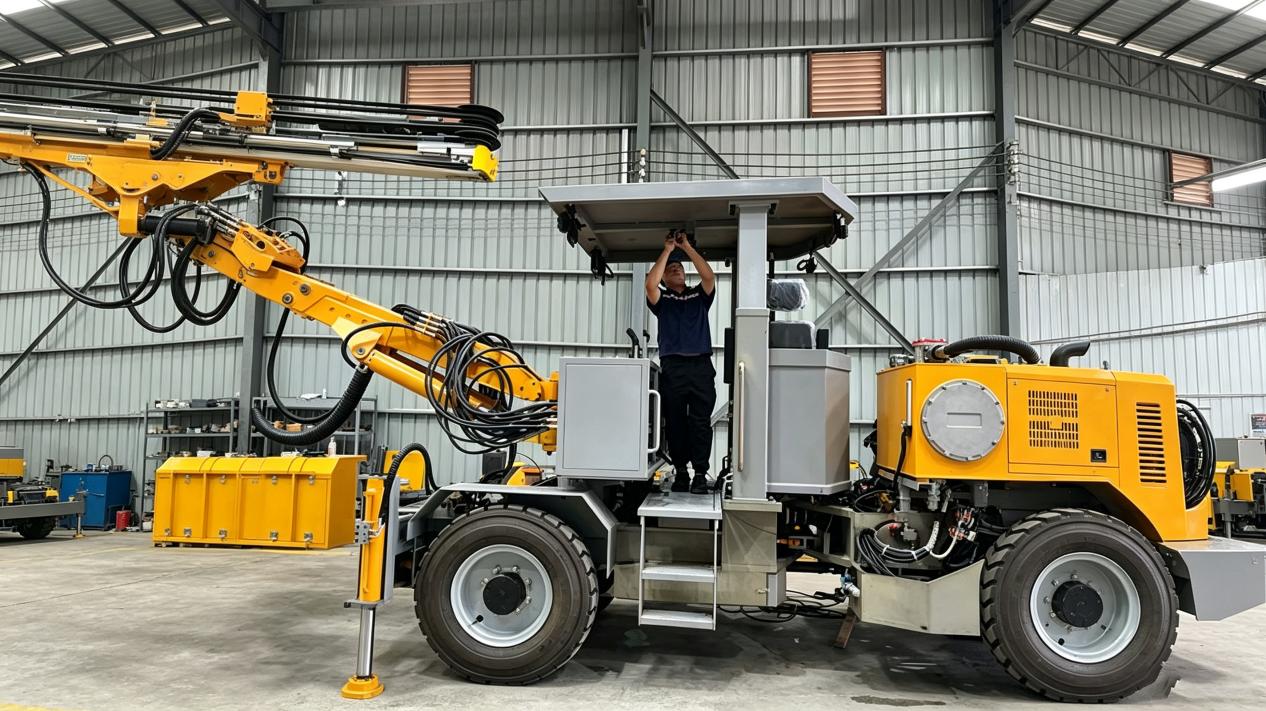
Underground mining development follows a series of connected operations. A working face is prepared, holes are drilled, blasting follows the site plan, and broken material is removed before the next round begins. Within this sequence, drill rigs are mainly used for face drilling. They prepare the required holes and then move to another working area as excavation advances.
For an underground drilling rig, the drilling task is closely linked to the tunnel profile, hole specifications, face coverage, and machine mobility. These factors determine how the equipment fits into repeated drilling rounds without extending its role beyond the work it is designed to perform.
Where Does Drilling Fit in Underground Mining?
Drilling takes place after the working face is accessible and before the following excavation operation.
A simplified sequence is:
Face preparation → rig positioning → drilling → blasting → mucking → next drilling round
The drill rig is mainly involved in positioning and drilling. It travels to the working face, establishes a suitable operating position, and places the drilling system according to the planned hole layout.
After the drilling work is completed, the machine can move away from the immediate face while subsequent operations take place. Once the area is ready for another drilling round, the rig can be repositioned at the new face.
This repeated movement makes mobility part of the machine’s practical use in underground development.
How Does a Drill Jumbo Prepare the Face?
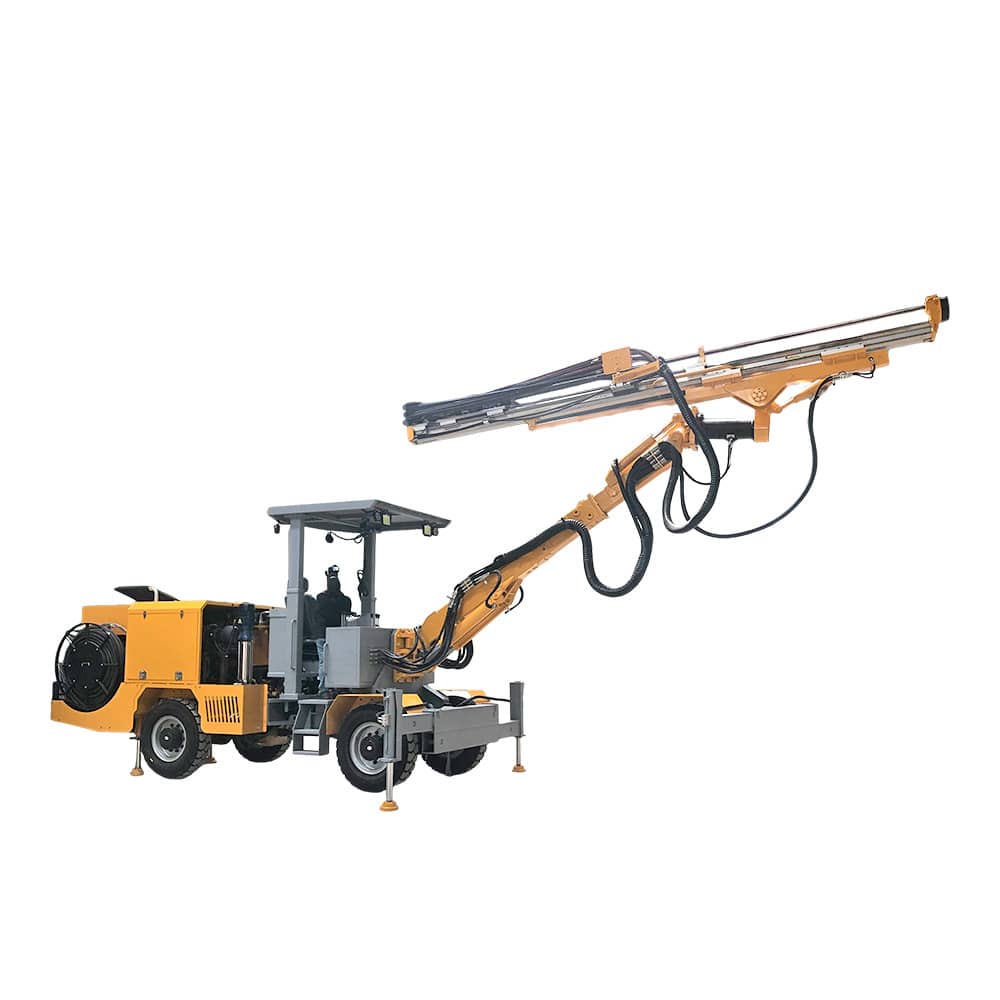
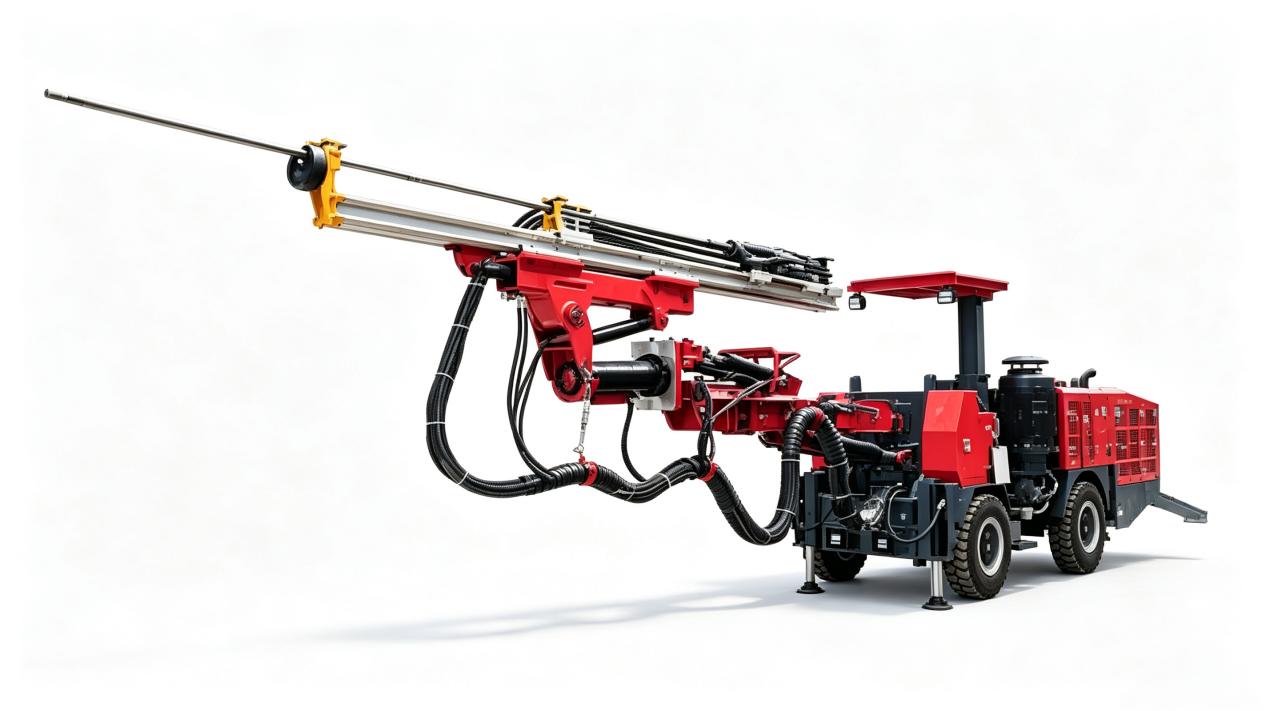
An underground drill jumbo combines a carrier, boom, feed, and drilling system for mechanized face drilling. The boom positions the drilling assembly, while the drilling system performs the rock drilling.
The appropriate configuration depends on the excavation dimensions and drilling requirements. The available product range includes different boom arrangements and machine sizes for underground mining and tunneling applications.
For example, the AZT-125 is listed for cross sections from 2 × 2 m to 5 × 4 m, while the AZT1-6500 is listed for approximately 3 × 3 m to 5 × 6.5 m.
These ranges provide a reference when comparing the machine with the dimensions of the working face.
Why Does Face Coverage Matter?
The drilling pattern determines where holes need to be placed across the working face. The rig should therefore provide sufficient boom movement and drilling coverage to reach those positions from its operating location.
Single-boom and double-boom configurations offer different drilling arrangements. A single-boom machine uses one drilling assembly, while a double-boom machine provides two assemblies for the working area.
The product range includes double-boom models such as the AZT2-9700 alongside other underground drill jumbo configurations.
The choice depends on the tunnel dimensions, drilling pattern, and project requirements. A larger boom configuration is not necessarily suitable for every underground working area.
How Do Hole Specifications Affect Drilling?
Hole diameter is one of the specifications that connects the rig with the planned drilling work.
Different models cover different drilling ranges. The AZT-125 is specified for a drilling diameter of 45–115 mm, while the AZT1-6500 is listed at 43–102 mm.
These ranges can be compared with the hole dimensions required for a particular project.
The practical starting point is the drilling plan. Once hole specifications have been established, contractors can check whether the drilling system corresponds with those requirements. This provides a more useful basis for equipment evaluation than comparing machines by overall size alone.
Why Does Mobility Matter Between Drilling Rounds?
As underground development progresses, the working face moves forward. After one drilling round is completed, the rig can be repositioned for the next face.
Carrier and transmission characteristics become relevant during this movement.
The underground drill jumbo range uses diesel-powered carriers, with hydrostatic transmission specified for relevant models. The AZT1-6500, for example, uses a hydrostatic drive walking system and has a listed running speed of up to 7.2 km/h.
Movement requirements vary with tunnel width, access routes, gradients, and the distance between working areas. These conditions should be considered when evaluating a drilling rig machine for a particular underground project.
How Do Machine Dimensions Affect Repositioning?
Underground equipment operates within confined spaces, so machine dimensions can affect access to and movement around the working face.
Turning radius, ground clearance, overall dimensions, and boom reach are among the specifications that can be reviewed.
The AZT1-6500, for example, lists a minimum turning radius of 3,450 mm inside and 5,510 mm outside, together with 330 mm ground clearance.
Such figures can be compared with existing underground routes before equipment is selected. A rig with suitable drilling specifications also needs to fit the physical space available at the site.
What Changes as the Working Face Advances?
The drilling location changes as excavation moves forward. The rig completes the required holes at one face, relocates, and establishes a new position for the next round.
The sequence can be summarized as:
Reach the face → position the rig → drill → relocate → repeat
The time required for each step varies according to the mine layout, drilling pattern, rock conditions, and operating procedures.
For this reason, the role of an underground mining drill rig should be considered in terms of repeated face access and drilling rather than as a machine responsible for the entire mining process.
What Does the Hydraulic System Contribute?
Hydraulic systems support several functions on an underground drill jumbo. Depending on the machine configuration, hydraulic control can be used for propulsion, boom movement, impact, and rotation.
The AZT1-6500, for example, uses hydraulic systems for propulsion, impact, and rotation.
During face drilling, these functions allow the drilling assembly to be positioned and operated. After the drilling round, the drive system supports movement toward another working area.
Hydraulic operation is therefore part of the machine’s overall drilling and positioning arrangement.
How Should Drill Rigs Be Evaluated Within the Cycle?
A drilling rig performs one stage of a larger underground development process. Its practical use can be viewed through three basic activities:
Access: The carrier moves the rig to the working face.
Drilling: The boom and drilling system create the planned holes.
Repositioning: The machine moves toward the next working area after the drilling round.
This is why drilling diameter alone does not describe how a rig fits into underground production. Face coverage, boom configuration, machine dimensions, hydraulic functions, and mobility also affect its use.
The focus should be on whether these specifications correspond with the actual drilling requirements and access conditions of the project.
What Should Be Checked Before Selecting a Drill Rig?
Several specifications can be reviewed when matching underground mining equipment with a drilling application:
- Drilling diameter:Compare the machine’s range with the required hole dimensions.
- Boom configuration:Check whether the available arrangement covers the working face.
- Cross-section range:Match the machine with the tunnel or excavation profile.
- Machine dimensions:Consider access, turning space, and working clearance.
- Hydraulic system:Review the functions required for drilling and positioning.
- Transmission and mobility:Consider the routes between working areas.
These factors provide a practical basis for comparing underground drilling equipment.
As the working face advances, the rig is repositioned for each new drilling round. Its drilling range, face coverage, dimensions, and mobility all influence whether the machine fits the conditions of the working area.
FAQ
What is the main role of a drill rig underground?
It performs mechanized face drilling and prepares holes for the planned excavation sequence.
Why is drill jumbo mobility important?
The rig needs to move between working areas as the underground face advances.
What does boom configuration affect?
It affects the drilling positions and face coverage available from the rig’s operating position.
Why does drilling diameter matter?
The drilling range should correspond with the hole dimensions required for the project.
Which specifications should be compared?
Drilling range, boom configuration, dimensions, hydraulic functions, and mobility are relevant.
about
Aivyter
We provides trusted air compressors and mining equipment, engineered for durability, efficiency, and demanding industrial applications.