Single Stage Air Compressor: Complete Professional Guide
A single stage air compressor is an essential tool for a wide range of applications, offering efficient air compression in a single piston stroke. In this guide, we’ll walk you through everything you need to know—from how these compressors work to their key benefits and best use cases. Whether you’re tackling DIY projects or professional tasks, this article will help you choose the right compressor, use it effectively, and maintain it for long-term reliability.
What is a Single Stage Air Compressor?
A single stage air compressor utilizes one piston stroke to compress ambient air to the desired pressure level, typically ranging from 100 to 150 PSI. This compression mechanism occurs in a single cylinder, where air is drawn in, compressed, and then delivered to a storage tank in one continuous motion.
How Single Stage Air Compressors Work
The Compression Process in Single Stage Air Compressors
Intake of Ambient Air
Single stage air compressors begin their operation with the intake of ambient air through an inlet valve. This valve opens to allow atmospheric air to flow into the cylinder. During this stage, the piston moves downward, creating a low-pressure area that draws air into the chamber.
Compression of Air in a Single Piston Stroke
Once the air is drawn in, the piston moves upward in the cylinder. This upward stroke compresses the air into a smaller volume, increasing its pressure. Unlike multi-stage compressors, a single stage air compressor performs this entire compression process in one stroke, which simplifies the system and makes it suitable for applications requiring moderate pressure levels, typically around 100-120 PSI.
Delivery of Compressed Air to the Storage Tank
After compression, the high-pressure air is pushed through the discharge valve and delivered to the storage tank. This tank stores the compressed air, making it readily available for use. A check valve ensures that the compressed air does not flow back into the cylinder when the piston returns to the intake stroke.
Key Components of Single Stage Air Compressors
Inlet Valve
The inlet valve controls the entry of ambient air into the cylinder. Its operation is synchronized with the piston’s movement, ensuring efficient air intake during the downward stroke.
Piston and Cylinder
The piston and cylinder are the core components responsible for compressing the air. The piston’s motion, powered by an electric motor or an internal combustion engine, creates the mechanical force required to compress the air. The cylinder serves as the chamber where this compression occurs.
Discharge Valve
The discharge valve releases the compressed air from the cylinder into the storage tank. It prevents the reverse flow of air during the intake phase, maintaining system efficiency and pressure stability.
Storage Tank
The storage tank is where the compressed air is stored until needed. It ensures a steady supply of air for tools and machinery. Tanks are equipped with safety features like pressure relief valves to prevent over-pressurization.
Pressure Switch and Regulator
The pressure switch monitors the air pressure in the storage tank and controls the compressor’s motor. When the tank pressure drops below a preset level, the switch activates the compressor to refill the tank. The regulator allows users to adjust the output pressure, ensuring compatibility with specific tools or processes.
Comparing Air Compressor Types
Single Stage vs. Two Stage Air Compressors
Compression Mechanics and Stages: Single stage air compressors compress air in a single stroke, where the piston completes the entire compression process in one cycle. In contrast, two stage compressors use two separate strokes, with the first stage compressing air to an intermediate pressure, and the second stage further compressing it to a higher pressure.
Pressure Output: Single stage air compressors deliver 100-150 PSI; two stage compressors exceed 175 PSI for heavy industrial use.
Energy & Costs: Single stage models have lower energy use, initial cost, and maintenance; two stage compressors require higher investment and upkeep.
Single Stage vs. Rotary Screw Air Compressors
Operational Principles: Single stage uses piston compression; rotary screw uses helical screws for continuous compression.
Duty Cycles: Single stage for intermittent use; rotary screw for continuous industrial operation.
Noise & Space: Single stage is compact/noisy; rotary screw is quiet/large and stationary.
Single Stage vs. Scroll Compressors
Technology: Single stage uses piston-cylinder; scroll compressors use spiral scrolls for smooth operation.
Oil-Free Capabilities: Scroll compressors are oil-free (food/medical grade); single stage relies on lubrication.
Maintenance: Scroll compressors have fewer parts and lower maintenance needs.
Application-Specific Selection Guide
Light Duty Tasks (<100 PSI)
Tire inflation, small pneumatic tools – single stage compressors are the most cost-effective choice.
Medium Duty Operations (100-150 PSI)
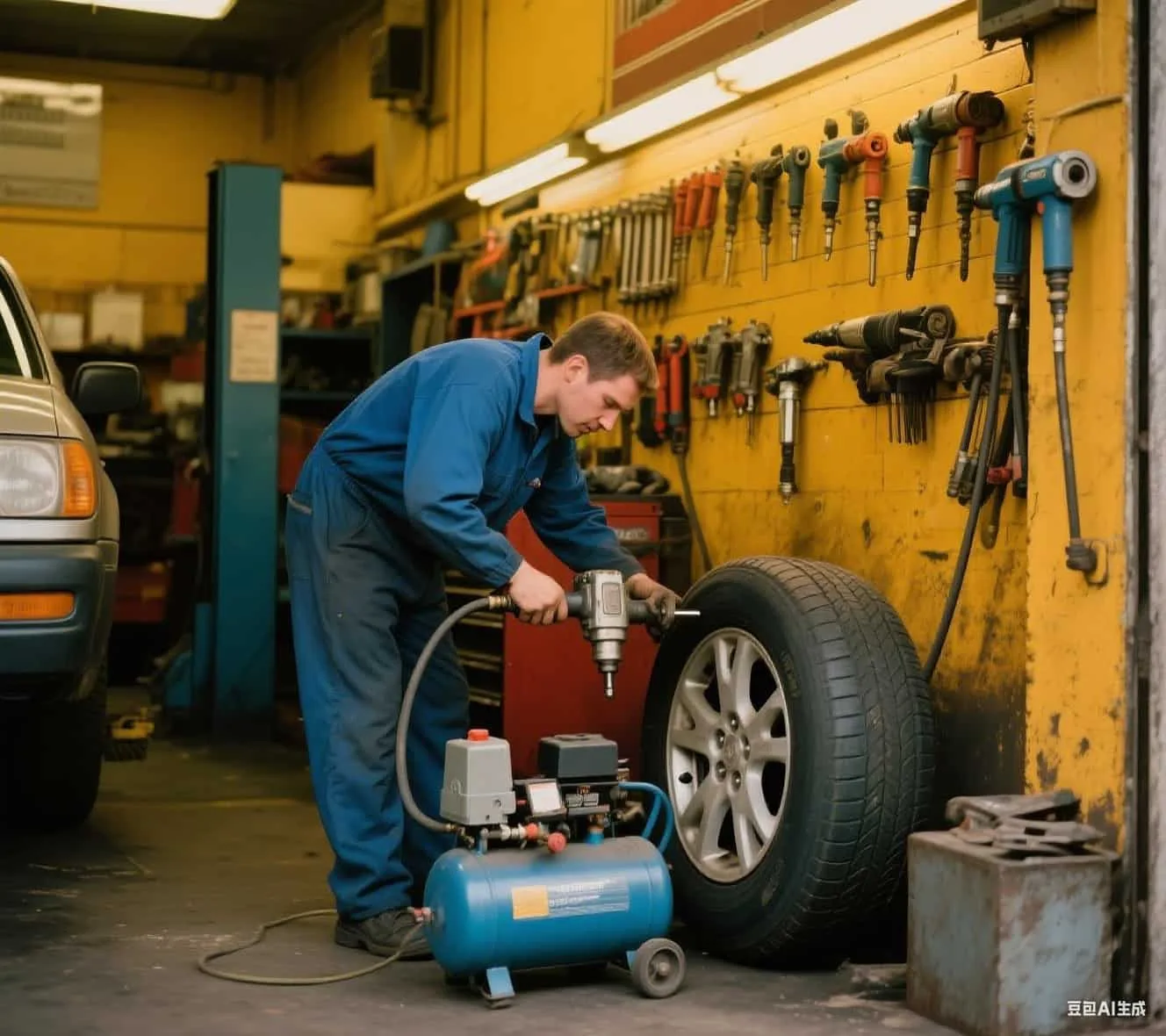
Impact wrenches, nail guns, spray painting – single stage compressors are the ideal solution.
Heavy Duty Requirements (>150 PSI)
Manufacturing, large construction – two stage or rotary screw compressors are recommended.
Industry-Specific Recommendations
- Automotive Repair: Single stage for tire inflation/painting; rotary screw for assembly lines
- Construction: Single stage for portable tasks; two stage for high-pressure jobs
- Healthcare: Scroll compressors for oil-free, silent operation
- Manufacturing: Rotary screw compressors for continuous high-demand work
Advantages of Single Stage Air Compressors
Simpler Design & Easy Maintenance
Fewer components make repairs and routine maintenance (oil changes, filter replacements) faster and cheaper.
Lower Initial Cost
Affordable for small businesses, hobbyists, and homeowners – perfect entry-level compressor.
Compact & Portable
Lightweight and small footprint, easy to move between job sites and store in small spaces.
Sufficient Pressure for Common Applications
100-150 PSI supports pneumatic tools, tire inflation, spray guns, and daily DIY tasks.
Practical Applications of Single Stage Air Compressors
Automotive Industry
Tire inflation, impact wrenches, and pneumatic tool operation for vehicle maintenance.
Woodworking & Carpentry
Powering nail guns, staplers, and sanders for furniture, cabinetry, and framing work.
Painting & Finishing
Consistent airflow for spray guns and airbrushes in automotive bodywork and decorative projects.
DIY & Home Maintenance
Inflating sports equipment, cleaning electronics, and general workshop dusting.
How to Choose a Single Stage Air Compressor
Pressure (PSI) & Air Flow (CFM) Requirements
Light-duty: 2-5 CFM at 90 PSI; Moderate tasks: 5-8 CFM at 90 PSI.
Air Tank Size
Small tank (6-20 gallons) for portability; Large tank (30-60 gallons) for continuous use.
Portability & Noise Level
Choose models with wheels/handles for mobility; select <70 dB for indoor/residential use.
Conclusion
Single stage air compressors are efficient, cost-effective, and versatile tools for moderate-duty applications. With simple design, portability, and reliable performance, they are the top choice for DIY enthusiasts, small workshops, and professional light-duty tasks. For personalized compressor selection and maintenance services, contact Aivyter’s expert team for tailored support.
FAQs
Q: What is a single stage air compressor?
A: It compresses air in one piston stroke, ideal for light to medium-duty applications.
Q: Single stage vs two stage compressor: which is better?
A: Single stage for low-pressure, budget projects; two stage for high-pressure industrial work.
Q: How to select the right single stage compressor?
A: Check PSI, CFM, tank size, portability, and noise level for your needs.
about
Aivyter
We provides trusted air compressors and mining equipment, engineered for durability, efficiency, and demanding industrial applications.