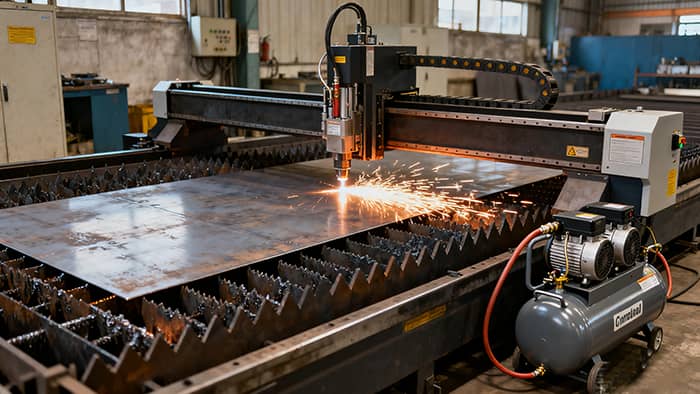
Laser cutting has transformed modern manufacturing by delivering precision, speed, and flexibility. However, behind every high-quality cut lies a critical factor: air supply. Compressed air and assist gases such as oxygen and nitrogen are essential in laser cutting processes, but they also introduce unique challenges that can affect efficiency and production costs.
1. The Role of Air in Laser Cutting
Compressed air serves several functions in laser cutting:
- Blowing molten material away from the cutting zone
- Cooling the workpiece and protecting the optics
- Preventing combustion and ensuring smooth cut edges
While compressed air can reduce costs compared to nitrogen, it requires careful management to avoid quality issues.
2. Common Air Challenges in Laser Cutting
a) Air Quality Issues
If compressed air contains moisture, oil, or dust particles, it can:
- Contaminate the cutting head and optics
- Cause oxidation or discoloration on edges
- Reduce laser efficiency and precision
Installing air dryers and multi-stage filters ensures cleaner airflow and longer equipment life.
b) Inconsistent Air Pressure
Stable air pressure is critical for cutting consistency:
- Low pressure leads to burrs and incomplete cuts
- Excessive pressure may damage nozzles or warp thin materials
A reliable air compressor with pressure regulation is necessary to maintain stability.
c) Energy Consumption
Air compressors account for a large portion of energy use. Poorly managed systems can:
- Increase operating costs
- Generate excess heat and noise
- Shorten compressor lifespan
Switching to energy-efficient screw compressors or variable-speed drive (VSD) systems can significantly reduce waste.
d) Maintenance and Downtime
Contaminated air leads to frequent nozzle clogging, lens contamination, and downtime, directly affecting productivity. Regular maintenance and monitoring are essential to reduce disruptions.
3. Best Practices to Overcome Air Challenges
- Use oil-free or well-filtered air compressors
- Install air dryers and filtration systems to remove moisture and contaminants
- Implement pressure monitoring and control systems
- Schedule preventive maintenance for compressors and cutting machines
- Adopt energy-efficient air compressors to cut costs
Conclusion
Air supply is a key factor in achieving consistent laser cutting performance. By addressing challenges such as air quality, pressure stability, energy efficiency, and maintenance, manufacturers can maximize productivity while minimizing costs and downtime. A clean and stable compressed air system is just as important as the laser itself in ensuring top-quality cutting results.
Frequently Asked Questions (FAQ)
Why is compressed air important in laser cutting?
Compressed air blows away molten material, protects optics, and cools the workpiece, making it essential for clean and precise cuts.
What problems occur if air quality is poor?
Moisture, oil, or dust in the air can contaminate lenses, cause edge discoloration, and reduce cutting accuracy.
How much air pressure is required for laser cutting?
It depends on the material and thickness. Thin metals may require lower pressure, while thicker materials need higher pressure for effective cutting.
How can manufacturers reduce air compressor energy costs?
Using energy-efficient screw compressors, VSD systems, and regular maintenance helps lower electricity consumption and extend equipment life.
about
Aivyter
We provides trusted air compressors and mining equipment, engineered for durability, efficiency, and demanding industrial applications.