In mining, tunneling, and large-scale industrial construction, moisture in compressed air lines leads to equipment corrosion, control valve freezing, and spoilage of pneumatic instruments. Unlike refrigerant dryers that achieve pressure dew points (PDP) of +3°C to +10°C, a rotary air dryer (often referring to heat-regenerative desiccant dryers or heated blower purge dryers) delivers PDP as low as -40°C to -70°C, eliminating liquid water and ice formation even in sub-zero ambient conditions. This article focuses on selection criteria, operating principles, and application-specific engineering considerations for professionals in civil engineering and mineral processing.
Wet compressed air from a screw compressor contains condensate that, if untreated, causes rust in air receiver tanks, accelerates wear on pneumatic cylinders, and blocks critical instrumentation lines. For operations such as blast hole drilling, wet shotcrete spraying, or automated ore sampling, a properly specified drying solution directly impacts uptime. We examine the differences between regenerative desiccant dryers, the role of dew point control, and how to match dryer type to site conditions.
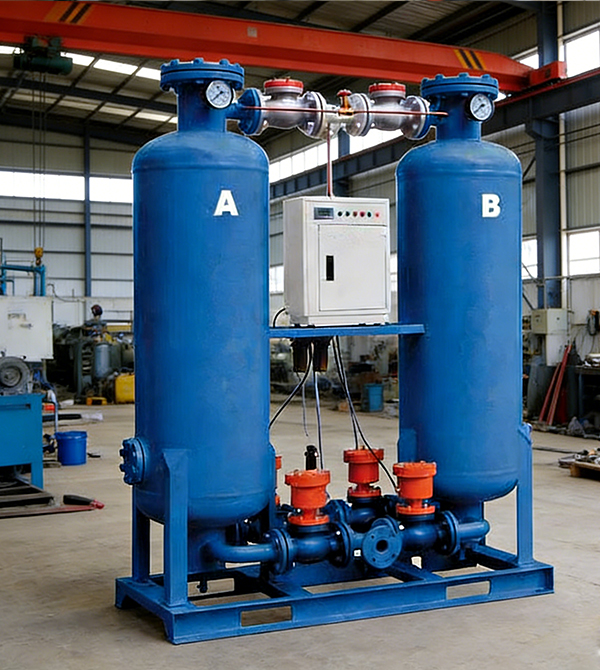
Core Operating Principles of a Rotary Desiccant Air Dryer
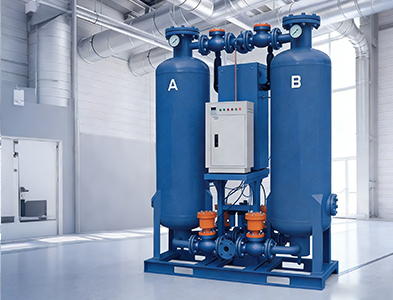
While “rotary” can refer to rotary drum dryers for bulk solids, in compressed air treatment it typically describes twin-tower regenerative dryers with a rotating switching valve or a rotating desiccant drum. The most common industrial configuration for mining applications is the heatless regenerative desiccant dryer, followed by externally heated units. Understanding the regeneration method is key to estimating operating costs and reliability.
- Heatless regeneration: Uses a portion of dried compressed air (typically 15-20% of rated flow) to purge moisture from the offline tower. Simple construction, suitable for hazardous areas. Higher purge air loss means lower net flow.
- Heated blower purge regeneration: Uses an external blower and electric heater to regenerate desiccant with ambient air, reducing purge loss to 3-5% of flow. Higher capital cost but lower energy consumption for larger flows (>10 m³/min).
- Rotating drum dryers: A single rotating drum containing desiccant material passes through two zones: drying and regeneration. Compact design with continuous operation, moderate dew point (-20°C to -40°C).
When evaluating a rotary air dryer for a mine site, consider the regeneration method’s impact on total compressed air availability. Heatless dryers are simple but reduce net output by up to 20%, meaning the upstream compressor must be oversized. Heated blower units add electrical load but preserve pneumatic capacity. For remote sites with limited power, heatless designs remain popular due to lower maintenance complexity.
Industry Pain Points: Moisture Damage in Mining & Construction
1. Pneumatic Drill and Rock Breaker Performance
Moisture-laden air delivered to down-the-hole (DTH) hammers causes erratic valve operation and accelerates internal corrosion. In cold climates, expanding wet air freezes inside the hammer, leading to mechanical jamming and piston fracture. A desiccant dryer achieving -40°C PDP eliminates liquid water and ensures consistent lubrication film integrity. Site data from underground limestone mines show that installing a properly sized rotary air dryer reduced DTH hammer replacement frequency by 60%.
2. Instrumentation and Control System Failures
Modern mining automation relies on pressure transmitters, solenoid valves, and flow meters. Water ingress causes drift in analog signals and short circuits in I/O cards. Dew points above ambient temperature allow condensation to form inside instrument air lines during night shutdowns. Class 1.2.1 air quality per ISO 8573-1 (pressure dew point ≤ -40°C) is standard for instrument air. This requires a regenerative dryer—refrigerant types cannot reach such low dew points.
3. Shotcrete and Wet-Mix Application Issues
In shotcrete spraying for tunnel linings, compressed air carries the mix to the nozzle. Excessive moisture alters the water/cement ratio, reducing adhesion and increasing rebound. Consistent dry air ensures reliable accelerator dosing. Site experience indicates that drying the air to a PDP of -20°C or lower eliminates nozzle clogging and improves gunning performance.
Selecting the Right Dryer Capacity and Dew Point for Your Operation
Proper sizing requires more than matching the compressor’s nominal flow. The dryer must account for ambient conditions, inlet air temperature, and pressure correction factors. Below are the steps used by engineering procurement teams.
- Step 1: Determine the required pressure dew point (PDP). For outdoor mining equipment in winter climates (≤ -10°C ambient), specify PDP at least 10°C below the lowest ambient temperature. -40°C is standard for most mine sites. For indoor plants or mild climates, -20°C may suffice.
- Step 2: Correct dryer capacity for operating pressure. Desiccant dryers are typically rated at 7 bar (g). At lower pressures (e.g., 5 bar), the dryer’s effective flow capacity reduces because the velocity through the desiccant bed increases, shortening contact time. Use correction factors: at 5 bar multiply rated flow by 0.8; at 10 bar multiply by 1.15.
- Step 3: Inlet air temperature correction. Most dryers are rated for 35°C inlet. Higher temperatures from undersized aftercoolers (e.g., 45°C) reduce desiccant capacity by 15-25%. Installing an efficient aftercooler and moisture separator before the dryer is mandatory.
- Step 4: Desiccant type selection. Activated alumina is common for -40°C PDP; molecular sieves are required for -70°C. Silica gel suits lower pressure applications but has shorter lifespan in oily environments. Ensure a pre-filter with ≤0.01 ppm oil carryover to protect desiccant from contamination.
For large-scale construction projects where air demand varies, consider a modular dryer system with two or three parallel units. This allows partial operation during low-demand periods, reducing purge losses and power consumption. Aivyter offers engineering support to calculate these corrections and recommend configurations based on site altitude and annual temperature profiles.
Maintenance Practices to Extend Desiccant Life and Ensure Dew Point Stability
Even a premium rotary air dryer will underperform without routine attention to pre-filtration, regeneration parameters, and desiccant condition. Based on field data from aggregate quarries and tunnel boring projects, the following schedule is recommended.
- Pre-filter element replacement: Replace coalescing pre-filters every 2000-4000 hours or when differential pressure exceeds 0.5 bar. Oil carryover >0.01 ppm will coat desiccant pores, permanently reducing adsorption capacity.
- Desiccant inspection and top-up: Annually, open the towers to check for dusting, crushing, or discoloration. Top up desiccant to compensate for attrition loss (typical 3-5% per year). For heavily cycled dryers, replacement every 2-3 years is common.
- Valve and timer servicing: Pneumatic or solenoid switching valves should be rebuilt every 10,000 cycles or two years. Sticking valves cause incomplete regeneration and dew point breakthrough. Monitor cycle timer accuracy.
- Heater element checks (heated dryers): Inspect electric heating elements and thermocouples annually. A failed heater increases purge air consumption or extends regeneration time, lowering net dry air output.
- Dew point monitoring: Install a reliable on-line dew point sensor (e.g., ceramic capacitive type) with alarm set at -30°C for -40°C target. Trend analysis helps predict desiccant degradation.
Documentation of maintenance actions and dew point records is often required for ISO 8573-1 compliance. Many modern dryers include Modbus or Profibus outputs for integration into centralized mine SCADA systems.
Energy Efficiency Considerations: Heated vs. Heatless Regeneration
The choice between heatless and externally heated regeneration directly affects electrical consumption and compressed air production costs. For a continuous 20 m³/min system at 7 bar, a heatless dryer consumes about 3-4 m³/min of purge air, equivalent to 15-20 kW of compressor power. A heated blower purge dryer reduces purge loss to ~1 m³/min but adds 6-8 kW of heater power. The net energy saving often favors heated units when annual operating hours exceed 5000 and electricity cost is moderate.
For remote mining sites with diesel-driven compressors, the purge air loss of heatless dryers reduces available air for production and increases fuel consumption. In such cases, investing in a zero-purge dryer (using blower regeneration with ambient air) pays back within 18-24 months. Aivyter provides lifecycle energy calculators to assist decision-making, though specific cost figures are tailored per project.
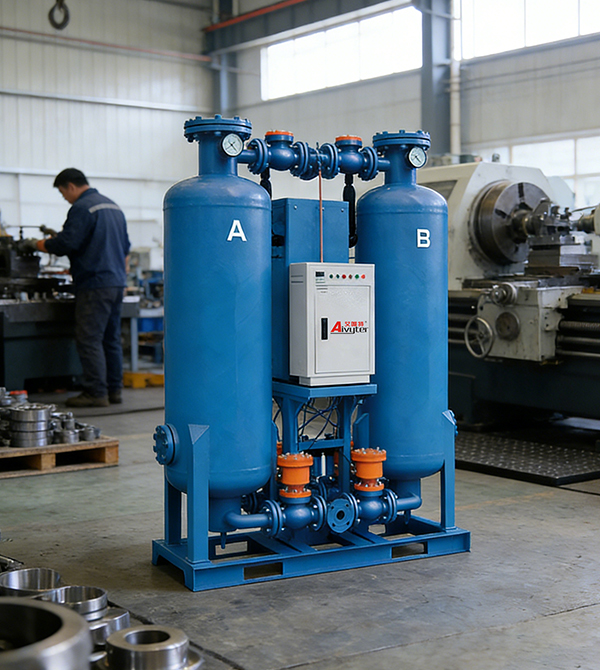
Installation Considerations for Demanding Environments
Rotary desiccant dryers require careful positioning and piping design to perform reliably in mining and construction settings.
- Location: Install the dryer downstream of the air receiver and aftercooler, but as close to point-of-use as possible to avoid re-condensation in long distribution pipes. In underground mines, explosion-proof enclosures (ATEX or IECEx) may be required if methane or coal dust is present.
- Piping materials: Use stainless steel or aluminum with smooth bores. Black iron pipes can shed rust particles that foul desiccant beds. Include a bypass line for maintenance without shutting down the air system.
- Ambient temperature: For externally heated dryers, ensure the control panel and blower intake are not exposed to extreme dust or water spray. Shelter the unit with a roof but allow adequate ventilation for cooling.
- Noise levels: Heatless dryers produce loud exhaust noise during purge cycles; install a silencer and consider acoustic enclosures if workers are nearby (below 85 dBA).
Frequently Asked Questions (FAQ) About Rotary Air Dryers for Industrial Use
Q1: What is the difference between a refrigerant air dryer and a rotary desiccant dryer?
A1: Refrigerant dryers cool compressed air to condense moisture, achieving pressure dew points of +3°C to +10°C. They are energy-efficient but cannot prevent freezing in lines exposed to sub-zero temperatures. Desiccant dryers (including rotary drum types) adsorb water vapor down to -40°C or -70°C PDP, essential for outdoor mining and pneumatic instrumentation in cold climates. Desiccant dryers have higher initial cost and operating expenses due to regeneration energy or purge air.
Q2: Can I use a rotary air dryer with an oil-flooded screw compressor?
A2: Yes, but only if proper oil removal filtration is installed upstream. Oil carryover above 0.1 ppm will foul desiccant media, reducing adsorption efficiency and causing unpleasant odors. Install a high-efficiency coalescing filter (≤0.01 ppm residual oil) plus an activated carbon filter for oil-free requirements. Many mine operators also add a polishing filter after the dryer to trap desiccant dust.
Q3: How do I know when my desiccant needs replacement?
A3: Signs include: (a) pressure dew point rising above the target (e.g., from -40°C to -20°C) even after adjusting purge settings, (b) increased pressure drop across the dryer (normally 0.2-0.3 bar, but >0.5 bar indicates desiccant crushing or dust accumulation), (c) visible powder in downstream filters or pneumatic tools. Desiccant samples showing yellowing (oil contamination) or disintegration confirm replacement need.
Q4: What is the typical lifespan of a desiccant bed in a mining environment?
A4: With proper pre-filtration (oil and particulate removal) and consistent regeneration conditions, activated alumina lasts 2-4 years in continuous service. Molecular sieves may last 3-5 years but are more sensitive to moisture shocks. Harsh conditions—high humidity intake, frequent oil carryover incidents, or poor maintenance—can reduce lifespan to 12-18 months. Annual dew point trending and visual inspections are recommended.
Q5: Is a rotary drum dryer better than twin-tower regenerative dryer for variable flow applications?
A5: Rotary drum dryers maintain stable dew point down to about 20% of full flow without adjustments, making them suitable for applications with demand fluctuations (e.g., multiple shift operations). Twin-tower dryers require careful cycle timing adjustments when flow varies significantly; otherwise, dew point may spike during low flow due to uneven bed loading. For highly variable flows, specify a dryer with a dew point demand control system that modulates purge or regeneration cycles based on actual moisture load.
Obtain an Engineered Specification for Your Project
Every mining or heavy construction site presents unique challenges: altitude, ambient humidity, available utilities, and downstream air quality class. Selecting the correct rotary air dryer involves balancing dew point requirements, purge losses, and maintenance access. Aivyter provides application engineers who review your pneumatic system layout, compressor performance curves, and seasonal climate data to recommend a dryer that delivers consistent, dry air with minimal operational intervention.
Contact our team today for a detailed proposal including flow capacity verification, desiccant volume calculation, and control system integration options. Send your inquiry now → Include your compressor flow (m³/min), working pressure, required pressure dew point, and any hazardous area classification for a prompt technical response.
about
Aivyter
We provides trusted air compressors and mining equipment, engineered for durability, efficiency, and demanding industrial applications.