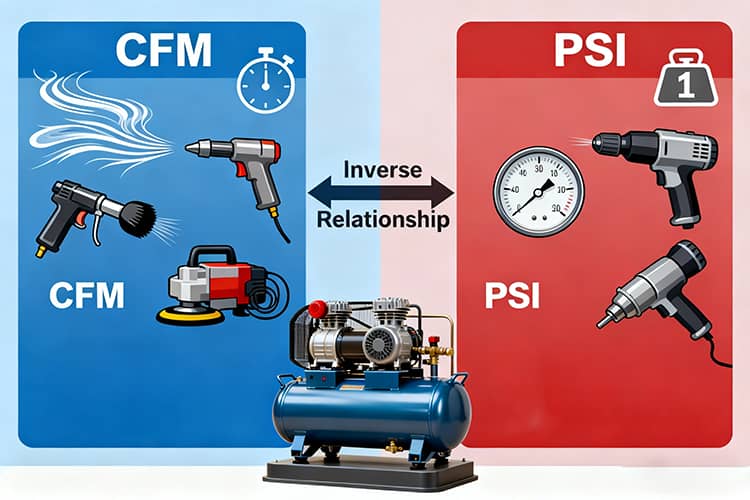
Air compressors power essential tools across industries, but which type is right for you? Rotary screw or piston? Each has unique advantages and disadvantages. In this post, we’ll explore a detailed comparison to help you make an informed decision.What are Piston (Reciprocating) Air Compressors?Piston air compressors, also known as reciprocating compressors, are a type of air compressor that uses continuously moving pistons to pump air into a chamber. They work similarly to an automotive engine, using a crankshaft driven by an electric motor.Key components of a piston air compressor include:Crankshaft: It converts the rotary motion of the motor into the reciprocating motion of the pistons.Connecting rod: It connects the crankshaft to the piston, allowing the piston to move up and down.Piston: It moves up and down inside the cylinder, drawing air in and compressing it.Cylinder: It’s the chamber where the air is compressed by the piston.Valves: They control the flow of air into and out of the cylinder.Inside of a piston air compressorThere are several types of piston air compressors:Single-stage compressorsThey have a single piston that compresses the air in one stroke.They’re suitable for lower pressure applications.Two-stage compressorsThey use two pistons to compress the air in two stages.The first piston compresses the air, then transfers it to the second piston for further compression.They’re ideal for higher pressure applications.Oil-lubricated compressorsThey use oil to lubricate the piston and crankshaft.The oil can mix with the compressed air, resulting in some oil carryover.Oil-free compressorsThey don’t use oil for lubrication, reducing the risk of oil contamination in the compressed air.They’re suitable for applications that require clean, oil-free air.Piston air compressors are known for their:Affordable initial costSimple maintenanceAbility to deliver high volumes of airHowever, they also have some drawbacks:Higher oil content in the compressed airNoisy operationPulsating air deliveryLess energy efficient and more oil carryoverWhat are Rotary Screw Air Compressors?Rotary screw air compressors are a type of compressor that uses two meshing helical screws, known as rotors, to compress air. As the rotors turn, they create a vacuum that pulls air into the compression chamber. The air is then compressed as it moves along the rotors, and is finally discharged at the end of the chamber.Key components of a rotary screw air compressor include:Male and female rotors: These are the two helical screws that mesh together to compress the air.Compression chamber: This is the space between the rotors where the air is compressed.Inside of a rotary screw air compressorThere are two main types of rotary screw air compressors:Oil-injected compressorsThey use oil to lubricate, seal, and cool the rotors during the compression process.The oil helps to reduce wear on the rotors and improves energy efficiency.However, some oil may mix with the compressed air, requiring additional filtration.Oil-free compressorsThey don’t use any oil in the compression chamber.The rotors are coated with a special material to prevent wear and provide sealing.They deliver clean, oil-free compressed air, which is essential for certain applications.Advantages of rotary screw compressors include:Continuous operation (100% duty cycle)They can run continuously without the need for cooling periods.Lower operating temperatureThey typically run at temperatures between 170-200°F, which is lower than piston compressors.Better energy efficiencyThey deliver more air per unit of energy consumed compared to piston compressors.Quieter operationThey produce less noise and vibration than piston compressors.Less maintenance and longer lifespanThey have fewer moving parts and are designed for long-term operation with minimal maintenance.However, rotary screw compressors also have some disadvantages:Higher initial costThey are generally more expensive to purchase than piston compressors.Need for a clean operating environmentThey require clean, cool air intake to prevent damage to the rotors and maintain efficiency.Skilled maintenance requirementsWhile they require less frequent maintenance, servicing rotary screw compressors often requires specialized skills.Rotary Screw vs Piston Compressors: Detailed ComparisonWhen it comes to choosing an air compressor, it’s crucial to understand the differences between rotary screw and piston compressors. Let’s dive into a detailed comparison of these two types, looking at various aspects that can impact your decision.FeaturePiston CompressorsRotary Screw CompressorsDesignCrankshaft-driven pistonTwo meshing helical rotorsOperating Temperature300-400°F, air-cooled170-200°F, built-in coolingDuty Cycle50-70%, limited runtime100%, continuous operationAir QualityMore moisture, contaminantsLess moisture, easier filtrationOil CarryoverIncreases with ageMinimized, oil-free optionsEnergy EfficiencyLess air per energyMore air per energyMaintenanceFrequent, simpler, cheaperLess frequent, complex, costlierNoise & VibrationNoisy, high vibrationQuieter, less vibrationCost & InstallationLower cost, larger spaceHigher cost, compact, flexibleDesign and ConstructionPiston compressors, also known as reciprocating compressors, use a crankshaft-driven piston to draw air into a chamber and compress it. They function similarly to an automotive engine, with intake and exhaust valves controlling the air flow.On the other hand, rotary screw compressors use two meshing helical screws, called rotors, to compress the air continuously. As the rotors turn, they trap air between them and the compressor housing, reducing the volume and increasing the pressure.Heat and Temperature ManagementPiston compressors operate at higher temperatures, typically between 300-400°F. They rely on air cooling and often require longer cooling periods between cycles. This can limit their duty cycle to around 50-70%, meaning they can only run for a portion of the time to prevent overheating.In contrast, rotary screw compressors operate at lower temperatures, usually between 170-200°F. They have built-in cooling systems, such as oil injection or air/oil separators, which allow them to run continuously without overheating. This enables them to have a 100% duty cycle.Moisture and Air QualityThe higher operating temperatures of piston compressors result in more moisture in the compressed air. This moisture can be challenging to remove, and the air may contain more contaminants.Rotary screw compressors, with their lower operating temperatures and built-in filtration systems, produce air with less moisture content. This makes it easier to remove contaminants and achieve higher air quality.Oil CarryoverAs piston compressors age, the wear on rings and valves can lead to increased oil carryover in the compressed air. This can be problematic for applications that require clean, oil-free air.Rotary screw compressors, particularly oil-free models, are designed to minimize oil carryover. They use special seals and coatings on the rotors to prevent oil from mixing with the compressed air.Energy EfficiencyPiston compressors typically deliver less air per unit of energy supplied. They may require more power to compensate for the cooling periods and the higher operating temperatures.Rotary screw compressors are generally more energy-efficient. They can deliver more air per unit of energy consumed, thanks to their continuous operation and lower operating temperatures.Maintenance RequirementsPiston compressors usually require more frequent maintenance, such as replacing valves, rings, and other wearing parts. However, the maintenance tasks are often simpler and less expensive compared to rotary screw compressors.Rotary screw compressors have fewer wearing parts and require less frequent maintenance. However, when maintenance is needed, it may be more complex and costly, often requiring specialized technicians.Noise and Vibration LevelsPiston compressors are known for being noisy and producing significant vibrations. They often require separate rooms or enclosures to mitigate the noise and vibration.Rotary screw compressors are generally quieter and produce less vibration. They can often be installed in the same room as the application without causing significant disturbance.Initial Cost and Installation RequirementsPiston compressors have a lower upfront cost compared to rotary screw compressors. However, they may require larger installations, including storage tanks and cooling systems, which can increase the overall costs.Rotary screw compressors have a higher initial cost but are more compact and require less space for installation. They can often be installed closer to the point of use, reducing the need for extensive piping.Applications and Choosing the Right CompressorWhen it comes to selecting an air compressor, there are several factors you need to consider. These factors will help you determine whether a piston or rotary screw compressor is the best fit for your specific application.Factors to consider:Required air quality and contaminant levelsDifferent applications have varying requirements for air purity.Consider if your application can tolerate some oil in the air or if it needs completely oil-free air.Airflow and pressure requirementsDetermine the amount of air (CFM) and pressure (PSI) your application requires.Ensure the compressor can meet these requirements consistently.Energy efficiency and operating costsEvaluate the energy consumption of the compressor.Consider the long-term operating costs, including electricity and fuel expenses.Maintenance requirements and service lifeAssess the maintenance needs of the compressor, including the frequency and complexity of servicing.Consider the expected service life of the compressor and the cost of replacements or rebuilds.Noise and space constraintsDetermine if noise levels are a concern for your work environment.Evaluate the available space for the compressor and any additional components, such as storage tanks or dryers.Common applications for piston compressors:Automotive serviceTire inflationOperating pneumatic toolsConstructionPowering nail guns, staplers, and other toolsRunning small-scale sandblasting or painting equipmentGeneral manufacturingOperating assembly line equipmentProviding air for cleaning and dryingCommon applications for rotary screw compressors:Continuous, high-volume air supplyIndustrial manufacturing processesLarge-scale sandblasting or painting operationsSensitive applications requiring clean, dry airFood and beverage processingPharmaceutical manufacturingElectronics assembly and packagingTextile manufacturingPowering looms, sewing machines, and other textile equipmentWastewater treatment plantsProviding aeration for biological treatment processesSummaryIn summary, rotary screw and piston air compressors have clear differences. Rotary screw models offer quieter operation, better energy efficiency, and continuous use, while piston compressors are more affordable upfront but require more maintenance and space.Selecting the right compressor depends on your specific application needs and operating conditions. Consider factors like duty cycle, air quality, and budget before making a decision.For personalized advice, it’s best to consult with compressor manufacturers or experts to ensure you get the right equipment for your needs.Aivyter’s team of compressed air experts is here to help you find the perfect solution for your business. Contact us today for personalized guidance in selecting the right compressor for your specific application, ensuring optimal performance and efficiency.
about
Aivyter
We provides trusted air compressors and mining equipment, engineered for durability, efficiency, and demanding industrial applications.