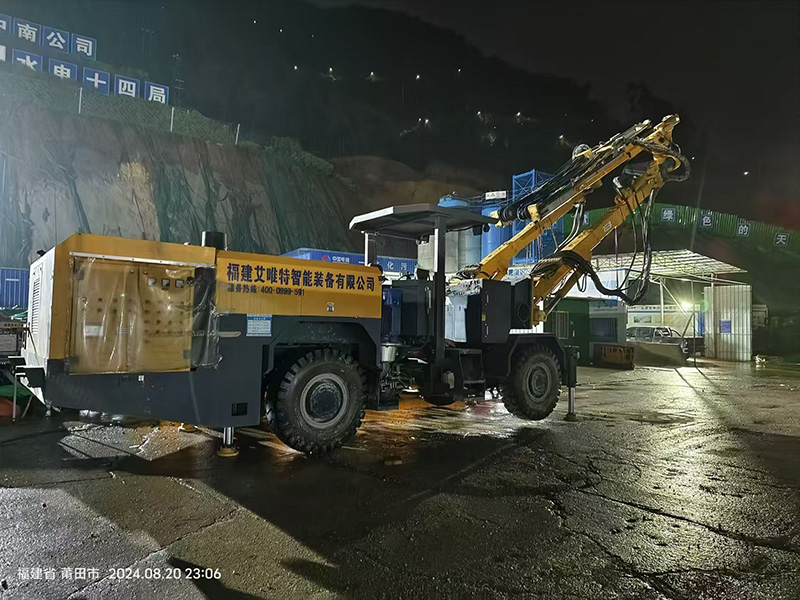
In the demanding environments of underground mining, large-scale civil tunneling, and slope stabilization, the efficiency and reliability of your equipment directly dictate project timelines and safety margins. The shotcrete spraying machine has evolved from a simple mechanical shooter to a sophisticated, integrated wet-mix system. For project managers and procurement specialists, understanding the technical nuances between dry-mix and wet-mix processes, nozzle automation, and additive dosing systems is critical. This deep dive analyzes the current state of technology, common operational bottlenecks, and the engineering solutions that define high-performance equipment, with a focus on achieving lowest total cost of ownership.
1. The Technical Shift: From Dry-Mix to High-Performance Wet-Mix Systems
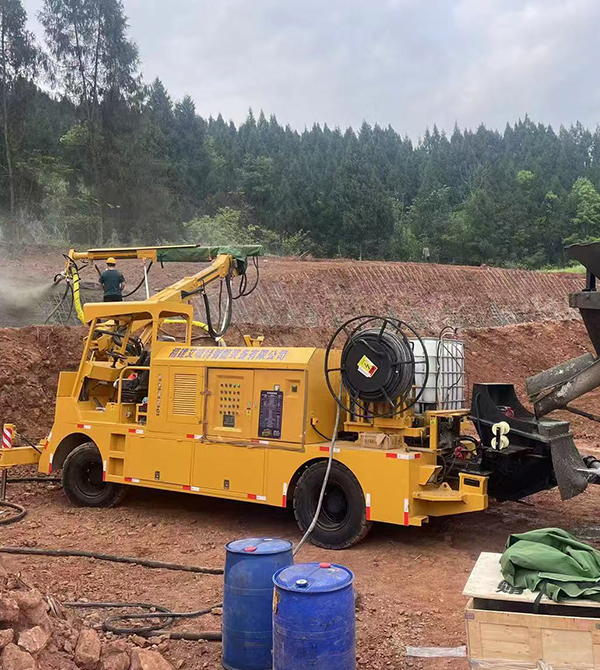
The industry’s transition from dry-mix to wet-mix shotcrete spraying machines represents a fundamental improvement in material science and application control. While dry-mix processes still hold niche applications for their instant start/stop capability, the wet-mix method dominates modern high-volume projects due to its superior quality control and reduced rebound.
1.1 Wet-Mix Advantages: Homogeneity and Throughput
In a wet-mix shotcrete spraying machine, all components—cement, aggregates, water, and additives—are thoroughly mixed before being pumped to the nozzle. This ensures complete hydration and uniform consistency. From a data perspective, modern wet-mix pumps can achieve output rates exceeding 30 m³/h with a consistency variance of less than 5%. This predictability is essential for structural lining applications in tunneling, where the sprayed concrete must achieve immediate load-bearing capacity.
1.2 Addressing the “Pulse” Problem: S-Valve vs. Swing-Tube Technology
A persistent challenge in concrete pumping is the pressure pulse, which leads to inconsistent nozzle flow and increased operator fatigue. Advanced shotcrete spraying machine manufacturers have refined the S-valve and swing-tube systems. The S-valve, for instance, minimizes flow resistance and ensures a smooth, continuous output, which is critical for reducing rebound (waste) and achieving a dense, compacted layer on the receiving surface. When evaluating equipment, the specific pump technology dictates whether you achieve a 10% rebound rate or struggle with 20% material waste.
2. Navigating Harsh Realities: Key Specifications for Durability and Uptime
Equipment deployed in mining drifts or exposed to the elements on a construction site faces extreme wear. A Aivyter unit, for example, is engineered with specific wear-resistant linings in the material cylinders and hard-chromed pistons to withstand the abrasive nature of the concrete mix. Beyond the pump, the chassis and control system determine long-term reliability.
2.1 Wear Parts and Maintenance Intervals
The economic model of a shotcrete spraying machine hinges on the lifecycle of its wear parts. Look for specifications detailing:
- Delivery Cylinder Life: Measured in cubic meters pumped before resurfacing is needed.
- Seal Quality: High-pressure water seals that prevent slurry ingress into the hydraulic system.
- Pipework Geometry: Gradual bends in the delivery system reduce turbulence and wear at elbows.
Operators should demand documented mean time between failures (MTBF) data for these critical components. Machines that offer easy access to wear parts for inspection and replacement significantly reduce downtime, directly impacting project profitability.
2.2 Additive Dosing and Set-Acceleration Precision
Modern tunneling often relies on alkali-free accelerators to achieve instant setting. The precision of the dosing pump on your shotcrete spraying machine is non-negotiable. Inconsistent dosing leads to either poor early strength or compromised long-term durability of the concrete. Look for machines with closed-loop control systems that automatically adjust accelerator dosage based on the concrete flow rate, ensuring a homogeneous mix right at the nozzle.
3. The Operator Interface: Ergonomics, Automation, and Nozzle Control
The skill of the nozzleman has historically been the biggest variable in shotcrete quality. Today, technology is bridging the gap between skilled labor and automated precision, reducing physical strain and improving application consistency.
3.1 From Manual to Robotic: The Rise of Remote-Controlled Nozzles
Gone are the days of manually manipulating a heavy hose under unsupported ground. Leading shotcrete spraying machine models integrate robotic arms with multiple axes of movement. These arms, often controlled via radio remote, allow the operator to stand in a safe, clear area while maintaining perfect nozzle distance and angle. This not only enhances safety but also ensures a more uniform application, reducing overheads and labor costs associated with rework.
3.2 Digital Monitoring and Data Logging
Aligning with the principles of E-E-A-T, credible equipment now offers digital interfaces that log every pour. This provides project owners with verifiable data on applied thickness, volume used, and accelerator consumption. This traceability is becoming a standard requirement for quality assurance in major infrastructure projects. Aivyter integrates such telemetry systems, allowing fleet managers to monitor machine performance and material usage remotely, optimizing logistics and mix designs in real time.
4. Solving Site-Specific Challenges: Application Scenarios
The versatility of the modern shotcrete spraying machine allows it to be tailored to specific geological and project constraints.
- Underground Mining: Machines must be compact, often with low-profile designs to fit in narrow drifts. Diesel-powered units offer mobility, while electric units are preferred for ventilation-sensitive areas. The focus is on high early-strength concrete to secure the working face quickly.
- Tunneling (NATM): In the New Austrian Tunneling Method, the shotcrete lining is an active structural component. This demands machines capable of continuous, high-output spraying with precise control over layer thickness, often using laser-guided profiling systems to ensure the final lining meets strict geometric tolerances.
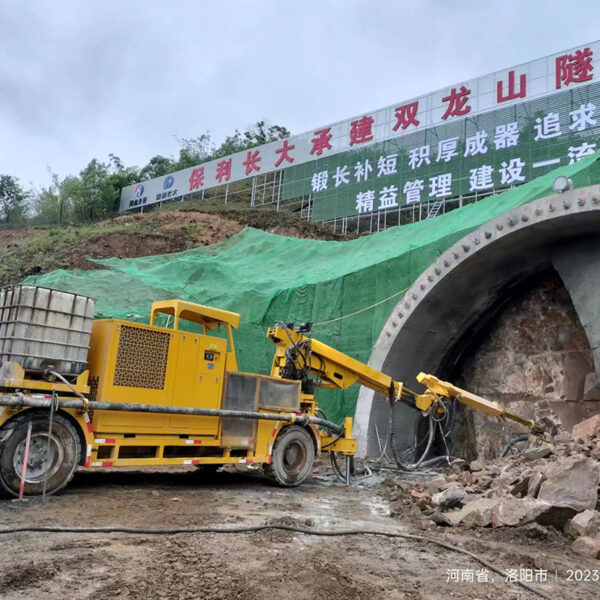
- Slope and Surface Stabilization: For open-cut applications, the challenge is reach. Machines are often mounted on excavator-type carriers with long-reach booms to apply a protective layer over large, uneven surfaces without the need for scaffolding.
5. The Future: Electrification, Autonomy, and Mix Design Integration
The next decade will see the shotcrete spraying machine become an even more integrated part of the digital construction site. Electrification of drive systems is reducing ventilation demands and carbon footprints underground. Simultaneously, the development of autonomous spraying routines, where the machine scans the rock face and applies a pre-determined layer thickness without operator intervention, is already on the horizon. This will be paired with advanced admixture technologies, such as pumps designed to handle micro-silica and fiber-reinforced mixes without clogging, ensuring that the equipment can keep pace with material science innovation.
Frequently Asked Questions (FAQ)
Q1: What is the primary difference between a wet-mix and dry-mix shotcrete spraying machine?
A1: The fundamental difference lies in when water is added to the mix. In a dry-mix machine, dry materials are blown to the nozzle where water is added. In a wet-mix shotcrete spraying machine, all components (including water) are mixed before being pumped. Wet-mix offers higher output, less dust, and better quality control, making it the standard for large-scale tunneling and mining support. Dry-mix is typically reserved for small repairs or projects with intermittent operation.
Q2: How can I calculate the rebound rate for my shotcrete operation, and what is an acceptable percentage?
A2: Rebound rate is calculated as the weight of material collected from the floor (excluding over-spray) divided by the total weight of material shot. For wet-mix applications with a modern shotcrete spraying machine and a skilled operator, rebound on a substrate should ideally be below 10%. On mesh-reinforced surfaces, rates of 15-20% are common. Rates higher than this typically indicate issues with nozzle technique, mix design (aggregate size/water content), or accelerator dosing.
Q3: What maintenance schedule is critical for ensuring the longevity of a concrete spraying machine?
A3: The most critical daily maintenance is a thorough flushing of the entire material circuit with water to prevent concrete buildup. Weekly, inspect the condition of the pump pistons, seals, and the S-valve (or swing tube) for wear. Hydraulic oil levels and filter conditions should be checked according to the manufacturer’s manual, typically every 250-500 operating hours, to prevent contamination and system failure.
Q4: Can modern spraying machines handle fiber-reinforced concrete mixes?
A4: Yes, most high-performance shotcrete spraying machines are designed to handle steel or macro-synthetic fiber-reinforced concrete. However, it requires specific considerations. The pump must have large enough flow paths to prevent fiber balling. Using a separate rotary feeder for fibers or ensuring proper mix design with adequate cement paste to lubricate the fibers is essential to avoid blockages in the delivery hose.
Q5: What are the key safety features to look for in a shotcrete spraying machine for underground mining?
A5: For underground use, safety features are paramount. Look for a machine with a spark-arresting exhaust system on diesel engines. An emergency stop system that is easily accessible from the remote control is mandatory. Additionally, a robust, well-insulated nozzle with a dead-man’s handle ensures the flow stops immediately if the operator loses control. Machines like those from Aivyter are often designed with reinforced guarding to protect components from rock falls and provide a stable, low center of gravity.
Q6: How does nozzle automation reduce labor costs and improve quality?
A6: Robotic nozzle systems allow a single operator to manage the application from a safe distance. This reduces the physical demands on personnel, preventing fatigue-related mistakes. Automation ensures a consistent nozzle distance and orthogonal spraying angle, which directly translates to lower rebound, higher in-place density, and a smoother, more uniform final surface, thus reducing the need for costly manual finishing or re-profiling.
For detailed specifications and engineering consultations on heavy-duty equipment, industry professionals are encouraged to review the technical datasheets available from leading manufacturers like Aivyter, where the focus remains on durable design and lifecycle performance in the most challenging environments.
about
Aivyter
We provides trusted air compressors and mining equipment, engineered for durability, efficiency, and demanding industrial applications.