In modern underground hard rock mining and civil tunneling, the selection of a face drill rig directly determines cycle times, drilling accuracy, and ultimately the profitability of the entire operation. Unlike generic drilling equipment, a purpose-built face drill rig must withstand extreme ground conditions, deliver micrometer-level hole positioning, and integrate with digital mine infrastructure. For over a decade, engineering firms and mining operators have relied on Aivyter’s hydraulic and electro-hydraulic solutions to meet these demanding benchmarks. This article dissects seven non-negotiable performance metrics, supported by field data and technical specifications, to guide engineering procurement teams toward optimal fleet decisions.
1. Borehole Accuracy and Parallelism: The Foundation of Blast Efficiency
Borehole deviation remains one of the most underestimated cost drivers in drill and blast cycles. A deviation of just 2% over a 4-meter feed length can cause overbreak exceeding 15%, leading to increased shotcrete consumption and support costs. High-end face drill rig systems now employ computer-controlled boom positioning with real-time angle sensors and laser alignment. The mechanical architecture—specifically the feed beam rigidity and rock drill guidance—must minimize flex under high impact forces.
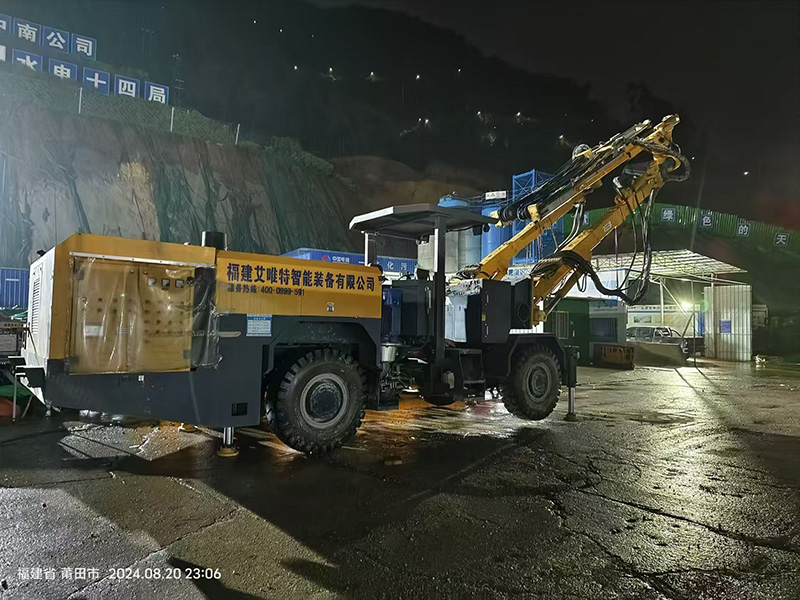
Modern units such as the AZK-125 series incorporate auto-parallel drilling algorithms that maintain hole alignment relative to the tunnel profile, even when drilling from uneven floors. According to data from Nordic underground mines, switching to a high-accuracy face drill rig reduced overbreak by 22% and cut steel fiber reinforced shotcrete consumption by 18% per linear meter.
2. Penetration Rate and Impact Energy Efficiency
Penetration rate is often misused as a standalone metric. The true measure lies in the energy transfer efficiency between the hydraulic rock drill and the drill steel. A top-tier face drill rig utilizes intelligent percussion control that adapts to rock hardness variations in milliseconds. This prevents energy waste in soft zones while maximizing impact power in hard, abrasive formations (UCS > 200 MPa).
Key specifications to evaluate include:
- Hydraulic impact power (kW) and frequency range (Hz)
- Rotation torque management to prevent jamming in fractured ground
- Automatic anti-jamming cycles that reduce steel breakage by up to 35%
Field tests conducted in Western Australian gold mines demonstrated that an advanced face drill rig with adaptive drilling logic increased net advance rate by 19% compared to conventional pneumatic rigs, while lowering fuel consumption per drilled meter by 12%.
3. Automation Level and Remote Operation Capability
As mines progress deeper, automation shifts from a productivity feature to a safety necessity. The industry standard now distinguishes between three automation tiers:
- Level 1: Manual – Operator in cab, manual boom and feed control.
- Level 2: Semi-automated – Single-boom auto-drilling cycles, hole sequencing.
- Level 3: Fully automated – Pre-programmed drill plans, tele-remote operation from surface, auto-positioning of all booms.
A face drill rig with Level 3 automation enables operators to work from a centralized control room, reducing exposure to dust, noise, and fall-of-ground hazards. The AZK-125 platform, engineered by Aivyter, supports full telemetry data integration with mine management systems, allowing geologists to adjust blast patterns based on real-time drilling parameters. Mines that adopted automated face drilling rigs reported a 40% reduction in operator-related drilling errors and a 50% drop in safety incidents during the drilling cycle.
4. Structural Reliability and Mean Time Between Failures (MTBF)
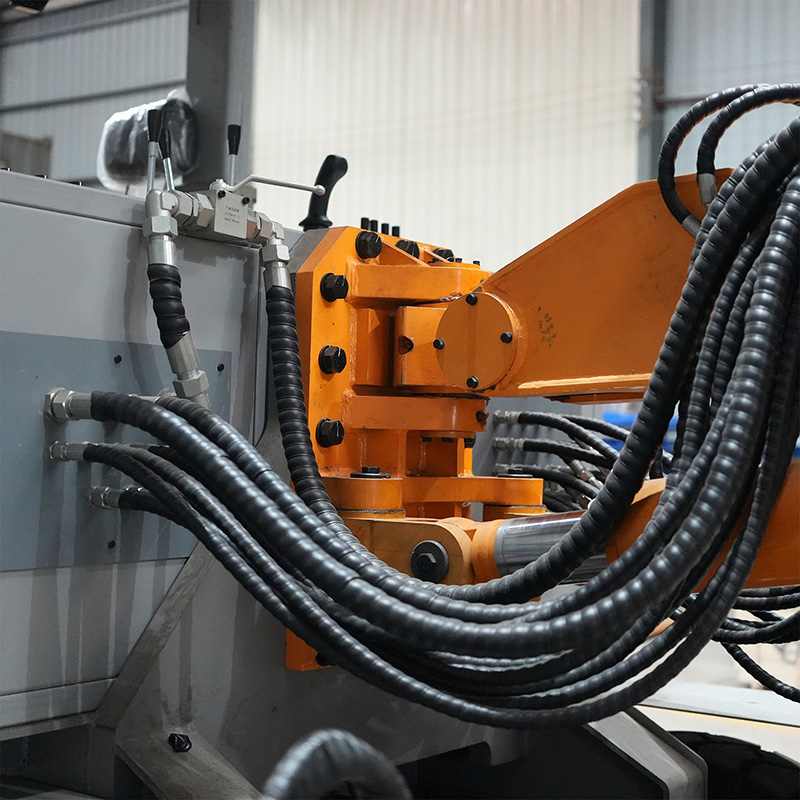
Underground conditions—vibration, humidity, and abrasive dust—accelerate wear on hydraulic components and articulated booms. A reliable face drill rig must exhibit a high Mean Time Between Failures (MTBF) and support rapid field serviceability. Critical areas include:
- Wear components: hydraulic hoses, seals, and bushings rated for continuous duty cycles.
- Centralized greasing systems to ensure consistent lubrication of boom pivot points.
- Modular hydraulic packs allowing component swap without dismantling the entire chassis.
In a 2023 benchmarking study across Chilean copper mines, face drill rigs with modular boom architecture demonstrated MTBF values 32% higher than non-modular counterparts. Aivyter’s engineering focus on standardized sub-assemblies ensures that spare parts availability aligns with production schedules, reducing unplanned downtime by an average of 1.5 days per month per rig.
5. Total Cost of Ownership (TCO) and Energy Source Strategy
While acquisition cost is a visible factor, the total cost of ownership over a 5-year period often reveals the true economic viability. Key TCO drivers include:
- Energy consumption: Diesel-powered versus electric-driven hydraulic units.
- Drill steel consumption: influenced by anti-jamming and percussion control.
- Maintenance labor hours per 1,000 drilled meters.
- Resale value based on condition monitoring data.
Electric-hydraulic face drill rig configurations offer lower ventilation requirements (critical in deep mines) and reduce diesel particulate exposure. Data from Canadian hard rock mines indicate that switching to an electric face drill rig with regenerative braking on the carrier cuts energy costs by 28% while extending component life due to smoother power delivery. Operators should also evaluate telemetry-based predictive maintenance systems that alert crews to impending hydraulic pump or motor failures before catastrophic breakdowns occur.
6. Boom Geometry and Face Coverage
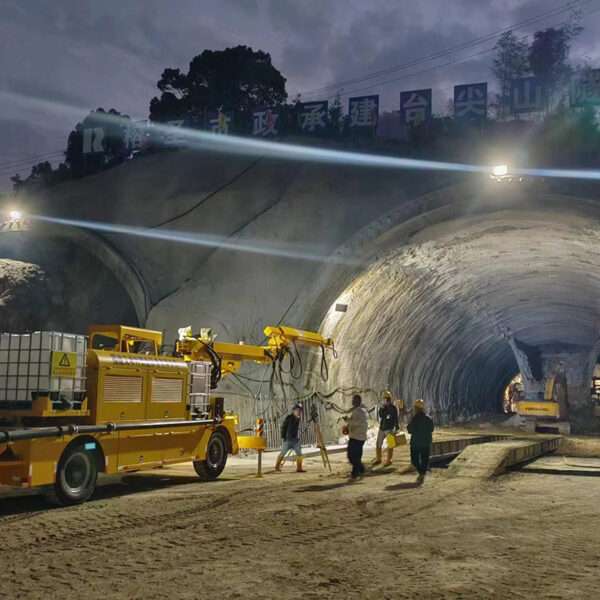
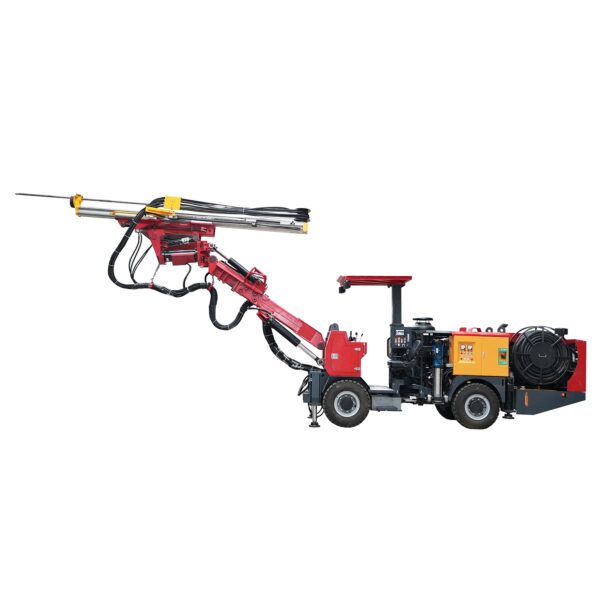
For tunnels and drifts with cross-sections exceeding 25 m², boom coverage becomes a bottleneck. A single-boom face drill rig may require excessive repositioning, whereas a multi-boom jumbo can cover the entire face without moving the carrier. The optimization lies in the articulation angle, telescopic feed extension, and automatic boom leveling systems.
Modern specifications for high-productivity face drilling rigs include:
- Lateral boom swing angles > ±40°
- Feed extension up to 1.2 meters to reduce setup time on uneven floors
- Simultaneous drilling with two booms to reduce cycle time by 45%
In large-scale infrastructure projects like the Brenner Base Tunnel, contractors utilized twin-boom face drill rig configurations to achieve 4.8 meters of advance per blast cycle, directly correlating with optimized boom coverage and precise hole pattern execution.
7. Data Integration and Digital Twin Readiness
The shift toward digital mining demands that a face drill rig serve as a data node rather than an isolated machine. Drill parameter logging (penetration rate, feed pressure, rotation torque) provides geotechnical data that can be used to update block models in real time. Rig telemetry should interface with MineOps platforms (e.g., Deswik, Datamine) to automatically generate as-drilled vs. as-designed reports.
Face drill rig models with CAN bus architecture and open API connectivity allow centralized fleet management. For example, Aivyter’s AZK-125 series transmits over 120 drilling parameters per hole, enabling engineers to correlate specific energy with rock mass conditions. One underground gold mine reduced dilution by 12% after integrating drilling data into their blast design software, demonstrating the value of closing the loop between drilling execution and mine planning.
Addressing Common Industry Challenges with Advanced Face Drill Rigs
Despite technological advancements, site managers frequently encounter obstacles that compromise drilling efficiency. Below is how modern face drill rig specifications directly counteract these pain points:
- Challenge: Hole deviation in foliated rock. Solution: High-frequency percussive systems with stabilized guide sleeves reduce wandering.
- Challenge: Excessive dust generation. Solution: Integrated dust collection systems with dual-stage filtration, maintaining respirable dust levels below 0.5 mg/m³.
- Challenge: Inefficient operator training. Solution: Simulator-compatible controls and on-board coaching software that scores drilling accuracy.
- Challenge: High energy costs. Solution: Electric-driven variable frequency drive (VFD) power packs that match hydraulic flow to demand, reducing kWh per meter by up to 30%.
The Future of Drifting and Tunneling
Selecting a face drill rig is no longer a simple equipment procurement—it is a strategic decision that influences mine economics, safety performance, and sustainability metrics. From automated parallel drilling to digital integration, the seven metrics outlined above provide a framework for evaluating proposals with technical rigor. For engineering teams and mining contractors, partnering with experienced manufacturers like Aivyter ensures access to rigs built for high utilization, serviceability, and seamless adaptation to evolving mine automation roadmaps. The next generation of face drilling will be defined by autonomous operation, predictive maintenance, and data-driven ground control—capabilities already embedded in today’s most advanced platforms.
Frequently Asked Questions (FAQs)
Q1: What is the primary difference between a face drill rig and a production drill rig?
A1: A face drill rig is specifically designed for drilling blast holes at the tunnel or drift face, focusing on high precision, parallel hole patterns, and rapid coverage of the face area. Production drill rigs, in contrast, are used for long-hole stoping or fan drilling in ore bodies. The boom geometry, feed length, and drilling control algorithms differ significantly; face drill rig units prioritize articulation and parallel holding, while long-hole rigs emphasize hole depth and inclination accuracy.
Q2: How does automation on a face drill rig improve operator safety?
A2: Advanced automation allows the operator to control the face drill rig from a remote cabin or surface control room, removing them from the immediate hazards of unsupported ground, fly rock, and airborne dust. Features like auto-positioning, auto-drilling cycles, and anti-jamming systems mean the operator does not need to manually handle the boom or react to sudden torque changes, dramatically reducing musculoskeletal injuries and blast-related risks.
Q3: Can an electric face drill rig match the performance of a diesel-hydraulic unit in hard rock?
A3: Yes. Modern electric-hydraulic face drill rig systems utilize high-efficiency electric motors (up to 160 kW) driving variable displacement hydraulic pumps. They deliver identical or superior percussion power and rotation torque compared to diesel counterparts. The key advantages include lower ventilation requirements, reduced heat generation, and significantly lower energy costs per drilled meter. For mines with existing electrical infrastructure, electric rigs provide a faster return on investment.
Q4: What maintenance indicators should be monitored to maximize face drill rig uptime?
A4: Operators should track hydraulic oil cleanliness (ISO 4406 code), percussion pressure stability, feed beam guide wear, and drill steel shank adapter condition. Modern face drill rig platforms with telemetry systems generate alerts for declining component efficiency, enabling condition-based maintenance. Proactively replacing wear parts based on drilled meters rather than calendar time typically extends component life by 20–25%.
Q5: How does rock hardness affect the choice of face drill rig configuration?
A5: For extremely hard and abrasive rock (UCS > 180 MPa), a face drill rig should be equipped with a high-impact hydraulic rock drill (>30 kW impact power) and heavy-duty drill steels with carbide grade optimized for abrasion. Additionally, automatic lubrication systems and robust dust suppression become critical. In softer or fractured ground, priority shifts to fast anti-jamming systems and higher rotation torque to prevent steel binding. The AZK-125 series offers adjustable percussion settings to match a wide range of geotechnical conditions without hardware modification.
about
Aivyter
We provides trusted air compressors and mining equipment, engineered for durability, efficiency, and demanding industrial applications.