For mining engineers, technical services managers, and procurement specialists, the specification of a drill rig underground mines represents one of the most capital-intensive decisions in a development cycle. Unlike surface equipment, an underground drill rig must operate in confined spaces, withstand high ambient temperatures, and deliver consistent borehole accuracy under extreme ground pressure. Over the past decade, the integration of electro-hydraulic controls, tele-remote operation, and predictive diagnostics has redefined productivity benchmarks. Aivyter has been at the forefront of this evolution, supplying modular drilling platforms that combine structural durability with advanced automation. This article outlines eight critical technical criteria—grounded in field data and engineering specifications—to guide fleet decisions for both greenfield projects and existing mine expansions.
1. Rig Configuration: Face Drilling Versus Long-Hole Production
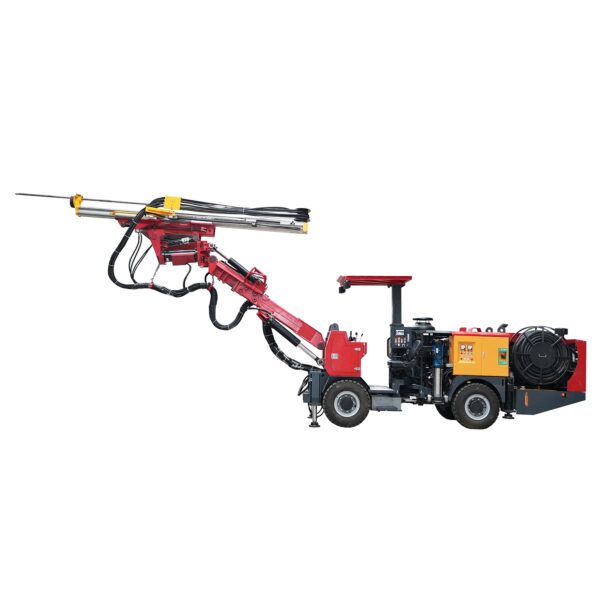
Underground mines typically employ two distinct types of drill rig underground mines equipment: face drilling jumbos for development and long-hole drill rigs for production stoping. Mixing the two applications leads to inefficiencies. Face drilling requires multi-boom articulation, auto-parallel holding, and rapid setup for blast patterns up to 5 meters deep. Long-hole rigs, conversely, emphasize hole straightness over 30–50 meters, high torque rotation, and automated rod handling.
When evaluating a drill rig underground mines platform, engineers must match the feed length, boom coverage, and rod carousel capacity to the specific mining method. For cut-and-fill operations with narrow veins, a compact single-boom rig with a 2.4-meter feed is optimal. For large-scale sublevel caving, twin-boom rigs with 4.8-meter feeds and semi-automated drilling cycles reduce cycle times by up to 40% compared to manual alternatives.
2. Automation Level and Remote Operation Capability
Automation has moved from a productivity enhancer to a safety imperative, particularly in deep mines with elevated geotechnical stress. Modern drill rig underground mines systems are classified into three automation tiers:
- Manual (Level 1): Operator in cab, direct hydraulic control—suitable for small mines with variable ground.
- Semi-Automated (Level 2): Single-boom auto-drilling cycles, hole sequencing, and feed control—reduces operator fatigue.
- Fully Automated (Level 3): Tele-remote operation from surface, pre-programmed drill plans, auto-positioning of booms using laser navigation—removes personnel from hazardous areas.
Data from Australian metalliferous mines shows that converting to Level 3 automation on drill rig underground mines fleets reduced exposure to fall-of-ground incidents by 52% and increased drilling accuracy (hole deviation <1.5%) through consistent parameter execution. The drill rig underground mines platforms from Aivyter integrate CAN bus architecture with mine management systems, enabling remote diagnostics and automated reporting of drilled meters against plan.
3. Hole Accuracy and Deviation Control
Borehole deviation directly impacts ore recovery and dilution. In long-hole stoping, a deviation of 2% over a 30-meter hole can result in 8–12% dilution, significantly reducing mill feed grade. Key technical features that minimize deviation include:
- High-frequency percussive rock drills with guided shank adapters.
- Feed beam rigidity: box-section steel beams with minimal torsional flex.
- Real-time angle sensors and automatic feed alignment correction.
For development applications, an accurate drill rig underground mines reduces overbreak, cutting shotcrete and rock bolt consumption. In a Swedish deep mine study, upgrading to a computer-controlled face rig lowered overbreak from 18% to 11%, saving over $320,000 annually in ground support materials for a single 5 km tunnel section.
4. Energy Source Strategy: Diesel Versus Electric-Hydraulic
The choice between diesel-powered and electric-powered drill rig underground mines units affects ventilation requirements, energy costs, and fleet carbon footprint. Electric-hydraulic rigs offer:
- Zero diesel particulate emissions—critical for deep mines where ventilation is a bottleneck.
- Lower operating costs: electricity is typically 30–40% cheaper per kWh than diesel, and electric motors have fewer moving parts.
- Reduced heat load: less stress on mine cooling systems.
However, diesel-powered units provide mobility in areas without trailing cables. Hybrid configurations, where the carrier is diesel and the drilling unit is electric, offer a compromise. A 2024 benchmarking report on drill rig underground mines fleets in Chile indicated that electric-hydraulic rigs achieved 28% lower total energy cost per drilled meter and required 15% fewer maintenance hours over 5,000 operating hours compared to diesel counterparts.
5. Structural Robustness and Mean Time Between Failures (MTBF)
Underground conditions—vibration from blasting, humidity, and abrasive dust—accelerate wear on hydraulic systems, booms, and electronic components. A reliable drill rig underground mines must demonstrate high Mean Time Between Failures (MTBF) for critical subsystems:
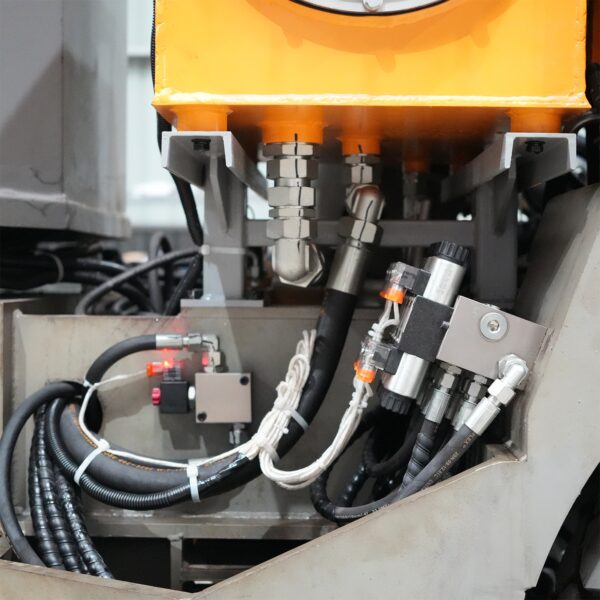
- Hydraulic pumps and valves: Look for piston pumps rated for continuous 100% duty cycle.
- Boom articulation joints: Centralized auto-lubrication systems reduce wear.
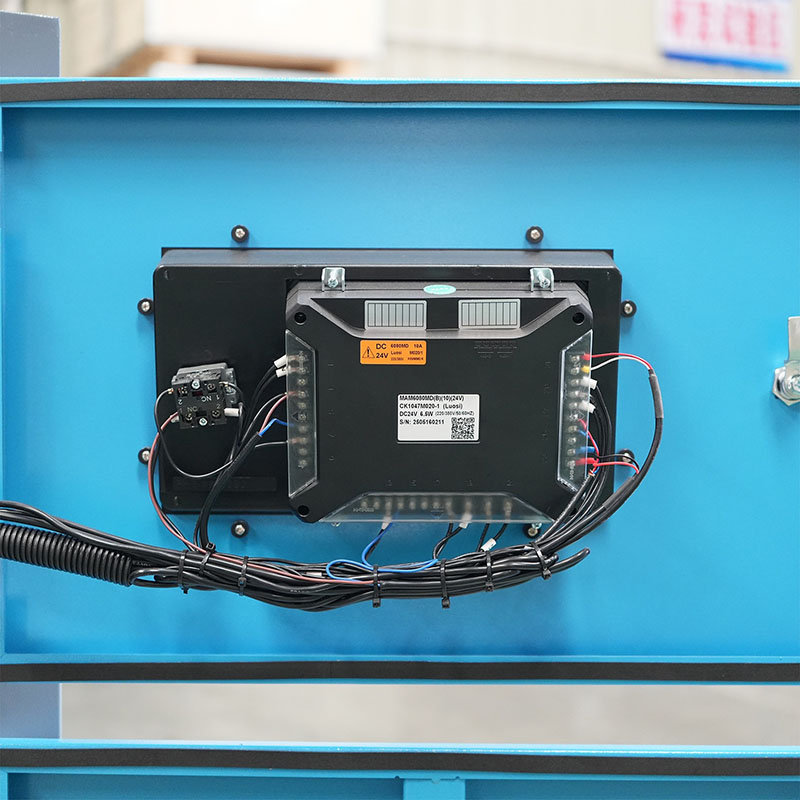
- Electrical harnesses: IP67-rated connectors prevent water ingress.
In a Canadian hard rock mine, shifting to a drill rig underground mines with modular hydraulic packs reduced average repair time from 8.2 hours to 2.5 hours, as components could be swapped without dismantling the entire power unit. Aivyter’s engineering emphasizes modularity, ensuring that spare parts availability aligns with production schedules and minimizing unplanned downtime.
6. Telemetry and Data Integration for Predictive Maintenance
Modern drill rig underground mines equipment functions as a data node within the mine’s digital ecosystem. Telemetry systems collect over 100 parameters per shift—percussion pressure, rotation torque, feed force, water flow—enabling predictive maintenance algorithms to flag impending failures before they occur. Key benefits include:
- Reduced catastrophic failures: 70% of hydraulic pump failures can be predicted via trending pressure ripple.
- Optimized drilling parameters: real-time adjustment to rock hardness variations improves penetration rates.
- Condition-based servicing: extending component life by 20–25% compared to fixed-interval maintenance.
Integration with mine planning software (e.g., Deswik, Datamine) allows geologists to correlate specific energy with ore boundaries, reducing dilution. Mines utilizing full telemetry on their drill rig underground mines fleets report a 12–18% increase in overall equipment effectiveness (OEE).
7. Ground Support Integration and Multi-Functionality
In many development cycles, drilling and ground support are sequential operations that create logistical bottlenecks. Some advanced drill rig underground mines platforms offer multi-functionality, such as a dedicated rock bolt drilling module on the same carrier. While a dedicated bolting rig is often preferred for large projects, multi-purpose rigs can be advantageous for narrow-vein mines with limited working faces.
Specifications to evaluate include:
- Quick-change tooling systems (drill steel to rock bolt adapter).
- Independent hydraulic circuits for drilling and bolting.
- Integrated resin or cement injection systems.
By combining drilling and bolting on a single drill rig underground mines chassis, contractors in the Alps’ base tunnels reduced cycle times by 25% in headings where space prohibited two separate units.
8. Total Cost of Ownership (TCO) and Resale Value
Initial capital expenditure accounts for only 20–30% of the total cost of ownership over a five-year period. Key TCO drivers for a drill rig underground mines include:
- Energy consumption: kWh per drilled meter (electric rigs) or liters per meter (diesel).
- Drill steel and bit consumption: influenced by anti-jamming technology and percussion control.
- Labor costs: automation reduces required operator hours per meter.
- Major overhaul intervals: expected life of rock drill, boom cylinders, and carrier engine.
Fleet managers should request lifecycle cost models from manufacturers. For the drill rig underground mines category, rigs with built-in condition monitoring and modular component design consistently demonstrate 15–20% lower TCO compared to non-instrumented, proprietary-part-dependent units. Aivyter provides detailed TCO projections based on mine-specific duty cycles, enabling accurate budget forecasting.
Addressing Operational Pain Points with Advanced Drill Rigs
Site managers frequently encounter challenges that diminish drilling efficiency. Below is how modern specifications directly counter these issues:
- Pain point: Inconsistent hole charging due to collapsed boreholes. Solution: Drill rig underground mines with high-pressure air flushing (up to 25 bar) and rapid retraction algorithms maintain hole integrity in faulted ground.
- Pain point: High maintenance costs on hydraulic hoses. Solution: Integrated hose management systems with protective routing and abrasion-resistant sleeves.
- Pain point: Operator skill shortage. Solution: On-board coaching software and simulator-compatible controls that reduce training time by 40%.
- Pain point: Inefficient drilling in variable ground. Solution: Adaptive percussion control that automatically adjusts impact energy based on real-time feedback from the rock drill.
Future-Proofing Underground Drilling Fleets
Selecting a drill rig underground mines requires balancing upfront investment with long-term productivity, safety, and data integration capabilities. The eight criteria outlined—from automation levels to TCO analysis—provide a robust framework for technical evaluation. As mines progress deeper and ore bodies become more complex, the ability to remotely operate, predict failures, and adapt drilling parameters in real time will separate competitive operations from those struggling with escalating costs. Manufacturers like Aivyter continue to push the boundaries of what a drill rig underground mines can achieve, delivering equipment that not only drills faster but also integrates seamlessly with the digital mine ecosystem.
Frequently Asked Questions (FAQs)
Q1: What is the typical service life of a modern drill rig used in underground mines?
A1: A well-maintained drill rig underground mines platform typically operates for 15–20 years, with major overhauls every 8,000–10,000 drilling hours. The hydraulic rock drill is a consumable component, often requiring rebuilds at 2,500–3,500 hours depending on rock abrasiveness. Rig telemetry helps track component degradation and schedule rebuilds before failures disrupt production.
Q2: How does tele-remote operation improve safety on a drill rig underground mines?
A2: Tele-remote operation allows the driller to control the drill rig underground mines from a surface control room or a secure refuge chamber, eliminating exposure to unsupported ground, dust, and noise. In mines using Level 3 automation, the operator manages multiple rigs simultaneously, and safety incidents related to drilling activities drop by more than 50%.
Q3: Can an electric drill rig match the drilling speed of a diesel-hydraulic unit in hard rock?
A3: Yes. Modern electric-hydraulic drill rig underground mines units use high-efficiency electric motors (up to 200 kW) driving variable-displacement pumps, delivering identical or superior percussion power and rotation torque compared to diesel. The key advantage is consistent power output unaffected by altitude or diesel engine derating, plus lower ventilation costs.
Q4: What are the most critical daily checks for an underground drill rig?
A4: Daily inspections should focus on hydraulic oil levels and cleanliness (visually check for foaming or contamination), drill steel lubrication to prevent shank adapter failure, water swivel seals to avoid flushing fluid ingress, and undercarriage and boom pins for excessive wear. Automated rigs with telemetry often generate daily health reports, flagging parameters outside normal ranges.
Q5: How does rock hardness influence the choice of percussion system on a drill rig underground mines?
A5: For extremely hard rock (UCS > 200 MPa), a drill rig underground mines requires a high-impact hydraulic rock drill (>30 kW impact power) with independent rotation to prevent bit balling. In softer or fractured ground, priority shifts to high rotation torque and advanced anti-jamming logic to avoid steel binding. Many modern rigs, including the AZK-125 series, offer adjustable percussion settings to match a wide spectrum of rock conditions without hardware changes.
about
Aivyter
We provides trusted air compressors and mining equipment, engineered for durability, efficiency, and demanding industrial applications.