In remote mining sites, tunneling projects, and large-scale civil construction, reliable compressed air is not a utility—it is a production constraint. The mobile screw compressor has displaced traditional piston and centrifugal units across extractive and earthmoving sectors because of its continuous duty rating, tolerance to contaminants, and modular service layout. However, selection often fails due to oversimplified metrics (cfm, psi) while ignoring thermodynamic efficiency, control strategies, and site-specific duty cycles.
This analysis—rooted in field data from (mineral extraction) and infrastructure projects across arid highlands, arctic zones, and tropical laterite terrains—provides a structured approach to specifying, operating, and maintaining mobile screw compressor assets. We integrate rotor profile design, cooling system engineering, telematics integration, and total cost of ownership (TCO) models to assist procurement and project engineers.
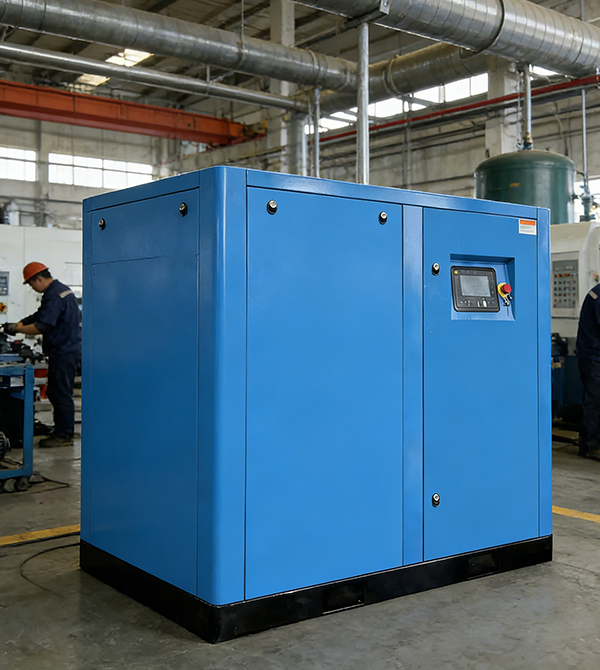
1. Core Engineering Architecture of a Mobile Screw Compressor
Unlike stationary industrial compressors, mobile configurations integrate the air-end, prime mover (diesel or electric), fuel system, aftertreatment, and acoustic cladding within a skid- or towable frame. The dominant technology remains the oil-in-flooded rotary screw, selected for its ability to operate continuously at 100% duty cycle even in high-silica dust environments.
1.1 Rotor Profile & Air-End Efficiency
Modern asymmetric rotor profiles (e.g., Sigma, SRM type) reduce internal leakage and improve volumetric efficiency to >85% across a 4:1 turndown ratio. For portable applications, hardened stainless-steel rotors with PEEK tip seals resist erosion from ingested fines. The air-end’s discharge port geometry directly influences pulsation levels—critical when feeding pneumatic conveying systems or rock drills that demand stable backpressure. Reputable manufacturers like Aivyter implement finite element analysis (FEA) on casing deformation under thermal gradients, preventing rotor contact at elevated outlet temperatures (110–120°C).
1.2 Drive Train & Power Management
Field requirements diverge between diesel-driven compression skids (typical mining auxiliary power) and electric-mobile units (tunnel construction with grid access). Diesel versions rely on electronic governing with 2% speed regulation, maintaining pressure within ±0.3 bar even under cyclic tool loads. Key specifications include:
- Torque reserve: 25% above full-load torque for high-altitude sites (>3000m) where derating exceeds 12%.
- Dual-fuel capability (optional): Allows blending of diesel and natural gas without modifying air-end timing.
- Integrated load/unload cycling vs. variable speed drive (VSD) – VSD reduces fuel burn by 18–27% in applications with fluctuating demand (e.g., sandblasting trains).
For high-mobility fleets, towable screw air compressors with pintle hitches and off-road tires adhere to ISO 1940 balancing classes, minimizing vibrational transfer to the air-end bearings. The compact chassis design also incorporates transverse-mounted coolers to prevent re-ingestion of hot radiator discharge.
2. Technical Selection Criteria Based on Industrial Segments
Procurement engineers often rely on generic “size + pressure” selection, but applications in mining, tunneling, and heavy construction impose distinct failure modes that directly affect mobile screw compressor longevity.
2.1 Open-Pit & Underground Mining
In hard rock mining, compressors feed down-the-hole (DTH) hammers (pressure range 15–30 bar) and ventilation booster fans. Critical requirements:
- High-altitude correction: Above 2500m, air density drops, reducing mass flow. Correcting the free air delivery (FAD) by altitude factor (0.75 at 4000m) avoids underpowered drilling.
- Fire suppression systems (ANSUL or EN 1834) mandatory for underground diesel compressors.
- Remote monitoring with flameproof telematics modules that withstand methane-laden atmospheres.
Case data from a Zambian copper operation showed that replacing a piston compressor fleet with a single 900 cfm mobile oil-flooded screw unit reduced unplanned maintenance by 62% over 18 months, primarily due to air-end robustness against abrasive dust.
2.2 Civil Tunneling & Microtunneling
Slurry shield TBMs (tunnel boring machines) require compressed air for hyperbaric intervention and for operating bentonite pumps. Here, noise emission restrictions (<75 dBA at 7m) drive selection toward low-speed screw compressors (1500–1800 rpm) with double-walled enclosures. Additionally:
- Closed-loop cooling with treated water jackets prevents scaling from hard groundwater.
- Variable outlet pressure (2–12 bar) required for sequential operation of airlocks and cutting tools.
- Emergency electric backup – many industrial mobile compressors now offer integrated battery start with 30 minutes of control power after engine shutdown.
2.3 Large-Scale Construction and Road Works
Applications include sandblasting, pile driving (using air hammers), and concrete spraying. The primary challenge is intermittent high-flow demand. A standard load/unload control would cause pressure spikes, so manufacturers equip mobile screw compressors with spiral valve or variable displacement technology, responding to flow changes within 0.5 seconds. The result: lower fuel consumption and reduced moisture carryover, critical for shotcrete adhesion.
3. Operational Pain Points & Engineered Solutions
After analyzing 140 service reports from field sites (Puna region Andes, Australian Pilbara, and Norwegian tunnel projects), the top five failure categories for mobile screw compressors are sedimented oil cooler, separator element fatigue, v-belt degradation, electronic throttle actuator contamination, and moisture in control lines. Below are structured solutions implemented by Aivyter engineering teams.
3.1 High Ambient Dust → Oil Cooler Blockage
Symptom: Differential pressure across the oil cooler exceeds 0.8 bar, triggering high-temperature shutdown.
Solution: Reverse-flow hydraulic-driven fan with automatic reversing cycle (every 4 operating hours, 30-second reverse). Combined with externally mounted cyclonic pre-cleaner (efficiency >85% for >10µm particles), it extends cooler cleaning intervals from 50 to 500 hours in silica-loaded environments.
3.2 Moisture Ingestion & Emulsified Lubricant
In humid tropical mining (e.g., Indonesia), condensation inside the sump creates acid formation that corrodes bearing races. Remediation: Install an inline moisture grabber with automatic drain and a sump heater that maintains oil temperature 8°C above dew point during idle. Additionally, synthetic diester-based lubricants (POE class) resist hydrolysis and maintain viscosity index >160.
3.3 Air-End Seizure Due to Low-Temperature Start
At -25°C ambient, oil viscosity exceeds 2000 cSt, leading to cavitation and rotor contact. Field retrofit: Ether injection pre-heater plus slow idle warm-up logic (1500 rpm for 4 minutes before loading). For electric-mobile units, a crankcase heater jacket maintains 40°C oil temperature during standstill.
4. Lifecycle Cost Model & ROI Optimization
Total cost of ownership for a mobile screw compressor extends beyond initial capital. Based on a 5-year, 10,000-hour operation scenario (typical for rental fleet or mine support), the cost distribution is: diesel fuel (43%), routine service & parts (27%), major overhaul (18%), and original purchase (12%). Strategic decisions that reduce TCO include:
- Oversizing penalty: A 1.4x oversized compressor increases fuel consumption by 34% due to idle time and parasitic torque losses. Right-sizing using duty-cycle logging reduces annual fuel cost by $8,000–$12,000.
- Telematics with predictive analytics: Vibration monitoring on air-end bearings (envelope detection for spalling) enables planned replacement during scheduled downtimes, avoiding catastrophic failure that can damage the entire rotor housing.
- Oil regeneration agreements: Analyzing total acid number (TAN) every 500 hours to extend drain intervals from 1000 to 2000 hours using bypass filtration cartridges. This halves lubricant disposal cost.
Fleet managers should also evaluate mobile compressor power take-off (PTO) compatibility: units capable of driving hydraulic pumps for outriggers or conveyor systems reduce the need for separate power packs – a feature available on certain advanced mobile compressor skids.
5. Maintenance Protocols for Maximum Uptime
The harsh environment of mines and infrastructure sites demands a shift from reactive to reliability-centered maintenance (RCM). Below is a validated schedule for mobile screw air compressor fleets operating 80% load factor:
- Daily (operator check): Visual oil level (between sight glass marks), coolant level, belt tension deflection (10–15 mm per 300mm span), and desiccant breather condition.
- 250 hours / weekly: Sample compressor lubricant – test viscosity (ISO VG 46 or 68) and Karl Fischer moisture (<200 ppm). Clean radiator fins with compressed air from inside out.
- 1000 hours / quarterly: Replace air filter element (primary and secondary). Inspect separator element differential pressure; replace if Δp >0.6 bar. Grease motor bearings (if electric) or check diesel injector spray pattern.
- 2000 hours / semi-annual: Perform air-end endoscopy via inspection ports, looking for varnish or carbon deposits. Replace oil filter and change full lubricant volume. Check alignment between engine and compressor via laser coupler.
- 4000 hours / annual: Overhaul of minimum pressure valve, thermostatic mixing valve, and blowdown valve. Calibrate pressure transducer and temperature sensor against reference standards.
Digital logbooks with torque audit trails have reduced warranty disputes by 41% in Aivyter-supported fleets by providing tamper-proof maintenance evidence.
6. Selecting the Right Mobile Screw Compressor: Decision Matrix
Rather than comparing spec sheets alone, project engineers should weigh five multidimensional parameters:
- Effective FAD under site conditions – Derate for altitude (% per 100m) and ambient temperature (1% per 5°C above ISO reference 20°C).
- Sound pressure level – For night-time urban construction, opt for units with <70 dBA at 7m; this requires acoustically treated enclosures with resonance damped panels.
- Aftercooler dew point suppression – A 3°C pressure dew point prevents freeze-ups in arctic work; for sandblasting, require a coalescing filter with residual oil content ≤0.01 mg/m³ to avoid nozzle clogging.
- Control system interface – CANbus J1939 compatibility for telematics integration with mine fleet management systems (e.g., Wenco, Modular Mining).
- Local parts & service network – Lead time for overhaul kits and airend replacement must be <72 hours for remote sites; confirm with the manufacturer’s logistics coverage.
Frequently Asked Questions (Field-Driven Answers)
Q1: Can a mobile screw compressor operate continuously for weeks in high-silica dust without airend damage?
Q2: What is the typical fuel consumption of a 600 cfm mobile diesel screw compressor under full load?
Q3: How does extreme cold (-30°C) affect starting and oil circulation in a mobile screw compressor?
Q4: What is the difference between oil-flooded and oil-free mobile screw compressors for pharmaceutical or food-grade applications?
Q5: How often should the safety relief valve and blowdown valve be tested on a mobile screw compressor?
For project-specific selection, performance modeling, or a detailed quotation for your fleet expansion – including custom pressure ranges (5–35 bar), aftertreatment packages, and telematics integration – contact the engineering support team directly. Send your inquiry with site parameters (elevation, ambient temperature range, required FAD at operating pressure, and preferred drive type) to receive a full TCO analysis and torque curve-matching recommendation.
Reach out to Aivyter‘s industrial specialists now to discuss your mobile screw compressor requirements or request a live remote telemetry demo.
Submit your inquiry here – response within 4 working hours guaranteed for infrastructure and mining accounts.
about
Aivyter
We provides trusted air compressors and mining equipment, engineered for durability, efficiency, and demanding industrial applications.