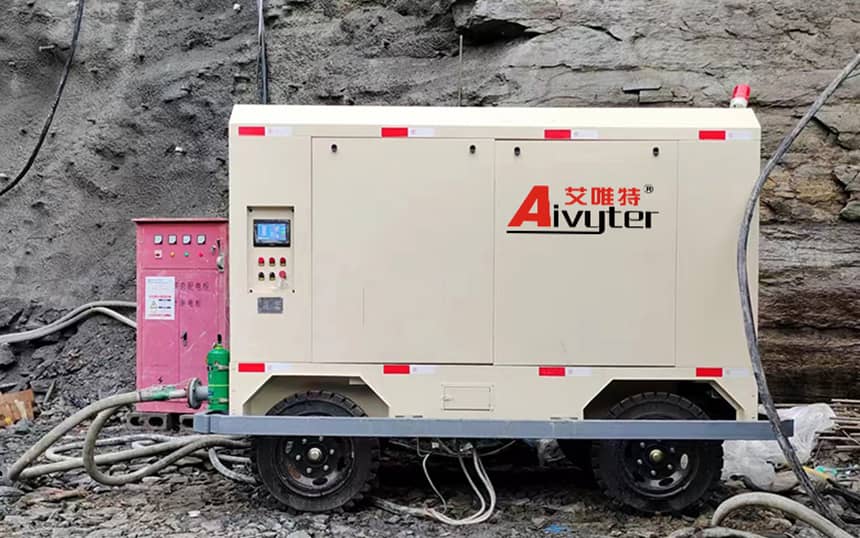
In off-grid construction, underground mining, pipeline installation, and road maintenance, access to reliable compressed air is frequently the bottleneck between project delay and on‑time completion. Fixed electric compressors become useless once power lines end. The proven solution for these environments is a diesel portable air compressor — a self‑contained, trailer‑mounted or skid‑mounted unit that delivers pneumatic power wherever the job takes it. This article provides a systematic breakdown of technical specifications, real‑world fuel economy data, emission compliance (Stage V / Tier 4 Final), and maintenance strategies drawn from hundreds of field deployments in mining, tunneling, and heavy civil works. We also examine how leading manufacturers such as Aivyter engineer these machines to withstand extreme dust, temperature swings, and continuous duty cycles.
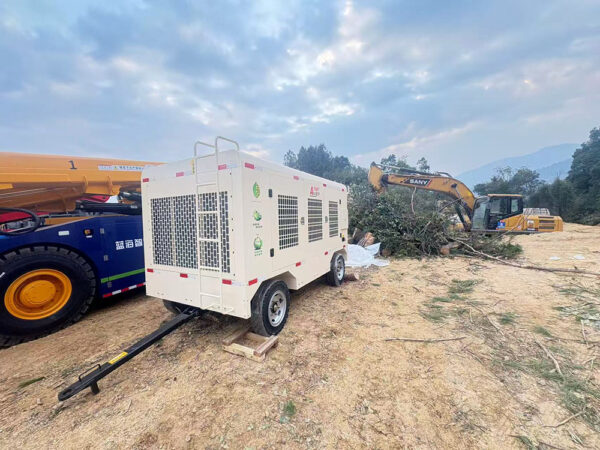
Why a Diesel Portable Air Compressor Outperforms Electric or Petrol Alternatives in Remote Sites
Project managers often face the choice between electric towable compressors, petrol‑powered piston units, and diesel‑driven rotary screw designs. Each has its place, but for sustained heavy‑duty applications — such as operating rock drills, sandblasting equipment, or pile driving hammers — the diesel portable air compressor offers decisive advantages:
- Energy density and runtime: Diesel fuel contains roughly 10× the energy per gallon compared to batteries and 30% more than gasoline. A typical 185 CFM unit runs 12‑16 hours on a single 30‑gallon tank.
- Rotary screw reliability: Unlike piston compressors that require frequent valve adjustments, diesel‑driven rotary screw airends provide continuous 100% duty cycle operation with minimal vibration.
- Torque characteristics: Diesel engines deliver peak torque at lower RPM, matching the load profile of screw compressors better than high‑RPM petrol engines.
- Global fuel availability: Diesel (gasoil) is universally available at mining camps, highway truck stops, and marine fuel depots — unlike specialty fuels or high‑current electrical hookups.
For large infrastructure projects spanning multiple years, a fleet of diesel driven air compressors reduces dependency on grid power and eliminates the risk of voltage drops or phase imbalance damaging sensitive tools.
Technical Deep Dive: Core Components of a Modern Diesel Portable Air Compressor
Engine and Emission Control System
Modern units are powered by turbocharged diesel engines meeting EPA Tier 4 Final or EU Stage V norms. These engines incorporate:
- High‑pressure common rail (HPCR) injection for precise fuel metering and reduced soot formation.
- Diesel Oxidation Catalyst (DOC) + Diesel Particulate Filter (DPF) or selective catalytic reduction (SCR) to lower NOx and PM.
- Electronic governor that maintains engine speed within ±1% regardless of air demand fluctuations.
Airend (Rotary Screw) Configuration
Unlike stationary industrial compressors, portable units use direct‑drive or belt‑driven screw airends optimized for variable ambient conditions. Key specifications include:
- Displacement range: 100 to 1600 CFM (2.8 to 45 m³/min) at pressures from 80 to 350 PSI (5.5 to 24 bar). High‑pressure variants for water well drilling can reach 500 PSI.
- Oil‑flooded or oil‑free: Most portable diesels use oil‑flooded rotary screws for lubrication and sealing; however, contamination‑sensitive applications (e.g., food‑grade pneumatic conveying) can specify oil‑free portable compressors.
- Integrated separator tank: Vertical or horizontal designs with low oil carryover (≤3 ppm).
Cooling System and Thermal Management
Continuous operation in 50°C ambient conditions demands robust cooling. Engine coolant radiators, charge air coolers, and compressor oil coolers are arranged in a stacked or side‑by‑side configuration. High‑dust environments require reversible cooling fans that automatically reverse flow every 10 minutes to blow out debris.
Field Performance Metrics: CFM, PSI, and Fuel Consumption Data
Selecting the correct diesel portable air compressor requires matching air flow (CFM) and pressure (PSI) to the most demanding tool. The table below summarizes typical pairings:
- 90 CFM @ 100 PSI: One 35‑lb rock drill or a needle scaler; fuel consumption ~1.8 gal/hr.
- 185 CFM @ 100 PSI: Two simultaneous rock drills or a 2” submersible pump; fuel ~3.2 gal/hr.
- 375 CFM @ 150 PSI: Sandblasting with 5/16” nozzle or large impact wrench; fuel ~6.1 gal/hr.
- 750 CFM @ 200 PSI: Microtunneling jacking systems or pile driving; fuel ~12.5 gal/hr.
Leading manufacturers such as Aivyter provide certified fuel consumption curves at 50%, 75%, and 100% load, allowing project estimators to calculate total fuel budgets for multi‑year contracts. Notably, variable‑speed (VS) diesel portables are emerging: they adjust engine RPM to match air demand, saving 15‑25% fuel during part‑load operation.
Application‑Specific Requirements for Mining, Tunneling, and Heavy Construction
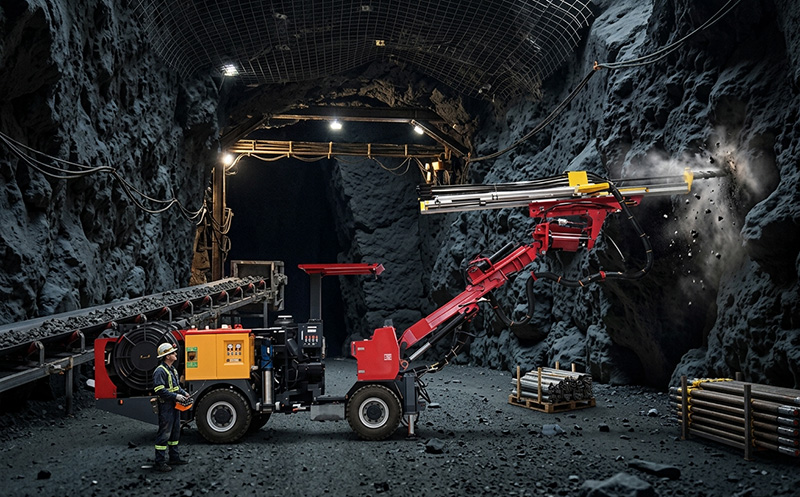
Underground Mining and Tunneling
Working in drifts and declines imposes severe constraints:
- Low‑profile design: Height under 1.5 meters for narrow‑vein mining; some underground diesel compressors are equipped with flame‑proof enclosures and engine shut‑down systems.
- Exhaust gas conditioning: Diesel particulate filters + catalytic converters to maintain mine air quality below 0.5 mg/m³ of DPM (diesel particulate matter).
- Cold start capability: Block heaters and ether injection for ambient temperatures as low as -25°C.
Pipeline and Utility Construction
Right‑of‑way projects involve frequent moves (every 2‑3 days). Features valued here include:
- Single‑point lift lug and forklift pockets for rapid loading onto flatbed trucks.
- Sound‑attenuated enclosures (as low as 68 dBA @ 7 meters) for night work in residential zones.
- Integral fuel tank and bund to contain spills and meet EPA SPCC regulations.
Drilling and Well Service
Water well, geothermal, and blast hole drilling require high pressure (250‑350 PSI) and sustained flow. Diesel portable air compressor units for drilling feature:
- Two‑stage screw airends to achieve 350 PSI efficiently.
- Integrated aftercooler and cyclone separator to remove condensate before it enters the hammer drill.
- Remote monitoring via telematics for real‑time air end temperature and fuel level.
Total Cost of Ownership (TCO): Own vs. Rent vs. Lease
For large contractors, the decision between purchasing a fleet of diesel portable air compressors and renting on demand depends on utilization rates. A 5‑year TCO model reveals:
- Purchase (new): $18,000 – $120,000 depending on CFM. Annual maintenance 8‑10% of purchase price. Break‑even at >1800 operating hours/year.
- Rental: $600 – $2500 per week. Includes maintenance but not fuel. Suitable for projects <6 months or intermittent use.
- Certified used/refurbished: 40‑60% lower upfront cost; verify engine emission compliance (some pre‑Tier 4 units cannot work in clean air zones).
Aivyter offers both new and factory‑remanufactured diesel portable compressors with a 12‑month warranty, including full documentation of engine and airend overhauls.
Maintenance Protocols to Maximize Uptime in Harsh Environments
Field data from 150+ mining sites shows that 40% of unplanned downtime on portable diesel compressors results from three preventable causes: fuel contamination, air filter bypass, and cooling system neglect. Implement these practices:
- Daily walk‑around: Check engine oil level (use API CK‑4 or higher), coolant level, and inspect hoses for chafing.
- Primary air filter service: Replace when restriction indicator shows >25” H₂O; use a vacuum cleaner on the outer element up to 6 times.
- Fuel polishing system: Install a 2‑micron water‑separator/filter to combat microbial growth and water condensation in storage tanks.
- Compressor oil analysis: Sample every 500 hours to monitor viscosity, TAN, and wear metals. Change oil when oxidation exceeds 50% of new oil baseline.
- Battery maintenance: Diesel portables with electric starting require monthly load testing and terminal cleaning; consider dual batteries in parallel for cold climates.
Emission Compliance and Noise Regulations: What Engineers Must Know
Urban construction sites and European mines enforce strict limits. A diesel portable air compressor operating in non‑road applications must display an EPA or EU emissions label. Key thresholds:
- EU Stage V (2019): PM ≤0.015 g/kWh, NOx ≤0.67 g/kWh for engines 56‑560 kW. Requires DPF on most units.
- China National IV: Similar to EU Stage IV, enforced since 2022.
- Noise directive 2000/14/EC: Maximum sound power level for portable compressors above 150 kW is 104 dBA; typical well‑designed units achieve 99‑102 dBA.
Failure to comply results in daily fines (up to $10,000/day in California). Always request the manufacturer’s Certificate of Conformity before purchase.
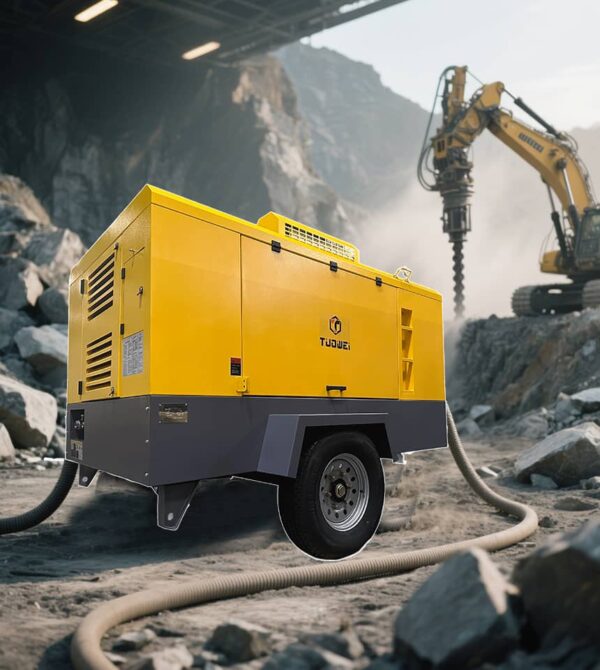
Selecting the Optimal Diesel Portable Air Compressor for Your Project Profile
The choice of a diesel portable air compressor directly influences operational cost, scheduling reliability, and regulatory standing. Start by defining your peak CFM demand and required pressure (including tool duty cycle). Then evaluate engine tier compliance, fuel tank capacity, and serviceability in your geographic region. For operations demanding extreme durability — such as hard rock mining or desert pipeline construction — prioritize units with oversized coolers, heavy‑duty air filters, and telematics. Brands like Aivyter have built a reputation by offering site‑specific configurations and 48‑hour parts dispatch. Finally, calculate TCO for the intended utilization rate: renting remains viable for short‑term projects, while owning a modern fleet yields lowest cost per CFM‑hour above 1800 annual operating hours.
Frequently Asked Questions (FAQ) – Diesel Portable Air Compressor
Q1: What is the typical lifespan of a diesel portable air compressor under continuous mining operation?
A1: With proper maintenance (oil changes every 500 hours, air filter replacement as needed, and annual engine valve adjustments), the diesel engine typically lasts 10,000‑15,000 hours before major overhaul. The rotary screw airend often reaches 20,000‑30,000 hours. Many diesel portable air compressors are retired at 8‑10 years due to emission regulation changes rather than mechanical failure.
Q2: Can I run a diesel portable air compressor at high altitudes (above 3000 meters)?
A2: Yes, but derating applies. For every 1000 meters above sea level, engine power drops by approximately 3‑4% and compressor output (CFM) reduces by 2‑3% because of lower inlet air density. At 4000 meters, expect a 12‑15% reduction in both. Solutions include specifying a high‑altitude kit (different turbocharger wastegate setting and revised injection mapping) and selecting a larger base model to compensate.
Q3: How do I calculate the exact fuel consumption for my duty cycle?
A3: Obtain the specific fuel consumption (SFC) curve from the engine datasheet (usually expressed in g/kWh). Multiply by the average engine power demand (kW) for your compressor load profile. A simplified field method: a diesel portable compressor uses 0.045‑0.055 gallons per CFM per hour at 100% load. For a 185 CFM unit, that equals 8.3‑10.2 gallons/hour at full load, dropping to 50‑60% at idle. Always add a 15% contingency for site conditions (dusty filters, high ambient temperature).
Q4: What safety features are mandatory for a diesel portable air compressor used in explosive atmospheres (coal mines)?
A4: For gassy mines (Group I, Zone 1 or 2), the unit must carry an MSHA (Mine Safety and Health Administration) or ATEX certificate. Required features: flame‑arrestor air intake, surface temperature monitoring (≤150°C), automatic engine shutdown upon overspeed or coolant loss, and a fire suppression system (typically dry chemical or aerosol). Standard construction compressors cannot be used in such environments.
Q5: How do I connect multiple tools that require different CFM/PSI simultaneously to one portable compressor?
A5: Use a distribution manifold with individual pressure regulators and check valves. Example: a 375 CFM @ 150 PSI compressor can feed a 150 CFM rock drill (needs 100 PSI) and a 200 CFM sandblaster (needs 120 PSI) simultaneously. The manifold must have a total outlet capacity equal to the compressor’s rated flow. Avoid deadheading any tool — always provide a pressure relief valve set below maximum system pressure. Aivyter’s accessory catalog includes modular manifolds with integrated gauges and shutoff valves for multi‑tool operation.
Need a diesel portable air compressor tailored to your mine or pipeline specifications? Share your project details (altitude, required CFM/PSI, duty cycle, emission zone) with Aivyter’s engineering support team. We provide dimensioned drawings, fuel consumption tables, and compliance certificates before purchase. Send your inquiry today for a competitive quote and 3D model of the proposed unit.
about
Aivyter
We provides trusted air compressors and mining equipment, engineered for durability, efficiency, and demanding industrial applications.