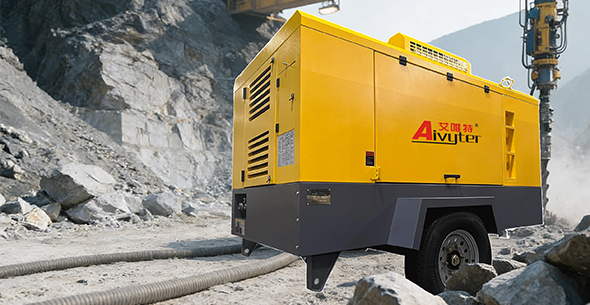
Industrial applications demand consistent, reliable pneumatic power. In sectors such as municipal engineering, open-pit mining, and heavy road construction, procurement managers and project engineers regularly face the challenge of matching strict project budgets with high-performance machinery. Sourcing cheap air compressors is a standard practice to keep capital expenditures manageable while ensuring that field operations remain fully productive. This analysis examines the technical specifications, selection criteria, and system integrations required to deploy cost-effective pneumatic power units without sacrificing operational durability.
Acquiring budget-friendly equipment requires a deep understanding of operational parameters. Rather than focusing solely on the initial purchase price, engineering teams must evaluate the physical construction, mechanical design, and compatibility of the compressor with existing tools. By focusing on fundamental engineering principles, organizations can secure highly reliable machinery that performs under pressure, even in the most demanding environments.
Engineering Parameters and Operational Demands
Before selecting any compressed air equipment, it is necessary to establish a precise pneumatic load profile for the site. Over-specifying a compressor leads to unnecessary capital expenditure and underloaded running conditions, which can cause moisture accumulation in the oil system. Conversely, under-specifying leads to insufficient pressure at the tool face, resulting in operational delays and excessive wear on the compressor air end.
Volume Flow (CFM) and Working Pressure (PSI)
Compressed air systems operate on two primary metrics: Cubic Feet per Minute (CFM), which measures volume flow rate, and Pounds per Square Inch (PSI), which measures pressure. Heavy pneumatic tools, such as rock drills, clay diggers, and sandblasting nozzles, have specific consumption profiles. A standard industrial rock drill, for instance, typically requires between 80 to 120 CFM at a continuous pressure of 90 to 100 PSI.
When calculating the total system requirements, engineers must sum the CFM requirements of all tools projected to operate simultaneously. A common calculation formula includes a 20% margin to account for pressure drops across long hose runs, minor system leaks, and future tool additions. Selecting a compressor that meets this aggregated demand prevents drop-offs in tool impact force and maintains constant production rates on the job site.
Duty Cycle and Continuous Run Capabilities
The duty cycle is the percentage of time a compressor can operate under full load within a given timeframe without thermal overload. Industrial-grade rotary screw air compressors are engineered for a 100% duty cycle, meaning they can run continuously throughout a multi-shift workday. Many entry-level reciprocating piston units are designed for a 50% to 60% duty cycle, requiring regular rest periods to dissipate heat.
For applications such as shotcreting, continuous quarry drilling, or industrial sandblasting, a 100% duty cycle machine is necessary. Selecting a rotary screw unit ensures that the internal oil circulation and cooling systems are optimized for continuous thermal equilibrium, preventing high-temperature shutdowns during long operational cycles.
Matching Compressors to Field Environments
Industrial construction and mining sites are physically demanding environments characterized by high dust levels, wide ambient temperature fluctuations, and rough handling. Standard workshop compressors are rarely built to withstand these conditions, making it necessary to select units with robust field protection features.
- Multistage Air Filtration: Heavy dust in mining and excavation sites can quickly clog air intake systems. High-capacity, dual-stage filtration systems protect the air end from abrasive particles that cause internal rotor wear.
- Thermostatically Controlled Cooling: Large radiators equipped with heavy-duty fans ensure the compressor maintains its optimal operating temperature, even when ambient temperatures exceed 40 degrees Celsius.
- Heavy-Gauge Enclosures: Protective steel canopies with powder-coated finishes protect internal components from falling debris, mechanical impacts, and corrosive atmospheric elements.
- Rugged Running Gear: For portable systems, a high-strength steel chassis, heavy-duty axles, and puncture-resistant tires are necessary to allow reliable transport across unpaved terrain.
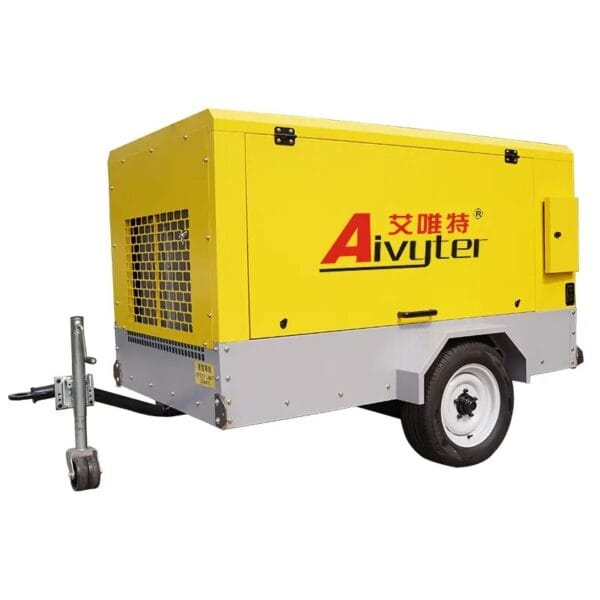
For operations that require mobile pneumatic power across vast infrastructure projects, portable diesel-driven rotary screw models offer the necessary independence from local electrical grids. Specialized engineering manufacturers like Aivyter develop mobile options that combine durable structural steel frames with accessible pricing structures, satisfying the needs of field operations in remote areas.
Rotary Screw vs. Reciprocating Compressors
The internal mechanical design of a compressor dictates its performance, noise levels, and suitability for specific jobs. Understanding the distinctions between rotary screw and reciprocating designs allows buyers to make informed purchasing decisions based on their primary operational requirements.
Rotary Screw Technology for Continuous Demand
Rotary screw air compressors utilize two intermeshing helical rotors to compress air continuously. As the rotors turn, they draw air through the inlet valve and sweep it through the rotor chambers, decreasing the volume and increasing the pressure without pulsation. The absence of reciprocating parts minimizes mechanical vibration, reduces wear on bearings, and lowers operational noise levels.
The most dependable options among cheap air compressors are rotary screw configurations. These systems feature high-efficiency airends that deliver a continuous supply of air, making them the preferred choice for applications requiring constant flow, such as automated manufacturing, tunneling, and large-scale blasting.
Reciprocating Units for Intermittent Loads
Reciprocating compressors rely on pistons driven by a crankshaft to compress air inside cylinders. While these machines generally carry a lower initial capital cost, their intermittent operation design limits their utility in major engineering projects. The pulsed output of a reciprocating unit requires a larger air receiver tank to smooth out flow variations before the air reaches downstream equipment.
For secondary tasks such as maintenance workshops, tire inflation, or light-duty pneumatic clamping, reciprocating models are highly effective. However, attempting to use a reciprocating piston model for continuous heavy drilling or industrial sandblasting often leads to mechanical overheating and accelerated wear on the valve plates and piston rings.
Systems Design to Optimize Budget-Friendly Machinery
Achieving dependable performance from affordable compressed air systems relies heavily on correct auxiliary system design. By installing appropriate downstream components, engineering teams can configure a reliable pneumatic network that compensates for any basic features of the primary unit.
Moisture and Contaminant Management
Atmospheric air contains water vapor, which condenses into liquid water as the air cools after compression. This liquid moisture can rust pneumatic tools, wash away lubricating oils, and clog delicate control valves. To prevent these issues, an integrated air-preparation system should be installed downstream of the compressor discharge.
A typical air-treatment train consists of a cyclone water separator, an air receiver tank, and a series of coalescing filters. For applications requiring exceptionally dry air, such as abrasive blasting or pneumatic control systems, adding a refrigerated or desiccant air dryer is recommended. Under these configurations, operators can run cheap air compressors continuously while supplying dry, clean, high-quality air to sensitive field instruments.
Air Receiver Tank Sizing
An air receiver tank serves several functional purposes in a pneumatic network. It acts as a pressure buffer, storing pressurized air to meet sudden peak demands without causing a drop in system pressure. It also allows the air to cool, facilitating the precipitation of moisture before the air moves further down the line.
For systems with fluctuating air consumption, the general sizing rule is to allocate 3 to 4 gallons of receiver volume for every CFM of compressor capacity. A larger receiver tank prevents the compressor from cycling between load and unload states too frequently, which minimizes wear on the inlet valve, reduces motor heating, and decreases energy consumption during idle periods.
Quality Indicators in Budget Pneumatic Equipment
When searching for cost-effective machinery, procurement departments must look beyond the pricing sheet to evaluate the manufacturing standards and mechanical componentry of the equipment. High-quality budget machinery is defined by solid design choices rather than cut-rate components.
- Premium Airend Design: The rotor profile within the screw compressor should feature precise tolerances to maximize volumetric efficiency and minimize internal air slippage.
- High-Efficiency Motors: Electric motors should be rated to standard protection levels (such as IP54 or IP55) and feature high insulation classes to withstand voltage fluctuations and dusty environments.
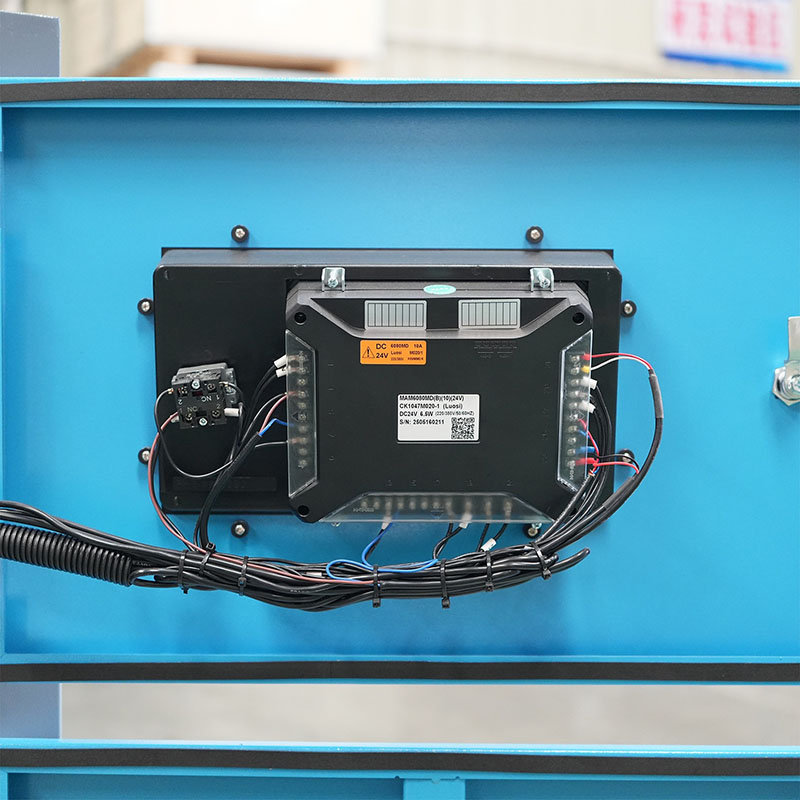
- Advanced Microprocessor Controllers: Modern control panels should display clear operational parameters, including discharge temperature, oil pressure, and maintenance countdowns, while providing automatic shutdown protection in the event of abnormal operations.
- Standardized Consumables: Reliable machinery utilizes standard thread sizes and common filter profiles, allowing maintenance teams to source replacement oil filters and air separator elements easily.
Procuring cheap air compressors requires a focus on these physical indicators of build quality. Equipment supplied by manufacturers like Aivyter can bridge the gap between initial affordability and long-term durability, utilizing standardized, easily serviceable components that simplify routine maintenance in field locations.
System Integration and Maintenance Practices
The lifespan of any industrial air compressor depends on systematic, preventative maintenance. Even the most robustly engineered systems will suffer reduced performance if routine inspections and service intervals are neglected.
A rigorous maintenance protocol should begin with daily visual checks of the oil level, control panel readings, and cooling fan operation. Condensate must be drained from the air receiver tank and the separator vessel daily to prevent water accumulation within the oil circuit. Air intake filters should be inspected weekly and cleaned or replaced more frequently when operating in high-dust mining or quarry environments.
Oil-injected screw compressors require regular oil changes, typically every 2,000 to 4,000 operating hours, depending on the oil type used. The oil separator element, which removes oil mist from the compressed air before it exits the machine, must also be replaced systematically. Using high-quality synthetic lubricants designed for rotary screw machinery helps maintain proper viscosity across a wide temperature range and prevents the formation of varnish on the rotors.
Strategic Sourcing and Support for Industrial Projects
Integrating pneumatic power into major infrastructure, mining, or civil engineering projects requires close cooperation between the site engineering team and the machinery manufacturer. Sourcing decisions should be based on a careful assessment of lead times, spare parts availability, and technical documentation.
By utilizing cheap air compressors from reliable suppliers, companies can distribute their capital resources more efficiently, allocating funds to other critical project areas while maintaining a dependable utility supply on-site. The key is selecting partners who offer transparent technical specifications, direct access to spare parts, and comprehensive engineering support.
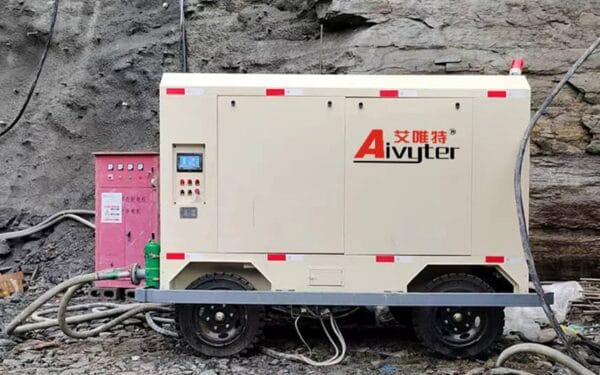
Collaborating with a dedicated supplier like Aivyter helps ensure that your site receives robust, high-performance machinery engineered for demanding field use. For detailed product specifications, system integration recommendations, or to receive a custom quotation tailored to your specific project parameters, please reach out to our sales engineering department. We are ready to assist with your next inquiry.
Frequently Asked Questions
Q1: Can rotary screw compressors in the lower price tier run continuously on a 24/7 basis?
A1: Yes, provided they are industrial-grade rotary screw models designed for a 100% duty cycle. Rotary screw machines utilize continuous oil injection to cool and lubricate the rotors, enabling them to run continuously without thermal issues, unlike reciprocating piston units which require periodic cooling cycles.
Q2: What is the main difference between oil-injected and oil-free compressors for industrial sites?
A2: Oil-injected compressors use oil to seal the rotors, lubricate bearings, and dissipate heat, making them durable and highly cost-effective for general construction and mining applications. Oil-free compressors run without oil in the compression chamber, which is necessary for sensitive industries like pharmaceuticals or food processing but carries a much higher initial equipment cost.
Q3: How do I determine the correct CFM and PSI requirements for multiple tools?
A3: Identify the required working pressure (PSI) of your highest-pressure tool, which determines the target pressure of the compressor. Then, add together the individual CFM requirements of all pneumatic tools that will run simultaneously, and add a 20% safety margin to account for system friction, pipe leaks, and future expansion.
Q4: Why is a larger air receiver tank beneficial for budget-conscious installations?
A4: A larger air receiver tank stores more volume, which dampens pressure drops during peak tool usage and allows the compressor’s motor to run in an unloaded state for longer periods. This reduces the frequency of start-stop cycles, minimizing wear on the electric motor, contactors, and mechanical drive couplings.
Q5: What routine maintenance is required to keep a portable screw compressor running reliably?
A5: Daily maintenance includes checking the engine and compressor oil levels, draining water from the receiver tank, and checking for leaks. Weekly maintenance involves cleaning or replacing the air intake filters, while periodic maintenance (every 2,000 to 4,000 hours) requires replacing the compressor oil, oil filter, and air-oil separator element.
Q6: How does dust affect a compressor on a construction site, and how can it be controlled?
A6: Dust acts as an abrasive, damaging the screw rotors, clogging the oil filters, and blocking the radiator cooling fins, which leads to high-temperature shutdowns. To manage dust, use dual-stage heavy-duty air intake filters, clean the radiator with compressed air regularly, and place the compressor upwind of dust-generating activities like drilling or crushing.
about
Aivyter
We provides trusted air compressors and mining equipment, engineered for durability, efficiency, and demanding industrial applications.