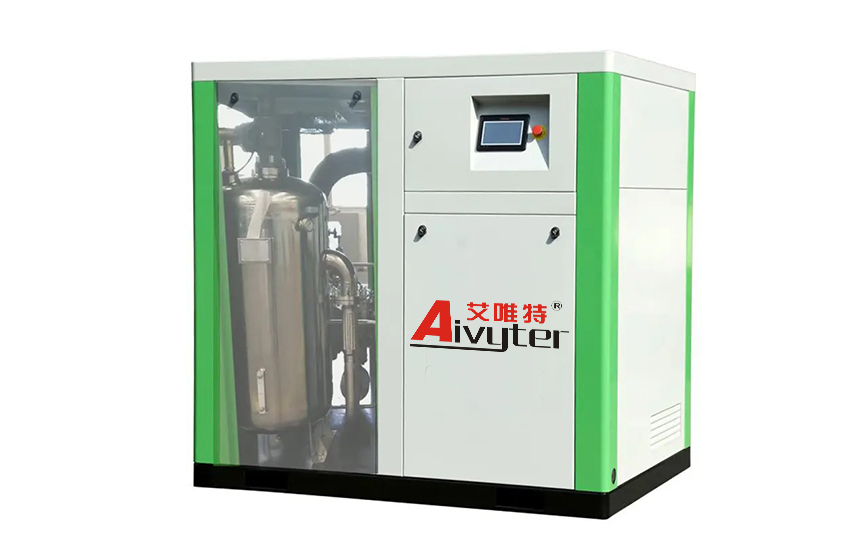
Industrial operations across mining, tunneling, and large-scale construction routinely depend on compressed air systems. Among the many performance parameters that influence equipment selection, acoustic output has moved from a secondary concern to a primary specification. A low noise compressor is no longer viewed as a niche product but as a standard requirement for sites operating under strict environmental and occupational health regulations. This article examines the engineering foundations, application-specific demands, and field considerations that define effective low-noise compression in heavy industry.
Equipment suppliers and engineering procurement teams now routinely specify noise limits alongside flow rate and pressure. The shift reflects broader regulatory trends and a growing recognition that noise management directly affects operational continuity, workforce well-being, and community relations. Aivyter has observed this evolution across multiple sectors, where the integration of acoustic engineering with compression technology has become a distinguishing factor in equipment performance.
Noise Regulations and Operational Constraints in Industrial Settings
Occupational noise exposure limits are enforced by agencies worldwide, with permissible levels typically ranging from 85 to 90 dBA over an eight-hour weighted average. For stationary equipment like compressors, the noise contribution at the operator’s position must be factored into the overall site sound profile. Many jurisdictions also impose boundary noise limits for industrial facilities, particularly those located near residential zones or protected natural areas.
Compliance with these limits requires more than passive attenuation. The acoustic signature of a compressor system is shaped by multiple sources: the air end, the drive motor, cooling fans, intake and discharge pulsations, and structural vibrations. Each source requires targeted mitigation. A low noise compressor design addresses these sources systematically, rather than relying solely on enclosures or silencers added as afterthoughts.
Site-specific constraints often impose additional demands. In underground mining, ventilation shafts and confined spaces amplify acoustic reflections, making perceived noise levels higher than free-field measurements would suggest. Urban construction projects face curfews and decibel limits that vary by time of day. These operational realities compel engineering teams to specify equipment with verified acoustic performance under real-world conditions, not just under ideal test-bench scenarios.
Engineering Approaches to Low Noise Compressor Design
Reducing compressor noise begins at the component level. The air end—whether rotary screw, reciprocating piston, or centrifugal—determines the fundamental frequency and amplitude of pressure pulsations. For rotary screw compressors, which dominate the industrial midsize segment, profile geometry and clearance management directly influence both efficiency and acoustic roughness. Tighter clearances and optimized rotor profiles reduce high-frequency content, producing a smoother pressure wave and lower overall sound power.
Beyond the air end, the following design elements collectively determine the final acoustic output:
- Intake silencer systems: Inlet air carries atmospheric noise and generates its own turbulence. Multi-chamber reactive silencers with absorption elements attenuate both low-frequency pulsations and broadband turbulence noise.
- Discharge pulsation dampeners: Pressure waves exiting the compression chamber are smoothed through tuned volumes or orifice plates, reducing downstream piping noise and vibration.
- Motor and drive train isolation: Electric motors produce electromagnetic and mechanical noise. Resilient mounts and flexible couplings decouple motor vibration from the compressor frame, reducing structure-borne transmission.
- Cooling fan design: Air-cooled compressors rely on fans that can generate significant broadband noise. Large-diameter, low-speed fans with aerodynamically shaped blades reduce tip-speed noise while maintaining adequate airflow.
- Enclosure acoustic treatment: Sheet metal enclosures require mass-loaded panels, constrained-layer damping, and absorption liners to block airborne noise. Ventilation openings demand silencer grids that allow cooling air passage while attenuating sound.
Each of these interventions carries trade-offs. A heavier enclosure improves attenuation but complicates maintenance access. A larger silencer reduces pressure drop but increases footprint. The engineering challenge lies in balancing acoustic performance with operational practicality. Aivyter approaches this balance by integrating acoustic modeling into the design phase, predicting sound field distribution before physical prototypes are built.
Low Noise Compressor Deployment in Underground Mining
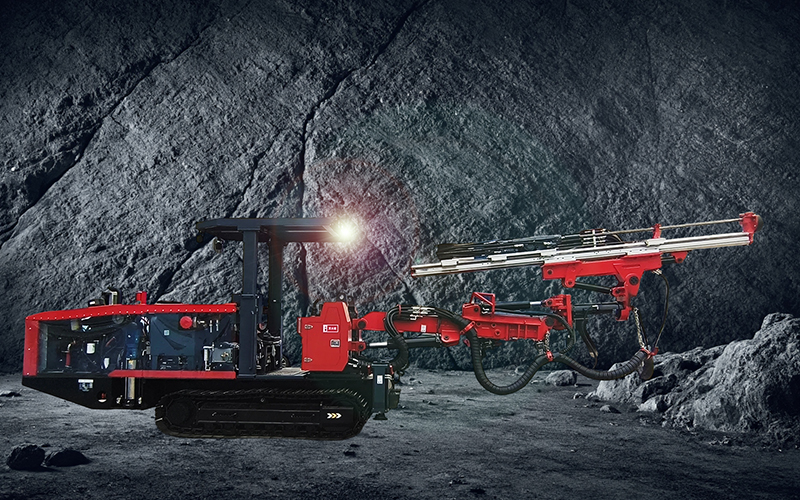
Underground mining presents one of the most demanding environments for compressed air equipment. Ventilation circuits are constrained by shaft dimensions and fan capacity, meaning that heat and noise from machinery directly affect the viability of working faces. Diesel-powered equipment is increasingly replaced by electric alternatives, but the noise from electric compressors remains a significant contributor to the overall sound level.
The acoustic environment underground is characterized by reverberant conditions. Hard rock surfaces reflect sound, creating a diffuse field where the measured sound pressure level can exceed the source’s free-field rating by several decibels. This phenomenon means that a compressor rated at 75 dBA on the surface may produce perceived levels approaching 85 dBA in a narrow drift. Specifying a low noise compressor for underground use therefore requires attention to both source power and directivity.
Practical measures for underground deployment include:
- Positioning compressors in designated sound-attenuated chambers away from active headings
- Using ducted intake and exhaust silencers that extend through ventilation doors
- Implementing remote monitoring and control to reduce operator exposure time
- Selecting oil-free or low-oil-carryover designs to minimize the risk of aerosolized lubricants in enclosed spaces
Mine operators also consider the interaction between compressor noise and communication systems. Voice communication and proximity warning devices rely on clear audio signals; excessive background noise degrades their effectiveness. A compressor with a well-controlled acoustic spectrum—avoiding tonal peaks in the speech frequency range—supports safer and more efficient underground operations.
Low Noise Compressor Use in Tunneling and Construction
Tunneling projects, particularly those in urban corridors, face rigorous noise constraints. Tunnel boring machines (TBMs) and associated support equipment—including compressors for slurry lines, grout pumps, and ventilation—operate around the clock in many cases. Nighttime work often proceeds under reduced noise limits that require active management of every sound source.
The confined geometry of a tunnel bore amplifies low-frequency noise, making it difficult to attenuate with conventional enclosures. Absorption materials are less effective at low frequencies, and the tunnel itself acts as a waveguide, transmitting sound over long distances. A compressor that generates strong low-frequency components can create nuisance conditions at tunnel portals and adjacent surface areas.
Mitigation strategies in tunneling focus on source modification rather than path control. Selecting a compressor with a rotary screw air end—which produces a more continuous pressure profile compared to reciprocating designs—reduces low-frequency pulsation. Variable speed drive (VSD) operation further smooths the acoustic output by avoiding the discrete tonal peaks associated with fixed-speed operation at resonant frequencies.
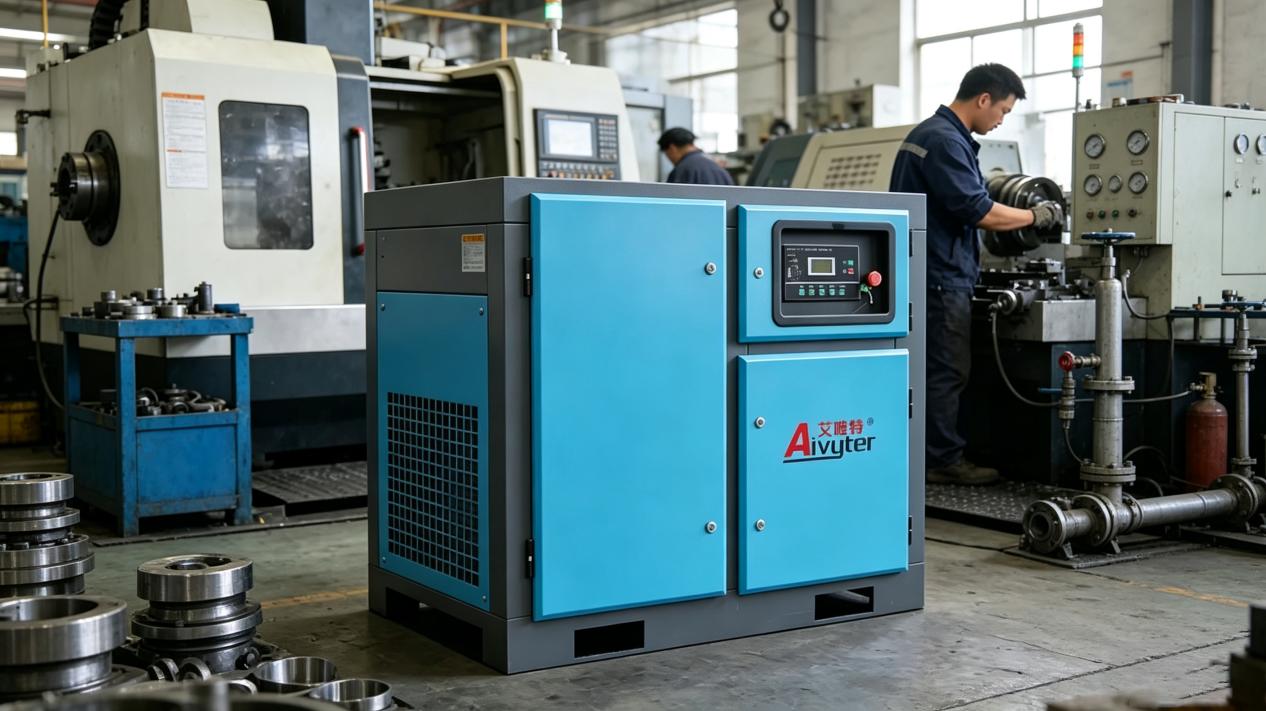
Construction sites above ground face different but equally stringent demands. Residential neighborhoods, hospitals, and schools impose daytime limits that often drop to 55–60 dBA at the property line. For a compressor that may sit 50 meters from the boundary, the sound power level at the source must be kept below 75 dBA to remain compliant. This requirement drives the adoption of fully enclosed compressor packages with integrated silencer systems, often mounted on rubber isolators to decouple ground vibration.
Maintenance Practices for Low Noise Compressor Systems
Acoustic performance degrades over time if maintenance schedules are not adhered to. Silencer media become clogged with dust and oil mist, reducing attenuation effectiveness. Loose fasteners allow panels to vibrate, creating rattles that add high-frequency noise. Worn bearings in the air end or motor produce tonal signatures that signal impending failure. A proactive maintenance program preserves the acoustic integrity of the compressor and prevents gradual noise creep.
Key maintenance actions that directly affect noise output include:
- Inspection and replacement of intake and discharge silencer elements at recommended intervals
- Verification of fastener torque on enclosure panels and access doors
- Condition monitoring of bearings through vibration analysis and oil sampling
- Cleaning of cooling fins and fan blades to maintain airflow and prevent fan imbalance
- Checking isolation mounts for compression set or degradation
Operators should also document baseline noise measurements at commissioning and conduct periodic spot checks using sound level meters. A sustained increase of 2–3 dBA under consistent load conditions indicates a need for investigation. Such measurements provide actionable data for maintenance planning and help distinguish between normal wear and acute issues.
Site-Specific Factors in Low Noise Compressor Selection
Selecting a compressor solely on the basis of published sound power ratings can lead to operational surprises. The effective noise at the receiver—whether an operator station, a property boundary, or a ventilation intake—depends on installation geometry, surface reflections, and background levels. A thorough selection process accounts for these variables and includes the following considerations:
- Distance and direction: Sound pressure drops with distance, but the attenuation rate is affected by obstacles and ground absorption. Placing the compressor behind a berm or inside a structure provides additional attenuation that does not appear in the manufacturer’s rating.
- Site ambient: A compressor that meets the limit in a quiet rural setting may still exceed the limit in a noise-sensitive urban environment. Comparing the compressor’s contribution against the ambient level—rather than against the absolute limit—provides a more realistic compliance check.
- Duty cycle: Intermittent operation generates transient noise events that may be more intrusive than continuous sound. Some regulations apply different limits for impulsive or short-duration noise. VSD compressors that modulate output smoothly can reduce the number of start-stop events, lowering the cumulative noise impact.
- Integration with other equipment: The compressor operates alongside drills, haul trucks, ventilation fans, and generators. The combined sound spectrum must be considered, particularly if multiple sources have tonal components at similar frequencies.
Field experience shows that a compressor with a 3 dBA margin over the specified limit often provides sufficient headroom to accommodate installation variations and maintenance degradation. This margin also reduces the risk of non-compliance during periodic regulatory inspections. Aivyter offers application engineering support to assist in this site-specific evaluation, ensuring that the selected equipment matches the acoustic and operational profile of the project.
Frequently Asked Questions
Q1: What specific noise level should a low noise compressor achieve for underground mining applications?
A1: For underground mining, the preferred specification is a sound power level below 80 dBA at the source, measured under full-load conditions. However, the effective level at the operator’s position depends on drift dimensions and ventilation airflow. Many mine operators set an internal limit of 75 dBA at 1 meter from the compressor enclosure, with additional attenuation required for compressors placed near active working faces.
Q2: How does variable speed drive operation affect low noise compressor performance?
A2: Variable speed drive compressors produce lower overall noise at partial loads because the air end and motor operate at reduced speeds. This reduction follows a logarithmic relationship—a 20% speed reduction typically yields a 3–4 dBA decrease in sound power. Additionally, VSD operation eliminates the discrete tonal peaks associated with fixed-speed operation at line frequency, resulting in a more broadband spectrum that is less perceptually intrusive.
Q3: Are oil-free compressors inherently quieter than oil-flooded designs?
A3: Not inherently. Oil-flooded rotary screw compressors have oil as a damping medium, which can reduce some mechanical noise. Oil-free designs rely on precise timing gears and dry-running components that may generate higher-frequency content. However, modern oil-free compressors incorporate advanced housing designs and silencer systems that bring their acoustic performance in line with—or below—that of oil-flooded models. The choice between oil-free and oil-flooded should be driven by air quality requirements, with noise as a secondary but manageable consideration.
Q4: What maintenance intervals are recommended for silencer elements in low noise compressor systems?
A4: Intake silencer elements typically require replacement every 1,000 to 2,000 operating hours, depending on ambient dust levels. Discharge silencer elements have longer service lives—often 4,000 to 6,000 hours—but should be inspected during routine oil changes. Operators should replace elements earlier if differential pressure readings exceed baseline values by 15–20%, as restricted airflow elevates noise and reduces compressor efficiency.
Q5: Can a low noise compressor be retrofitted with additional silencing equipment after installation?
A5: Yes, but with limitations. Retrofitting an external silencer on the intake or discharge is straightforward and effective. Adding a full acoustic enclosure around an existing compressor is more complex and may interfere with cooling airflow and service access. The most effective retrofits target specific noise paths: vibration isolation pads under the base frame, flexible connectors on piping, and absorption panels on nearby reflective surfaces. A site acoustic survey is recommended to identify the dominant path before specifying retrofit measures.
For detailed specifications, application engineering support, or to discuss site-specific noise requirements, submit an inquiry through the Aivyter contact form. Include project location, air demand, pressure requirements, and noise constraints for a tailored equipment proposal.
about
Aivyter
We provides trusted air compressors and mining equipment, engineered for durability, efficiency, and demanding industrial applications.