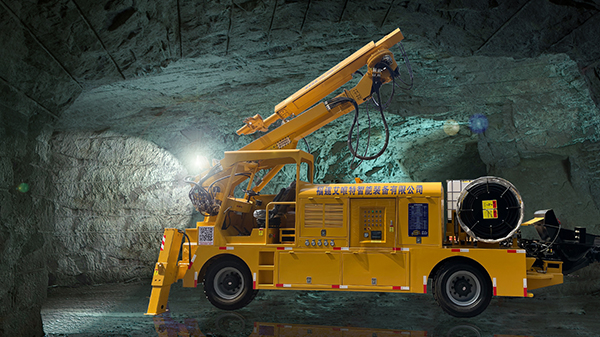
In mining, tunneling, and large‑scale infrastructure projects, the rotary screw compressor is a central production asset. Performance deviations of a few percentage points translate into significant operational losses. Choosing among global screw compressor manufacturers demands more than comparing brochures. Engineering procurement teams must evaluate manufacturing precision, material science, quality systems, and application‑specific design philosophies. This guide provides a structured methodology for assessing manufacturers based on real‑world industrial demands.
Core Manufacturing Capabilities for Rotary Screw Compressors
The difference between a robust compressor and a maintenance liability lies in production discipline. The following technical capabilities separate competent screw compressor manufacturers from average assemblers.
Rotor Profile Generation and Metrology
Helical rotor profiles determine internal leakage, specific power, and noise. Leading manufacturers use CNC rotor grinders with sub‑micron positioning accuracy. Profile deviations above 5 µm increase internal recirculation losses by 8‑12%. Advanced producers apply 3D coordinate measuring machines (CMM) to every rotor batch, verifying lead angle, helix error, and surface finish (Ra ≤ 0.2 µm for oil‑flooded types). Thermally stabilized grinding avoids geometry changes due to ambient shifts. Manufacturers unable to provide in‑house profile measurement reports should raise red flags.
Housing Casting and Bore Tolerances
Compressor housings are typically cast from high‑grade gray iron (GGG‑40) or ductile iron. Permanent mold casting achieves tighter bore consistency than sand casting. Bores for rotor journals require honed finishes (Ra 0.4 µm) and roundness within 0.01 mm. Some manufacturers use cryogenic treatment to stabilize housing dimensions over temperature cycles. For mining compressors expected to work from -20°C to 50°C, housing distortion directly affects rotor tip clearance. Ask for thermal expansion simulation data.
Bearing Selection and Preload Control
High‑speed screw compressors (3,000‑15,000 rpm) use matched angular contact ball bearings for thrust loads, alongside cylindrical roller bearings for radial support. Premier manufacturers specify ISO P5 or P4 precision classes with controlled internal clearance (C3 or C4). Preload on thrust bearings is set via spacer grinding – an operation requiring skilled technicians. Inadequate preload leads to rotor axial movement and seal damage; excessive preload causes premature fatigue. Look for manufacturers that document bearing mounting preload values and use inductive heating for interference fits.
Quality Assurance and Certification Frameworks
Standards compliance is non‑negotiable for industrial compressors. However, the depth of implementation varies widely.
Performance Testing Under Loaded Conditions
According to ISO 1217 (displacement compressors), each unit should undergo a full performance test: actual volume flow rate, specific power input, and discharge temperature. Reliable screw compressor manufacturers operate test rigs with calibrated nozzles, thermocouples, and pressure transducers traceable to national standards. Request test reports showing the deviation from design point – acceptable tolerance is within ±3% for flow and ±5% for power. Avoid suppliers that only run no‑load spin tests.
Pressure Vessel and PED Compliance
Compressor receiver tanks and oil separators are pressure vessels. Certifications required include ASME Section VIII (USA), PED 2014/68/EU (Europe), or GB/T 150 (China). Verify that the manufacturer holds notified body approvals for their fabrication processes. For hazardous atmospheres (e.g., coal mining), ATEX or IECEx certified units are mandatory. Non‑certified equipment cannot be legally installed in many jurisdictions.
Oil‑Free vs. Oil‑Flooded – Certifications for Air Purity
For applications requiring ISO 8573‑1 Class 0 oil‑free air (food, pharmaceutical, electronics manufacturing), manufacturers must demonstrate third‑party verification. Class 0 requires that oil content is undetectable by specified methods. Oil‑free screw compressors use water‑lubricated bearings or dry‑type rotors with PTFE coating. Ask for the actual test certificate from an accredited lab.
Industry‑Specific Engineering Adaptations
A manufacturer that excels in clean factories may fail in underground mining. Evaluate how well the manufacturer addresses sector‑specific stressors.
Mining and Quarrying – Dust Ingress and Corrosion
Mining screw compressors require heavy‑duty air intake systems with two‑stage filtration (cyclone pre‑cleaner + main filter). The manufacturer should offer oversized coolers with protective grilles and reversible fans to blow off accumulated dust. For underground coal mines, flame‑proof enclosures (FLP) and anti‑static discharge valves are mandatory. Also check for corrosion‑resistant coatings on coolers – salt spray test (ASTM B117) exceeding 500 hours without red rust.
Civil Engineering – Portability and Power Fluctuations
Tunnel boring and road construction demand mobile compressors with integrated chassis and sound‑attenuated canopies. Manufacturers must design for generator power supply: wide voltage tolerance (±10%) and frequency variation (±5%). An undersized minimum pressure valve or weak coupling can cause surging. Look for compressors with soft‑start or VFD options to manage inrush currents.
High Ambient Temperature Regions
In desert or tropical climates, cooling system design is decisive. Screw compressor manufacturers should specify coolers with 15‑20% extra capacity, using fin spacing ≥4 mm to prevent clogging. Thermostatic mixing valves maintain oil viscosity. Request confirmation that the compressor can operate at ambient 55°C without derating.
After‑Sales Support and Spare Part Logistics
Compressor downtime directly hits project schedules. The manufacturer’s support structure is as important as the equipment itself.
Parts Interchangeability and Documentation
Well‑structured manufacturers provide full parts catalogs with exploded diagrams, OEM part numbers, and recommended overhaul intervals. They maintain cross‑reference databases to avoid obsolescence. For international projects, verify that a regional distribution center holds stock of high‑wear components: air filters, oil separators, seal kits, and bearing sets. Aivyter, as a specialized supplier of compressor systems and spares, adheres to ISO 9001:2015 documentation standards, ensuring traceability for every component delivered to remote sites.
Technical Field Support and Remote Diagnostics
Manufacturers investing in IoT‑ready controllers allow predictive maintenance. Vibration sensors, temperature transmitters, and pressure differential switches can be integrated with site SCADA. Ask whether the manufacturer offers remote troubleshooting via secure gateways. For critical mines, a 24/7 technical hotline with engineers who understand local conditions is a differentiator.
How to Conduct a Technical Audit of Screw Compressor Manufacturers
Before issuing a purchase order, procurement teams should perform a structured audit. Use this checklist:
- Facility tour: Observe rotor grinding cleanliness, bearing assembly cleanrooms (ISO 8 or better), and torque control on housing bolts.
- Calibration records: Review calibration certificates for torque wrenches, micrometers, and test rig instruments – traceable to national standards.
- Failure mode analysis: Request summary of warranty claims over the last three years. High rate of seal or bearing failures indicates design or assembly issues.
- Custom engineering capability: Can the manufacturer adjust rotor coating, modify flange orientations, or supply higher protection class motors (IP55 or IP65)?
- Training programs: Do they provide on‑site training for your maintenance crew? Knowledge transfer reduces misdiagnosis.
Manufacturers that openly share audit results and welcome third‑party inspections demonstrate confidence in their processes. Aivyter maintains an open‑door policy for qualified engineering partners, providing technical workshops at their facility.
Integration with Compressed Air System Design
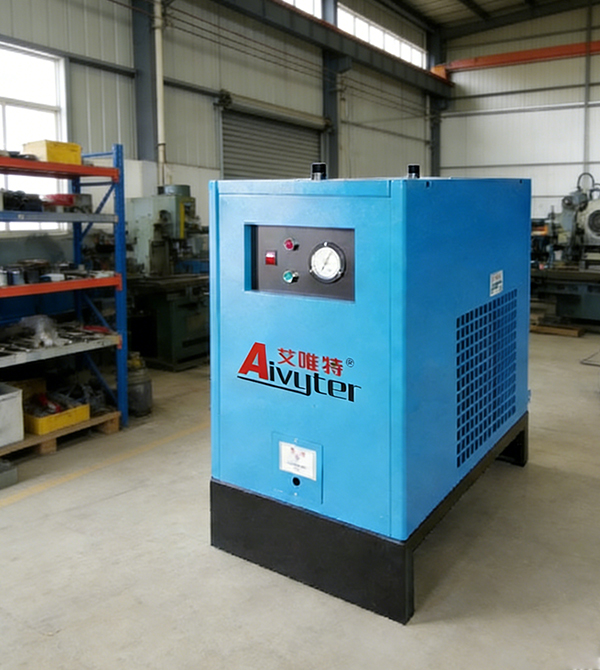
A screw compressor does not operate in isolation. The manufacturer’s responsibility extends to system integration: dryer sizing, receiver tank volume, and pipe diameter recommendations. Poorly matched dryers cause condensate backflow into the compressor sump, leading to oil emulsification. Competent manufacturers provide system simulation tools to calculate pressure drop and storage requirements. They also advise on condensate management – oil‑water separators meeting local environmental discharge norms.
Frequently Asked Questions (FAQ)
Q1: What technical documents should I request from a screw compressor manufacturer before placing an order?
A1: Request these six items: (1) certified performance curve (flow vs. pressure, power input), (2) dimensional outline drawing with service clearances, (3) material certificates for rotor and housing, (4) bearing type and supplier list, (5) electrical schematic and I/O list, (6) factory acceptance test (FAT) procedure. For mining, also ask for ATEX/FLP certificates.
Q2: How can I verify if a manufacturer produces genuine oil‑free screw compressors or simply claims so?
A2: Demand ISO 8573‑1 Class 0 test report from a third‑party laboratory such as TÜV, DNV, or SGS. The report must state the detection method (e.g., flame ionization detector) and the measured oil concentration (should be below 0.01 mg/m³). Also inspect the compressor layout: oil‑free designs have no oil sump and use water or grease lubricated bearings with vented chambers.
Q3: Do all screw compressor manufacturers comply with the same efficiency standards?
A3: No. Efficiency levels follow regional standards: IE3/IE4 for motor efficiency (IEC 60034‑30), and specific power classes for compressors (ISO 50001, CAGI data sheets in North America, or EU 1253/2014). High‑quality manufacturers provide CAGI datasheets showing full load and part load specific power. Avoid those that only quote shaft power without including cooling fan power.
Q4: What is the typical lead time for custom‑built screw compressor units for mining projects?
A4: For non‑standard enclosures, larger air receivers, or special coatings, lead times range from 12 to 20 weeks. Manufacturers with modular design platforms can reduce this to 8‑10 weeks by using pre‑engineered sub‑assemblies. Always confirm the promised lead time in the purchase agreement and request milestone photos during assembly.
Q5: How does Aivyter differentiate its engineering support for screw compressor systems?
A5: Aivyter provides full lifecycle assistance: from selection based on altitude and ambient conditions, to vibration acceptance testing, and remote operating data monitoring. Their technical team includes former field service engineers familiar with mining and construction environments, ensuring that spares and support align with actual site constraints, not just theoretical specifications.
Need Assistance Selecting the Right Screw Compressor Manufacturer?
For projects requiring robust screw compressor systems, rigorous technical evaluation is essential. Whether you need a standard industrial unit or a fully customized solution for extreme conditions, the engineering team at Aivyter can guide your selection. Share your operating parameters: required flow (m³/min), discharge pressure (bar), site altitude, ambient temperature range, and any hazardous area classifications.
Send your technical inquiry now: https://www.aivyter.com/contact – You will receive a detailed response with performance estimates, datasheets, and a preliminary proposal within two business days.
about
Aivyter
We provides trusted air compressors and mining equipment, engineered for durability, efficiency, and demanding industrial applications.