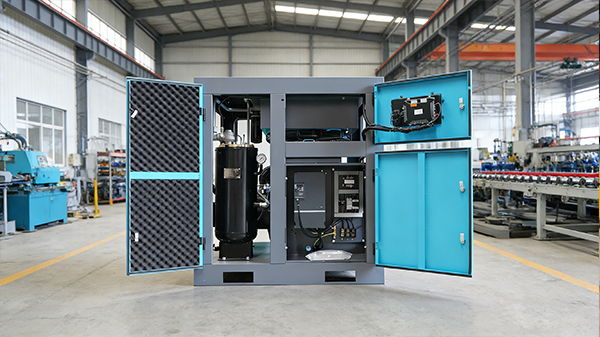
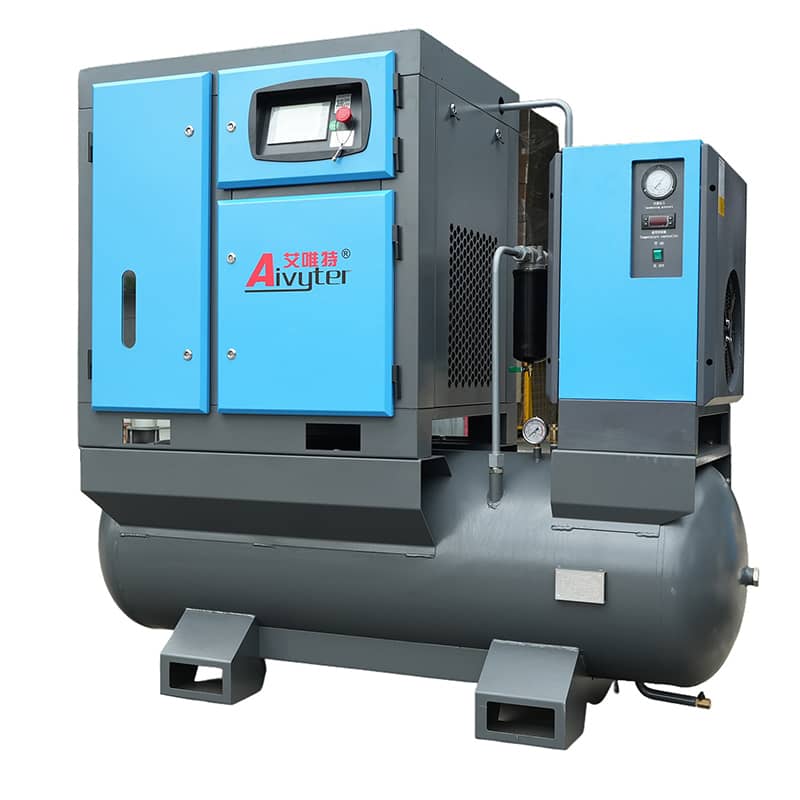
Industrial manufacturing, mineral extraction, and heavy engineering demand continuous, high-volume pneumatic power. The choice of utility systems dictates the operational stability of the entire facility. Among these utility systems, the stationary air compressor serves as the primary engine for pneumatic tools, processing lines, and material handling systems. Modern facilities require continuous air delivery under demanding duty cycles, making robust design a priority over temporary flexibility.
Engineering teams focus on system integrity when deploying these fixed units. Manufacturers like Aivyter supply configurations engineered to withstand high dust levels, temperature variations, and fluctuating air demands. This analysis details the design factors, mechanical configurations, and application considerations that define heavy-duty compressed air installations.
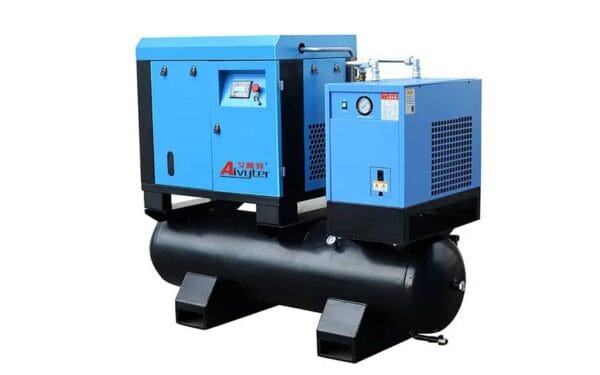
Mechanical Architecture and Operating Principles of Fixed Air Systems
Industrial facilities rely on specific mechanical designs to convert mechanical energy into pneumatic power. Understanding these configurations helps engineers select the correct unit for their operational profiles.
Rotary Screw Compression Chambers
The dominant mechanism in medium-to-high capacity fixed installations is the rotary screw air end. This design features asymmetric male and female rotors mounted on heavy-duty bearings. As the rotors turn, the volume between the lobes decreases, compressing the trapped air.
- Asymmetric Rotor Profiles: Modern profile geometries minimize blow-by losses, improving thermodynamic efficiency and volumetric output.
- Bearing Arrangements: Double-row tapered roller bearings are positioned at the discharge end to handle combined radial and axial forces, extending the operational life of the air end.
- Lubricant Injection: Controlled oil injection seals the clearances between rotors, absorbs heat generated during compression, and lubricates the moving parts.
Air-Cooled versus Water-Cooled Systems
Heat management determines the continuous duty rating of a stationary air compressor. Units are classified based on their heat dissipation method, each suited to different environments.
- Air-Cooled Units: These employ high-surface-area aluminum block radiators paired with axial or centrifugal fans. They suit facilities with adequate ventilation where simple mechanical installation is preferred.
- Water-Cooled Units: These use shell-and-tube or plate heat exchangers connected to a dedicated cooling tower loop. They are suitable for high ambient temperatures, contaminated atmospheres, or deep mining locations where air cooling is impractical.
Two-Stage Compression Advantages
For applications demanding high flow rates at elevated pressures, two-stage compression is often preferred over single-stage designs. By dividing the compression process into two distinct stages with an intercooler in between, the air temperature is reduced before entering the second stage. This reduces the work required for the second compression stage, increases volumetric efficiency, and lowers mechanical stress on the internal components.
Industrial Application Profiles and Operating Demands
The functional demands placed on compressed air systems vary widely across heavy industries. Each sector imposes specific challenges regarding air volume, operating pressure, and contamination tolerance.
Automated Manufacturing and Assembly Lines
Automated production environments rely on pneumatic actuators, control valves, and robotic pick-and-place systems. A sudden drop in air pressure can halt entire assembly lines, causing production delays.
To prevent these disruptions, the stationary air compressor must deliver stable flow at uniform pressures, typically between 6 and 8 bar. Integrating downstream desiccant dryers and particulate filters ensures the air meets ISO 8573-1 Class 1 or Class 2 quality standards, protecting delicate pneumatic components from corrosion and wear.
Mining and Tunneling Infrastructure
Underground and open-pit mining environments are characterized by high levels of ambient dust, moisture, and variable ambient temperatures. Compressed air drives pneumatic drills, ventilation boosters, and slurry pumps.
These harsh conditions demand heavy-duty filtration systems, including multi-stage cyclonic pre-cleaners, to protect the compressor’s air end. Mechanical enclosures must be structurally reinforced to resist physical impacts and vibration. Reliable operation is necessary here, as pneumatic systems often power safety equipment and underground ventilation control doors.
Power Generation and Process Plants
In thermal power plants and chemical processing facilities, compressed air is used for instrument control systems and bulk dry-material conveying. High reliability is non-negotiable, as instrument air failures can lead to plant shutdowns. These installations often feature redundant configurations, with multiple machines operated by centralized sequencers to ensure a continuous supply even during maintenance cycles.
Resolving Common Industrial Air System Challenges
Operators of industrial air networks face persistent challenges that affect production quality. Managing these issues requires correct equipment integration and system design.
Managing Condensation and Moisture
Atmospheric air contains water vapor, which condenses during compression. Liquid water in downstream piping causes pipe corrosion, valve sticking, and product contamination.
Integrating a liquid separator with automatic condensate drains immediately downstream of the aftercooler removes the bulk of the moisture. For processes sensitive to moisture, a refrigerated or desiccant dryer must be paired with the compressor system to lower the pressure dew point to appropriate levels, ensuring dry air reaches the point of use.
Managing Particulate Contamination
Ambient air carries microscopic dust, pollen, and industrial byproducts. If left unfiltered, these particles act as abrasives on compressor rotors and downstream equipment. High-capacity intake filters with micro-glass media capture particles down to 3 microns. Regular maintenance of these filter elements prevents pressure drops and maintains intake efficiency, protecting the internal components from premature wear.
Regulating Variable Demand
Plant air consumption is rarely constant. Standard fixed-speed compressors operate on load/unload cycles, which can lead to high energy consumption during low-demand periods. Variable speed drive (VSD) systems allow the motor speed to match real-time demand. This matches power consumption to actual air usage and minimizes mechanical stress from frequent motor starts. For integrated solutions, systems manufactured by Aivyter provide steady pressure control across fluctuating demand profiles, stabilizing the entire plant air network.
Selection Parameters for High-Capacity Installations
Selecting the correct plant air system requires evaluating several design parameters to ensure long-term reliability.
Air Flow Capacity (CFM / m³/min)
The total volume of air required by all pneumatic devices, including a safety margin for system leakage and future expansion, determines the required displacement. Underestimating capacity leads to pressure drops, while overestimating results in short-cycling and condensation issues within the oil circuit.
Operating Pressure (PSI / bar)
The operating pressure must match the highest demand rating of the connected tools, accounting for pressure drops across piping, filters, and dryers. Standard industrial applications operate between 7 and 10 bar, while specialized high-pressure processes may require 13 bar or more.
Air Purity Class
Different applications require different air qualities. Selecting the appropriate filtration and dryer train according to ISO 8573-1 standards prevents downstream product defects and premature tool wear. Oil-free configurations or advanced oil-separation filtration systems are selected based on the sensitivity of the final product.
Control and Monitoring Integration
Modern industrial facilities require integration with distributed control systems (DCS) or building management systems. Advanced controllers on the stationary air compressor monitor parameters like discharge temperature, pressure, and vibration, providing early warnings to prevent unplanned downtime.
Frequently Asked Questions
Q1: What are the primary differences between stationary and portable air compressors?
A1: Stationary air compressors are anchored to a concrete foundation, designed for continuous high-capacity operations, and typically feature large three-phase electric motors, advanced heat-management systems, and integrated air treatment options. Portable units are mounted on trailers or frames, powered by diesel engines, and designed for temporary outdoor applications where mobility is required.
Q2: How often should the lubricant in a rotary screw stationary air compressor be replaced?
A2: Lubricant life depends on the fluid type and operating conditions. Synthetic fluids typically last between 4,000 and 8,000 running hours under normal operating temperatures, while mineral-based fluids may need replacement every 2,000 hours. Regular oil analysis helps determine the exact replacement interval based on operating conditions.
Q3: How does ambient temperature affect compressor performance?
A3: High ambient temperatures reduce air density, which decreases the mass flow rate of the compressor. Higher temperatures also increase the heat load on cooling systems, raising the discharge temperature of the air. This can lead to automatic shutdowns if the temperature exceeds safety limits. Proper ventilation is necessary to maintain efficient operation.
Q4: Why is an air receiver tank recommended for fixed compressor installations?
A4: Air receiver tanks store compressed air to handle peak demand periods, prevent rapid cycling of the compressor motor, damp pressure pulsations, and allow moisture to condense and settle before the air reaches downstream filtration equipment.
Q5: Can a stationary air compressor run continuously?
A5: Yes, industrial rotary screw compressors are designed for 100% continuous duty cycles. Unlike reciprocating models that require cooling periods, these units run continuously when maintained within their designed temperature and pressure limits.
Industrial Project Consultations
Selecting and configuring a high-capacity air plant requires careful calculation of flow dynamics, pressure requirements, and environmental conditions. Our team of application engineers is ready to assist you in designing a system tailored to your facility’s requirements.
To receive a detailed analysis, equipment specifications, or a customized quote for your upcoming project, please submit an inquiry with your site requirements. We will help you select the most reliable configuration from the Aivyter product line to support your long-term operational goals.
about
Aivyter
We provides trusted air compressors and mining equipment, engineered for durability, efficiency, and demanding industrial applications.