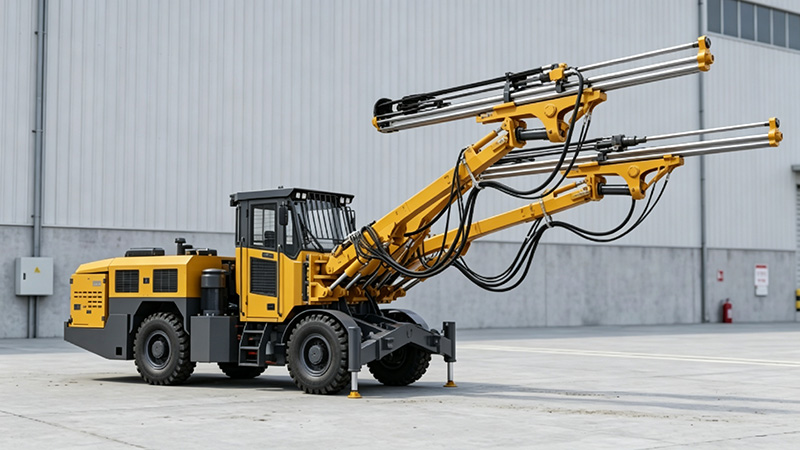
Selecting an underground drill rig manufacture for hard rock mining is not a routine procurement. It is a strategic decision that directly impacts your production rates, operating costs, and site safety. Hard rock conditions—such as granite, quartzite, and magnetite—push equipment to their limits. A poorly matched drill jumbo will deliver low penetration, frequent breakdowns, and high consumable wear. This guide offers a practical framework for evaluating manufacturers. We draw on real-world practices from Aivyter, a company with nearly two decades of experience in the drill rig equipment sector. Our goal is to help you ask the right questions and avoid costly missteps.
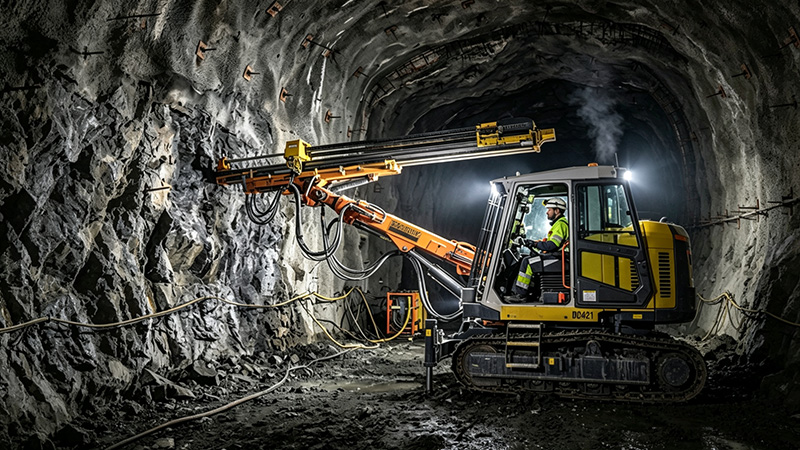
The Realities of Hard Rock: What Your Drill Jumbo Must Handle
Hard rock is unforgiving. Its high compressive strength and abrasive nature demand more from an underground drill rig than softer formations. Before you compare brochures, understand the specific challenges your operation faces.
Impact Power and Feed Force
Your drill rig must deliver consistent, high-impact energy to fracture hard rock efficiently. A weak hydraulic rock drill will struggle, leading to slower cycles and increased bit wear. Look for a manufacture that offers powerful rock drills with advanced valve systems. The feed force must also match the impact energy to keep the drill string in optimal contact with the rock.
Structural Rigidity and Accuracy
High-frequency vibration is the enemy of precision. The boom and carrier frame of your underground drill jumbo must resist flexing. Any deformation will cause borehole deviation, which can ruin blast patterns and reduce ore recovery. A rigid structure is a non-negotiable feature for any serious hard rock operation.
Dust Control and Heat Management
Hard rock drilling generates tremendous heat and silica-laden dust. An efficient wet dust suppression system is not optional—it is a health and safety requirement. Similarly, the hydraulic system needs robust cooling circuits to maintain stable operating temperatures in hot, confined underground spaces.
Safety and Mobility in Confined Spaces
Underground environments are cramped, wet, and often poorly lit. The drill rig must have a high level of ingress protection (IP) for electrical systems. The operator cabin should be ergonomic and offer clear visibility. Furthermore, the machine’s overall dimensions, turning radius, and gradeability determine whether it can reach all production faces efficiently.
Therefore, your first step is to define your specific rock properties and tunnel dimensions. Only then can you judge whether a manufacturer’s product line truly matches your needs.
Five Critical Dimensions for Evaluating an Underground Drill Rig Manufacture
Not all manufacturers are equal. Some are assembly operations; others are true engineering houses. Use these five dimensions to separate competent partners from the rest.
1. R&D Capability and Core Technology
The heart of any drill jumbo is its hydraulic system and control logic. A manufacture that designs its own hydraulic valve blocks and control algorithms will deliver better performance and reliability. Generic, off-the-shelf components often result in poor match between impact, rotation, and feed.
Aivyter in practice: Since 2009, Aivyter has built a technical team of hydraulic and automation specialists. Their focus is on the precise coordination of impact frequency, rotational torque, and feed pressure. This results in a load-sensing hydraulic system that adjusts impact energy to the rock’s hardness automatically. The benefit is twofold: longer tool life and consistently higher penetration rates.
2. Product Completeness and Customization Options
Hard rock mining operations vary widely. A narrow-vein mine needs a different machine than a large-scale block cave operation. The ideal underground drill rig manufacture offers a range of models—single-boom, twin-boom, and even triple-boom jumbos. They should also offer roof bolters and production drills.
Furthermore, look for OEM and ODM capabilities. This indicates a flexible production line that can adapt to your specific voltage, safety standards, and face geometry.
Aivyter product range:
- Development drill jumbos (single, twin, and triple boom)
- Roof bolting drill rigs
- Production drill rigs
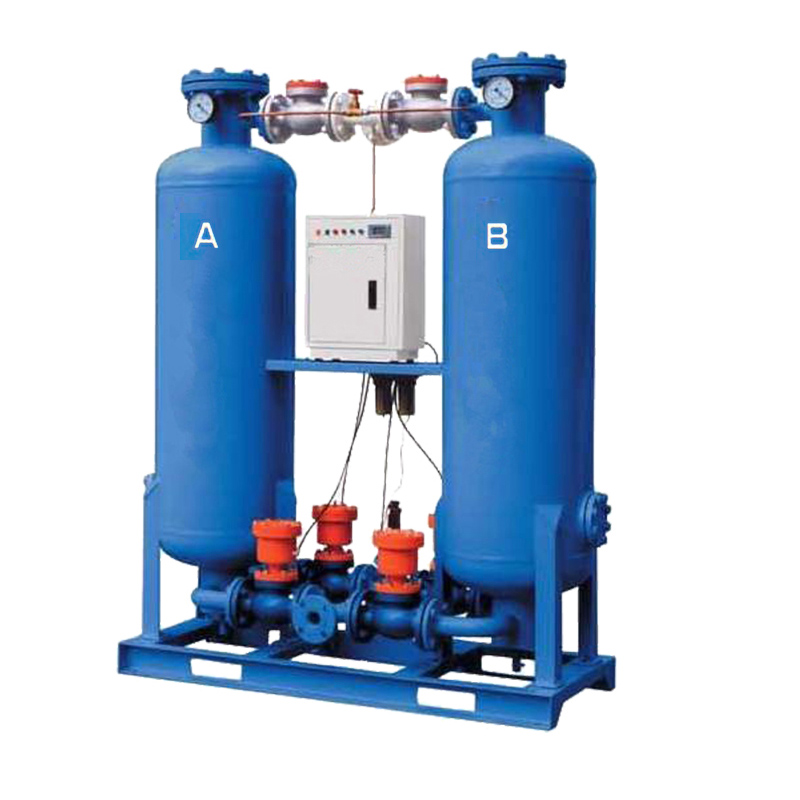
- Rotary screw air compressors for auxiliary support
- Wet spray machines for ground support
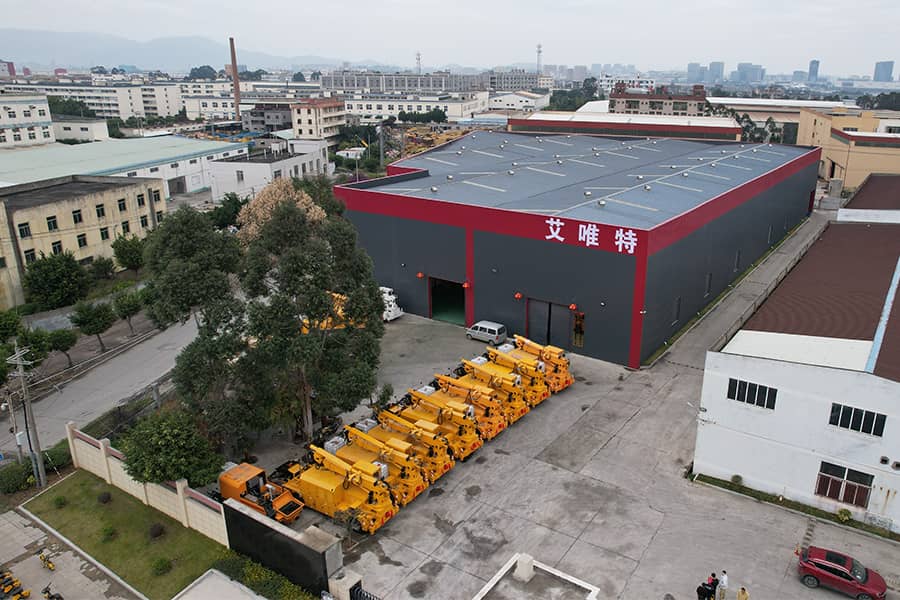
With a factory floor exceeding 10,000 square meters, Aivyter can handle non-standard customization. They work with clients on face dimensions, tramming height, and explosion-proof requirements.
3. Quality Assurance and International Certifications
For high-value capital equipment, certifications are not just paperwork. They are evidence of consistent manufacturing processes and product safety. International buyers should prioritize manufacturers with ISO 9001, CE, TUV, and SGS certifications. These are often prerequisites for export, project insurance, and mine safety audits.
Aivyter’s credentials: Aivyter holds CE, TUV, SGS, and ISO 9001 certifications. Their products meet EU safety standards and are exported to key mining regions including Southeast Asia, Africa, South America, and Russia. These certifications give buyers confidence in product quality and compliance.
4. After-Sales Support and Spare Parts Availability
An underground drill rig can cost a mine over $10,000 per hour in lost production during unplanned downtime. Therefore, the manufacture’s service network is critical. Ask about their response time, spare parts inventory, and training programs.
Key service elements include:
- Remote technical support and diagnostics
- Warehousing for critical spare parts
- On-site commissioning and operator training
- Comprehensive operation and maintenance manuals
Aivyter service approach: Aivyter maintains a professional after-sales team and an overseas distributor network. They provide installation, training, routine inspection, and overhaul services. Their “customer satisfaction first” policy ensures each project has a dedicated support engineer.
5. Proven Application Cases and User References
Claims in a brochure mean little. You need proof. Ask the underground drill rig manufacture for case studies that match your geology. Request data on penetration rates, tool life, and availability in similar hard rock mines. Talk to existing users to verify performance.
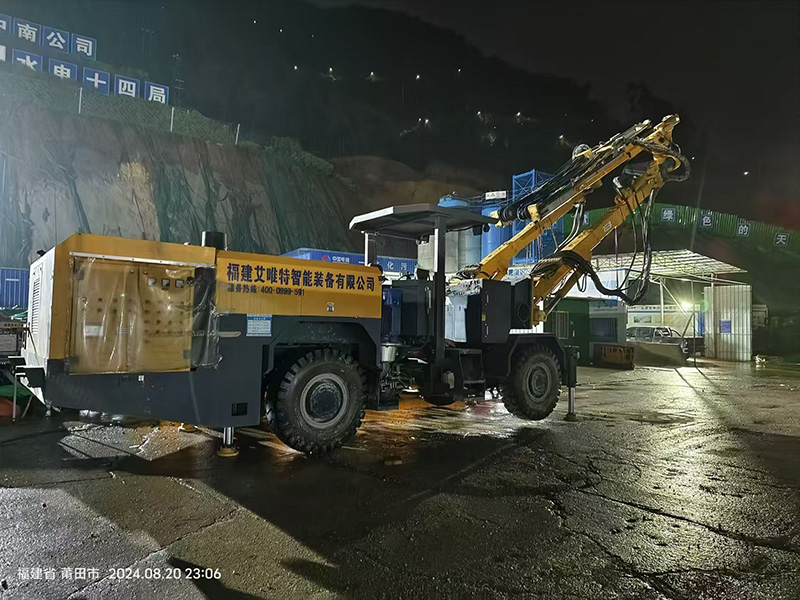
Aivyter track record: Aivyter drill rigs operate in numerous metal mines—including iron, copper, and gold—with hard rock conditions. Users report daily advance rates exceeding 12 meters in certain tunnels. Clients consistently note the equipment’s durability and ease of maintenance.
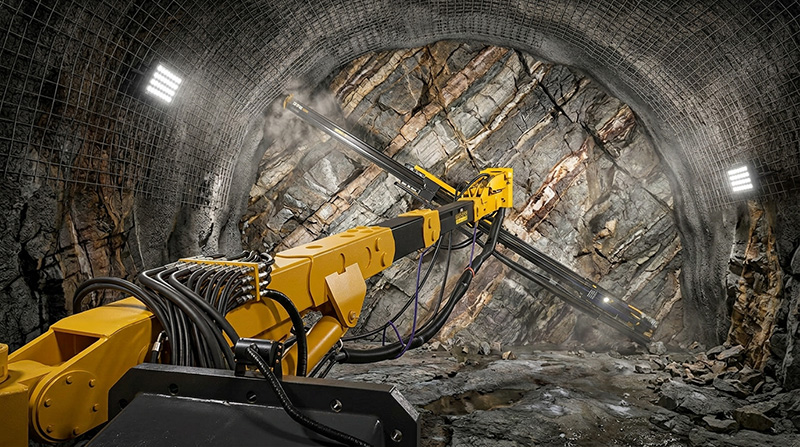
A Four-Step Selection Workflow for Your Next Drill Jumbo
To bring structure to your evaluation, follow this practical four-step process. It will help you compare options objectively and avoid decision fatigue.
Step 1: Define Your Operational Requirements
Start with a clear set of specifications. Document your tunnel cross-section, rock hardness (Protodyakonov coefficient), monthly advance target, voltage supply, and tramming conditions. The key question: “What are my site’s absolute limits?”
Step 2: Create a Shortlist of Manufacturers
Based on industry recommendations and case references, select three to five candidates. Prioritize companies with their own manufacturing facilities and a complete production chain. Avoid trading houses that outsource assembly.
Step 3: Conduct a Technical Comparison
Compare critical parameters side-by-side. These include impact power, number of booms, coverage area, tramming speed, dust extraction efficiency, and control system type. Always apply a 20% safety margin on key performance metrics.
Step 4: Evaluate Commercial and Service Terms
Look beyond the initial purchase price. Consider shipping costs, import duties, delivery lead time, warranty period, and consumable pricing. Evaluate the total cost of ownership over five years. Ask about the manufacturer’s service response commitments and parts replacement policies.
Why Aivyter Deserves a Place on Your Shortlist
We have mentioned Aivyter in the context of each evaluation dimension. Let us summarize why this underground drill rig manufacture is a strong candidate for your next project.
- Deep experience: Operating since 2009, Aivyter has accumulated a wealth of hard rock drilling data and application knowledge.
- Self-owned manufacturing: Their own factory ensures quality control, consistent delivery, and complete transparency—no badge-engineered products.
- One-stop solution: They supply drill rigs, air compressors, and wet spray machines. This ensures better system compatibility and reduces multi-vendor coordination.
- Full international compliance: CE, TUV, SGS, and ISO certifications cover all export requirements.
- Service guarantee: Their commitment to quality equipment and responsive service is backed by a measurable performance culture.
Hard rock mining is a demanding business. You need a partner who understands the technical and operational realities of your site. Aivyter’s engineering team is ready to discuss your specific geological conditions and production goals.
Final Recommendations and Next Steps
Selecting an underground drill rig manufacture is a high-stakes decision. It is not about buying a machine—it is about securing a long-term technical partnership. After your technical and commercial evaluation, we strongly advise a factory inspection. If travel is constrained, request a live video tour of the production facility. Examine work-in-progress, witness assembly practices, and review test bench data. Speak directly with the engineering team, not just the sales representatives.
Aivyter welcomes international clients to visit their Fuzhou factory in person. They also offer remote live-streaming inspections for those unable to travel. Whether you need a standard model or a fully customized OEM/ODM solution, Aivyter brings technical expertise, reliable manufacturing, and flexible commercial terms to the table.
Your hard rock mining operation deserves equipment that performs consistently, safely, and profitably. Make your choice count.
Frequently Asked Questions (FAQ)
Q1: What is the most important factor when choosing an underground drill rig manufacture for hard rock?
A1: The most critical factor is the manufacturer’s understanding of hard rock dynamics. This translates to their ability to match impact energy, feed force, and rotation speed optimally. You need a manufacture that designs its hydraulic system for hard, abrasive rock—not a one-size-fits-all solution. Always look for proven application cases in similar geological conditions.
Q2: How do I verify a manufacturer’s quality claims before purchasing?
A2: Request independent certifications like ISO 9001, CE, TUV, and SGS. Ask for test data from their quality assurance department. More importantly, request a list of client references and contact them directly. Visit the factory if possible, or arrange a live video inspection to see the assembly and testing processes first-hand. This provides tangible proof of their quality standards.
Q3: How important is spare parts availability from the underground drill rig manufacture?
A3: Spare parts availability is a top priority. A drill jumbo can have hundreds of wear and hydraulic components. A delay of a few days for a critical part can cost a mine tens of thousands in lost production. Choose a manufacture with a structured spare parts management system, regional warehouses, and transparent lead times for both standard and non-standard items.
Q4: What customization options should I expect from a reliable drill jumbo manufacture?
A4: A competent manufacture should offer modifications to boom length, feed size, cabin layout, electrical voltage, and automation level. They should also be able to integrate remote control, telemetry, or special dust suppression systems. The key is their engineering flexibility. Ask about their OEM/ODM experience—a manufacture that frequently customizes will handle your specific needs more effectively.
Q5: How do I compare the total cost of ownership among different manufacturers?
A5: Compare not just the purchase price, but also expected consumable costs (drill bits, rods), maintenance intervals, energy consumption, and projected major overhaul schedules. Request a five-year cost projection from each manufacturer. Factor in their service response times and parts pricing. A cheaper machine with high consumable costs and poor support is rarely a bargain in hard rock mining.
Ready to discuss your hard rock drilling project? We invite you to contact Aivyter for a consultation. Our engineering team can review your site data, recommend the optimal drill jumbo configuration, and provide a detailed lifecycle cost analysis. Whether you need a standard model or a tailored OEM solution, we are prepared to support your mining operation with reliable equipment and dedicated after-sales service. Send us an inquiry or use our online contact form. Let us help you choose the right underground drill rig manufacture for lasting productivity and safety.
about
Aivyter
We provides trusted air compressors and mining equipment, engineered for durability, efficiency, and demanding industrial applications.