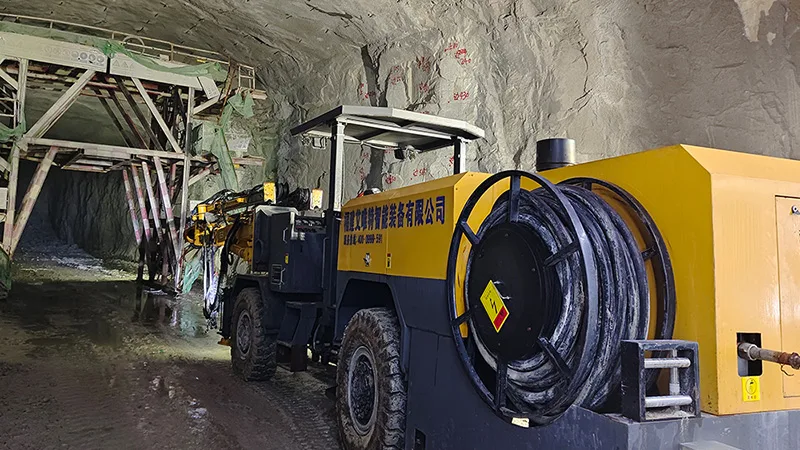
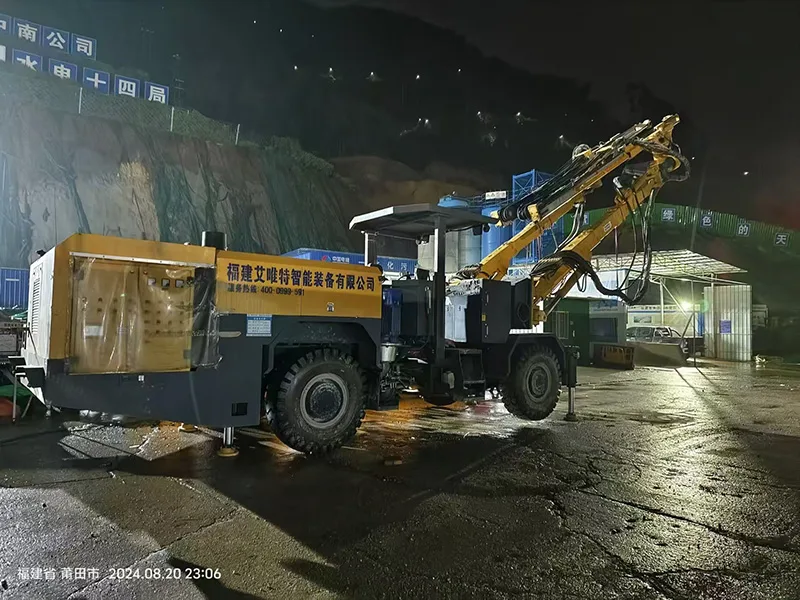
In the complex world of underground mining and civil tunneling, the underground rock drilling machine serves as the primary tool for creating blast holes, bolt holes, and exploration boreholes. Modern operations demand equipment that delivers high penetration rates, exceptional accuracy, and robust reliability under extreme geological conditions. This article provides a technical deep dive into the core technologies, application scenarios, and economic considerations that define today’s underground rock drilling machine landscape, drawing on industry best practices and innovations from leading manufacturers such as Aivyter.
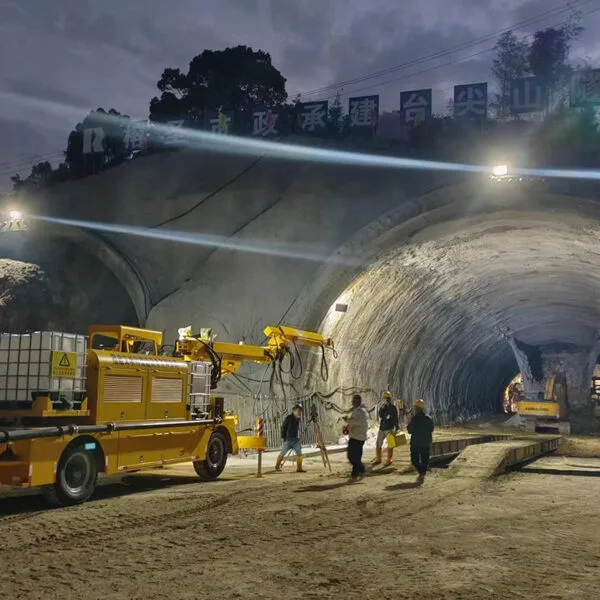
1. Key Technological Components of Modern Underground Rock Drilling Machines
Today’s underground rock drilling machine is a mechatronic system integrating hydraulics, electronics, and structural mechanics. The core subsystems determine its performance and longevity.
1.1 Drilling Jumbo Architecture and Carrier Design
The carrier—typically a heavy-duty articulated chassis—provides mobility in narrow drifts. Robust frames with oscillating axles ensure stability during tramming and drilling. Many rigs now feature ergonomic cabins with vibration damping and ROPS/FOPS certification, directly impacting operator safety and shift efficiency.
1.2 Hydraulic Drilling Systems and Rock Drills
The heart of any underground rock drilling machine is its hydraulic rock drill. Modern units, such as those in the Aivyter AZT series, employ independent rotation and impact mechanisms. Impact energy (kW) and frequency (Hz) are precisely tuned to rock mass characteristics. Advanced models offer automatic anti-jamming functions and collocation with electronic control systems to optimize the feed force, rotation speed, and flushing pressure. For instance, the combination of a 20 kW rock drill with a 45 mm bit in competent granite can achieve penetration rates exceeding 2.5 m/min.
1.3 Drill String and Rod Handling
Automated rod handling systems have become standard on larger jumbos. These carousels or magazines reduce manual handling, speeding up the cycle time and minimizing operator fatigue. The use of hex rods or T38/T45 extensions depends on the required hole depth and diameter. Coupling these with premium button bits (spherical or ballistic) directly affects both penetration rate and meter cost.
1.4 Positioning and Control Systems
Laser-based or total-station guidance systems, combined with CAN-bus electronics, enable accurate face drilling. Sensors measure boom angles, feed extension, and collaring position. The result is precise drill pattern execution—critical for tunnel profile control and overbreak reduction. Many modern underground rock drilling machines offer semi-automatic boom positioning, allowing one operator to manage multiple booms.
2. Application-Specific Configurations: From Development to Production
The selection of a specific underground rock drilling machine depends on the mining method and excavation phase.
2.1 Development Drilling (Face Drilling Jumbos)
For drifting and tunneling, electro-hydraulic two- or three-boom jumbos dominate. They drill parallel holes (cut, easer, contour) according to a designed blast plan. Key parameters include boom coverage area (up to 120 m²) and parallel holding capability. The Aivyter AZT1-7200, for example, offers a compact design suitable for headings as small as 3.5 m wide, yet its two booms provide full face coverage up to 48 m² with high precision.
2.2 Production Drilling (Longhole and Fan Drilling)
In sublevel stoping or block caving, production drills create longholes (up to 50 m or more) for ring blasting. These machines require high torque, powerful rotation, and stable feed beams. They often use down-the-hole (DTH) hammers for large-diameter holes in hard rock or rotary heads for softer formations. Automated alignment based on drill plans ensures the rings are correctly oriented to avoid dilution.
2.3 Rock Reinforcement (Bolting Rigs)
Roof bolting is a safety-critical application. Dedicated bolting rigs install various bolt types (mechanical, resin, cable) quickly. Integrated platforms combine drilling and resin/cement injection. The ability to install bolts perpendicular to the rock surface, even in uneven backs, is a key feature.
3. Addressing Operational Challenges: Precision, Safety, and Sustainability
Operating a underground rock drilling machine involves significant challenges that directly impact productivity and cost.
- Hole deviation and accuracy: Deviations of more than 2–3% over a 20 m hole can cause poor fragmentation or dilution. Solutions include rigid feeds, accurate boom control, and stabilization guides. Electronic angle sensors and real-time monitoring help maintain alignment.
- Dust and noise control: Stringent health regulations demand effective dust collection systems (dry or wet). Modern drills integrate shrouds and vacuum extractors to capture dust at the source, while silencers on hydraulic power packs reduce noise exposure.
- Ventilation and diesel emissions: In deeper mines, diesel-powered carriers contribute to heat and emissions. Electric-hydraulic and battery-electric underground rock drilling machines are gaining traction, offering zero emissions underground, lower heat output, and reduced energy costs. Aivyter has pioneered electric-over-hydraulic systems that maintain full power while eliminating diesel fumes.
- Wear part longevity: Drilling tools (bits, rods, shanks) are major consumables. Using the correct flushing and rotation parameters, along with high-quality materials, can extend tool life by 20–30%, directly reducing operating costs.
4. The Shift Toward Automation and Digitalization in Underground Drilling
Automation is no longer a future concept but a present reality in many large-scale mines. Underground rock drilling machines are being retrofitted or newly built with advanced automation packages.
4.1 Semi-Automatic and Tele-Remote Operation
Operators can now control a underground rock drilling machine from a surface control room via low-latency networks. Tele-remote operation removes the operator from hazardous areas, especially in seismic-prone ground. Features include auto-drilling sequences where the machine drills a complete round without manual intervention, adjusting parameters based on rock feedback.
3.2 Data Integration and MWD (Measurement While Drilling)
MWD systems record penetration rate, percussive pressure, rotation pressure, and flushing flow per hole. This data is georeferenced and fed into geological models. Mining engineers can identify rock interfaces, fractures, and ground conditions, optimizing blast patterns and ground support. This closed-loop data flow turns a drilling machine into a geological sensor.
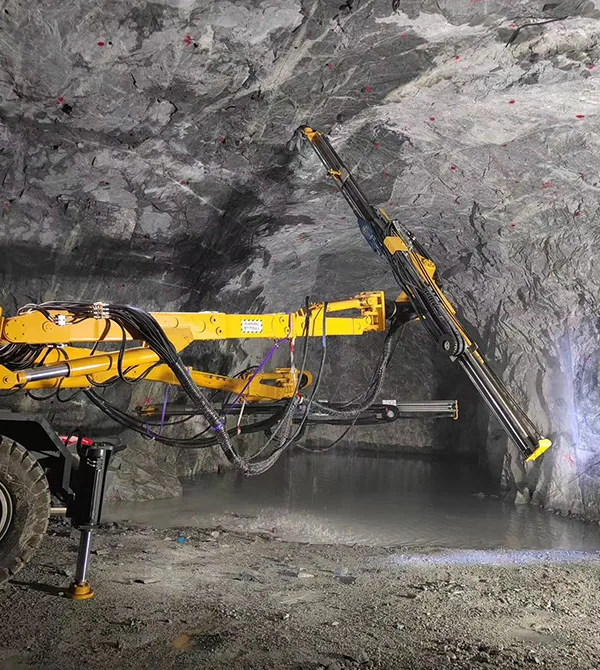
5. Comparative Analysis: Top Hammer vs. Down-the-Hole (DTH) Drilling Methods
Choosing between top hammer (TH) and DTH drilling depends on hole diameter, depth, and rock hardness.
- Top Hammer (TH): For hole diameters up to 127 mm and depths typically less than 20–25 m, TH is the most efficient. Impact energy is transmitted through the drill string, making it very fast in small to medium holes. However, energy loss increases with depth.
- Down-the-Hole (DTH): For larger diameters (≥ 100 mm) and deeper holes (up to 50 m or more), DTH hammers located directly behind the bit provide superior straightness and penetration in hard, fractured rock. They are preferred for production drilling and raise boring pilot holes.
- Rotary Drilling: Used in softer rock formations (e.g., salt, potash), rotary drills crush the rock under high thrust without percussive impact.
Modern rigs like the Aivyter AZT1-7200 are designed with modular feeds to accommodate both TH drifters and DTH hammers, offering flexibility for mines that need to switch between development and production tasks.
6. Economic Considerations: Total Cost of Ownership (TCO) and Productivity Metrics
Investment decisions for underground rock drilling machines are based on TCO, not just initial purchase price.
6.1 Cost Components
- Capital expenditure (CAPEX): Machine price, including automation options.
- Operating expenditure (OPEX): Energy consumption (diesel/electric), drill steel and bit costs, maintenance parts and labor, and operator wages.
- Productivity indicators: Meters drilled per shift, availability (%), and utilization (%). A machine with 90% availability vs. 75% can significantly reduce the number of units needed per mine.
6.2 Benchmarking Performance
Data from several underground operations shows that an optimized electro-hydraulic rock drilling machine can achieve up to 120 m drilled per operating hour in development headings. Advanced automation reduces the time for boom positioning and collaring, boosting overall shift efficiency by 15–20%. Aivyter‘s focus on robust hydraulics and easy service access reduces mean time to repair (MTTR), directly contributing to higher fleet availability.
Frequently Asked Questions (FAQ) on Underground Rock Drilling Machines
Q1: What is the typical lifespan of an underground rock drilling machine?
A1: With proper maintenance, a heavy-duty underground rock drilling machine can operate effectively for 8 to 12 years. Major overhauls of the engine (or electric motor), hydraulic pumps, and rock drills are typically scheduled at 10,000–15,000 operating hours. Factors like rock abrasiveness, operator skill, and maintenance quality heavily influence longevity.
Q2: How does automation affect the accuracy of blast hole drilling?
A2: Automation systems, including computer-controlled boom positioning and anti-jamming functions, can reduce hole deviation by up to 50% compared to manual operation. They ensure the drill rig follows the planned pattern precisely, leading to better fragmentation, reduced overbreak, and safer tunnel profiles.
Q3: What are the main differences between hydraulic and pneumatic rock drills for underground use?
A3: Pneumatic drills are older technology, requiring a compressed air supply; they have lower efficiency (10–15%) and high noise levels. Hydraulic drills are 30–40% more energy-efficient, offer higher penetration rates, and provide better control over impact and rotation. Most modern underground rock drilling machines are hydraulic or electro-hydraulic.
Q4: Can an underground rock drilling machine be used for both face drilling and bolt installation?
A4: Some multi-purpose rigs are designed with interchangeable feeds or booms to handle both drilling and bolting. However, dedicated jumbos usually optimize either face drilling (high speed, multiple booms) or bolting (maneuverability, platform). A common solution is to use a specialized bolting rig alongside a separate face drilling jumbo for maximum productivity. Some models like the Aivyter AZT1-7200 can be equipped with a bolting module for smaller operations.
Q5: What safety features are essential on a modern underground drilling rig?
A5: Essential safety features include: certified FOPS/ROPS cabin; automatic brake systems; fire suppression system; remote control capability for operation in hazardous zones; dust collection or water mist systems for silica dust control; and collision avoidance systems using radar or cameras. Emergency stop buttons should be easily accessible both in the cabin and on remote panels.
Q6: How do I choose the correct drill bit for a specific rock type?
A6: For hard, abrasive rock (e.g., granite, quartzite), spherical button bits with tungsten carbide inserts are preferred for durability. For softer, fractured rock, ballistic (semi-spherical) buttons provide faster penetration. The bit diameter, gauge design, and flushing hole configuration must match the rock drill’s impact energy and the desired hole size. Consulting with manufacturers and running on-site trials is recommended.
Q7: What is the impact of electrification on underground drilling operations?
A7: Switching from diesel to electric-powered underground rock drilling machines eliminates exhaust emissions, significantly improving air quality and reducing ventilation requirements (by up to 50% in some cases). Electric drives also have lower noise levels, reduced heat generation, and lower energy costs per drilled meter, contributing to a more sustainable and comfortable working environment.
In conclusion, the selection and operation of a underground rock drilling machine is a complex engineering decision that integrates geology, technology, and economics. Manufacturers like Aivyter continue to push the boundaries of automation, durability, and energy efficiency, providing the industry with tools that meet the demands of modern, safe, and productive mining. For a detailed technical discussion on how the AZT1-7200 series can optimize your operation, consult with our engineering team.
about
Aivyter
We provides trusted air compressors and mining equipment, engineered for durability, efficiency, and demanding industrial applications.