In underground mining and tunneling, the choice of a drill rig machine underground directly determines advance rates, drilling accuracy, and overall project economics. Unlike surface equipment, these machines operate in confined spaces with limited ventilation, high humidity, and demanding geological conditions. The wrong selection leads to costly downtime, safety incidents, and missed production targets. Over the past decade, Aivyter has supplied specialized drill rig machine underground solutions to mines and contractors worldwide, accumulating data on what separates high-performance rigs from underperforming alternatives. This article outlines seven technical parameters that engineers and procurement managers must evaluate before committing to a drill rig machine underground investment.
1. Hole Diameter and Depth Capability
The primary specification of any drill rig machine underground is its ability to achieve required hole diameters and depths. In development headings, blast holes typically range from 38 mm to 64 mm in diameter with depths up to 5 meters per round. For long-hole production drilling, diameters often reach 89–127 mm with depths exceeding 30 meters.
When evaluating a drill rig machine underground, verify that the feed length, rod storage capacity, and rotation torque match the intended application. A machine optimized for long-hole stoping will have insufficient rod handling speed for rapid development cycles. Conversely, a development rig lacks the torque needed for large-diameter production holes. Manufacturers like Aivyter offer modular systems where the same carrier can accept different drill feeds and rotation units, allowing mines to standardize on one platform across multiple applications.
2. Hydraulic System Pressure and Flow
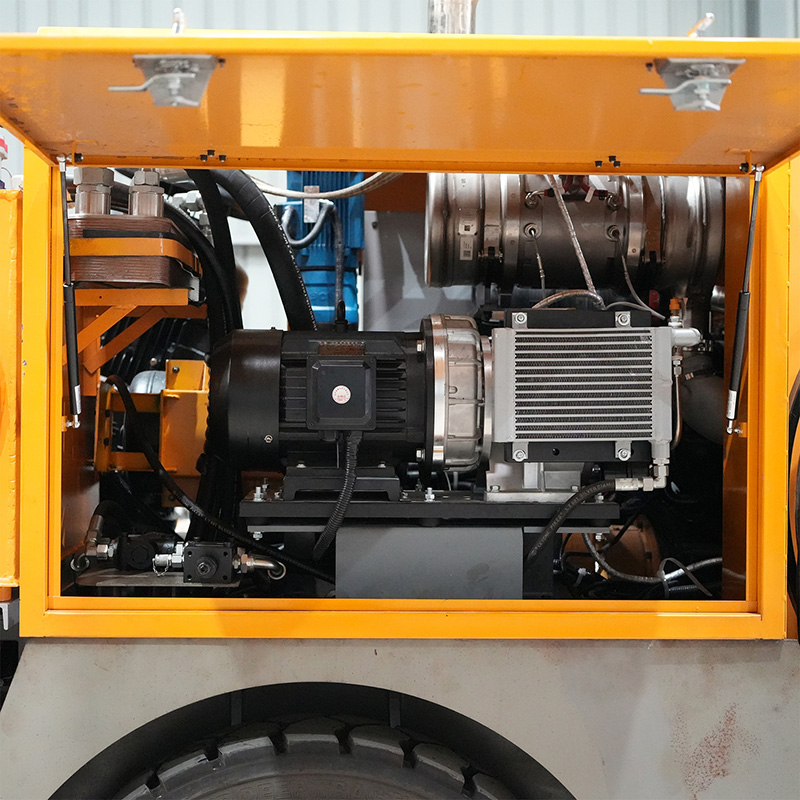
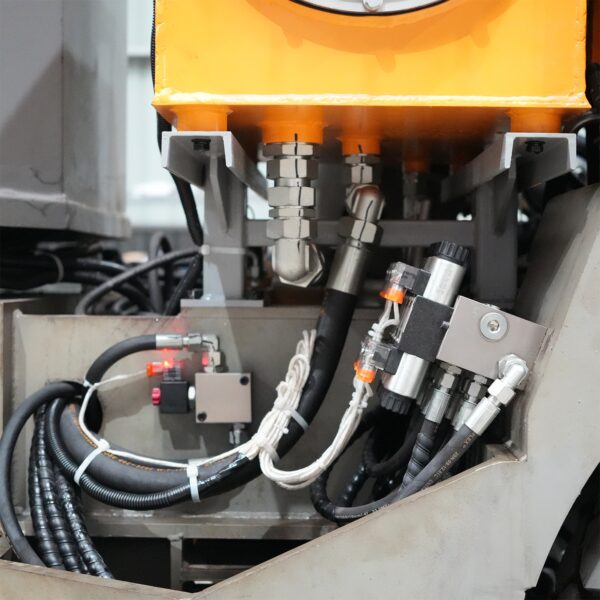
Hydraulic performance determines penetration rates and reliability. A modern drill rig machine underground uses variable-displacement piston pumps operating at 250–350 bar, delivering 150–300 L/min depending on the model. Higher pressure and flow directly translate to faster rotation speeds and higher percussive power for rock drills.
Key metrics include: Rotation speed (typically 0–200 rpm) and torque (500–2,500 Nm). For hard rock conditions, a rig with 1,500 Nm torque and 180 rpm rotation handles quartzite and granite without stalling. The hydraulic system must also provide independent control for boom movement, feed advance, and rock drill functions to allow simultaneous operations.
Closed-loop hydraulic circuits with load-sensing pumps reduce fuel consumption by 15–20% compared to open-loop systems. This efficiency is critical in underground mines where ventilation and fuel logistics constrain operations.
3. Rod Handling and Automation Level
Rod handling is the single largest productivity factor for a drill rig machine underground. Manual rod handling limits cycle times and exposes operators to injury risks. Automated rod changers reduce non-drilling time by 40–60% for long-hole applications.
Modern rigs offer three automation tiers: Manual (operator handles each rod), Semi-automatic (hydraulic rod handler reduces manual work), and Full automatic (magazine storage with robotic transfer). For production drilling with 30-meter holes, a fully automatic drill rig machine underground completes the same work in 60% of the time compared to manual rigs.
Rod diameter and length must match the drill feed. Standard lengths are 1.2 m, 1.5 m, or 1.8 m. Compatibility with industry-standard drill steels ensures supply chain flexibility. Aivyter’s systems use a universal rod interface, allowing mines to source consumables from multiple suppliers without modifications.
4. Boom Configuration and Working Envelope
The boom geometry defines where a drill rig machine underground can position holes. For development, a single-boom rig with 180-degree swing and 30-degree tilt covers a 4.5 m × 4.5 m face. Larger headings require articulated booms that allow drilling from a single setup position.
Key parameters: Coverage area (m²), extension length (m), and parallel holding capability. A boom with parallel hold maintains hole alignment when the boom moves, critical for accurate fan drilling in production stopes. For narrow vein mining, compact rigs with boom heights under 2.2 m fit in 3 m × 3 m drifts.
Computer-controlled boom positioning systems (CNC) store hole patterns and automatically index to the next hole, reducing alignment time by 80%. These systems also prevent drilling outside the planned pattern, minimizing overbreak and dilution.
5. Carrier Dimensions and Tramming Capability
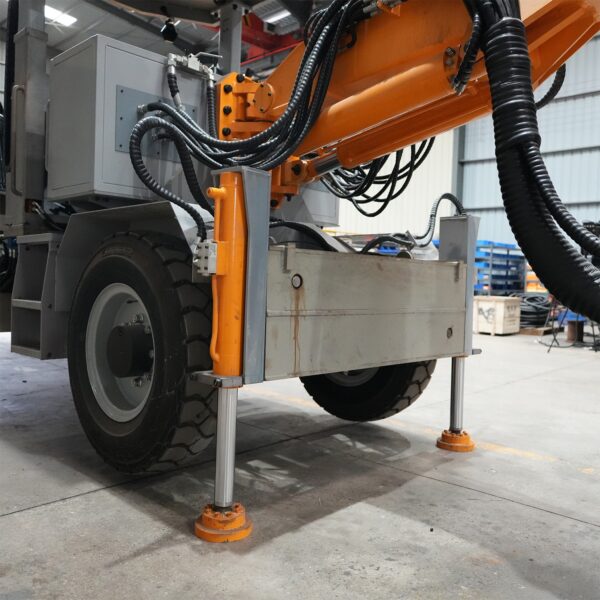
Underground mines impose strict dimensional constraints. The drill rig machine underground must navigate drifts with typical widths of 3–5 m and heights of 3–4 m. Carrier width (with booms retracted) should be ≤2.5 m for flexibility in narrow veins.
Tramming speed and gradeability matter for production fleets. Diesel-powered rigs require 12–15 km/h tramming speeds on level ground and 30% gradeability for ramp access. Electric-hydraulic rigs (tethered) have lower speed but zero emissions—critical for ventilation-limited mines.
Track vs. wheeled carriers: Wheeled rigs offer higher tramming speeds and smoother rides; track-mounted rigs provide lower ground pressure (as low as 0.8 kg/cm²) for soft floor conditions. Tracked drill rig machine underground systems are preferred in highly fractured ground where wheeled units sink.
6. Dust Suppression and Ventilation Integration
Drilling generates respirable silica dust, a health hazard and regulatory compliance issue. A properly equipped drill rig machine underground incorporates: Water mist injection at the drill bit (minimum 10 L/min), dust collector with HEPA filters, and operator cab pressurization to maintain clean air.
Water consumption affects mine water management. Modern rigs use precision water flow control that matches water to penetration rate, reducing water use by 30–50% compared to constant-flow systems.
For mines with tight ventilation budgets, electric-powered drill rig machine underground systems eliminate diesel particulate emissions, reducing ventilation demand by 40% per rig. Aivyter’s electric-hydraulic models offer tether management systems with cable reels that maintain 200 m working radius without manual handling.
7. Telemetry and Predictive Maintenance
Downtime from unplanned failures is the largest cost in underground operations. Modern drill rig machine underground platforms integrate sensors that monitor: hydraulic oil temperature, vibration on rotating components, penetration rate trends, and fuel/electricity consumption.
Onboard computers transmit data to surface servers via mine Wi-Fi or 4G networks. Predictive algorithms flag abnormal patterns—such as gradual loss of rotation torque—before failure occurs. Maintenance teams receive alerts specifying likely root cause (e.g., worn hydraulic motor) and required parts.
Fleet management dashboards show real-time location, operating status, and shift-by-shift production metrics. Mines using telemetry-equipped drill rig machine underground fleets report 15–25% higher utilization and 30% reduction in unplanned maintenance costs.
Application-Specific Configurations
These seven parameters must be weighted based on the specific mining method:
- Drift development: Prioritize boom coverage, rod handling speed, and tramming agility. Diesel-powered rigs with articulated booms dominate this segment.
- Long-hole stoping: Emphasis on hole depth (≥30 m), rod handling automation, and telemetry for pattern accuracy. Electric-hydraulic rigs with remote operation reduce dilution.
- Narrow vein mining: Compact carrier dimensions (≤2.2 m width) and high maneuverability. Track-mounted rigs with adjustable boom geometry are preferred.
- Civil tunneling: High advance rates with consistent rock conditions. Automated drilling cycles and integrated rock bolt installation capabilities add value.
How Aivyter Addresses These Parameters
Aivyter designs its drill rig machine underground series with these seven parameters as foundational. The AZT1-7200 platform offers modular booms, interchangeable drill feeds, and a common carrier that accepts both diesel and electric power modules. Telemetry is standard, with real-time data accessible through a cloud-based fleet management portal.
Field data from installations in Canada, Australia, and South Africa show that Aivyter rigs achieve 95% mechanical availability in 12-month periods—significantly above the industry average of 85%. This reliability stems from hydraulic systems designed with 30% reserve capacity, eliminating over-stress failures common in cost-optimized machines.
Frequently Asked Questions (FAQ)
Q1: What is the typical service life of an underground drill rig machine?
A1: A well-maintained drill rig machine underground typically operates for 15–20 years before major rebuilds. Key components such as rock drills, hydraulic pumps, and diesel engines require overhaul at 8,000–10,000 operating hours. Carriers can exceed 30,000 hours with regular maintenance. Aivyter’s modular design allows component-level replacement, extending chassis life beyond 25 years.
Q2: How does automation affect operator safety on underground drill rigs?
A2: Automation on a drill rig machine underground significantly reduces safety risks. Remote operation allows the operator to work from a protected cab or surface control room, eliminating exposure to falling rock, dust, and moving machinery during rod handling. Tele-remote systems enable drilling in areas with unstable ground conditions that would otherwise be inaccessible. Mines using automated rigs report a 70–80% reduction in drilling-related incidents.
Q3: What is the difference between a jumbo and a production drill rig?
A3: A jumbo (development drill rig) is optimized for blast hole drilling in headings. It typically has 1–3 booms and is designed for rapid tramming between faces. A production drill rig machine underground is specialized for long-hole drilling in stopes, with longer feeds, automated rod handling, and greater torque. While some manufacturers offer convertible platforms, using a jumbo for production drilling results in 40–50% lower productivity due to inadequate rod handling and torque.
Q4: How do I choose between diesel and electric underground drill rigs?
A4: Diesel-powered drill rig machine underground offers higher mobility and independence from power cables, ideal for development where the face moves frequently. Electric-hydraulic rigs (tethered) provide lower operating costs, zero emissions, and reduced ventilation demand. Choose electric when the mine has adequate ventilation constraints or when the rig operates in a fixed production area. Hybrid systems that tram on diesel and drill on electric power combine the advantages of both.
Q5: What maintenance schedule should I follow for optimal drill rig uptime?
A5: A preventive maintenance program for any drill rig machine underground should include: daily inspections of hydraulic hoses, drill steel, and safety devices; weekly fluid analysis (engine oil, hydraulic oil) to detect contamination; monthly calibration of boom positioning systems; and quarterly overhaul of rock drill components based on meter drilled. Telemetry systems can automate scheduling by alerting when consumables approach wear limits. Aivyter provides custom maintenance plans based on expected meterage per shift.
Q6: How do I improve drilling accuracy in complex ore bodies?
A6: Drilling accuracy depends on three factors: boom rigidity, hole alignment systems, and operator skill. The drill rig machine underground should feature a CNC boom control that stores hole patterns and uses inclination sensors to maintain alignment. Laser alignment systems provide visual feedback for manual operation. For extreme accuracy (deviation < 1% of hole length), guided drilling systems with real-time downhole sensors are available. Aivyter’s automated pattern drilling reduces deviation to 0.5% of hole length, minimizing ore dilution.
Selecting the right drill rig machine underground is a strategic decision that affects productivity, safety, and operating costs for years. The seven parameters—hole capability, hydraulic performance, rod handling, boom configuration, carrier dimensions, dust control, and telemetry—provide a comprehensive evaluation framework. Aivyter applies these engineering principles to deliver rigs that consistently outperform in the most demanding underground environments, with documented reliability and life-cycle cost advantages.
about
Aivyter
We provides trusted air compressors and mining equipment, engineered for durability, efficiency, and demanding industrial applications.