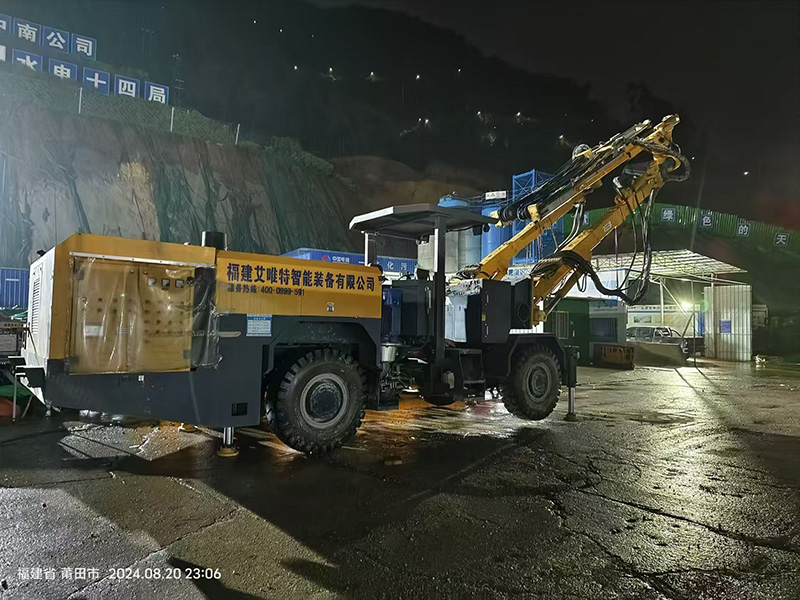
In heavy industrial sectors—mining, tunneling, offshore engineering, and large-scale construction—compressed air is the fourth utility after electricity, water, and gas. The electric screw air compressor has replaced traditional reciprocating units in most demanding applications due to its continuous duty cycle, lower pulsation, and superior volumetric efficiency. This guide provides a data-driven examination of rotary screw technology, application-specific engineering, and total cost of ownership (TCO) strategies, based on field experience from mineral processing plants to subway construction sites.
Fundamentals of Electric-Driven Rotary Screw Technology
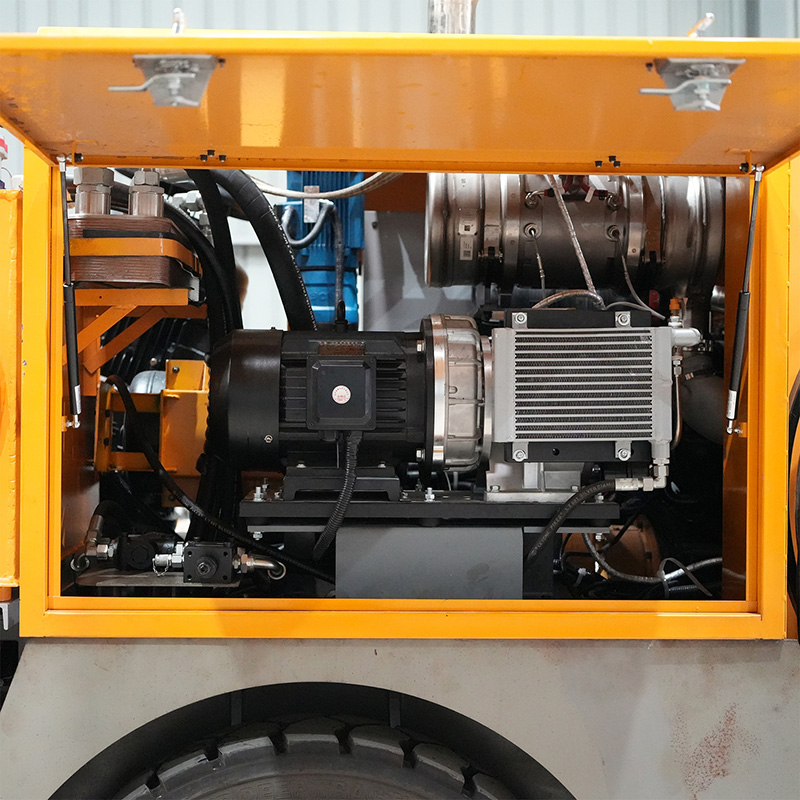
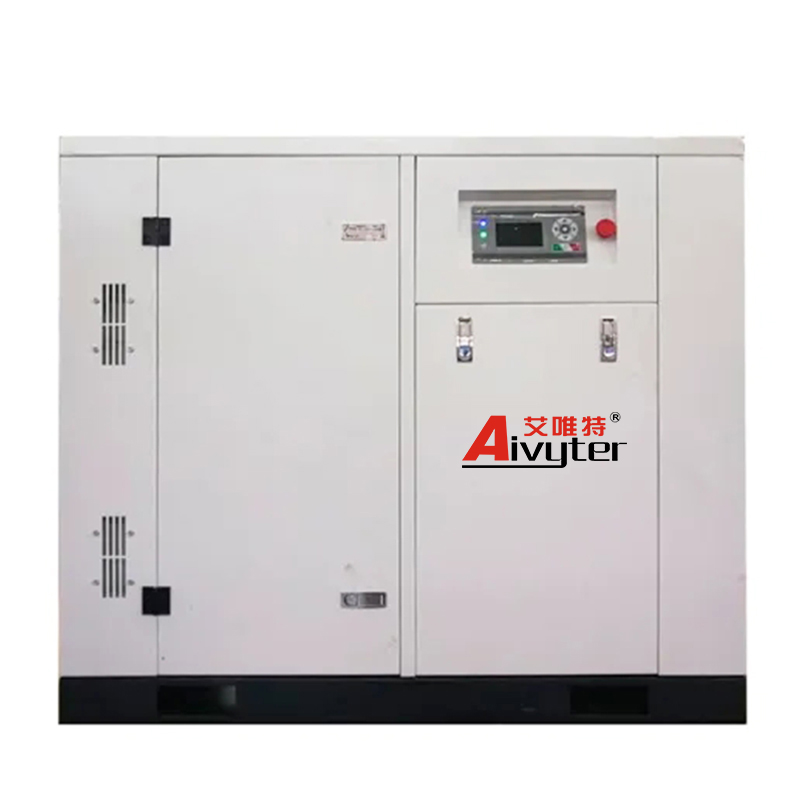
Unlike piston compressors that produce intermittent flow, the rotary twin-screw element—male and female rotors—creates continuous compression through progressively decreasing cavities. The electric screw air compressor integrates three core assemblies:
- Air end: Precision-machined screws with coating options (e.g., PTFE or MoS₂) for reduced internal leakage and extended lifespan in abrasive environments.
- Drive motor: IE4 / IE5 permanent magnet synchronous motors (PMSM) or asynchronous TEFC motors, often combined with variable frequency drives (VFD).
- Oil system: Thermostatic bypass valve, full-flow filtration (1–3 micron) and air-oil separation allowing ≤2 ppm residual oil carryover for most industrial tools.
For mining and construction, the critical differentiator is the duty cycle capability: S1 continuous operation at 100% load factor with adequate cooling margin. Typical discharge pressures range from 7 bar (102 psi) for pneumatic conveying to 13 bar (188 psi) for rock drills and bolters. Flow rates (FAD) vary from 0.5 m³/min for workshop tools to over 100 m³/min for large open-pit drills.
Site-Specific Engineering Challenges: Mining & Civil Construction
Dust and Particulate Ingestion Control
Surface mines and aggregate quarries generate silica and mineral dust with particle sizes down to 0.3 µm. A standard intake filter (MERV 15 / ISO 5011) will plug rapidly, causing pressure drop and energy loss. Solutions applied by Aivyter include two-stage filtration with inertial pre-separator plus safety cartridge, and real-time differential pressure monitoring. For underground operations (coal, potash, metals), flame-resistant components and methane monitoring are mandatory; electrical enclosures should meet IECEx / ATEX Zone 2 or 1 depending on gas classification.
High Altitude & Temperature Extremes
At 3,000 m above sea level, air density drops by roughly 30%, reducing compressor volumetric output and motor cooling capacity. The electric screw air compressor requires de-rating correction factors: for every 1,000 m altitude, expect a 10–12% reduction in free air delivery (FAD) unless the unit is oversized. Conversely, in desert mining (ambient >45°C) or arctic construction (-30°C), the lubricant viscosity and cooler efficiency become limiting. Advanced units incorporate synthetic ester or PAO-based oils (viscosity index >140) and thermostatically controlled crankcase heaters for cold starts.
Energy Performance: VSD vs. Load/Unload Regulation
Electricity consumption represents 75–85% of a compressor’s lifetime cost. The traditional load/unload (duty cycle) control maintains pressure within a ±0.5 bar band but wastes 12–20% energy during unloaded running (still consuming 15–30% of full load power). Variable Speed Drive (VSD) technology adjusts motor RPM to exactly match air demand, providing proportional power reduction. Field data from a Chilean copper mine showed that replacing a 160 kW fixed-speed unit with a VSD electric screw air compressor reduced specific energy from 6.8 kW per m³/min to 5.1 kW per m³/min—a 25% saving at partial loads (average 65% loading).
For facilities with multiple compressors, master sequencing controllers (e.g., load sharing based on dew point and pressure) further optimize efficiency. The payback period for VSD in variable-demand applications like shotcrete spraying or tunnel ventilation is typically 12–18 months.
Lifecycle Cost Analysis & Predictive Maintenance
Beyond initial purchase price, TCO components include energy, maintenance, downtime, and air quality treatment. A 75 kW electric screw air compressor operating 6,000 hours/year at $0.12/kWh incurs annual electricity costs of approximately $54,000. Maintenance (oil, filters, separator, bearings) adds $4,000–7,000 per year. The largest hidden cost is production loss from unplanned stops—common failure points are: air-end bearing fatigue (after 40,000–60,000 hours), motor insulation deterioration, and cooler fouling in dusty environments.
Condition-based monitoring (CbM) for industrial compressors has matured: vibration analysis (ISO 20816-3) on the air-end and motor bearings, thermography of discharge piping, oil analysis for particle count (ISO 4406) and acid number (TAN). Aivyter’s integrated IoT gateway provides real-time efficiency dashboards and automatic filter/oil change alerts, reducing downtime by 40% in aggregate plant deployments.
For mission-critical mining applications, redundancy (N+1 configuration) and quick-change coupling designs should be specified.
Air Treatment Integration: Dryers, Filters & Condensate Management
Raw compressed air leaving the electric screw air compressor contains water vapor, oil aerosol, and solid particles. Demand-specific treatment includes:
- Refrigerated dryers: pressure dew point (PDP) +3°C to +10°C, sufficient for most pneumatic tools and general plant air.
- Desiccant dryers (heatless or heated blower): PDP -40°C to -70°C required for instrumentation, painting, or winter pipeline operations.
- Particulate/coalescing filters: 1 µm, 0.01 µm, and activated carbon towers for oil-free air (<0.003 ppm).
For underground mining, air quality must comply with ISO 8573-1 Class 2.4.2 (solid particles, humidity, oil content). Condensate from aftercoolers and dryers contains emulsified oil—install oil-water separators using gravity, membrane, or adsorption media to meet discharge regulations (≤20 ppm oil in water).
Case Study: High-Altitude Tunnel Boring Machine (TBM) Support
A hydropower tunnel project in the Andes (elevation 3,800 m, ambient 5–15°C) required 32 m³/min at 10 bar for TBM grippers, grouting pumps, and ventilation doors. The selected configuration: two 160 kW VSD electric screw air compressor units with stainless steel coolers, Class F insulation motors, and remote telemetry. Corrections for altitude: the compressor’s control algorithm increased the motor speed to +18% above sea-level rating, and synthetic lubricant (ISO VG 46) maintained film strength. After 14 months of continuous operation (8,500 hours), oil analysis showed TAN increase of only 0.8 mg KOH/g, well below change threshold. Site energy cost was reduced by 32% compared to planned piston-compressor baseline. Aivyter provided on-site commissioning and training for local mechanics, resulting in 97% mechanical availability.
Regulatory and Safety Standards for Industrial Installations
Compliance requirements for electric screw air compressor installations in heavy engineering:
- ASME Section VIII / PED 2014/68/EU for receiver tanks.
- ISO 1217:2009 (displacement compressor performance testing).
- NFPA 99 for medical air (if dual-use).
- Mining-specific: MSHA (USA) or DGMS (India) flameproof enclosures.
- Energy efficiency: ISO 50001 ready, with mandatory energy audits for systems >75 kW.
Pressure safety devices (spring-loaded relief valves) and thermal cut-outs must be annually validated. For construction sites with temporary power, voltage stability (≤ ±5% variation) is crucial: install line reactors or harmonic filters to protect VFD-driven compressors.
Frequently Asked Questions (FAQ)
Q1: How do I size an electric screw air compressor for a mining operation with variable shifts?
A1: Start by measuring the actual air consumption (in m³/min FAD) across all tools during peak and average shifts using a data logger. Add a safety margin of 15% for leakage and future expansion. For highly varying loads (e.g., pneumatic conveying in batches), choose a VSD-driven compressor plus a small wet receiver (20–30% of compressor FAD per minute). Avoid oversizing beyond 2x average flow, as part-load efficiency drops. Many operators prefer a combination: one VSD unit for trim duty plus one fixed-speed base unit.
Q2: What is the typical service life of the airend in an electric screw air compressor under heavy dust conditions?
A2: With maintained intake filtration (pressure drop < -30 mbar) and oil changes at manufacturer intervals (normally 2,000–4,000 hours for mineral oil, 8,000 hours for synthetics), the rotary screw airend can achieve 50,000–80,000 hours before bearing or rotor profile degradation. In extremely abrasive environments (silica dust, carbon black), use a spin-on pre-filter and monitor oil particle counts (ISO 4406 code 18/16/13 or better). Replacement of bearings and seals at 40,000 hours is a common preventive practice.
Q3: Can I use an electric screw air compressor for diamond drilling or raise boring?
A3: Yes, but with attention to oil carryover. Diamond drills require compressed air for flushing and hammer drilling; any oil content above 5 ppm can contaminate core samples and block fine nozzles. Specify a compressor with high-efficiency oil separator (residual ≤1 ppm) and install an external coalescing filter (0.01 µm) plus activated carbon tower immediately downstream. For sensitive exploration, consider an oil-free rotary screw unit (water-injected or dry type), though capital cost is 40–60% higher.
Q4: How does ambient temperature affect the required lubricant viscosity grade?
A4: Most industrial screw compressors are charged with ISO VG 46 (viscosity 46 cSt at 40°C). For ambient >40°C, ISO VG 68 is recommended to maintain film thickness. For continuous operation below 0°C, use ISO VG 32 with low pour point (-40°C) plus a thermostatic bypass that accelerates warm-up. Never mix mineral and synthetic oils. Always follow the OEM viscosity-index recommendations; using incorrect grade can reduce airend life by up to 30%.
Q5: What are the first signs of airend failure in an electric screw air compressor?
A5: Key indicators: (1) Increase in discharge temperature >15°C above baseline under same load (suggests oil cooler fouling or internal leakage); (2) Growing vibration velocity >4.5 mm/s RMS (ISO 10816-3 limit for rigid mounting); (3) Higher specific power (kW per m³/min) >15% above commissioning value; (4) Oil consumption exceeding 2–3 drops per hour. Perform quarterly vibration trending and oil analysis; an accelerated ferrous particle count (PQ index) indicates bearing wear. Immediate corrective action avoids catastrophic rotor seizure.
Conclusion & Inquiry Request
Selecting the correct electric screw air compressor requires balancing technical specifications—pressure, flow, duty cycle, ambient corrections—against total lifecycle costs and site-specific hazards (dust, altitude, flammables). Modern VSD drives, predictive maintenance telemetry, and modular air treatment packages have transformed reliability in mining and heavy civil works. Aivyter supplies industrial-grade rotary screw compressors from 7.5 kW to 500 kW, certified for extreme environments, with global field service support.
For a detailed engineering proposal, including airflow demand analysis, energy saving calculation, and payback simulation for your project, please submit your inquiry through the official channel. Our application engineers respond within 24 hours with site-specific recommendations, CAD layouts, and compliance documentation.
➡️ Request your customized quotation and technical assessment now: Send Inquiry to Aivyter
about
Aivyter
We provides trusted air compressors and mining equipment, engineered for durability, efficiency, and demanding industrial applications.