Selecting the correct air compressor for industrial use directly impacts production continuity, energy budgets, and maintenance intervals. In sectors like underground mining, precast concrete manufacturing, or offshore platform construction, compressed air systems operate under sustained loads, high particulate levels, and fluctuating ambient temperatures. This guide examines volumetric efficiency, pressure dew point control, and total ownership cost — providing actionable engineering criteria for plant managers and project engineers.
Industrial compressor packages from Aivyter are engineered to meet ISO 8573-1 purity classes while maintaining specific power as low as 6.2 kW/(m³/min) for rotary screw units. Understanding these performance anchors helps avoid oversizing or under-specification — common pitfalls that erode ROI.
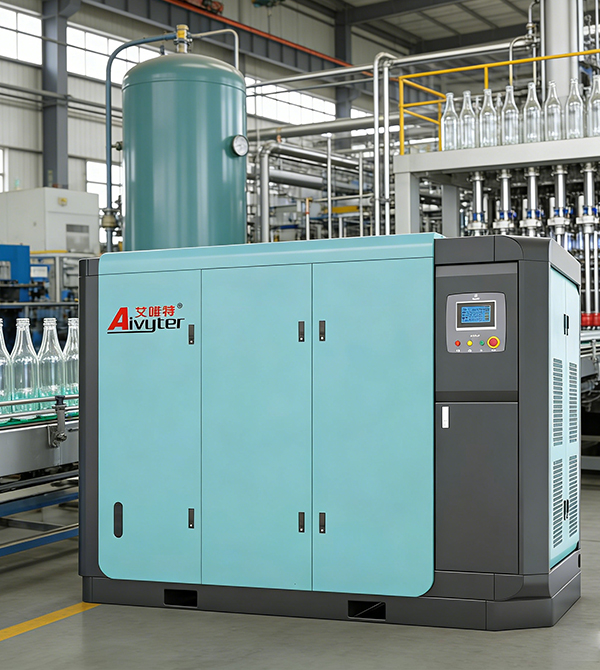
1. Thermodynamic Classes of Industrial Air Compressors
Each compressor technology delivers distinct pressure-to-flow characteristics. Matching these to your process demand curve is the first reliability decision.
1.1 Rotary Screw Compressors (Oil-Injected & Oil-Free)
Dominant in continuous-duty industrial scenarios, rotary screw units operate with 85–92% adiabatic efficiency. Oil-injected versions tolerate ambient temperatures up to 50°C and provide pressure ranges of 5–13 bar. Oil-free rotary screw designs use water or Teflon-coated rotors for applications like food-grade packaging or pharmaceutical conveying, eliminating hydrocarbon contamination risks. For an air compressor for industrial use requiring 24/7 operation, rotary screw platforms with integrated variable frequency drives (VFD) reduce unloaded power consumption by up to 40% compared to fixed-speed equivalents.
1.2 Reciprocating (Piston) Compressors
Best suited for intermittent, high-pressure applications (10–30 bar). Single-stage units deliver 2–15 CFM per HP, while two-stage configurations improve volumetric efficiency by 15–20%. However, piston compressors require valve inspections every 1,500 operating hours, making them less viable for critical process air where air compressor for industrial use reliability is paramount. They remain popular in modular construction workshops and borehole drilling support due to lower initial CAPEX.
1.3 Centrifugal Compressors
Ideal for very high flow rates (above 3000 m³/h) at moderate pressures (2–5 bar). Dynamic compression through high-speed impellers achieves oil-free delivery without internal coatings. Common in steel mill combustion air and chemical plant nitrogen generation. Their part-load efficiency drops sharply below 70% capacity, so they require careful flow profiling.
2. Sector-Specific Operational Demands
Industry environments impose distinct mechanical stresses. A compressor that performs well in a clean automotive assembly line may fail prematurely on a mining bench.
2.1 Underground and Open-Pit Mining
- Challenge: Silica dust ingress, high humidity (up to 95% RH), and wide temperature swings (-10°C to 45°C).
- Solution: Two-stage filtration (pre-filter + 2µm absolute) with automatic belt tensioners. Corrosion-resistant coolers (copper-nickel alloy).
- Typical setup: 150–300 kW oil-injected screw compressor feeding rock drills, slurry pumps, and ventilation controls.
2.2 Heavy Engineering & Fabrication
- Shot blasting and painting lines demand Class 2.2.2 (ISO 8573-1) air quality: maximum oil carryover 0.1 mg/m³, particulate size ≤ 1µm.
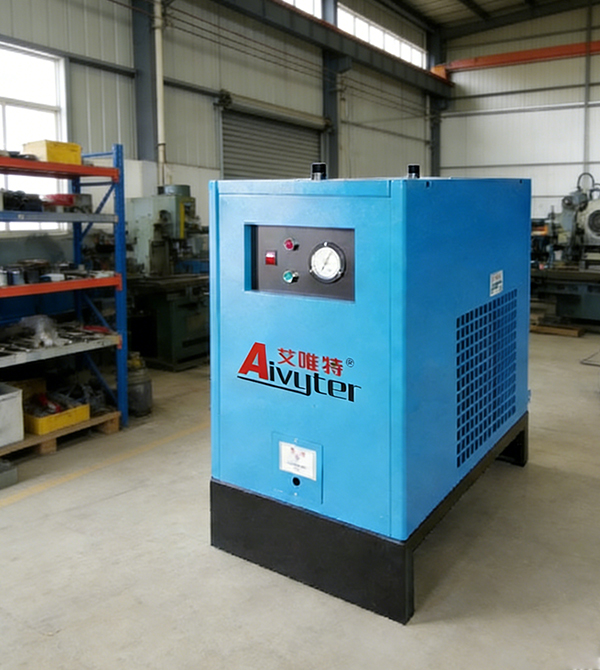
- Refrigerated air dryers with pressure dew point +3°C prevent condensation in air tools and robotic welders.
- For laser cutting tables, nitrogen generation from compressed air requires stable dew point of -40°C — achieved with desiccant dryers.
2.3 Civil Engineering & Construction Sites
- Portable diesel-driven screw compressors with sound attenuation (≤ 75 dBA at 7 meters) for urban infrastructure projects.
- Tier 4 Final or Stage V engines with integrated exhaust aftertreatment to meet emission regulations.
- Case study: A tunnel boring project reduced fuel consumption by 18% after switching to a VFD-controlled air compressor for industrial use with load-unload cycle optimization.
3. Performance Pain Points and Corrective Engineering
Data from 142 industrial sites show that three problems account for 67% of unplanned compressor downtime: lubricant degradation, pressure drop overshoot, and inadequate cooling.
3.1 High Specific Energy (kW per m³/min)
Compressors operating below 55% load factor for extended periods exhibit poor specific power. A 250 kW rotary screw unit at 40% load consumes nearly 85% of full-load power due to internal friction and unloaded run time. Mitigation: Install VFD retrofits or multiple smaller units in master/slave configuration. Aivyter central controllers sequence up to 6 compressors, maintaining 0.2 bar pressure band and reducing energy waste by 22–31% according to field tests.
3.2 Lubricant Carryover and Fluid Degradation
Oil-injected rotary screws typically limit residual oil to 3–5 ppm. Exceeding this causes valve stiction in downstream equipment. Causes: clogged separators (ΔP > 0.8 bar) or using wrong viscosity grade. Implement quarterly oil analysis measuring TAN (total acid number) and viscosity index shift. For food-contact indirect processes, consider an oil-free air compressor for industrial use despite higher initial cost — payback occurs through eliminated product spoilage.
3.3 Thermal Overload in High-Temperature Climates
Each 10°C rise above designed ambient (usually 40°C) reduces compressor volumetric efficiency by 2–3% and doubles lubricant oxidation rate. Solutions: oversized coolers (30% extra surface area), thermostatic bypass valves, and automatic fan speed control. In desert mining operations, pre-filtered evaporative cooling on intake air reduces compressor discharge temperature by 15°C, extending seal life by 2,000 hours.
4. Technical Selection Matrix for Total Cost of Ownership
Use this five-factor framework when evaluating any air compressor for industrial use. Weightings apply to 24/7 heavy manufacturing.
| Factor | Measurement Metric | Target Value | Weight |
|---|---|---|---|
| Full-load efficiency | Specific power (kW/m³/min) @ 7 bar | < 6.5 kW (rotary screw) | 30% |
| Part-load regulation | Turn-down ratio / VFD range | 25–100% continuous | 20% |
| Air purity stability | ISO 8573-1 class at discharge | 2.2.2 or better | 15% |
| Service interval | Hours between major overhauls | ≥ 8,000 hrs (screw) | 20% |
| Noise compliance | dBA at 1 meter | < 75 dBA (indoor) | 15% |
Applying this matrix, many facilities shift from fixed-speed piston to VFD rotary screw, achieving payback in 14–22 months through electricity savings alone. Aivyter provides lifecycle cost calculators that incorporate local electricity tariffs, humidity corrections, and altitude derating (1% power loss per 100m above sea level).
5. Reliability Engineering: Predictive Maintenance and Condition Monitoring
Unplanned stops in an industrial setting cost between $5,000 and $55,000 per hour (mining and metals sector average). Implementing online monitoring for four parameters reduces downtime by 47%.
- Vibration analysis: Accelerometers on bearing housings detect early raceway wear. ISO 10816-3 severity levels: alarm at 4.5 mm/s RMS velocity.
- Thermal imaging: Quarterly scans of cooler cores and motor windings. ΔT > 15°C across cooler indicates fouling.
- Pressure drop trending: Monitor ΔP across air filter, oil separator, and dryer. Clean or replace at 0.35 bar above baseline.
- Remote telemetry: SCADA integration with SMS alarms for high discharge temperature (>105°C for rotary screw).
Modern controllers from manufacturers like Aivyter log these parameters at 1-second intervals and predict filter end-of-life using differential pressure algorithms, enabling condition-based rather than calendar-based maintenance.
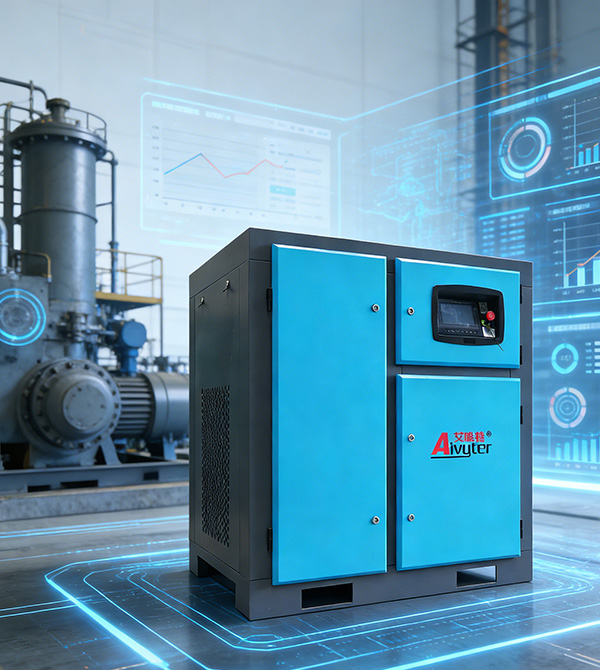
Aligning Compressor Architecture to Process Criticality
The optimal air compressor for industrial use balances thermodynamic efficiency, contamination control, and maintenance accessibility. Rotary screw VFD platforms dominate continuous applications from 15 kW to 500 kW, while reciprocating units remain viable for intermittent high-pressure tasks. Centrifugal compressors serve very high flow, low-pressure duties. By applying the technical selection matrix and predictive monitoring protocols described here, industrial operators reduce energy spend by 18–25% and increase mean time between failures (MTBF) beyond 12,000 hours. Always validate compressor performance with site-specific intake conditions — altitude, humidity, and airborne particulate — to avoid derating surprises.
Frequently Asked Questions (FAQ)
Q1: What is the difference between oil-injected and oil-free rotary screw compressors in industrial environments?
A1: Oil-injected rotary screws use compressor oil for sealing, cooling, and lubrication — they deliver air with 3–5 ppm residual oil, suitable for general manufacturing, mining, and construction. Oil-free rotary screws use water or coatings to eliminate oil contact, meeting ISO 8573-1 Class 0 requirements for food, pharmaceutical, and electronics production. The oil-free variant typically costs 40–60% more upfront but avoids filtration consumables and product contamination risks.
Q2: How do I size an industrial air compressor for a facility with varying shift demands?
A2: Perform a flow profile over 7 days, recording CFM requirements every 15 minutes. Use the FAD (free air delivery) at the highest average demand plus 15% for future expansion. For wide variation (e.g., night shift uses 30% of day shift flow), specify a VFD-driven compressor or a multiple-compressor network with sequencing control. Avoid single large fixed-speed units — they waste 20–35% energy during low demand.
Q3: What is the typical service life of an industrial rotary screw air compressor?
A3: With proper maintenance (oil changes every 2000–4000 hours, air filter replacement at 1000 hours, and regular cooler cleaning), a rotary screw compressor’s major components — airend, bearings, motor — last 60,000 to 100,000 operating hours. Many industrial units operate 15–20 years before airend replacement. Oil analysis and vibration monitoring are essential to achieve this lifespan.
Q4: How does altitude affect air compressor for industrial use performance?
A4: At 2000m above sea level, atmospheric pressure drops by about 20%, reducing compressor volumetric throughput by roughly the same percentage unless the unit is oversized. For sites above 1500m, apply a correction factor: required sea-level FAD = desired altitude FAD × (sea-level pressure / site pressure). Also, electric motor cooling becomes less effective — consider higher service factor motors or derate nameplate power by 3% per 500m above 1000m.
Q5: What are the signs that my compressed air dryer is undersized?
A5: Key indicators: liquid water in downstream piping, pressure dew point exceeding +5°C for refrigerated dryers (measured with a portable dew point meter), and frequent purge cycling on desiccant dryers (more than 2 cycles per hour). An undersized dryer causes corrosion in air tools, false readings in pneumatic instruments, and accelerated lubricant breakdown. Recirculate dryer sizing based on actual inlet temperature and flow — many operators overlook the 10°C safety margin recommended by CAGI standards.
about
Aivyter
We provides trusted air compressors and mining equipment, engineered for durability, efficiency, and demanding industrial applications.