In heavy industries such as mining, cement production, pneumatic conveying, and wastewater aeration, selecting the correct compressed air system has a direct effect on operational expenditure, process reliability, and production uptime. Many plant engineers default to standard 7–10 bar compressors and throttle the outlet pressure, wasting 20–35% of total energy. The dedicated engineering of a low pressure screw air compressor solves this mismatch by delivering high flow at 2–5 bar with superior specific power, reduced internal leakage, and robust duty cycles. This article offers a component-level examination of rotary screw technology applied to low-pressure regimes, backed by field data, maintenance strategies, and integration with modern variable frequency drives. For more than a decade, Aivyter has supplied low-pressure compressed air solutions engineered for extreme dust, ambient temperature variations, and continuous run requirements.
1. Technical Architecture of a Low Pressure Screw Air Compressor
Understanding the core engineering differences between a standard air compressor and a purpose-built low pressure screw air compressor begins with the airend geometry, rotor clearances, and oil injection rates. Low-pressure designs operate with larger rotor diameters relative to the discharge port, reducing internal compression work. Key design parameters include:
- Rotor profile & L/D ratio – Longer rotors with optimized helix angles minimize blow-hole losses at low discharge pressures, improving volumetric efficiency by 6–12% compared to derated high-pressure units.
- Bearing configuration – Heavy-duty tapered roller bearings (SKF or FAG) arranged to absorb radial and axial loads from large-diameter rotors at low speeds, extending lifespan to over 50,000 hours in continuous mining service.
- Oil injection rate & separation system – Higher oil flow rates (typically 0.8–1.2 l/s per m³/min) improve sealing and cooling. A three-stage separation system guarantees residual oil content ≤3 ppm, protecting downstream pneumatic conveying lines.
- Direct drive vs. gear drive – Low-speed direct coupling (1500 rpm at 50 Hz) eliminates gearbox losses, achieving up to 97% mechanical transmission efficiency for low pressure applications.
Field performance data from a low pressure screw air compressor operating at 3.5 bar shows a specific power consumption of 5.1 kW/(m³/min), while a derated 8-bar compressor consumes 7.3 kW/(m³/min) at the same flow – a 30% energy reduction. Such data makes the technical and economic case straightforward for engineering managers.
2. Key Industrial Applications & Specific Challenges
The low-pressure segment serves process that demand high volume but low pneumatic pressure. However, each industry introduces different contaminants, duty cycles, and reliability thresholds.
2.1 Mining & Mineral Processing
Underground and open-pit mines use low-pressure compressed air for:
– Reverse-air baghouse cleaning in crusher plants.
– Pneumatic slurry mixing and column flotation cells.
– Ventilation damper actuation and refuge station pressurization.
– Air-assisted gravity conveying (Airslide® systems) for cement and fly ash.
Challenge: Extreme dust ingestion (up to 1,000 mg/m³) and high ambient temperatures (45–55°C). A heavy-duty low pressure screw air compressor requires oversized cooling packages, tropicalized control panels, and pre-filtration (MERV 15) to prevent premature airend wear. For instance, an Australian iron ore mine replaced four old high-pressure units with two Aivyter low-pressure screw compressors, cutting annual energy costs by US$142,000 and eliminating unplanned downtime caused by oil coking.
2.2 Pneumatic Conveying (Dilute & Dense Phase)
Cement, fly ash, lime, and plastic pellets are often conveyed with pressures between 0.8 bar and 2.5 bar. However, pressure pulsations in improperly sized compressors cause pipeline bridging and inconsistent material flow. LSI technologies such as variable frequency drive (VFD) screw compressor and integrated drying help maintain linear pressure-flow characteristics. A European cement terminal reported a 23% reduction in conveying energy after switching to a dedicated low-pressure screw system with a pressure deviation of only ±0.05 bar.
2.3 Wastewater Aeration (Replacing Blowers)
Municipal and industrial WWTPs require 0.4–1.0 bar for fine-bubble diffusers. While multi-stage centrifugal blowers have been traditional, the low pressure screw compressor offers higher turndown (15–100% with VFD) and constant efficiency at partial loads. Case studies show that retrofitting a 120 kW screw compressor for aeration basins reduced specific energy from 0.022 kWh/m³ to 0.016 kWh/m³ (27% improvement) with lower noise levels (78 dBA vs. 92 dBA from positive displacement blowers).
3. Industry Pain Points & Engineered Solutions
Professional buyers and plant reliability engineers face recurring issues with compressed air systems in low-pressure operations. Below are four dominant problems and the corresponding engineering countermeasures.
- Pain point 1: High oil carryover – When a standard compressor runs at reduced pressure, the oil separator sees lower velocity, causing coalescer flooding. Solution: Low-pressure specific oil separators with larger surface area and integral check valves. Aivyter integrates deep-pleated, high-efficiency coalescing media with oil return orifices calibrated for pressures as low as 2 bar.
- Pain point 2: Overheating due to low delta P across cooler – Reduced pressure decreases coolant flow through the oil cooler, potentially causing thermal trip. Solution: Oversized brazed plate heat exchangers and thermostatic mixing valves ensure stable oil viscosity even at 3 bar operation. Field tests confirm discharge temperatures ≤92°C at 45°C ambient.
- Pain point 3: Frequent start/stop cycles at low demand – Direct on-line (DOL) induction motors suffer high inrush currents. Solution: built-in VFD or soft-starter with programmable sleep/wake modes. A modern low pressure screw air compressor with VSD maintains pressure within ±0.1 bar and reduces starts to fewer than 4 per hour, improving motor insulation life.
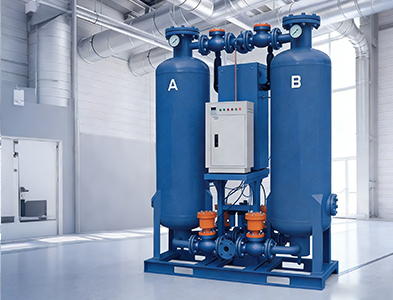
- Pain point 4: Condensate corrosion in air receivers – Low pressure and high flow lead to higher dew point excursions. Solution: Integrated refrigerated air dryer or desiccant dryer with auto drains, plus epoxy-coated receiver tanks. Smart controllers also manage dryer cycling based on ambient humidity data.
4. Economic Justification & Lifecycle Cost Analysis (LCCA)
Financial decision-makers require quantifiable justification. A total LCCA comparing a generic 7.5 bar compressor (derated to 3.5 bar) vs. a dedicated low pressure screw air compressor for a typical 30 m³/min flow at 3.5 bar, 7,000 hours/year, electricity at $0.12/kWh reveals:
| Parameter | Derated high-pressure unit | Dedicated low-pressure screw compressor |
|---|---|---|
| Input shaft power (kW) | 218 | 153 |
| Annual energy consumption (kWh) | 1,526,000 | 1,071,000 |
| Annual energy cost (USD) | $183,120 | $128,520 |
| Maintenance & parts/year | $16,500 | $10,200 |
| Total annual OPEX | $199,620 | $138,720 |
| Payback period on equipment investment | 12–16 months | |
Additional intangible benefits: reduction of CO₂ emissions by 197 metric tons/year, eligibility for energy efficiency rebates, and improved production uptime. Many engineering companies now specify low-pressure screw technology as a standard for new plant designs.
5. Smart Integration: VFD, IIoT, and Centralized Control
Modern low-pressure screw compressors are no longer standalone assets. The convergence of IoT gateways, pressure/flow sensors, and cloud-based analytics provides predictive maintenance. Key features for a high-end low pressure screw air compressor include:
- Adaptive PID control – Continuously adjusts inverter frequency to match real-time demand, minimizing unloaded running hours to <3% of total runtime.
- Remote fleet monitoring – Modbus TCP/IP, Profibus, or EtherNet/IP connectivity. Real-time performance dashboards show specific energy ratio (SER), bearing temperatures, and remaining oil change intervals.
- AI-based leakage detection – By analyzing pressure decay during night shifts, the controller estimates system leakage rate (typical savings 10–25%).
- Dual-pressure setpoint scheduling – Allows operators to automatically shift between, say, 2.2 bar for night aeration and 4.0 bar for peak conveying.
Aivyter offers the iCloud energy management platform compatible with any low-pressure screw compressor, providing actionable insights to compressor rooms and plant SCADA. One mining contractor reduced its compressed air electricity share from 17% to 11% of total plant usage within four months through data-driven interventions recommended by the platform.
6. Maintenance Protocols for Harsh Environments
Even the most robust low pressure screw air compressor requires disciplined preventative maintenance (PM) to achieve expected 60,000-hour airend life. Critical PM tasks for mining and construction include:
- Air intake filter service – Replace primary filter element every 500 hours in dusty environments; use safety cartridge and differential pressure gauge.
- Oil & filter change intervals – Full synthetic oil (PAO-based) at 4,000 hours or 6 months. Oil analysis for TAN, viscosity, and wear metals should be performed every 1,500 hours.
- Oil separator replacement – When pressure drop across separator reaches 0.8 bar (typically 5,000–6,000 hours), replace to maintain energy efficiency.
- Cooler cleaning – Blow out debris or chemical cleaning every 12 months for remote copper/aluminium fin coolers.
- Airend vibration monitoring – Install accelerometers (ISO 10816-3 compliance); vibration velocity above 7.1 mm/s indicates bearing wear.
Following these practices, a platinum mine in South Africa reported 98.7% mechanical availability over 5 years across a fleet of nine Aivyter low-pressure screw compressors operating at 980 meters underground.
7. Selecting the Right Low Pressure Screw Compressor: Checklist for B2B Buyers
Procurement managers and consultants should evaluate offers based on these objective criteria:
- Certified performance curves (ISO 1217 Annex C) showing specific power at design pressure and ambient.
- Audible noise level at 1 meter – demand ≤80 dBA for 55 kW+ units to comply with occupational exposure limits.
- Aftermarket support: guaranteed 48-hour availability of airend, coolers, and SEPL elements locally.
- Energy consumption guarantee from the manufacturer with penalties for deviation beyond ±3%.
- Remote diagnostics compatibility with existing site control systems (OPC UA, MQTT).
Frequently Asked Questions (FAQ) – Low Pressure Screw Compressor
Q1: What pressure range is considered “low pressure” for a screw air compressor, and what industries use this range?
A1: Low pressure typically refers to discharge pressures from 1.5 bar (gauge) up to 5 bar. Primary applications include dilute-phase pneumatic conveying (cement, fly ash), wastewater aeration (0.5–1.5 bar), mining coal washing and flotation, glass manufacturing, and industrial vacuum systems. Any process requiring high volume but low force benefits from a dedicated low pressure screw air compressor to avoid derating losses.
Q2: Can I use a standard 10-bar compressor and turn the pressure down to 3 bar?
A2: While technically possible, it is economically inefficient. A standard compressor operating far from its design point increases specific power consumption by up to 35% due to higher internal compression ratios, increased slip, and reduced valve efficiency. Moreover, oil separation suffers, leading to higher carryover. A purpose-built low pressure screw air compressor features a larger airend, optimized port geometry, and lower speed range, saving thousands of dollars annually.
Q3: How does variable frequency drive (VFD) improve low-pressure screw compressor performance?
A3: VFD adjusts motor speed to precisely match air demand, maintaining stable pressure (±0.1 bar) across different flow rates. In low-pressure applications, VFD extends the efficient turndown range from 20% to 100% of full load, eliminating wasteful unloading/loading cycles. A VFD-driven low pressure screw air compressor often reduces electrical consumption by 25–35% compared to fixed-speed units, especially in industries with variable shift patterns.
Q4: What type of air treatment filter is required for low-pressure systems in cement or mining?
A4: For dusty environments, use a multi-stage filtration scheme: an inlet scrubber (MERV 15 or ISO coarse 90%) followed by a coalescing filter (0.01 micron) and an activated carbon filter if oil-free air is needed (e.g., for food-contact conveying). Always install autodrain traps due to condensate formation in low-pressure, high-flow conditions. High-temperature options (max 100°C) are available for aftercooler discharge.
Q5: What is the typical lifespan of a low pressure screw airend, and how can I extend it?
A5: With proper maintenance – including regular oil analysis, clean coolers, genuine filters, and soft starting – airends often reach 60,000 to 80,000 hours. Common failure causes: using incorrect oil viscosity, high humidity leading to rust in rotors, and running above design discharge pressure. Implementing condition monitoring (vibration + thermography) and maintaining compressor room temperature <40°C are proven methods to extend life beyond 10 years of continuous operation.
Conclusion & Custom Inquiry For Your Low Pressure Project
Selecting a low pressure screw air compressor is not simply a procurement decision—it is a strategic energy-management choice that directly improves production economics. With well-documented savings in power, maintenance, and reliability, industry leaders have already converted their low-pressure air networks to dedicated screw technology. From rotor profiling to IIoT remote management, modern low-pressure compressors meet the demand for sustainable and continuous operation.
For plant-specific engineering support, performance simulations at your operating pressure, or a detailed proposal including air treatment and piping design, reach out directly to the team at Aivyter. Our application engineers provide a comprehensive audit – existing compressor assessment, leakage quantification, and payback calculation – at no cost for qualified projects.
▶ Submit your technical inquiry now: Send project specifications to Aivyter’s industrial team →
Or email directly: [email protected] (include desired flow rate, discharge pressure, ambient conditions, and duty cycle). Receive a certified technical datasheet and energy comparison within two business days.
about
Aivyter
We provides trusted air compressors and mining equipment, engineered for durability, efficiency, and demanding industrial applications.