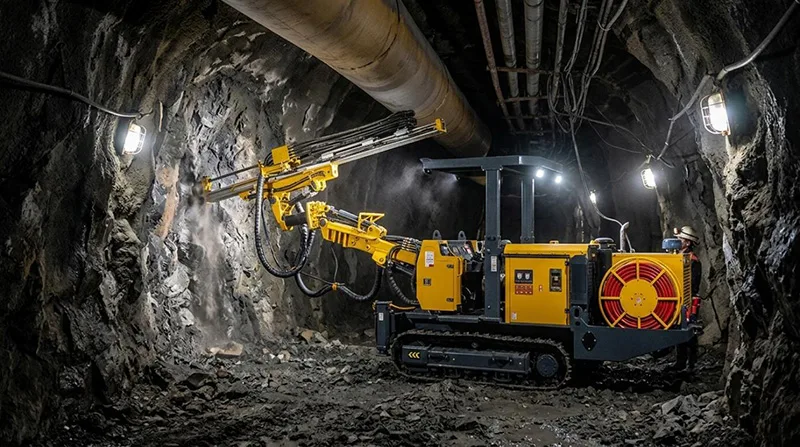
Every meter drilled underground directly impacts your operational budget. Choosing the wrong drill does more than slow down production; it spikes fuel costs, tears through drill steels, and burns out rotary heads. Mining contractors often find themselves caught between two proven power sources: compressed air and hydraulic fluid.
Neither technology is universally better than the other. Success hinges on a single factor: matching the machine drive to the rock mechanics of your deposit. At Aivyter, our engineers see operators struggle when they push light pneumatic rigs into high-silica granites or deploy heavy hydraulic jumbos into fractured, low-yield veins. If you need immediate assistance evaluating your geological profile, you can request an equipment consultation and quote from our technical team.
This technical guide breaks down how pneumatic and hydraulic underground mining drilling machines perform across varying rock formations, helping you invest in equipment that delivers the lowest cost per meter drilled.
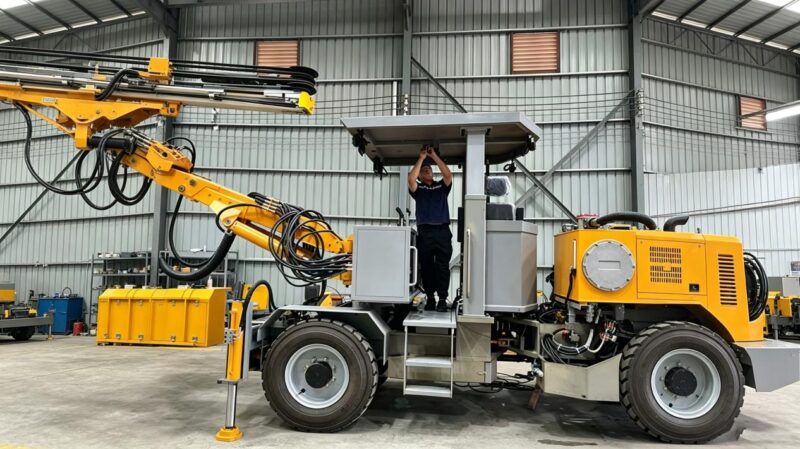
How Pneumatic and Hydraulic Underground Drilling Systems Function
Percussion drilling underground relies on transmitting kinetic energy through a drill string to crush rock through sheer compressive stress. The difference lies in how pneumatic and hydraulic underground mining drilling machines convert raw input energy into that destructive impact.
Pneumatic Drilling Machines: Compressed Air Simplicity
Pneumatic rock drills use compressed air, typically delivered at 6 to 8 bar (90 to 115 psi), to drive an internal reciprocating piston. That piston strikes the shank adapter, sending a shockwave through the drill steel down to the carbide bit. Exhaust air then flushes cuttings out of the borehole.
These units feature fewer moving parts and require zero electronic sensors. They handle wet, dusty, and abrasive drifts without risking electrical failure. However, compressed air is inherently inefficient as an energy carrier. Piston speeds hit a mechanical ceiling, which restricts impact energy and limits daily penetration rates.
Hydraulic Drilling Machines: High-Pressure Power and Control
Hydraulic underground mining drilling machines operate via closed-loop hydraulic circuits pressurized between 150 and 250 bar (2,100 to 3,600 psi). An oil-driven piston strikes the shank adapter at significantly higher frequencies than air drills—often exceeding 60 to 100 Hz.
In addition, hydraulic drifters incorporate independent rotation motors and dual-damping shock absorption systems. These dampening mechanisms absorb reflected shockwaves from hard rock faces, protecting both the feed beam and the internal components from premature fatigue. While hydraulic rigs deliver superior power transfer, they require clean operating environments, precise fluid filtration, and experienced service technicians.
Critical Rock Mechanics That Dictate Drill Selection
Selecting reliable underground mining drilling machines requires an honest review of your geotechnical data. Three core rock properties must dictate your purchase decision.
- Unconfined Compressive Strength (UCS): Measured in megapascals (MPa), UCS measures the maximum compressive stress rock can withstand before fracturing. Rocks below 50 MPa behave softly, while formations exceeding 180 MPa require extreme blow energy to propagate cracks.
- Cerchar Abrasivity Index (CAI) and Quartz Content: Highly abrasive formations wear down carbide gauge buttons rapidly. Abrasive rock demands drills with smooth rotation control and steady feed pressure to avoid grinding the bit flat and binding the drill string.
- Rock Quality Designation (RQD) and Structural Fractures: Highly jointed or faulted ground (RQD below 50%) shifts during percussion. This creates a risk of drill-string jamming unless your rig features automatic anti-jamming systems.
When Pneumatic Underground Mining Drilling Machines Excel
Pneumatic underground mining drilling machines remain workhorses in specific mining methods and soft-to-medium formations. They dominate in low-capital operations, narrow-vein stoping, and hazardous gas zones.
Pneumatic drills perform best in rocks with a UCS below 80 to 100 MPa. These include:
- Bedded sedimentary rocks such as shale, siltstone, and soft sandstones.
- Evaporite deposits including potash, gypsum, and rock salt.
- Stratified coal seams and interbedded mudstones.
- Weathered or highly fractured limestone deposits.
In these formations, high-impact hydraulic force often proves counterproductive. Excessive strike energy can shatter the borehole walls, creating cave-ins and trapping your drilling tools. A pneumatic system delivers enough percussion to fracture weaker rock bridges without over-crushing the surrounding ground structure.
Pneumatic rigs also shine in gassy coal mines or narrow-vein operations where running high-voltage electrical cabling to support a hydraulic power unit poses explosion hazards or logistical headaches. Air drills tolerate dirty conditions, water dripping from the hanging wall, and basic maintenance schedules carried out by general mechanics.
The limitation appears when UCS climbs past 120 MPa. In dense, non-yielding rock, pneumatic pistons lack the kinetic energy to cause spalling under the bit buttons. The bit bounces against the rock face, and penetration crawls to a halt while fuel consumption on your surface compressors skyrockets.
When Hydraulic Machines Become Essential for Hard Rock
When mining shifts to igneous or hard metamorphic formations, pneumatic rigs run out of steam. Hydraulic underground mining drilling machines are designed to fracture dense, crystalline rock efficiently through high frequency and optimized piston stroke geometry.
Equipment manufacturers like Aivyter design hydraulic drill rigs to master formations exhibiting UCS ratings from 150 MPa to well over 250 MPa. Typical environments include:
- Intrusive igneous formations like granite, diorite, and gabbro.
- Precambrian banded iron formations (taconite).
- Massive sulfide ore bodies and quartz-veined metamorphic host rock.
- Basalt flows, quartzite, and hard dolomites.
Breaking hard rock requires sending a fast-rise shockwave down the steel that exceeds the compressive strength of the rock matrix right beneath each bit insert. Hydraulic drifters generate this profile by using thin, elongated pistons struck at high velocity. Because hydraulic oil is nearly incompressible, up to 70% of the prime mover’s power converts directly into rock-fracturing impact energy, compared to roughly 15% to 20% in pneumatic lines.
Modern hydraulic underground mining drilling machines also include automated anti-jamming (anti-seizure) valves. When the bit hits a fault zone or a soft fracture within a hard quartz seam, rotation pressure instantly rises. The hydraulic system senses this spike, automatically reverses the feed direction, lowers impact pressure, and clears the hole before the drill string seizes.
Direct Comparison: Pneumatic vs. Hydraulic Drilling Systems
The table below provides a side-by-side technical evaluation of both machine categories to help guide your mine planning team.
| Performance Metric | Pneumatic Drilling Machines | Hydraulic Drilling Machines |
|---|---|---|
| Suitable Rock Hardness (UCS) | Soft to Medium (30 – 100 MPa) | Medium to Ultra-Hard (100 – 280+ MPa) |
| Penetration Rate (ROP) | Moderate (0.3 – 0.7 m/min in medium rock) | Very High (1.2 – 2.5+ m/min in hard rock) |
| Energy Transfer Efficiency | Low (~15% to 20% system efficiency) | High (~60% to 75% system efficiency) |
| Initial Capital Expenditure (CAPEX) | Low to Moderate | High |
| Overall Operating Cost (OPEX) | High energy usage per meter drilled | Lower energy cost; higher component repair costs |
| Maintenance Complexity | Low; field rebuilds possible with basic tools | High; demands clean oils, filtration, and skilled labor |
| Noise & Working Environment | Very loud exhaust air (often >110 dB), fogging | Quiet percussion cycle, no oil mist or air exhaust |
| Drill String Wear | Higher button wear per meter in hard rock | Controlled by hydraulic dampening systems |
Step-by-Step Decision Framework for Mine Operators
Selecting between pneumatic and hydraulic underground mining drilling machines comes down to a systematic evaluation of your deposit and existing site infrastructure. Follow these three steps before issuing a tender.
Step 1: Test Your Rock Core Samples
Never rely on visual estimates of rock strength. Run laboratory tests on recent exploration core to identify UCS, Brazilian Tensile Strength (BTS), and quartz percentage. If your UCS results fall consistently under 100 MPa, pneumatic units provide a simple, cost-effective drilling platform. If multiple samples test above 140 MPa, running pneumatic equipment will cause poor drilling output and excessive rod replacement.
Step 2: Inspect Power Infrastructure and Air Reticulation
Pneumatic drilling requires substantial infrastructure: heavy compressors, broad receiver tanks, and large-diameter steel piping down shafts and along crosscuts. Every 100 meters of pipe drops air pressure, sapping power from the drills at the face.
Hydraulic rigs run using onboard electric-hydraulic power packs connected to the mine’s 380V, 550V, or 1000V electrical reticulation grid via trailing cables. If your headings run several kilometers deep, extending high-voltage power lines to a hydraulic machine is often cheaper and more energy-efficient than battling pressure drop over extensive compressed air networks.
Step 3: Calculate the Total Cost of Ownership (TCO)
Look beyond the purchase price on the invoice. Calculate TCO based on your target advance rate:
Total Cost per Meter = (Capital Cost Amortization) + (Energy & Fuel

Costs) + (Bits & Steels) + (Labor & Maintenance)
Hydraulic rigs cost more upfront, but their fast penetration cuts labor hours and diesel or power costs per meter by more than 40% in hard formations. For high-volume production tunnels, that speed advantage quickly pays off the initial capital expenditure.
Frequently Asked Questions (FAQ)
Q1: Can pneumatic underground mining drilling machines drill hard granite formations?
A1: They can, but at an extremely slow pace. Drilling granite (UCS 160–220 MPa) with pneumatic equipment yields low penetration speeds (often under 0.2 meters per minute). The repeated piston strikes generate heavy friction and heat, rapidly dulling button bits and running up high air-compressor fuel bills.
Q2: Why are hydraulic underground mining drilling machines considered more energy-efficient?
A2: Air compressors lose considerable energy as heat during the compression cycle, and pipe runs lose pressure through friction and minor air leaks. Hydraulic systems transmit power through near-incompressible hydraulic fluid within a compact, onboard closed circuit, delivering about three times more input power directly to the rock face.
Q3: How do fractured rock zones affect hydraulic drifters?
A3: Fractured or layered ground can cause drill steels to jam. Modern hydraulic underground mining drilling machines address this with anti-jamming controls. When the drill strikes a void or broken ground, hydraulic feedback valves immediately lower impact energy, pull back the feed, and flush the hole to prevent stuck steel.
Q4: What maintenance skills are required to support hydraulic drill rigs underground?
A4: Hydraulic units require technicians trained in proportional valve diagnostics, pressure relief calibration, and system contamination control. Keeping hydraulic oil pure is essential; contaminated fluid quickly damages expensive proportional valves and piston seals.
Q5: Can I convert my underground mine from pneumatic to hydraulic equipment gradually?
A5: Yes. Many mines use a phased conversion. Operators often deploy an electro-hydraulic single-boom jumbo for main decline ramp development where speed matters, while keeping small pneumatic stoper and sinker drills for auxiliary tasks, ditching, and roof bolting in isolated crosscuts.
Final Recommendations and Next Steps
Your rock formation is fixed; your equipment choice is not. Match your drill technology to your rock mechanics to safeguard your margins:
- Choose pneumatic underground mining drilling machines when working in soft to medium ground, remote mines with limited technical labor, narrow-vein stopes, or spaces where simplicity and low capital expenditure are top priorities.
- Invest in hydraulic underground mining drilling machines when drilling hard, abrasive rock, driving long development rounds, or targeting high production rates where rapid penetration lowers your total cost per meter.
Aivyter manufactures high-performance drilling solutions built to tackle tough underground rock formations. Our field engineers can review your geotechnical core logs, inspect your mine’s power infrastructure, and help you configure the right equipment for your site. Contact the Aivyter engineering team today to request technical documentation or receive a customized quotation for your mine.
about
Aivyter
We provides trusted air compressors and mining equipment, engineered for durability, efficiency, and demanding industrial applications.