Compressed air is often called the fourth utility in manufacturing plants, yet its generation and treatment are frequently underestimated. A properly sized factory air compressor must deliver stable pressure, dry air (low dew point), and minimal oil carryover for pneumatic tools, actuators, and instrumentation. This article examines compressor technologies, air treatment components, distribution piping, and maintenance strategies for heavy-duty industrial environments. Companies like Aivyter engineer complete compressed air systems that balance efficiency with reliability. We focus on engineering decisions—from rotary screw vs. reciprocating to variable frequency drive (VFD) sizing—without oversimplifying the complexities of a plant-wide network.
1. Core Technologies for a Factory Air Compressor
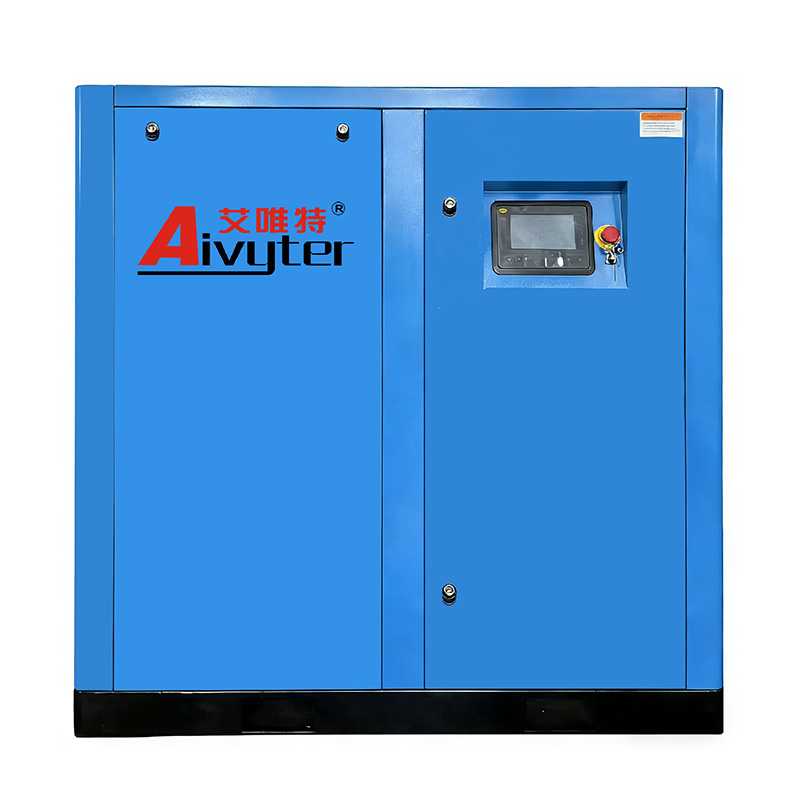
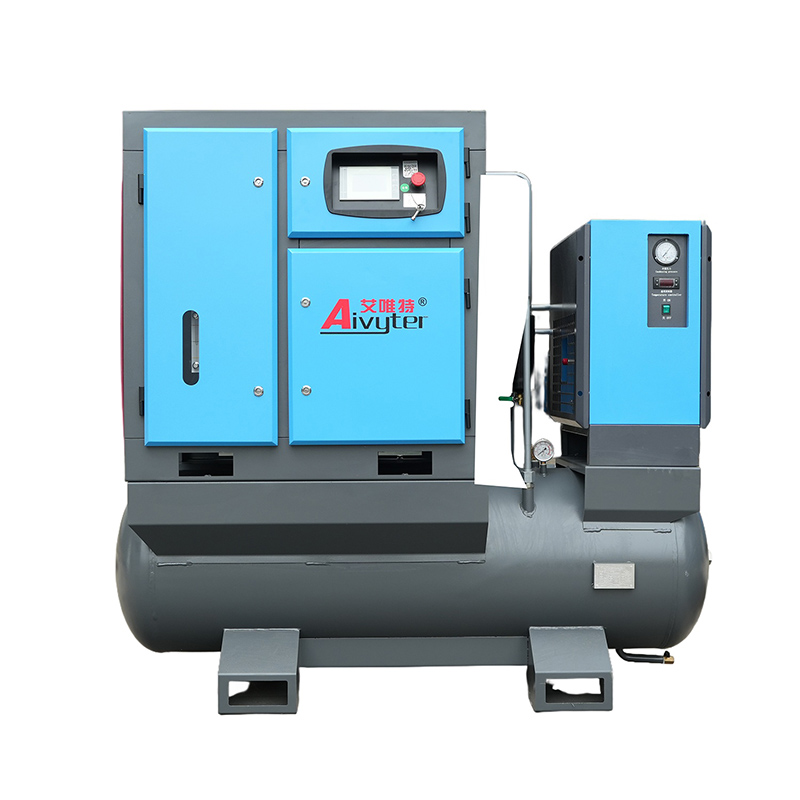
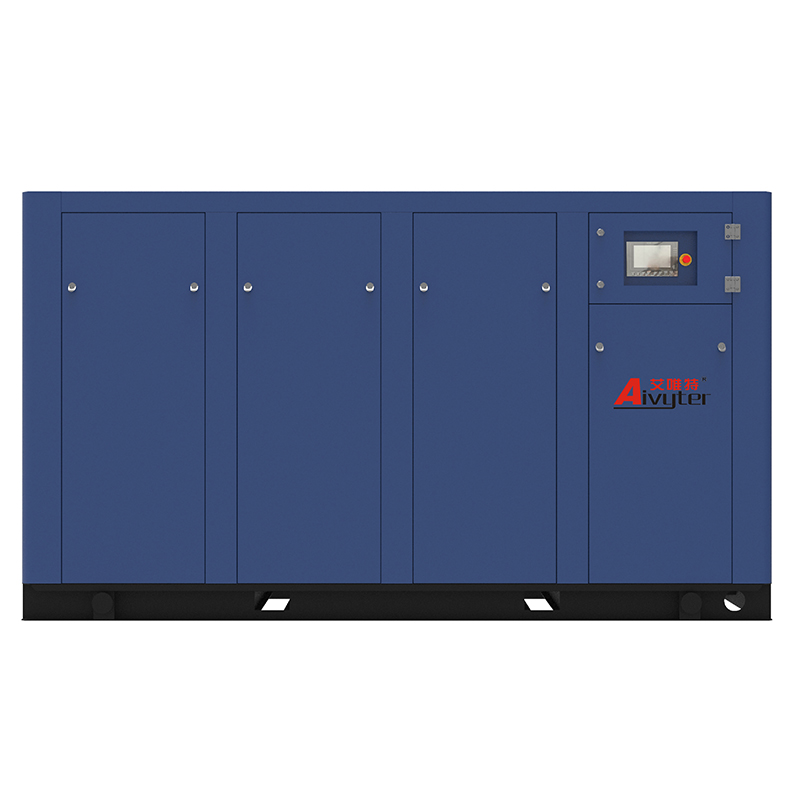
Two designs dominate industrial settings: oil-injected rotary screw and reciprocating piston. Each suits different duty cycles and air quality needs. A factory air compressor selection begins by matching technology to demand profile.
1.1 Rotary Screw (Oil-Injected)
- Ideal for 100% duty cycle (continuous operation).
- Capacity range: 5 kW to 500+ kW, pressures up to 13 bar.
- Oil injection seals clearances, cools the air, and lubricates bearings.
- Typical oil carryover: 2–5 ppm (with standard coalescing filter).
1.2 Reciprocating (Piston)
- Suitable for intermittent duty (<50% duty cycle).
- Lower initial cost for small capacities (below 15 kW).
- Higher vibration and pulsation; requires rigid mounting.
- Oil carryover can exceed 10 ppm without aftertreatment.
For 24/7 factory operations, rotary screw is standard. However, improper sizing leads to excessive unloading losses or pressure drops. A variable frequency drive (VFD) screw compressor modulates motor speed to match air demand, saving energy during partial loads. Aivyter’s VFD-equipped units maintain ±0.1 bar pressure stability.
2. Air Treatment: Dew Point, Particulate, and Oil Removal
Raw compressed air from a factory air compressor contains water vapor, oil aerosols, and solid particles. Without treatment, pneumatic components fail prematurely. The standard treatment train includes:
- Aftercooler (air-cooled or water-cooled): Reduces discharge temperature to within 10-15°C of ambient, condensing bulk water.
- Moisture separator: Removes liquid condensate via centrifugal or baffle design.
- Refrigerated air dryer: Cools air to 3°C (pressure dew point), condensing remaining vapor. For indoor tools, +3°C dew point is sufficient.
- Desiccant air dryer (heatless or heated): Achieves -40°C to -70°C dew point for critical instrumentation, painting, or outdoor lines in freezing climates.
- Particulate filters (0.01–1 micron): Remove rust, pipe scale, and desiccant dust.
- Coalescing filters (oil removal): Reduce oil carryover to 0.01 mg/m³ (0.01 ppm) for sensitive applications like food packaging or electronics assembly.
Selection of dryer type depends on ambient temperature and required air quality class per ISO 8573-1. Many factories mistakenly overspecify desiccant dryers (higher pressure drop and purge loss) when refrigerated dryers are adequate. For every 2 bar pressure drop across treatment, energy consumption rises by 1%. Aivyter’s system design includes pressure drop calculations for each component.
3. Distribution Piping: Sizing, Looping, and Material
Even the best factory air compressor fails if distribution piping causes pressure drops or condensate pooling. Engineering principles:
- Loop or header design: A ring main (closed loop) provides uniform pressure to all take-off points. Dead-end lines cause pressure gradients.
- Pipe sizing: Velocity should stay below 6 m/s for main lines, 10 m/s for branches. Use friction loss charts (e.g., 0.05–0.1 bar per 100m).
- Material: Aluminum or stainless steel resists corrosion; black steel rusts and generates particles. Copper is suitable for dry air only.
- Slope and drains: Pipe slope of 1-2% toward low points, with automatic condensate drains (electronic or float type) at each drip leg.
A common mistake: installing small-branch lines from the bottom of the header, drawing condensate directly into tools. Always take branches from the top of the horizontal pipe.
4. Control Strategies for Multi-Compressor Plants
Factories often operate two or more compressors to manage varying demand. Control methods affect efficiency and component life:
- Start/stop (on/off): Simplest, but limited to motors under 30 kW to avoid thermal stress.
- Load/unload (constant speed): Compressor runs continuously, but unloading wastes about 15-25% of full-load power during no-demand periods.
- Variable Speed Drive (VFD): Adjusts motor speed to match air output exactly. Best for demand that varies between 40-90% of rated flow. Avoid VFD for near-constant loads (efficiency penalty at 100%).
- Sequencing (master controller): Automatically starts/stops multiple compressors based on system pressure and flow. Modern controllers use machine learning to predict demand cycles.
Aivyter’s central controller integrates with existing compressors (regardless of brand) and includes remote monitoring via industrial IoT. Pressure setpoint optimization (lowering average pressure by 1 bar reduces energy consumption by 7-10%).
5. Industry-Specific Considerations
Different factory segments impose unique requirements:
- Automotive assembly: High flow for pneumatic tools (6-7 bar). Need class 3.4.4 air quality (max 5 ppm oil, dew point +3°C).
- Food & beverage: Oil-free compressors (or external oil-free air treatment) to comply with ISO 8573-1 Class 0 (0.01 mg/m³ oil). Desiccant dryers often required.
- Electronics manufacturing: Extremely dry air (-40°C dew point) and particle-free (0.01 micron filtration). Stainless steel piping mandatory.
- Textile mills: High humidity environments; refrigerated dryers with oversized condensate drains. Corrosion-resistant air receiver tanks.
- Metal fabrication (laser cutting, stamping): High pressure (10-12 bar) and high flow. Reciprocating or two-stage rotary screw compressors.
Selecting a factory air compressor without considering end-use air quality leads to production stoppages. Aivyter offers air quality audits that sample compressed air at point-of-use to verify ISO class compliance.
6. Maintenance Protocols for Long-Term Reliability
Compressed air systems degrade over time. Key maintenance tasks:
- Oil changes (rotary screw): Every 2000-4000 hours using manufacturer-approved synthetic oil. Extend oil life with periodic sampling (spectrometric analysis).
- Air/oil separator replacement: When pressure drop across separator exceeds 0.6 bar (or annually). Neglect leads to high oil carryover and foaming.
- Air filter (intake and inline): Replace intake filter when differential pressure indicator shows red. Replace coalescing filters every 12 months regardless of pressure drop.
- Condensate drains (electronic): Clean strainers quarterly. Test function by pouring water into the drain; ensure it cycles.
- Cooler cleaning: Remove debris from air-cooled radiators monthly; water-cooled heat exchangers require descaling every 2 years.
- Belt or direct coupling check: Tension belts per manufacturer (deflection 10-15mm). For direct-drive, check elastomeric coupling for cracks.
Document all service events in a CMMS. Predictive maintenance—vibration analysis on motor bearings, thermography on electrical panels—prevents unplanned outages.
Frequently Asked Questions (FAQ) – Factory Air Compressor
Q1: How do I determine the required size (cfm or m³/min) for my factory air compressor?
A1: List all pneumatic equipment with their air consumption (free air delivery at rated pressure). Multiply by usage factor (simultaneity): 0.8 for general workshop, 0.9 for assembly lines, 1.0 for continuous blasting. Add 15-20% for future expansion and leakage. Then convert to intake conditions (cfm free air). Many factory air compressor suppliers, including Aivyter, offer free sizing software based on your equipment list.
Q2: What is the acceptable pressure drop from compressor to farthest point of use?
A2: Industry guideline: total pressure drop (including dryer, filter, piping, fittings) ≤ 10% of compressor discharge pressure. For a 7 bar system, drop should stay below 0.7 bar. Higher drops indicate undersized piping or clogged filters. Measure pressure at the receiver tank and at the farthest tool under peak demand.
Q3: Can I use a standard factory air compressor for breathing air?
A3: No. Breathing air requires specific treatment: CO monitor, catalytic converter for CO removal, and purification to Grade D (OSHA) or EN 12021 standards. A standard oil-lubricated compressor, even with coalescing filters, does not remove gaseous contaminants like carbon monoxide. Breathing air systems use oil-free compressors or dedicated breathing air purifiers.
Q4: How often should I test my compressed air quality (oil, water, particles)?
A4: For ISO 8573-1 compliance, test every 12 months for typical industrial applications. For critical applications (food, pharma, electronics), test quarterly. Use on-site gas detector tubes or send samples to a lab. Aivyter provides testing kits with analysis reports.
Q5: What causes excessive moisture in compressed air despite a working dryer?
A5: Common causes: (1) High inlet temperature to dryer—check aftercooler performance; (2) Dryer undersized for peak flow; (3) Condensate drain stuck closed; (4) Dryer bypass valve leaking; (5) For desiccant dryers, exhausted desiccant or heater failure. Measure dew point at dryer outlet and compare to specification.
Q6: Is a variable frequency drive (VFD) always beneficial for a factory air compressor?
A6: Not always. VFD provides best savings when average demand is 50-80% of compressor capacity and demand fluctuates. For near-constant load (e.g., 90%+), a fixed-speed load/unload compressor with a large air receiver may be more efficient and have lower initial cost. Aivyter’s engineers can model your load profile to recommend the best drive type.
Q7: How do I reduce compressed air leakage in my factory?
A7: Leakage typically accounts for 20-30% of output. Conduct a leak survey: with all equipment off, measure the time compressor loads/unloads. Calculate leak rate = (compressor output × loaded time%) / total cycle time. Use ultrasonic leak detectors to locate leaks. Common leak points: quick-release couplings, condensate drains, pipe joints, and old hoses. A leakage reduction program can cut energy use by 15-25%.
Inquiry: Compressed Air System Assessment for Your Factory
Selecting a factory air compressor involves more than picking a horsepower rating. You need a system that accounts for air treatment, piping layout, storage, and control strategy. Aivyter provides a no-obligation compressed air audit that includes:
- Seven-day data logging: pressure, flow, power, dew point.
- Leak quantification and location report using ultrasonic mapping.
- Recommendations for compressor type, dryer sizing, and distribution upgrades.
- Payback analysis for VFD vs. fixed-speed options (without disclosing absolute cost figures).
Submit your inquiry to start the technical discussion:
→ Send your current compressor specifications (make, model, hours), a list of major air-consuming equipment, and any pressure/quality complaints. Our application engineers will respond with a proposed measurement plan within three business days.
Contact form: https://www.aivyter.com/contact (or use the live chat on our website).
about
Aivyter
We provides trusted air compressors and mining equipment, engineered for durability, efficiency, and demanding industrial applications.