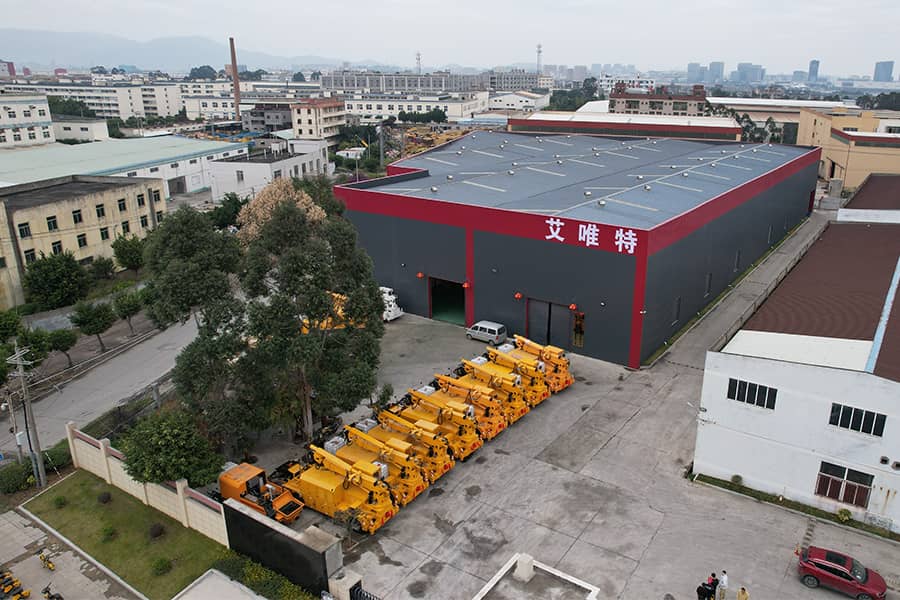
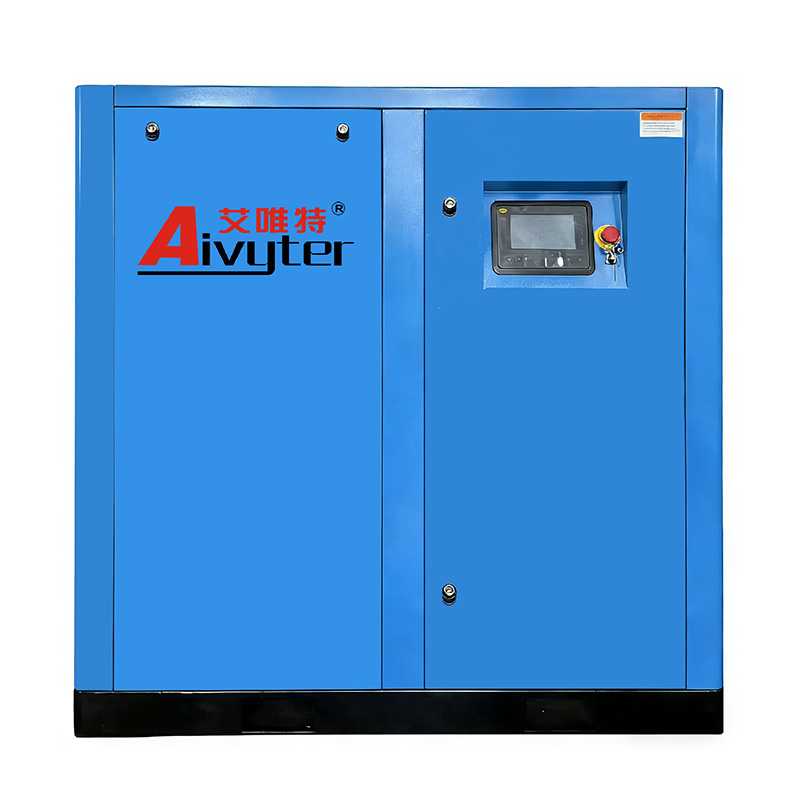
For plant managers and procurement engineers, the initial screw air compressor price is only the first line item. A low‑cost unit may demand frequent repairs, consume excessive electricity, and fail to deliver rated CFM under real conditions. Understanding the components that influence pricing – from motor efficiency class to drying integration – allows you to select a compressor that minimizes lifetime expenditure. Aivyter manufactures rotary screw compressors for industrial, construction, and mining applications. This article dissects the variables behind a screw air compressor price and provides a framework for comparing quotes based on total cost of ownership rather than upfront figures.
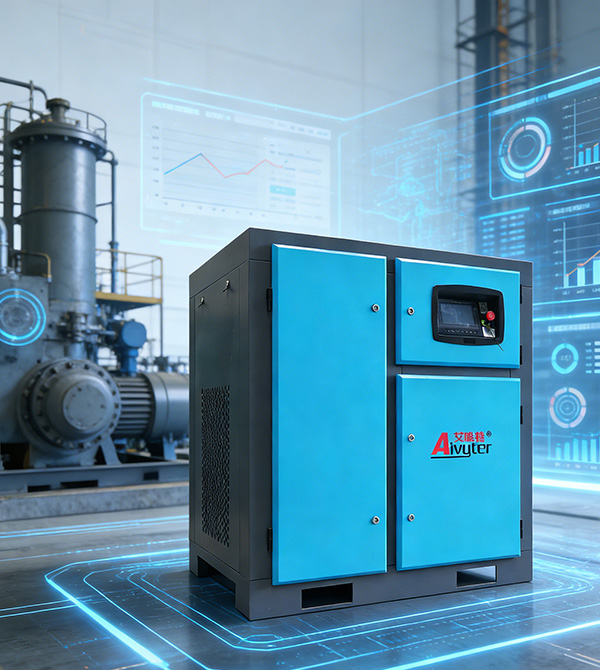
Why Screw Compressor Pricing Varies Widely – Core Components
Two seemingly similar 75 kW screw compressors can differ in screw air compressor price by 40% or more. The difference lies in five engineering areas.
1. Air End (Airend) Quality
The screw element is the heart of the machine. Factors affecting cost:
- Profile design: Asymmetric rotor profiles (e.g., Sigma, X‑Profile) deliver 10‑15% better specific power than older symmetric designs. Licensed profiles from OEMs (GHH, Rotorcomp) add to the price.
- Material and coating: Cast iron with PTFE‑coated rotors resists corrosion and extends life, but costs more than uncoated steel.
- Bearing type: Heavy‑duty tapered roller bearings or angular contact ball bearings (SKF, FAG) vs. standard cylindrical rollers – premium bearings add 15‑20% to airend cost.
2. Motor Efficiency and Drive Type
Motor selection directly impacts both purchase price and electricity consumption.
- IE3 vs. IE4 motors: An IE4 (Super Premium) motor is 2‑3% more efficient than IE3, but adds 15‑25% to motor cost. Over 40,000 operating hours, IE4 often pays back.
- Fixed‑speed vs. Variable Speed Drive (VSD): VSD compressors include a VFD (inverter) and often a permanent magnet motor. Expect a VSD unit to cost 50‑80% more than a fixed‑speed equivalent. However, for fluctuating air demand, VSD reduces energy use by 25‑35%.
- Direct coupling vs. belt drive: Direct‑drive (elastic coupling or flange mounted) has fewer parts and higher efficiency (no belt losses), but may have higher initial cost.
3. Air Treatment Integration
A compressor alone does not deliver clean, dry air. Integrated components add to the base screw air compressor price but reduce external piping and installation labor:
- Aftercooler (air‑ or water‑cooled): Reduces discharge temperature to within 10‑15°C of ambient. Stainless steel coolers cost more than copper or aluminum.
- Moisture separator (cyclonic or coalescing): Removes bulk condensate. Electronic drain valves (zero‑loss) are superior to timer drains.
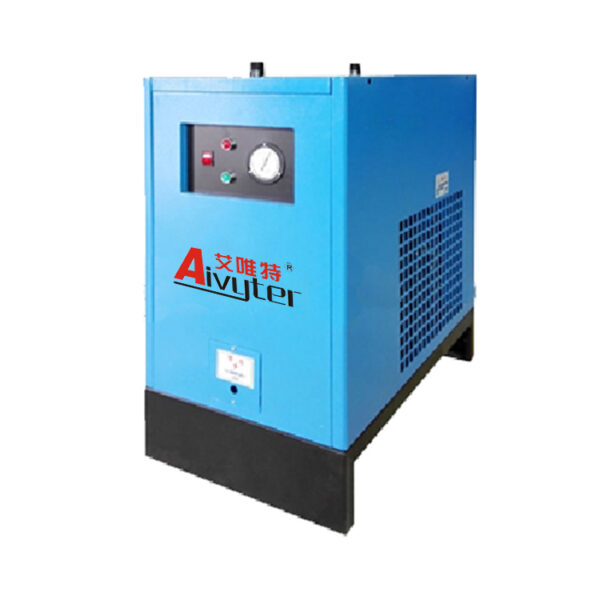
- Built‑in air dryer: Refrigerated or desiccant dryers mounted on‑frame reduce footprint but increase initial spend by 20‑40%.
- Oil‑water separator: Required for condensate disposal in environmentally regulated areas.
4. Control System and Telemetry
Basic compressors use electromechanical relays. Advanced units include:
- Microprocessor controller with touchscreen: Allows remote monitoring, load/unload scheduling, and fault logging – adds $500‑1500.
- Modbus/Profibus connectivity: Enables integration with plant SCADA. Optional but valuable for Industry 4.0 setups.
- Multiple compressor sequencing (master controller): For systems with 3+ compressors, an external sequencer optimizes run hours and pressure band.
5. Enclosure and Noise Dampening
Indoor vs. outdoor installation changes enclosure requirements:
- Standard acoustic enclosure (75‑85 dBA): Sufficient for separate compressor rooms.
- Low‑noise / Super‑silent enclosure (<70 dBA): Extra mass, foam lining, and isolated fans – adds 10‑15% to total price.
- Weather‑proof outdoor enclosure (IP54 or higher): Includes louvers, roof, and corrosion‑resistant paint – premium of 20‑30% over indoor version.
Price Ranges by Power and Configuration (Indicative Market Data)
To help you benchmark a screw air compressor price quote, below are typical ranges for industrial rotary screw compressors (2025‑2026, ex‑works, without installation). Note that prices vary by region and specification.
| Power (kW) | Flow (m³/min @ 7 bar) | Fixed‑speed (basic) | Fixed‑speed with dryer | VSD (Premium) |
|---|---|---|---|---|
| 11 kW | 1.6 – 2.0 | $3,200 – 4,500 | $4,500 – 6,000 | $6,000 – 8,500 |
| 22 kW | 3.2 – 4.0 | $5,500 – 7,500 | $7,500 – 9,500 | $10,500 – 14,000 |
| 37 kW | 5.5 – 7.0 | $9,000 – 12,000 | $12,000 – 15,000 | $17,000 – 22,000 |
| 55 kW | 8.5 – 10.5 | $14,000 – 18,000 | $18,000 – 23,000 | $26,000 – 34,000 |
| 75 kW | 12.0 – 15.0 | $19,000 – 25,000 | $25,000 – 32,000 | $36,000 – 48,000 |
| 110 kW | 18.0 – 22.0 | $28,000 – 36,000 | $37,000 – 46,000 | $52,000 – 70,000 |
These figures are for oil‑injected rotary screw compressors (7‑10 bar). Oil‑free units cost approximately 2.5‑3x higher due to special coatings and water‑injected airends.
Industry Pain Points That Drive Hidden Costs
Buyers who focus solely on the upfront screw air compressor price often encounter these expensive surprises within 12‑24 months.
Pain Point 1: Excess Energy Consumption
Root cause: Oversized compressor running perpetually in load/unload mode (inefficient) or modulating control. Solution: Perform an air demand study and size the compressor for the base load, then add a VSD or smaller trim unit. A 75 kW VSD can reduce annual electricity cost by $5,000‑10,000 compared to a fixed‑speed of the same rating, depending on load profile.
Pain Point 2: Frequent Oil and Filter Changes
Root cause: Cheap OEM parts with short life (e.g., 1,000 hours vs. 4,000‑hour synthetic oil). Solution: Specify synthetic lubricant (PAO or ester‑based) and larger oil filters. Ask the supplier for the expected service interval at your operating ambient temperature. Some premium compressors offer 8,000‑hour oil change intervals.
Pain Point 3: Downtime for Parts Availability
Root cause: Imported compressors with no local parts stock. Solution: Choose a supplier with a regional distribution center. Aivyter maintains inventories of airends, coolers, and controllers for quick dispatch.
How to Compare Compressor Quotes – A 5‑Step Method
When you receive multiple screw air compressor price proposals, normalize them using the following criteria.
- Specific Power (kW per m³/min): Request the ISO 1217 (discharge pressure 7 bar, inlet 20°C) performance curve. Lower specific power means lower electricity cost. For a 75 kW unit, specific power should be ≤6.0 kW/(m³/min).
- Pressure dew point (if dryer included): Refrigerated dryers should achieve +3°C PDP; desiccant dryers -40°C. Confirm the dryer’s pressure drop (<0.3 bar).
- Guaranteed flow at site conditions: Elevation and ambient temperature derate output. Ask for the corrected flow at your site (e.g., 1,500 m altitude reduces flow by 10‑12%).
- Warranty terms: Standard warranty is 12 months or 2,000 hours. Better suppliers offer 24 months / 4,000 hours on the airend. Check if warranty covers travel and labor.
- Installation and commissioning cost: Some quotes exclude electrical connections, foundation, or piping. Get a line‑item breakdown.
Total Cost of Ownership Calculation Example
For a 55 kW compressor running 4,000 hours per year at $0.12/kWh, a difference of 0.5 kW/(m³/min) in specific power translates to:
- Annual energy cost difference = 0.5 kW × 4,000 h × $0.12 = $240 per m³/min of flow.
- For a 10 m³/min compressor, that’s $2,400/year extra electricity.
- Over 10 years, $24,000 – far outweighing a $3,000 lower initial price.
Thus, a higher priced compressor with better efficiency is often the cheaper long‑term choice.
When to Consider Variable Speed Drive (VSD) – Decision Matrix
VSD compressors have a higher screw air compressor price but offer energy savings when air demand varies. Use VSD if:
- Your air demand fluctuates by more than 30% between minimum and maximum over an 8‑hour shift.
- The compressor will run at partial load (>30% of time below 70% of full flow).
- You need stable pressure within ±0.1 bar (fixed‑speed typically has ±0.5‑1 bar band).
- You have a high electricity tariff or demand charges – VSD reduces peak power draw.
For steady 24/7 base load operation (e.g., textile mills, continuous production), a fixed‑speed compressor with a large air receiver may be more economical.
Selecting a Reliable Screw Air Compressor Supplier
Beyond the price tag, evaluate the manufacturer’s service network. Aivyter provides:
- Factory‑trained service engineers in 15 countries.
- Genuine spare parts stocked regionally, delivered within 48 hours.
- Remote monitoring via IoT controller – alerts for filter change, oil temperature, and vibration.
A compressor that costs 10% more but comes with 5‑year airend warranty and 24‑hour support reduces risk for your operation.
Frequently Asked Questions (FAQs) on Screw Air Compressor Price
Q1: Why do two 30 kW compressors from different brands vary in price by $4,000?
A1: The difference stems from airend type (proprietary vs. generic), motor efficiency (IE3 vs. IE2), control panel complexity, and inclusion of a dryer/separator. Also, brands with local service infrastructure charge a premium for faster support. Always compare the specific power and warranty length, not just the screw air compressor price tag.
Q2: Is a VSD screw compressor worth the extra upfront cost?
A2: For most plants with variable air consumption (e.g., multiple shifts, intermittent tool use), yes. The payback period is typically 12‑24 months from energy savings alone. For constant high load (>90% of capacity), a fixed‑speed unit is more economical. Ask your supplier to provide an energy savings simulation based on your air demand log.
Q3: What hidden costs are not included in a typical screw air compressor price quotation?
A3: Common exclusions: electrical cabling from panel to compressor, foundation pad or vibration isolators, safety valve certification, first fill of oil and filters, freight insurance, and customs duties (for imports). Also, an air receiver tank (required by code in many regions) and piping to distribution points are usually separate. Request an “all‑in” delivered and commissioned price.
Q4: How does altitude affect the required compressor size and price?
A4: At 2,000 m above sea level, air density drops by ~20%, so a compressor’s actual flow (m³/min) decreases by the same percentage. To achieve the same mass flow, you need a larger compressor – which has a higher base screw air compressor price. Always provide your site elevation when requesting quotes. Some suppliers offer high‑altitude kits (oversized fans, derated motor) for a surcharge.
Q5: What is a reasonable warranty for an industrial screw compressor?
A5: Standard: 12 months or 2,000 operating hours (whichever comes first) on the entire machine. Premium suppliers offer 24 months / 4,000 hours on the airend and drive motor. Extended warranties are available for an extra 5‑8% of the purchase price. Avoid compressors with only 6‑month warranties.
Get a Customized Screw Air Compressor Price Based on Your Site Data
Investing time up front to analyze your flow, pressure, and duty cycle will deliver a compressor that operates efficiently for 15‑20 years. Aivyter provides a free site survey and load profiling to recommend the optimum horsepower, drive type, and air treatment package. We also provide a detailed screw air compressor price breakdown that separates equipment, installation, and a 5‑year service plan. Share your operating parameters – pressure, average flow, and acceptable pressure band – to receive a proposal tailored to your facility.
Submit your inquiry here: https://www.aivyter.com/contact – Our engineering team will respond within 48 hours with a recommendation and ROI calculation.
about
Aivyter
We provides trusted air compressors and mining equipment, engineered for durability, efficiency, and demanding industrial applications.