1. Core Engineering: Why Rotary Screw Technology Dominates Portable Applications
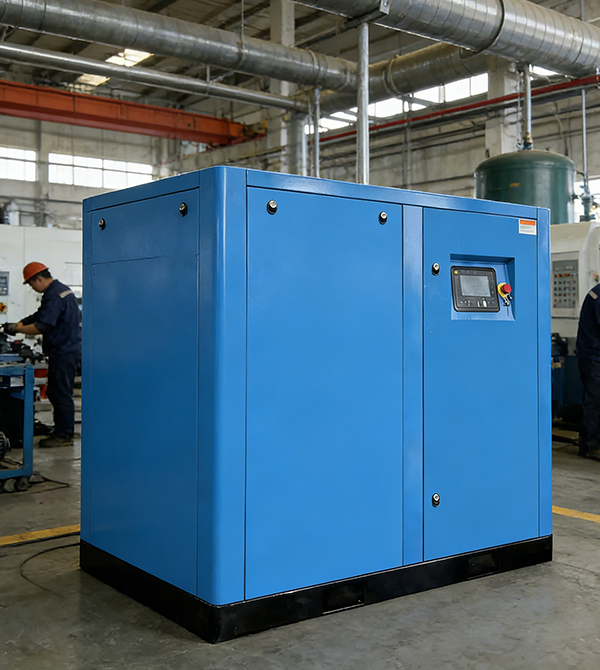
The foundation of any portable rotary screw compressor is its airend – two interlocking helical rotors that trap, reduce, and discharge air continuously. This principle eliminates the pulsation and unbalanced forces common in reciprocating units. Key technical advantages include:
- Continuous duty cycle – 100% load factor without overheating, critical for 24/7 drilling or sandblasting.
- Oil-injected sealing & cooling – Injected oil seals internal clearances, reduces internal leakage, and carries heat away, enabling compact designs.
- Direct or belt drive flexibility – Allows matching engine or motor speed to air demand, improving part-load efficiency.
Modern airends feature asymmetric rotor profiles (e.g., 5:6 lobe combination) that lower specific power by 12–15% compared to older symmetric designs. For field engineers, this translates into lower fuel consumption per cubic meter of air delivered – a decisive factor when diesel prices exceed $4 per gallon.
2. Sizing and Performance Parameters: Matching the Compressor to Real-World Demand
Selecting the correct portable rotary screw compressor requires precise analysis of volume (CFM or m³/min), pressure (PSI or bar), and duty cycle. Oversizing wastes fuel; undersizing stalls operations. Below are critical metrics for heavy industries:
- Free air delivery (FAD) – Typical portable units range from 100 CFM (small utility) to 1,600 CFM (large mining). Drilling rigs often require 600–900 CFM at 150–200 PSI.
- Maximum operating pressure – 100 PSI is adequate for pneumatic tools; 150–200 PSI needed for down-the-hole (DTH) hammers; 350 PSI for specialized water well drilling.
- Ambient & altitude correction factors – Above 3,000 feet, engine power derates by 3–4% per 1,000 ft. Turbocharged diesel engines and variable geometry airends compensate effectively.
Project managers must also evaluate duty cycle software that logs loaded vs. idle hours. A unit running 70% load requires different oil change intervals and fuel tank sizing than one running 95% load. Advanced telematics from manufacturers like Aivyter integrate these parameters into fleet management dashboards.
3. Application Deep Dive: Mining, Tunneling & Large-Scale Civil Works
Each sector imposes unique mechanical and environmental stressors. Understanding these ensures the compressed air system does not become the project bottleneck.
3.1 Surface and Underground Mining
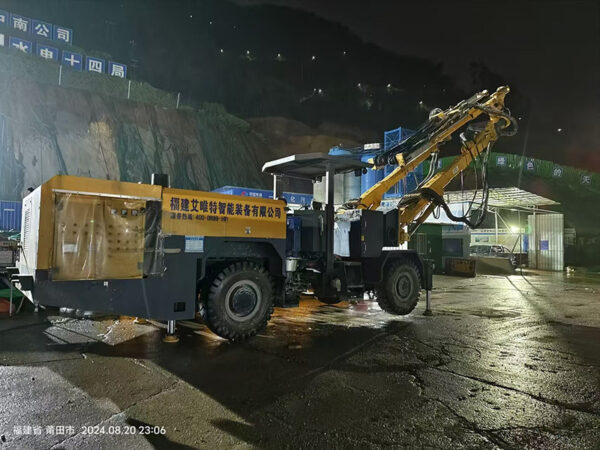
Blasthole drilling (DTH hammers), slurry pumping, and ventilation bag inflation demand high pressure and high volume. Dust ingress is severe. Solutions include:
- Two-stage filtration – Cyclone pre-filter + heavy-duty air filter (99.9% efficiency at 5 microns) for engine and airend intake.
- Corrosion-resistant coolers – Aluminum finned-tube coolers with epoxy coating to resist acidic mine water spray.
- Remote start/stop & shutdown timers – Prevents idling during shift changes, reducing fuel burn and carbon build-up.
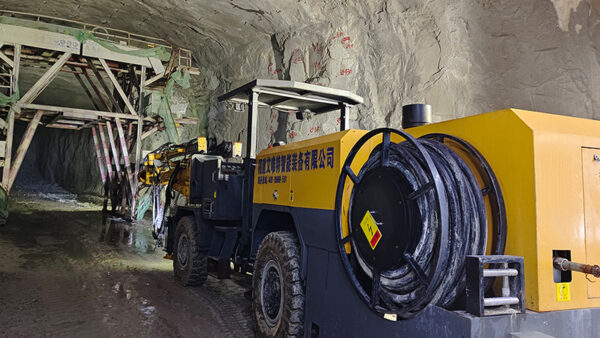
3.2 Tunneling (TBM & Drill-and-Blast)
Tunnel boring machines (TBMs) use compressed air for steering cylinders, grout pumps, and dust suppression. Key requirement is 100% oil-free air in certain sections to avoid respirable oil mist. Portable oil-free rotary screw units with class 0 certification (ISO 8573-1) are deployed alongside standard oil-injected models for general tools.
3.3 Oil & Gas Field Services
Well stimulation, pipeline purging, and nitrogen generation rely on portable rotary screw compressor skids that are explosion-proof (ATEX / IECEx). These units feature flame arrestors, surface temperature monitoring, and grounding lugs.
4. Total Cost of Ownership (TCO): Fuel, Maintenance, and Residual Value
While initial purchase price attracts attention, TCO over 10,000 operating hours determines the true economic decision. Field data from 150+ mine sites show that fuel accounts for 68% of lifetime costs, maintenance 22%, and capital only 10%.
- Fuel efficiency technologies – Electronic engine management, variable displacement airends, and auto-start/stop (when receiver pressure reaches setpoint) cut consumption by 18–25%.
- Extended oil & filter intervals – Premium synthetic lubricants (PAO or ester-based) allow 2,000-hour changes instead of 1,000 hours in severe dust.
- Resale value drivers – Units with certified maintenance records, Tier 4 Final / Stage V engines, and CANbus telematics retain 35-40% of value after 5 years.
Fleet operators working with Aivyter benefit from lifecycle cost analysis tools that compare diesel vs. electric drive, rental vs. ownership, and optimal replacement cycles.
5. Configuration Choices: Oil-Injected, Oil-Free, Aftercoolers & Receivers
Selecting the right portable rotary screw compressor configuration is not one-size-fits-all. Consider these options:
- Oil-injected vs. oil-free airend – Oil-injected offers higher efficiency (specific power 6.2 kW/m³/min) and lower first cost; oil-free eliminates condensate treatment and is mandatory for food/pharma or sensitive instrument air.
- Integrated aftercooler & water separator – Reduces discharge temperature to 15°F above ambient, condenses 70% of water vapor, protecting downstream tools from rust and icing.
- Vertical vs. horizontal air receiver – Horizontal tanks (200–500 gallon) offer lower center of gravity for road towing; vertical tanks save footprint on drilling decks.
- Sound-attenuated enclosures – Reduce noise to 75 dBA at 7 meters, meeting EU Stage V and OSHA limits for urban construction sites.
For hybrid sites requiring both high-volume low-pressure (pneumatic conveying) and low-volume high-pressure (testing), dual-pressure portable units with separate regulation loops are available from specialized suppliers like Aivyter.
6. Maintenance Strategies to Maximize Uptime in Remote Locations
Unplanned downtime in a mine or tunnel costs $5,000–$20,000 per hour. Proactive maintenance on the portable rotary screw compressor is non-negotiable. Implement these field-proven protocols:
- Oil analysis every 500 hours – Measures viscosity, TAN (total acid number), and wear metals (iron, copper, silicon). A sudden spike in silicon indicates air filter bypass.
- Engine cooling system care – Clean radiator fins daily in dusty environments using compressed air reverse blow. Check coolant SCA (supplemental coolant additive) levels for diesel engines.
- Separation system checks – Replace oil separator element at 2,000 hours or when pressure differential exceeds 12 PSI. Carry spare belts, fuel filters, and air filter secondaries on site.
Telematics platforms now predict component failure using vibration sensors on airend bearings and engine alternators. One mining operator reduced unplanned stops by 54% after implementing predictive alerts on their fleet of twelve 900 CFM portables.
7. The Aivyter Advantage: Engineering Portable Solutions for Extreme Conditions
Aivyter has developed a reputation among civil contractors and mining houses for building portable rotary screw compressor packages that start reliably at -20°C (-4°F) and operate at altitudes up to 4,500 meters without de-rating. Key differentiators include:
- Oversized coolers – 30% larger frontal area than industry average, maintaining airend discharge temperature below 105°C even in 50°C desert environments.
- Modular canopy design – Tool-less access to all service points; forklift pockets and lifting lugs rated for heli-lift operations.
- Global parts support – 48-hour dispatch for critical spares (airend, cooler cores, electronic controllers) to more than 60 countries.
Certifications include ISO 9001:2015, CE, and ASME pressure vessel stamps. Every unit undergoes full-load factory testing with a dynamometer to verify CFM and specific fuel consumption before shipment.
Frequently Asked Questions (FAQ)
Q1: What is the typical service life of a portable rotary screw compressor in mining applications?
A1: With proper maintenance (oil changes every 1,000–2,000 hours, air filter replacements at 500-hour intervals, and regular engine servicing), the airend can last 40,000–60,000 hours. Engine life is typically 12,000–15,000 hours before major overhaul. Many units are refurbished with new bearings and seals at 30,000 hours, extending total life beyond 10 years.
Q2: How does altitude affect portable rotary screw compressor performance?
A2: Above 3,000 ft, air density drops, reducing both engine power (by ~3.5% per 1,000 ft) and mass flow through the airend. For every 1,000 ft above sea level, expect a 2–4% loss in free air delivery. Turbocharged diesel engines and high-altitude airends with larger displacement compensate, but operators must downrate expectations. At 10,000 ft, a 600 CFM compressor delivers approximately 480–510 CFM.
Q3: Can I run a portable rotary screw compressor continuously for weeks without shutdown?
A3: Yes, rotary screw technology is designed for 24/7 continuous duty. However, you must follow stricter maintenance intervals: check oil level daily, inspect air filters every 8 hours in heavy dust, and monitor coolant and belt tension. Automatic shutdown systems protect against high discharge temperature (above 115°C) and low oil pressure. Many drilling contractors operate units 800 hours non-stop, changing oil every 14 days.
Q4: What are the key differences between a portable rotary screw compressor and a portable reciprocating compressor?
A4: Rotary screw units provide 100% duty cycle, lower noise (75–85 dBA vs. 90–100 dBA), and virtually pulse-free air – essential for sensitive instruments and sandblasting. Reciprocating (piston) units are lighter and cheaper for intermittent use (e.g., 50% duty cycle) but require more frequent valve maintenance and produce high vibration. For projects running more than 6 hours per day, the rotary screw’s reliability and lower lifecycle cost make it the standard choice.
Q5: What safety features are required for portable compressors used in underground mines?
A5: Underground regulations (MSHA, CANMET, or EU Directive) mandate: 1) Exhaust gas temperature monitoring with automatic shutdown; 2) Flame-proof engine intake shut-off valve; 3) Spark arrestor on exhaust; 4) Fire suppression system (dry chemical or foam) over engine and airend compartments; 5) Ground-fault protection on any electrical components; 6) Daily methane monitoring before start-up. Aivyter’s underground series includes all these features plus anti-static discharge hoses.
Ready to optimize your field operations with a heavy-duty portable rotary screw compressor? Aivyter offers site assessments, custom pressure/flow configurations, and global service contracts. Send your technical inquiry now to receive a detailed proposal, performance curves, and a lifecycle cost model tailored to your project. Click here to contact our engineering team or email [email protected] for a same-day response.
about
Aivyter
We provides trusted air compressors and mining equipment, engineered for durability, efficiency, and demanding industrial applications.