Selecting the right compressed air system for mining, tunneling, or large-scale construction directly impacts production continuity and operational expenditure. When you decide to buy industrial air compressor equipment, the technical specifications must align with site conditions, duty cycles, and downstream air quality requirements. This guide provides a data-driven framework—covering rotary screw vs. reciprocating technologies, pressure/flow calculations, total cost of ownership (TCO), and industry pain points—to support procurement decisions. Drawing from decades of field data in mineral processing and civil engineering, we examine why leading operations partner with Aivyter for high-reliability compressed air solutions.
1. Matching Compressor Architecture to Application Severity
Before you buy industrial air compressor machinery, the first technical decision is selecting the compression stage and lubrication method. Each design exhibits distinct efficiency curves, maintenance intervals, and tolerance to contamination.
Rotary Screw Compressors – Continuous Heavy Loads
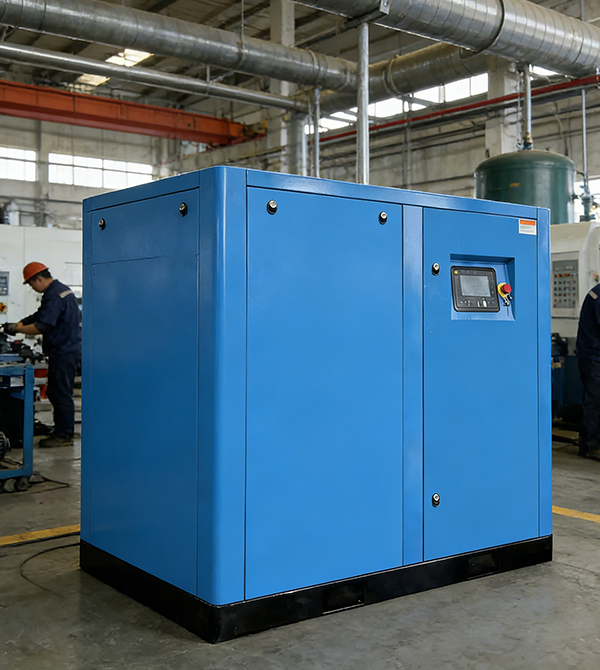
- Oil-injected rotary screw: Ideal for 24/7 operations in mining and manufacturing. Offers high volumetric efficiency (typically 85-90% adiabatic).
- Oil-free rotary screw: Required for processes demanding ISO 8573-1 Class 0 air (e.g., instrumentation, food-contact packaging).
- Capacity range: 5 kW to 1000+ kW, with discharge pressures up to 15 bar (g).
Reciprocating (Piston) Compressors – Intermittent High Pressure
- Best for construction sites with variable loads and low duty cycles (<25%).
- Can achieve pressures exceeding 30 bar, suitable for pneumatic bolting or jetting.
- Higher vibration levels and more frequent valve/piston ring replacements compared to rotary screw designs.
Centrifugal Compressors – Large Volume, Oil-Free
- Used in process plants requiring >2000 CFM at moderate pressure (3–10 bar).
- High initial capital but lowest specific power (kW/CFM) at full load.
- Susceptible to surge if demand fluctuates rapidly; requires anti-surge control systems.
For most mining and heavy construction projects, an oil-injected rotary screw compressor offers the optimal balance between initial investment and maintenance costs. However, if your operation involves deep underground drilling with high ambient temperatures, consider variable frequency drive (VFD) models to reduce energy waste during partial loads.
2. Core Technical Parameters to Evaluate When You Buy Industrial Air Compressor
Accurate sizing prevents two costly errors: undersizing (pressure drops, production stops) and oversizing (excessive energy consumption, short-cycling wear). Focus on these five metrics before purchase.
2.1 Free Air Delivery (FAD) – CFM or m³/min
Calculate total pneumatic tool consumption + leakage allowance (15-20% for older distribution networks). Example: a fleet of six rock drills each requiring 185 CFM at 7 bar demands at least 1110 CFM FAD at reference conditions (ISO 1217). Buy industrial air compressor units with integrated VSD can modulate output from 30% to 100% to match real-time demand.
2.2 Operating Pressure (bar/psi)
Every extra bar increases energy consumption by 7-8%. Verify the maximum pressure required at the furthest point in the network. If tools need 6.5 bar, set compressor discharge at 7.5 bar (accounting for pressure drop through dryers, filters, and piping). Avoid over-specifying “high-pressure” machines unless required for specific applications like hydro-demolition or pile driving.
2.3 Duty Cycle & Load Profile
Classify your operation as: continuous (>22 hours/day, e.g., concentrator plant), intermittent (8-16 hours with stops, e.g., tunneling shifts), or standby/backup. Continuous duty demands a heavy-duty rotary screw with forced lubrication and oversized cooling. Intermittent operations can accept a lower-cost belt-driven rotary screw or high-quality reciprocating unit.
2.4 Ambient Conditions & Altitude
High altitude reduces air density, derating compressor output by roughly 3% per 300 meters above 1000m. For mines in the Andes or Himalayas, specify a unit with larger rotor profiles or a turbocharger option. Similarly, ambient temperatures above 45°C require a larger aftercooler and synthetic lubricant.
2.5 Air Quality Requirements
- Residual oil content: oil-injected screw typically delivers 3-5 ppm; add coalescing filters to reach 0.01 ppm.
- Particulate: 1-micron or 0.01-micron filtration based on tool tolerance (e.g., air bearings need 0.1 micron).
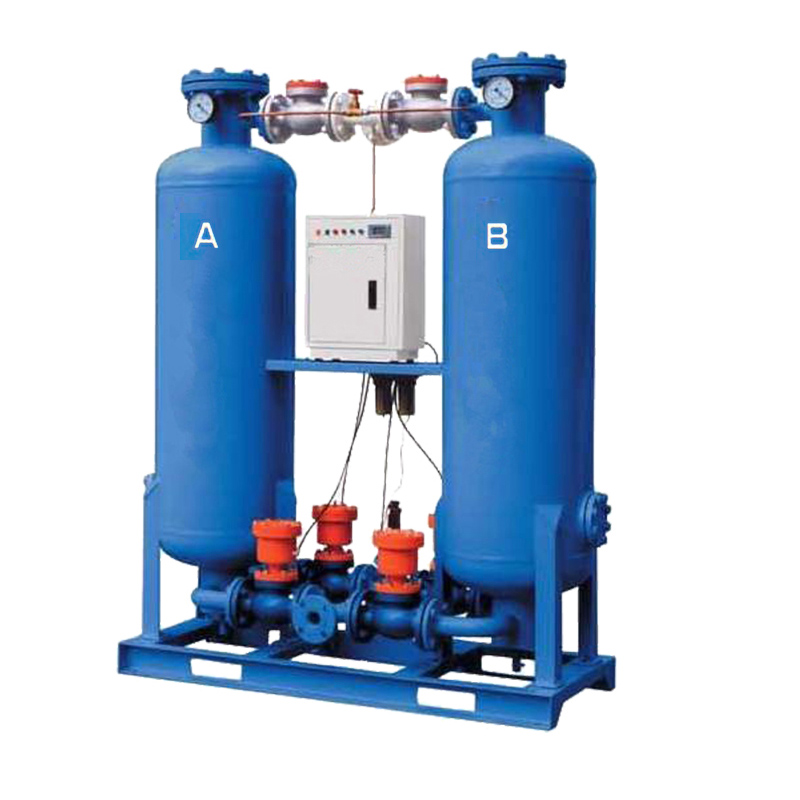
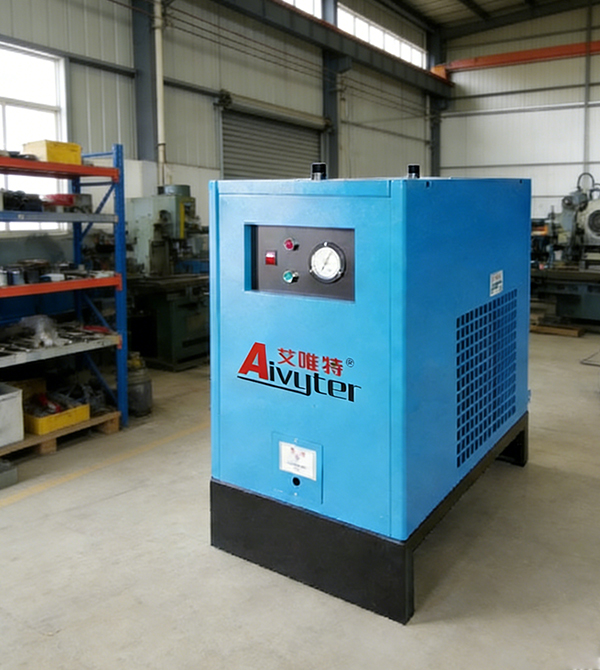
- Pressure dew point: non-cycling refrigerated dryers achieve +3°C; desiccant dryers reach -40°C for outdoor winter operations.
3. Industry-Specific Pain Points and Engineered Solutions
Each sector presents unique challenges that generic compressor suppliers often overlook. Below we address three critical environments.
Mining: Dust, Altitude, and Remote Serviceability
- Pain point: Premature filter clogging and abrasive dust ingress into airend bearings.
- Solution: Install a two-stage intake filtration system (cyclone pre-filter + high-efficiency cartridge). Specify compressors with sealed motor enclosures and positive pressure control rooms. Aivyter offers mining-grade units with oversized coolers and easy-service filter banks, reducing unplanned downtime by up to 40%.
- Data: A Chilean copper mine reduced filter replacement frequency from weekly to bi-monthly after switching to a high-altitude optimized rotary screw.
Heavy Construction: Portability, Power Availability, and Transient Loads
- Pain point: Diesel-driven compressors on remote sites suffer from fuel theft, emissions regulations, and noise restrictions.
- Solution: Towable electric rotary screw compressors with VFD and integrated power factor correction. For grid-limited sites, consider hybrid diesel-electric units.
- Case example: A highway tunnel project in the Alps utilized a fleet of industrial air compressor units with sound enclosures below 72 dB(A) to meet night-time noise limits while delivering 850 CFM continuously.
Manufacturing & Engineering: ISO Air Quality and Zero Unplanned Stops
- Pain point: Oil carryover ruins paint finishes, electronics, or food packaging lines.
- Solution: Class 0 certified oil-free rotary screw compressors with stainless steel piping. Install a central controller to sequence multiple compressors and maintain stable pressure.
- Modern cloud-based monitoring predicts bearing wear and suggests maintenance before failure occurs.
4. Total Cost of Ownership (TCO) – Beyond the Purchase Price
When you buy industrial air compressor equipment, the initial capital accounts for only 15-20% of lifetime costs. Energy and maintenance dominate the remaining 80%. Use this TCO breakdown to compare quotations.
- Energy (65-75% of TCO): A 250 kW compressor running 6000 hours/year at $0.10/kWh costs $150,000 annually. Improving specific power from 7.5 kW/(m³/min) to 6.8 kW/(m³/min) saves $14,000/year.
- Maintenance & spare parts (10-15%): Oil, filters, separators, and lubricants. Synthetic oils extend change intervals from 2000 to 8000 hours.
- Installation & piping (5-8%): Undersized distribution lines create pressure drops. Properly sized ring mains reduce losses.
- Downtime costs (variable): In a gold mine, every hour of lost air can represent $20,000 in deferred production. Redundant compressors and rapid-response service contracts mitigate this risk.
Request an energy audit from your supplier. Aivyter provides a TCO calculator that models real-time energy consumption based on your specific pressure and flow profile, helping you avoid the trap of “lowest bidder” procurement.
5. Why Aivyter Delivers High-Reliability Industrial Air Compressors
Engineered for extreme conditions, Aivyter designs and manufactures rotary screw and oil-free compressors for mining, tunneling, and large-scale EPC projects. Key differentiators include:
- Heavy-duty airends with 50,000-hour bearing life (tested to ISO 8573).
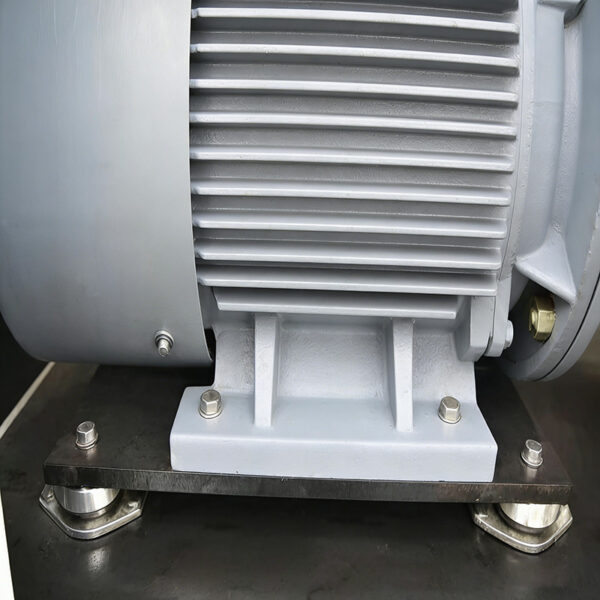
- IP55 motors and NEMA 4X control panels for dusty/moist environments.
- Remote telemetry with predictive maintenance alerts via Modbus or 4G gateway.
- Global spare parts distribution with 48-hour delivery to major mining hubs.
Several international contracting firms have standardized on industrial air compressor solutions from Aivyter after achieving 98% average uptime over three years in high-silica dust conditions. Explore the full product line at https://www.aivyter.com/products/.
6. Procurement Checklist: Steps to Buy Industrial Air Compressor Correctly
Follow this sequence to avoid specification errors:
- Map your compressed air network: Measure actual CFM consumption at each shift with a flow meter.
- Define future expansion: Add 20% capacity if production is projected to grow within 3 years.
- Select air treatment: Match dryer and filter sizes to the compressor’s peak flow, not average.
- Compare specific power (kW/CFM) at 100%, 70%, and 40% load. VFD models win at partial loads.
- Evaluate service access: Ensure air filter, oil filter, and separator change can be performed without dismantling adjacent equipment.
- Request a factory acceptance test (FAT) witness report for large units (>200 kW).
- Negotiate service agreement terms: Include emergency response time, consumables pricing, and remote monitoring.
7. Frequently Asked Questions (FAQs) about Industrial Air Compressors
Q1: What is the typical lifespan of a rotary screw industrial air compressor in mining service?
A1: With proper maintenance (scheduled oil changes, air filter replacement, and bearing monitoring), a premium rotary screw airend lasts 50,000–80,000 operating hours. Many mine sites achieve 10-12 years of service before major overhaul, especially when using synthetic lubricants and operating within design temperature limits.
Q2: Should I buy industrial air compressor with fixed speed or variable frequency drive (VFD)?
A2: If your air demand varies by more than 30% between shifts (common in construction and milling circuits), a VFD compressor reduces energy consumption by 20–35% compared to load/unload operation. For constant base load (>90% load factor), a fixed-speed, high-efficiency motor yields lower capital cost.
Q3: How do I calculate required air receiver tank size?
A3: A general rule is 5–10 gallons per CFM for intermittent duty; 2–4 gallons per CFM for continuous duty. The tank prevents short cycling and provides instantaneous peak flow. For a 500 CFM compressor, a 2000-gallon receiver is typical. Ensure the tank meets ASME Section VIII or PED certification for your jurisdiction.
Q4: Can I use a standard industrial compressor for underground mining?
A4: Underground applications require MSHA (or equivalent) certifications, flame-proof enclosures, and often water-cooled designs due to poor ventilation. Never deploy a surface compressor underground without explosion-proof modifications and gas monitoring. Specialized underground compressors also feature low-height profiles and skid mounting for rail transport.
Q5: How often should I replace the air-oil separator element?
A5: Typically every 2000–4000 hours, depending on ambient dust levels and oil quality. Monitor pressure differential across the separator; when it exceeds 0.8–1.0 bar above clean element reading, replace immediately. Neglecting this leads to high oil carryover and possible aftercooler clogging.
Q6: What is the ROI period for upgrading to a high-efficiency compressor from an older model?
A6: Based on recent energy prices, replacing a 15-year-old 200 kW load/unload compressor with a modern VFD model yields payback in 18–30 months, solely from electricity savings. Additional gains from reduced maintenance and fewer production interruptions shorten this period further.
8. Ready to Specify Your Next Compressed Air System?
Choosing the correct compressor package demands rigorous engineering analysis—not just a price comparison. Whether you operate an open-pit copper mine, a subway tunnel extension, or a precast concrete plant, the right buy industrial air compressor decision will impact your balance sheet for a decade. Aivyter provides application engineering support, on-site load profiling, and post-sales commissioning to ensure your compressed air system delivers maximum uptime.
Contact our engineering team today for a tailored quotation and TCO analysis. Submit your inquiry with site parameters (altitude, ambient temperature, required CFM, pressure, and number of shifts) to receive a detailed technical proposal within 48 hours.
👉 Send your inquiry now — include your project name and compressor requirements. Our specialists will respond with datasheets, CAD drawings, and a lifecycle cost comparison.
© 2026 Aivyter. Engineered for heavy industry.
about
Aivyter
We provides trusted air compressors and mining equipment, engineered for durability, efficiency, and demanding industrial applications.