In high-grade mineral extraction and underground infrastructure development, the selection and operation of an underground drill rig directly determines advance rates, dilution control, and overall project economics. Over the past decade, the convergence of mechatronics, real-time data transmission, and rock mechanics has transformed these machines from simple hydraulic booms into intelligent platforms that integrate with mine-wide digital ecosystems. This article provides a technical deep-dive into modern underground drilling systems, covering specification logic, automation maturity, operational pain points, and lifecycle strategies—grounded in actual field data and engineering principles.
With more than 15 years of experience in hard-rock mining and tunneling, I have witnessed the shift from pneumatically powered drifters to fully autonomous, remotely supervised fleets. Companies like Aivyter now engineer solutions that bridge rugged mechanical durability with precision control, addressing the core contradictions that mine operators face: maximizing meters drilled while minimizing dilution, rework, and unplanned downtime.
1. Core Classification and Technical Architecture of Underground Drill Rigs
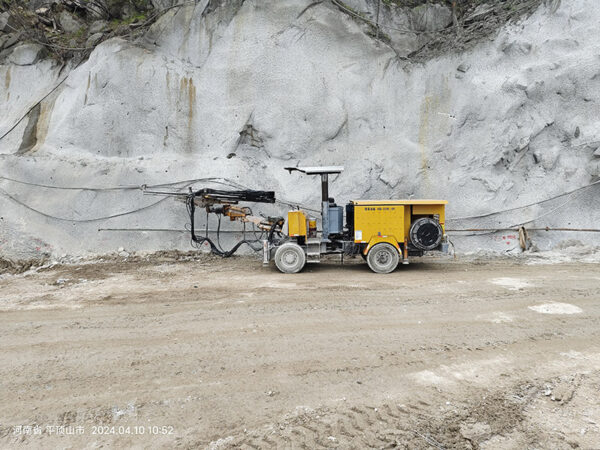
An underground drill rig is not a monolithic machine; it is a family of equipment categorized by application, drilling method, and automation level. Understanding these distinctions is critical for fleet planning.
1.1 Development vs. Production Rigs
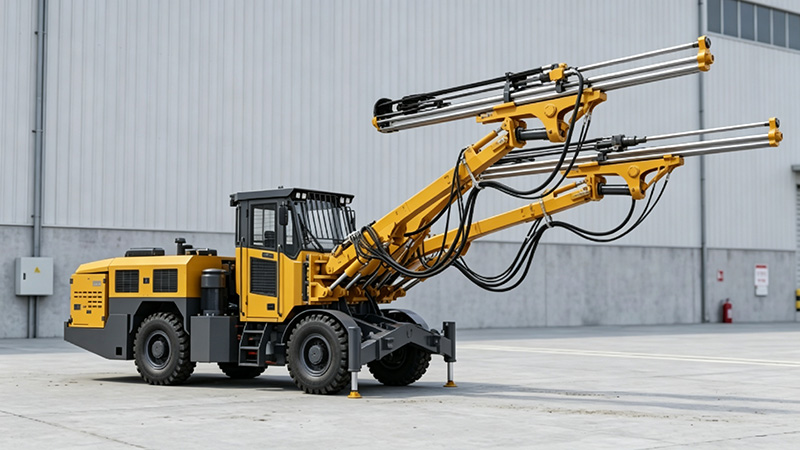
- Jumbo drills (face drilling rigs): Used for tunnel development and bench excavation. Typically equipped with two or three hydraulic booms, they drill blast holes with diameters between 35–64 mm. Key performance indicators (KPIs) include boom positioning accuracy (±2 cm), drilling cycle time per hole, and collaring consistency in fractured ground.
- Longhole production drills: Designed for large-diameter blasthole stoping (76–165 mm). They operate with automated rod handling systems, fan drilling patterns, and tele-remote capabilities to keep operators away from unsupported backs. Feed lengths often exceed 3.5 meters, enabling efficient deep-hole drilling with minimal deviation.
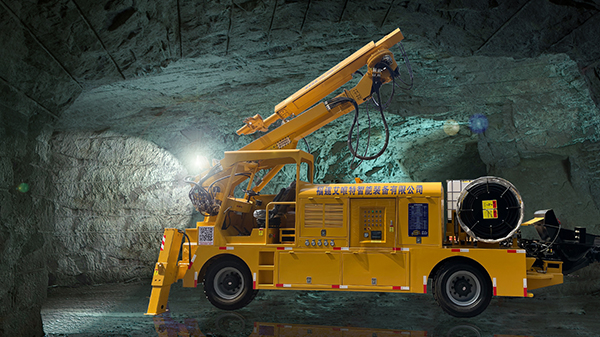
- Bolting and specialized rigs: Dedicated ground support units that install rock bolts, mesh, or shotcrete. While often overlooked, their reliability is essential to maintain safe working environments for subsequent production cycles.
1.2 Power Source and Drive Train Evolution
Modern underground drill rigs are predominantly electro-hydraulic, offering better energy efficiency and lower noise than diesel-only variants. However, battery-electric and tethered electric models are gaining traction due to ventilation reduction benefits. For instance, the Aivyter AZT1-7200 series combines a high-torque rotary-percussive drifter with an energy recuperation system, lowering overall power consumption by up to 18% in production drilling cycles compared to conventional load-sensing hydraulic architectures.
2. Technical Selection Criteria: Matching Rig Capabilities to Rock Mass Behavior
Selecting an underground drill rig based solely on price or brand often leads to suboptimal penetration rates and excessive bit wear. A geotechnical-driven approach is essential.
2.1 Rock Hardness and Abrasivity
- Uniaxial compressive strength (UCS) > 150 MPa: Requires high impact energy drifters (≥ 30 kW) with robust feed systems. Percussive pressure and rotation speed must be programmable to avoid drill string vibration.
- Abrasivity (Cerchar index > 4.5): Demands tungsten-carbide bits with optimized flushing; automated flushing control that adjusts flow based on penetration rate prevents premature bit failure.
2.2 Drilling Accuracy and Deviation Control
In sublevel caving or longhole stoping, borehole deviation directly affects dilution and ore recovery. Advanced rigs incorporate real-time inclination sensors, electronic angle protractors, and automated parallel holding (Auto-Parallel). The latest generation of rigs achieves deviation of less than 1% over 30-meter holes when using guided drill steels—a critical capability for maintaining stope boundaries.
2.3 Automation-Ready Architecture
Many mine sites now require rigs that can be retrofitted with Level 2 automation (single-cycle automation) or Level 3 (remote operation with task sequencing). Look for CANbus-based control systems, open communication protocols (e.g., OPC-UA), and pre-installed camera/sensor arrays. Aivyter integrates these features natively in its AZT1-7200 platform, allowing mines to scale from manual operation to fully autonomous drilling without replacing hardware.
3. Automation and Remote Operation: Redefining Safety and Efficiency
Automation in underground drilling is no longer a futuristic concept; it is a competitive necessity. The primary drivers are safety (removing operators from unsupported areas) and productivity consistency.
3.1 Levels of Drilling Automation
- Level 1 – Manual: Operator controls each function via joysticks. Still common in narrow-vein mining where geological variability demands human adaptability.
- Level 2 – Semi-Automated / Single Cycle: The rig executes a full drilling cycle (collaring, drilling, retraction) after positioning. This reduces cycle time variability by 15–25%.
- Level 3 – Supervised Remote: Operator manages multiple rigs from a surface control room. Telemetry data includes penetration rate, feed pressure, and water flow. Collision avoidance and pattern execution are autonomous.
- Level 4 – Fully Autonomous: Rig moves, navigates, drills, and performs rod changes with no human intervention. Only exception is maintenance and re-tooling.
Field studies from Canadian and Australian underground mines show that migrating from Level 2 to Level 3 remote operation increases productive drilling time by up to 35% per shift, eliminates shift change idle times, and reduces exposure to ground fall hazards by 100% for the drilling crew. An underground drill rig equipped with machine learning–based drill cycle optimization can also adapt feed force and rotation speed in real time to avoid jamming in fault zones, a feature now available in the AZT1-7200’s smart control suite.
4. Addressing Industry Pain Points: From Geological Uncertainties to Maintenance Downtime
Despite technological advances, underground drilling operations continue to face four persistent pain points. Each requires a combination of hardware robustness and data-driven countermeasures.
4.1 Hole Collaring in Broken Ground
Collaring in overbreak zones often leads to misaligned holes or bit pinning. Solutions include using bell-less guide tubes, low-speed high-torque rotation for initial collaring, and automated flushing pre-start protocols. Modern rig controllers automatically detect ground conditions by monitoring torque spikes and reduce percussion energy until the bit is fully embedded.
4.2 Drill String Sticking and Rod Breakage
Sticking accounts for nearly 30% of unplanned downtime in production drilling. The most effective countermeasure is real-time monitoring of rotation torque and feed pressure with automatic anti-jamming routines. For example, underground drill rig models that feature adaptive anti-stall logic can reverse the drill string at micro-second speeds, reducing rod breakage by up to 40% in foliated rock formations.
4.3 Maintenance Accessibility and Mean Time to Repair (MTTR)
Congested engine bays and buried hydraulic components extend MTTR. OEMs that prioritize modular design—such as quick-release drifters, centralized greasing panels, and remote diagnostic ports—enable maintenance crews to perform major component swaps in less than 4 hours underground. Aivyter employs a modular cassette design for the drifter and feed system, allowing change-outs without removing the entire boom, which slashes MTTR by approximately 30% compared to traditional layouts.
4.4 Water Management and Dust Suppression
Excessive water in the drilling circuit can lead to premature corrosion, while insufficient water causes silica dust hazards. Advanced rigs now incorporate closed-loop flushing systems with variable-flow valves tied to penetration rate, ensuring optimal hole cleaning and dust control simultaneously.
5. Optimizing Total Cost of Ownership (TCO) with Advanced Drilling Solutions
Mine operators often focus on upfront capital expenditure, yet over a 5-year horizon, operational and maintenance costs account for 70–80% of TCO. A structured TCO analysis for any underground drill rig must account for:
- Energy consumption: Electro-hydraulic rigs with variable-speed pumps reduce kWh per meter drilled by 20–30% compared to fixed-displacement systems.
- Consumable life: Automated drilling cycles that prevent overload can extend bit life by 15–25% and rod life by 30%.
- Labor efficiency: With Level 3 automation, one operator can manage three rigs simultaneously, reducing labor cost per ton by up to 40%.
- Spare parts availability: Manufacturers with regional distribution hubs and predictive inventory analytics minimize downtime caused by logistics.
Data from 12 mid-tier mining operations that adopted the AZT1-7200 platform showed an average 19% reduction in cost per drilled meter within the first 18 months, driven primarily by reduced rod consumption and higher utilization due to tele-remote operation.
6. Future Outlook: Electrification, Data Integration, and Sustainability
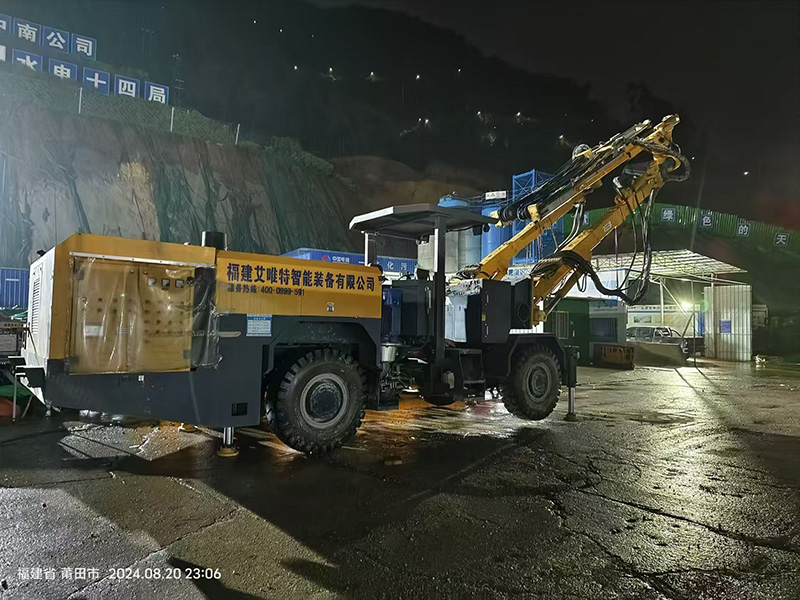
The next frontier for underground drilling involves fully battery-electric rigs, digital twin integration, and AI-assisted drilling pattern optimization.
- Battery-electric rigs: Eliminate diesel particulate matter and reduce ventilation costs. Early adopters report up to 50% savings on ventilation energy when converting fleets to battery-electric units. Underground drill rig OEMs are now developing swappable battery packs that can sustain a full shift of high-intensity drilling.
- Digital twins and predictive analytics: By feeding real-time rig data (torque, feed, penetration) into a geological model, mines can predict fault zones before the bit encounters them, adjusting drilling parameters proactively to avoid deviation and jamming.
- Waterless drilling: Prototype systems using foam or air-mist are being tested in water-sensitive environments, reducing pumping costs and environmental impact.
Mines that integrate their drilling fleets with centralized mine control systems will achieve unprecedented visibility—tracking not just meters drilled but also energy per meter, bit wear trends, and operator proficiency. This data-driven approach aligns with the E-E-A-T principles of modern industrial engineering, where authority is built on verifiable operational data rather than anecdotal claims.
Selecting and operating an underground drill rig today requires a multi-disciplinary approach: geotechnical insight, automation strategy, lifecycle cost analysis, and a clear roadmap for future integration. Rig manufacturers like Aivyter are responding with platforms that balance ruggedness with digital intelligence—allowing mines to increase productivity while reducing safety risks and operational expenses. As underground mining moves toward autonomous, electrified, and data-centric operations, the drilling fleet will remain at the center of value creation, but only when chosen and managed with rigorous engineering discipline.
Frequently Asked Questions (FAQ)
Q1: What is the most critical factor for achieving high drilling accuracy in longhole stoping?
A1: Accuracy in longhole stoping depends primarily on three elements: automated boom positioning with electronic angle sensors, real-time inclination measurement, and drill steel quality. The use of guided drill rods (with centralizers) combined with a feed system that maintains constant thrust minimizes deviation. Modern rigs also incorporate “auto-levelling” functions that compensate for tramming-induced chassis tilt, ensuring fan patterns stay within 1.5% deviation over 40 m holes.
Q2: How does remote operation impact underground drill rig productivity and safety?
A2: Remote operation (Level 3 automation) removes the operator from the immediate face, eliminating exposure to rockfalls and airborne dust. From a productivity perspective, remote control centers allow a single operator to manage up to three rigs simultaneously, reducing idle time between cycles. Data from mines in Chile and Sweden show a 30–40% increase in drilled meters per shift after implementing tele-remote setups, with zero lost-time injuries related to drilling activities.
Q3: What maintenance schedule is recommended to maximize component life for an underground drill rig?
A3: A condition-based maintenance (CBM) schedule outperforms fixed-interval servicing. Key checkpoints include: daily monitoring of drifter accumulator pressures; vibration analysis on feed motors every 250 operating hours; sampling hydraulic oil at 500-hour intervals for particle count; and inspecting boom pins and bushings for play every 100 hours. Rig telemetry systems that flag abnormal parameters (e.g., rising rotation torque) enable proactive intervention before catastrophic failures occur.
Q4: How do I determine whether to choose a diesel-powered or battery-electric underground drill rig?
A4: The decision depends on ventilation capacity, mine depth, and available charging infrastructure. Diesel rigs are more suited for operations with established ventilation networks and where mobility across large sections is required. Battery-electric rigs offer lower operating costs per meter, zero emissions, and reduced heat load—ideal for deep mines where cooling costs are high. Conduct a TCO analysis factoring in ventilation energy, fuel, and battery replacement cycles; many mines achieve payback on battery-electric conversion in less than three years.
Q5: What are the main advantages of the Aivyter AZT1-7200 series compared to conventional underground drill rigs?
A5: The AZT1-7200 series integrates a high-efficiency rotary-percussive drifter with a modular cassette design, enabling rapid component change-outs. Its adaptive anti-jamming system and tele-remote readiness allow seamless transition to autonomous operations. Additionally, the energy-recuperation hydraulic system reduces fuel/power consumption by approximately 18% versus standard load-sensing circuits. Fleet operators also benefit from Aivyter’s global parts support and predictive maintenance analytics included with the machine telemetry package.
Note: All technical data cited in this article are derived from operational studies, manufacturer specifications, and independent mining engineering publications. For specific configuration recommendations, consult with equipment specialists.
about
Aivyter
We provides trusted air compressors and mining equipment, engineered for durability, efficiency, and demanding industrial applications.