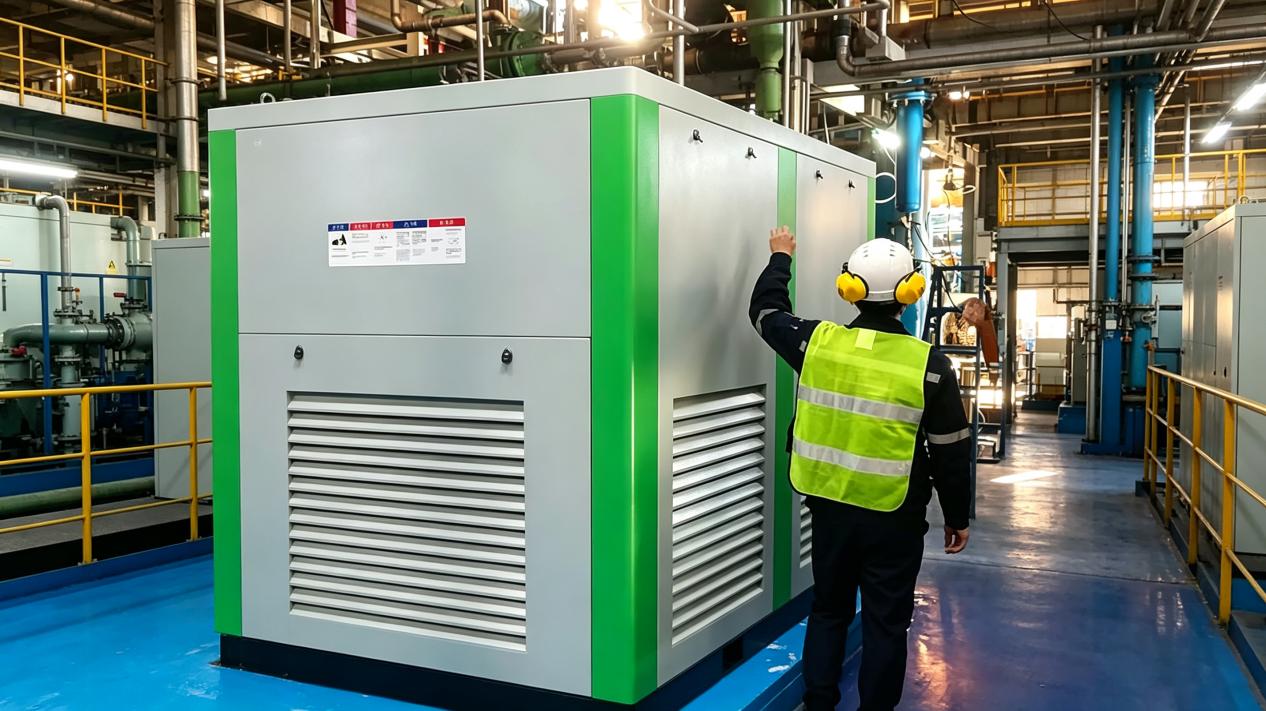
Compressed air requirements vary between manufacturing processes. Some production lines mainly need air for pneumatic tools and general equipment, while others place greater importance on controlling oil contamination. This difference can affect whether a conventional screw compressor or an oil free screw air compressor is a better fit.
The decision should start with the application. Air quality, pressure, flow, operating pattern, cooling conditions, and installation requirements all need to be considered before selecting a compressor configuration.
What Is the Difference Between Oil-Free and Standard Compression?
One of the main differences is how lubrication is handled during compression.
In an oil-injected screw compressor, oil enters the compression chamber to support lubrication, cooling, and sealing. Oil separation is then used to remove oil from the compressed air before it reaches downstream equipment.
An oil free screw compressor does not introduce lubricating oil into the compression chamber. The water-lubricated screw compressors available in this range use water as the lubricating medium. The product information also describes oil-free compressed air production and stainless-steel components in the compression system.
This distinction becomes more relevant when compressed air is closely connected with a manufacturing process.
When Does Air Quality Affect Compressor Selection?
The first point to examine is where the compressed air is used.
For general factory applications, compressed air may operate pneumatic tools, actuators, machinery, and other equipment without direct contact with the manufactured product. In such cases, a standard industrial air compressor can be evaluated according to pressure, flow, operating hours, and installation conditions.
Different considerations arise when compressed air is used around products, packaging, process materials, or sensitive equipment. The oil-free screw compressor range is listed for applications including electronics, medicine, food processing, laboratories, chemical industries, and bottle blowing.
In these environments, manufacturers need to determine whether oil contamination could affect the process before choosing the compressor type.
How Should Oil Contamination Risk Be Evaluated?
The compressor outlet is not the only point that matters. Air quality should be considered at the point where compressed air enters the production process.
For example, compressed air may come into contact with a product surface or process material. It may also be supplied to equipment where contamination needs to be controlled. The required air quality can therefore vary according to the application.
An oil free air compressor can reduce the introduction of lubricating oil from the compression stage. However, the rest of the compressed air system still requires attention.
Filters, dryers, piping, condensate management, and installation conditions can all influence the air delivered to production equipment. Selecting an oil-free compressor does not remove the need to evaluate these components.
When Can a Standard Compressor Be Considered?
A standard compressor can remain suitable where oil contamination is not a significant concern for the application.
For general plant air, manufacturers can compare compressors according to required pressure, air delivery, operating hours, control method, and installation conditions.
The product range covers several compressor configurations, including fixed-speed screw compressors, variable-speed models, two-stage compressors, high-pressure systems, and integrated screw compressors.
This distinction is useful when making a selection:
Oil-free compression primarily addresses air-quality requirements, while the compressor configuration also needs to match pressure, flow, and operating demand.
There is therefore no need to treat oil-free technology as a requirement for every industrial compressed-air system.
Does Working Pressure Affect the Choice?
Working pressure needs to match the requirements of the equipment using the compressed air.
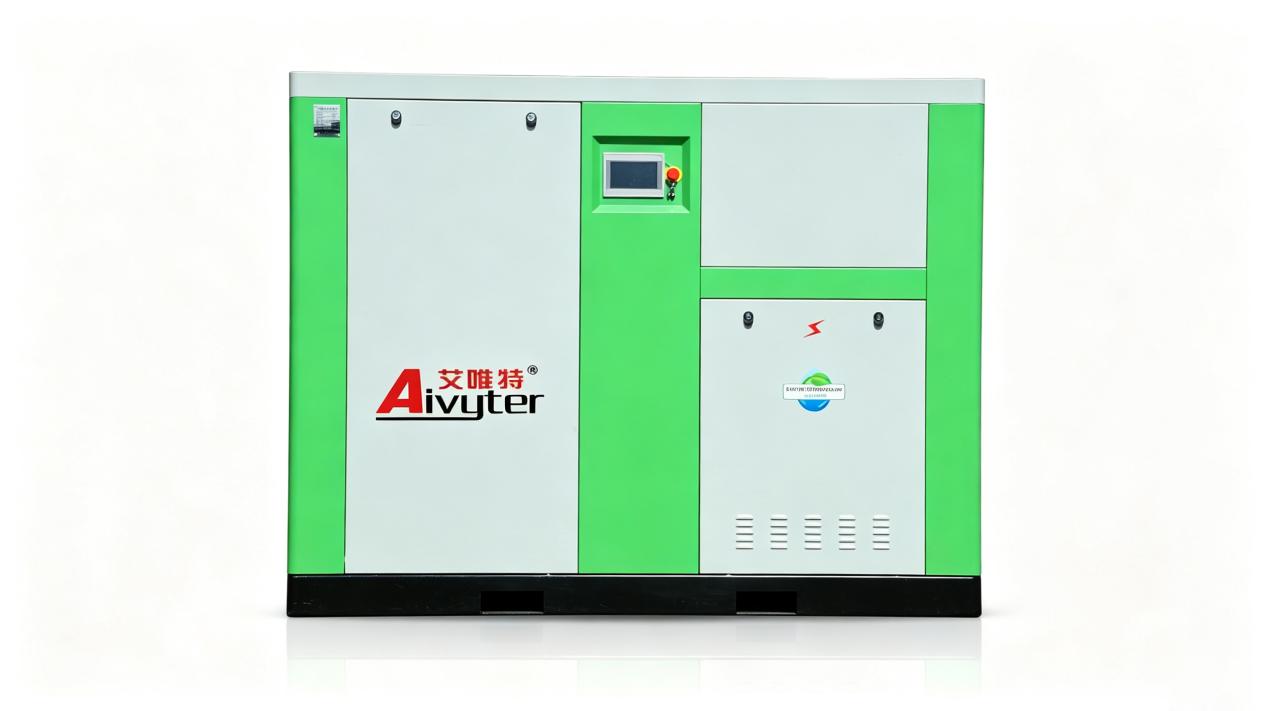
The SGM water-lubricated oil-free screw compressor range includes listed pressure options of 8 bar, 10 bar, and 12.5 bar, with different models covering different motor powers and air delivery capacities.
The required pressure should be established at the point of use rather than selected only according to the compressor’s maximum rating. Pressure losses through piping, filters, dryers, and other components can reduce the pressure available to production equipment.
For this reason, pressure should be evaluated together with air quality when comparing oil-free and standard compressor options.
How Does Air Demand Influence the Selection?
Compressed-air consumption can change during production. Some facilities have relatively stable demand, while others experience fluctuations between machines, shifts, or production stages.
The SGM range includes variable-frequency configurations and constant-pressure control. Such configurations can be relevant when compressor output needs to respond to changes in air demand.
However, variable-speed operation and oil-free compression address different requirements. Variable-frequency control concerns how the compressor responds to changing demand, while oil-free compression concerns the lubrication method used during compression.
Keeping these factors separate makes it easier to determine which specifications actually matter for the application.
What Role Does Cooling Play?
Cooling conditions should also be reviewed before selecting a compressor.
The listed oil-free screw compressor configurations include air-cooled and water-cooled options. The appropriate arrangement depends on the installation environment, available cooling resources, ambient conditions, and equipment configuration.
For an existing factory, available space and cooling arrangements can influence installation. A new compressed-air system may offer more flexibility, but the compressor still needs to operate within the conditions specified for the selected model.
Cooling is therefore one of several practical factors to evaluate alongside pressure, flow, and air quality.
Should Noise and Installation Space Be Considered?
Noise can matter when a compressor is installed close to production areas, laboratories, or occupied workspaces.
Different SGM models have different listed noise levels, while the product information describes low-noise and low-vibration operation. These characteristics can be considered when comparing configurations for a particular installation.
Space, ventilation, cooling, piping connections, and maintenance access also affect installation planning. They do not determine whether a compressor must be oil-free, but they can influence which model is practical for the facility.
How Should Manufacturers Compare the Two Options?
A useful comparison starts with the actual production requirement rather than the compressor specification sheet alone.
First, identify the air application.
Determine where compressed air is used and whether it has contact with products, packaging, materials, or sensitive equipment.
Next, establish the required air quality.
If oil contamination needs tighter control, an oil-free configuration becomes more relevant.
Then, determine pressure and flow.
Check both normal consumption and higher-demand periods at the point of use.
After that, review the operating pattern.
Consider whether demand is stable or changes during production.
Finally, evaluate the complete installation.
Cooling, drying, filtration, piping, available space, noise, and maintenance access all form part of the selection process.
This approach helps separate the reason for choosing oil-free compression from other compressor specifications.
When Is an Oil-Free Screw Compressor the Better Fit?
An oil free screw air compressor becomes more relevant when controlling oil contamination is an important part of the manufacturing process.
Food processing, pharmaceutical production, electronics, laboratories, medical applications, and other sensitive processes may place greater emphasis on compressed-air quality. The oil-free screw compressor products are listed for several of these application areas.
For general factory air where oil contamination has less influence on production, a standard industrial compressor may be considered after pressure, flow, operating pattern, and air-treatment requirements have been established.
The distinction is therefore based on application requirements rather than a simple ranking between compressor types.
What Should Be Checked Before Purchase?
Before selecting an oil free compressor, manufacturers can review:
- Where the compressed air will be used
- Whether air contacts products or process materials
- Required air-quality level
- Working pressure at the point of use
- Normal and peak air demand
- Variation in compressed-air consumption
- Filtration and drying requirements
- Cooling conditions
- Available installation space
- Maintenance access and operating conditions
These factors provide a practical basis for comparing an oil-free screw compressor with a standard compressor.
The key question is not whether one compressor type should replace another across all applications. It is whether the compressor’s air-quality characteristics, pressure range, capacity, and configuration match the requirements of the production process.
FAQ
When should manufacturers choose an oil-free screw compressor?
It is worth considering when oil contamination control is important to the production process or product.
Is a standard screw compressor suitable for general factory air?
It can be considered when the application does not require strict control of oil contamination.
Does an oil-free compressor remove the need for air treatment?
No. Filtration, drying, condensate management, and suitable piping may still be required.
Does variable-speed control make a compressor oil-free?
No. Variable-speed control manages changing demand, while oil-free compression concerns the compression process.
What should be checked before choosing an oil-free compressor?
Review air quality, pressure, flow, demand variation, cooling, installation space, and maintenance requirements.
about
Aivyter
We provides trusted air compressors and mining equipment, engineered for durability, efficiency, and demanding industrial applications.