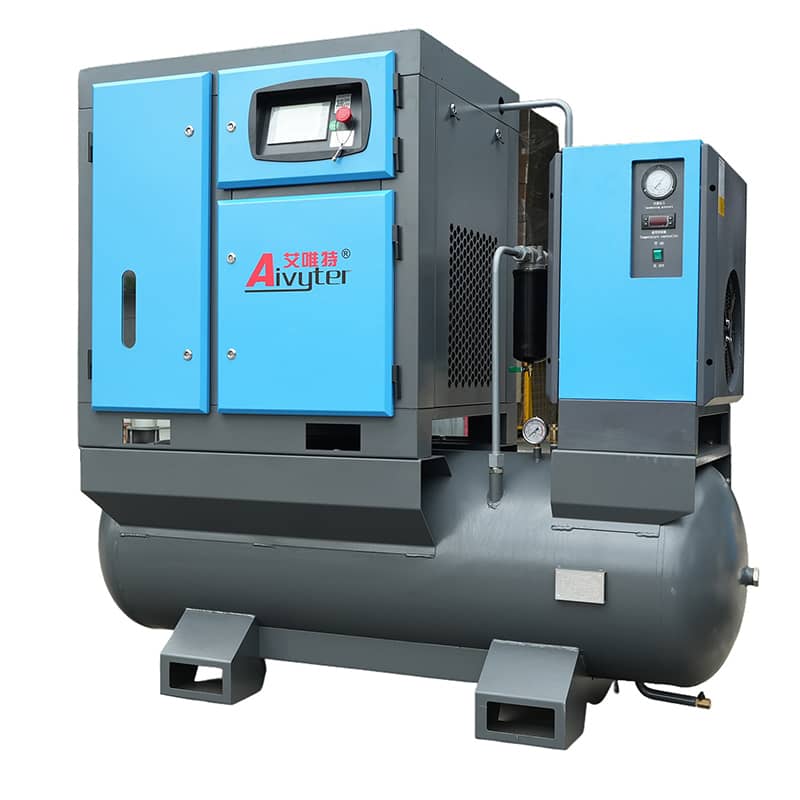
Industrial manufacturing environments face constant challenges regarding ambient noise regulation and operator safety. High-decibel machinery not only compromises worker hearing but also introduces structural vibration that can affect sensitive nearby processes. To address these challenges, plant managers and system designers prioritize acoustic suppression in utility machinery. Manufacturers like Aivyter design advanced systems that reduce sound pressure levels without sacrificing volumetric efficiency. Achieving a compressor low noise profile requires a comprehensive understanding of thermodynamics, fluid dynamics, and mechanical vibration isolation. By integrating silent operation principles directly into the design phase, modern industrial facilities can maintain productive, regulatory-compliant work environments.
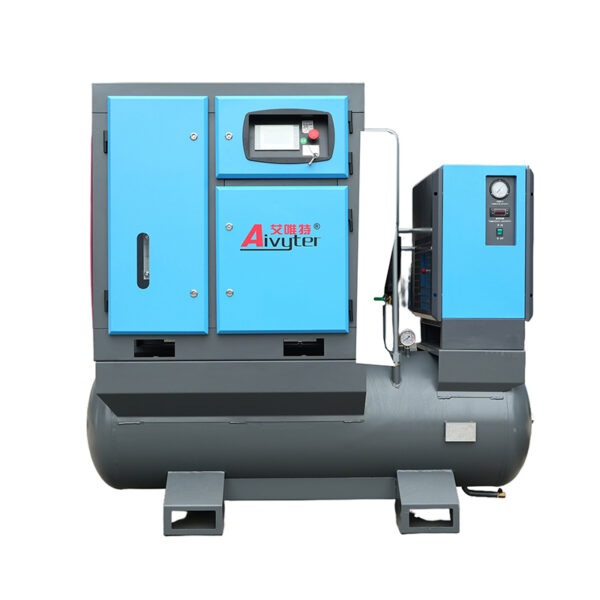
The Physics of Acoustic Emission in Industrial Air Compressors
Understanding the origin of sound in compressed air systems is the first step toward effective mitigation. Air compressors generate noise through several distinct pathways, primarily classified as aerodynamic, mechanical, and structural.
Aerodynamic noise occurs due to the rapid displacement of air during the intake and discharge cycles. In a standard rotary screw or reciprocating system, the periodic opening and closing of valves, or the high-speed meshing of rotors, creates pressure fluctuations. These pulsations travel through the piping system as sound waves. The turbulent air entering the intake filter also contributes significantly to high-frequency acoustic emissions, often characterized by a sharp rushing sound.
Mechanical noise arises from physical contact between moving components. This includes the friction of piston rings against cylinder walls, bearing rotation, and gear meshing. In belt-driven models, the belt-to-pulley interface also contributes a high-frequency squeal. Furthermore, imbalances in the motor rotor or the compressor crankshaft can lead to repetitive mechanical impacts, which generate periodic vibration signatures.
Structural noise is the result of kinetic energy transferring from the motor and compression block into the frame and outer panels of the machine. If the chassis of the unit has a natural resonant frequency close to the operating speed of the motor, the entire structure acts as an amplifier, radiating sound into the surrounding room. Standard industrial units often operate at noise levels exceeding 80 to 85 dB(A). Because the decibel scale is logarithmic, an increase of just 3 dB(A) represents a doubling of sound energy. Consequently, reducing a system to a compressor low noise rating of 60 to 65 dB(A) requires removing more than 90% of the acoustic energy.
Key Engineering Strategies for Achieving Compressor Low Noise Operations
Achieving silent operation is not merely about wrapping an existing machine in foam. It demands a holistic re-engineering of the internal architecture to address sound at its source and along its transmission paths.
Acoustic Enclosures and Sound-Absorbing Materials
Modern quiet compressors utilize specialized, multi-layered acoustic enclosures. The outer shell is typically constructed from heavy-gauge sheet steel, which provides the necessary mass to block low-frequency sound waves. Inside this shell, engineers apply high-density polyurethane foam or mineral wool with open-cell structures designed to absorb sound waves rather than reflect them. The air pathways for cooling and ventilation must be designed with acoustic baffles or silence paths. These tortuous paths force cooling air to make multiple 90-degree turns, dissipating acoustic energy before the air exits the cabinet.
Vibration Isolation and Dampening
To prevent structural resonance, the motor and compressor air-end must be mechanically isolated from the base frame. Engineers achieve this by using elastomeric or spring-loaded vibration isolators. These mounts are calculated precisely to match the static and dynamic load of the equipment, dampening kinetic energy transfer. Flexible couplings are used in place of rigid piping connections for internal oil and air lines, preventing the transmission of structural vibration to external pipe networks. This isolation is vital in preventing the entire piping network of a facility from acting as a giant soundboard.
Aerodynamic Intake and Pulsation Silencers
The intake air filter assembly is a major source of high-frequency noise. By installing a dedicated intake silencer that uses expansion chambers and dissipative sound absorption, the rushing sound of incoming air is suppressed. For the discharge line, pulsation dampeners are integrated close to the compression chamber. These vessels use internal baffle plates and volume expansion to smooth out the pressure waves, turning a pulsating flow into a continuous, quiet stream. This design consideration is fundamental in maintaining low ambient noise levels in adjacent work areas.
Direct Drive and Low-Speed Operation
Eliminating belts and pulleys removes a significant source of mechanical friction and high-pitch noise. Direct-drive configurations connect the motor shaft directly to the compressor rotor using a flexible coupling. By matching the motor speed to the optimal rotor speed, the system can run at lower revolutions per minute (RPM). Operating a larger displacement air-end at lower speeds generates far less thermal and acoustic energy than running a small air-end at high speeds, which is a key design aspect of a compressor low noise system.
Application Areas Requiring Low-Decibel Compressed Air
While every factory benefits from quiet machinery, certain industries demand silent operations as a strict compliance or process requirement. Understanding these environments helps in selecting the appropriate system architecture.
Pharmaceutical and Medical Laboratory Settings
In laboratory and medical testing facilities, analytical equipment requires steady, clean air. Because these instruments are often located in close proximity to scientists and technicians, a standard industrial compressor is unusable due to the disruptive noise. Implementing a silent, clean air source allows for uninterrupted concentration, precise instrument calibration, and compliance with indoor workplace health regulations. The quiet operation ensures that the testing environment remains free from distracting acoustic interference.
Food, Beverage, and Packaging Plants
Packaging lines and bottling facilities require large volumes of clean air to operate pneumatic actuators and product sorting systems. These lines are densely populated by operators monitoring quality control. Installing a compressor low noise solution directly on the factory floor eliminates the need for long, expensive piping runs from a distant central compressor room, while keeping ambient sound levels within safe limits for nearby workers. This proximity reduces pressure drops along the line and improves overall system response.
Electronics and Semiconductor Cleanrooms
Semiconductor fabrication plants operate under highly controlled environments where micro-vibrations can ruin delicate silicon wafers. In these settings, the mechanical vibration associated with standard air compressors is as dangerous as the noise itself. High-performance quiet compressors use balanced rotary screw elements and extensive dampening to ensure both noise and physical micro-vibration are kept to minimums, preserving cleanroom integrity and preventing wafer defects.
Selecting the Right Compressed Air System for Acoustic Management
When evaluating new air equipment, procurement teams must look beyond standard flow rate (CFM) and pressure (PSI) specifications. Decibel ratings must be assessed alongside the physical installation environment.
Engineers should verify whether the manufacturer’s decibel rating was measured under free-field conditions or in a semi-reverberant room, and at what distance (typically 1 meter is the standard). A quiet machine should ideally fall between 60 dB(A) and 68 dB(A). It is also important to consider the frequency spectrum of the sound; high-frequency whines are often more disruptive to human workers than low-frequency rumbles, even if both show the same overall decibel reading on a meter.
Cooling fan design is another factor to analyze. Standard axial fans are loud and produce direct air turbulence. Quiet systems, such as those designed by Aivyter, often employ radial cooling fans. These fans move large volumes of air at lower rotational speeds, distributing heat efficiently while maintaining low noise emissions. The drive configuration must also be evaluated; variable speed drive (VSD) systems adjust the motor speed dynamically based on actual air demand, allowing the compressor to run much quieter during periods of low production.
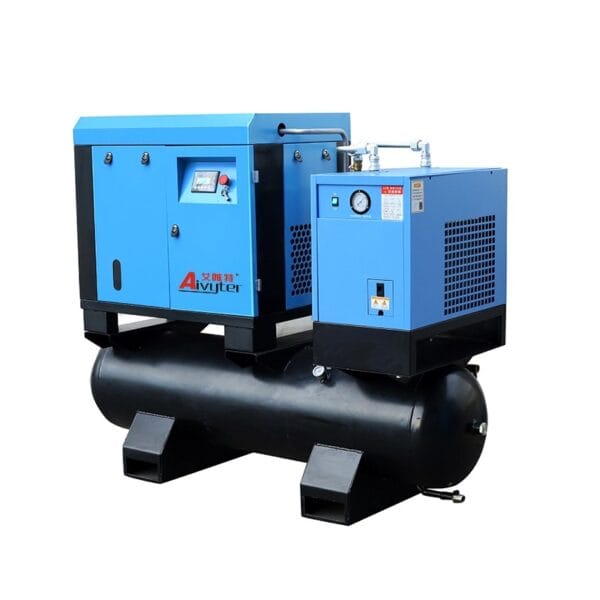
Maintaining Low Acoustic Output Over the Equipment Lifecycle
An air compressor that operates quietly at installation may become progressively louder if maintenance is neglected. Wear on internal components inevitably leads to increased friction and vibration.
- Regular Lubrication and Bearing Audits: Worn bearings produce high-frequency whining. Replacing bearings at recommended intervals prevents mechanical noise escalation.
- Enclosure Panel Inspection: Cabinet doors must seal tightly. Damaged rubber seals, loose latches, or missing soundproof foam panels will allow acoustic energy to leak out.
- Vibration Pad Maintenance: Over time, elastomeric isolation pads can harden or crack under the weight of the machine. Periodic inspection ensures these mounts remain soft enough to absorb vibrations.
- Intake Filter Replacements: Clogged filters restrict air intake, forcing the machine to work harder and creating higher aerodynamic suction noise. Clean intake pathways ensure a smooth, quiet air draw.
By implementing these simple preventative maintenance steps, the integrity of the compressor low noise design is preserved for many years of operation, preventing unexpected noise spikes in the facility.
Inquire with Our Acoustic and Air System Specialists
Selecting the correct quiet air system requires balancing airflow requirements, spatial constraints, and strict noise regulations. The engineering team at Aivyter is ready to assist you in designing a customized air setup tailored to your specific facility. If you require expert guidance on low-decibel operations, please submit your detailed inquiry through our contact portal, and our application engineers will provide a comprehensive proposal suited to your requirements.
Frequently Asked Questions Regarding Quiet Air Systems
Q1: What is considered a safe decibel level for industrial air compressors?
A1: Standard industrial environments aim to keep ambient noise below 85 dB(A) to prevent long-term hearing loss. High-performance silent compressors typically operate between 60 dB(A) and 68 dB(A), which is equivalent to a normal conversational level, making them safe for indoor installation without hearing protection.
Q2: Can a standard compressor be converted into a low-noise unit after installation?
A2: While retrofit acoustic enclosures and vibration pads can help reduce noise, converting a standard unit into a true low-noise system is difficult. True low-noise systems integrate internal sound baffles, balanced low-speed direct drives, and specialized cooling fans directly into the structural design of the machine.
Q3: How does a variable speed drive (VSD) compressor help reduce noise?
A3: A VSD system regulates the motor’s rotational speed based on real-time air consumption. When the demand for compressed air drops, the system slows down the motor. This lower speed dramatically reduces both mechanical friction and aerodynamic sound output during periods of low demand.
Q4: Why do oil-free compressors sometimes sound different from oil-injected models?
A4: Oil-injected compressors use lubricant to seal the gaps between the rotors, which also naturally dampens noise. Oil-free units do not have this liquid dampening barrier, requiring high-precision manufacturing and specialized acoustic enclosures to achieve identical low-noise performance.
Q5: Does a low-noise compressor require more maintenance than a standard model?
A5: No, but the maintenance priorities are slightly different. Along with standard mechanical service, operators must regularly check structural items like cabinet door seals, panel alignments, and rubber vibration isolation pads to ensure there are no acoustic leaks or mechanical resonances developing over time.
about
Aivyter
We provides trusted air compressors and mining equipment, engineered for durability, efficiency, and demanding industrial applications.