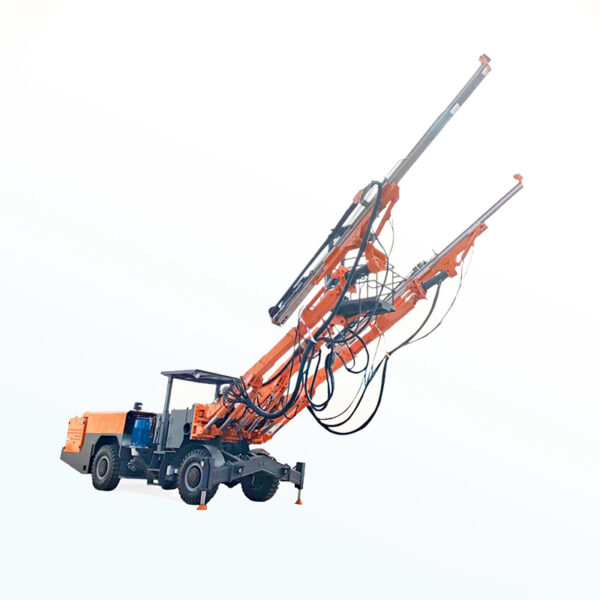
The extraction of metalliferous ores and industrial minerals from deep subsurface environments presents some of the most rigorous engineering challenges on the planet. As near-surface deposits become depleted, mining operations are forced to extend deeper into the earth’s crust, encountering higher rock stress, increased temperatures, and complex geotechnical conditions. At the very core of this demanding extraction process lies the underground mining drill rig, a highly specialized piece of capital equipment designed to execute the critical drilling phase of the drill-and-blast cycle.
For operations managers, geotechnical engineers, and procurement directors, understanding the nuanced technical specifications of these machines is not merely a matter of operational preference; it is a fundamental driver of mine profitability, operator safety, and long-term asset viability. This comprehensive technical analysis explores the anatomical components, application-specific configurations, industry pain points, and Total Cost of Ownership (TCO) variables associated with modern subsurface drilling machinery.
1. The Anatomical Engineering of Subsurface Drilling Machinery
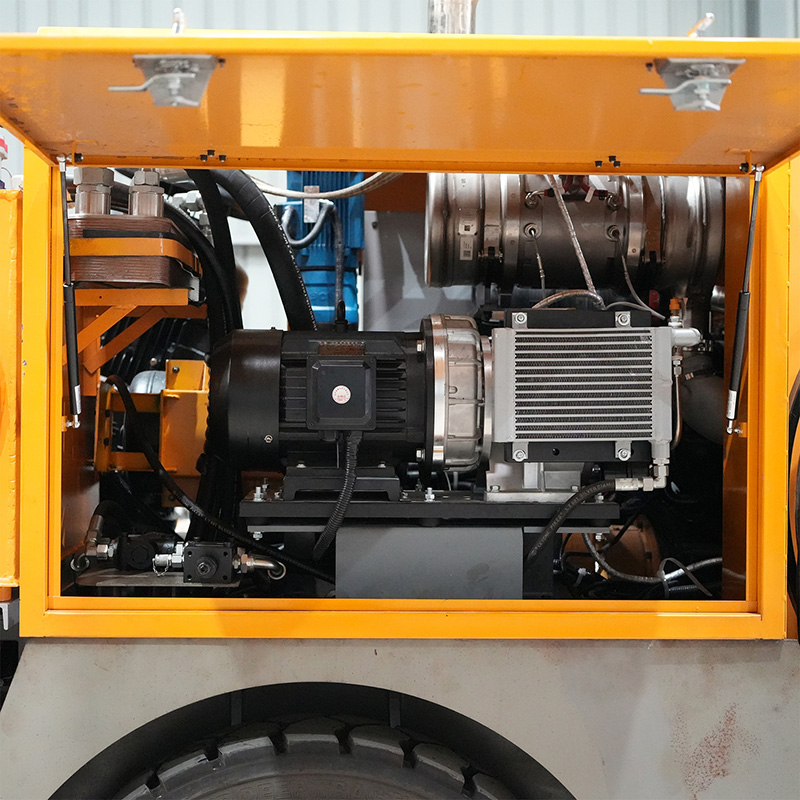
A modern drilling machine is a synthesis of advanced hydraulics, robust mechanical engineering, and sophisticated telemetry. To evaluate a machine’s capability, one must dissect its three primary subsystems: the hydraulic rock drill (drifter), the boom and feed mechanism, and the articulated carrier.
1.1 Hydraulic Rock Drills (Drifters)
The drifter is the mechanical heart of the equipment. It operates on the principle of percussive drilling, combining high-frequency impacts with continuous rotation and high-pressure flushing. Modern hydraulic drifters are rated by their percussive power output, typically ranging from 14 kW for softer rock formations to over 30 kW for extremely hard, abrasive igneous rocks like granite or basalt.
- Percussion Mechanism: A hydraulic piston strikes the shank adapter at frequencies between 40 and 70 Hz. This impact generates a compressive stress wave that travels down the drill string to the bit, fracturing the rock face.
- Nitrogen Accumulators: To protect the hydraulic infrastructure from destructive cavitation and pressure spikes, high-pressure and low-pressure nitrogen accumulators absorb shockwaves and maintain hydraulic fluid equilibrium.
- Flushing Systems: Effective cuttings removal is mandatory. High-pressure water (or a water-air mist) is pumped through the center of the drill string to cool the bit inserts and flush crushed rock from the blast hole, preventing bit jamming and excessive wear.
1.2 Articulated Booms and Feed Systems
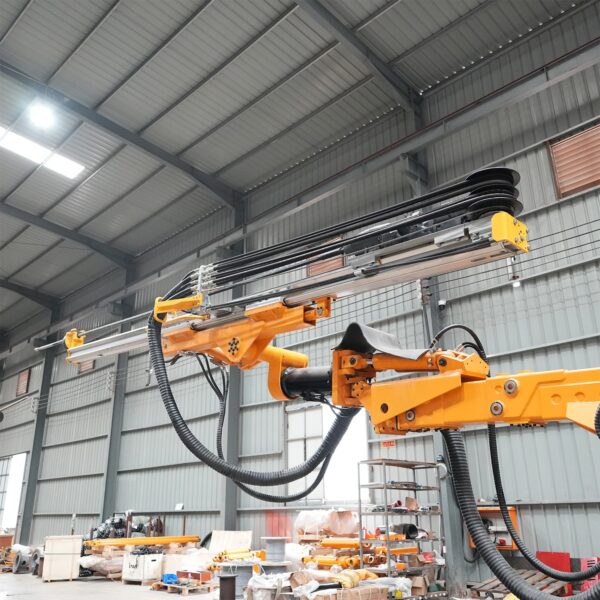
The positioning architecture dictates the accuracy of the drill pattern. Face drilling requires booms with exact parallel holding features, ensuring that once a boom is aligned, it remains perfectly parallel to the heading axis as it moves to subsequent hole positions. This kinematic coverage prevents deviations in the blast pattern, thereby minimizing overbreak and underbreak.
The feed system—usually constructed from extruded aluminum profiles for a high strength-to-weight ratio—houses the feed cylinder or chain drive that pushes the drifter forward. The feed force must be meticulously calibrated; inadequate force leads to poor energy transfer and threaded joint wear, while excessive force causes drill string deviation and premature bit failure.
1.3 Carrier Frames and Powertrains
Maneuverability in confined drifts requires center-articulated carrier frames. These chassis employ heavy-duty axles with planetary hub reduction and hydrodynamic transmissions. While traditional rigs rely on Tier 3 or Tier 4 Final diesel engines for tramming (movement between headings) and electric-hydraulic packs for the actual drilling process, the industry is witnessing a rapid transition in power sources, which we will address in subsequent sections.
2. Primary Applications in Hard Rock Environments
The geometry of the ore body and the selected mining method (e.g., Sublevel Caving, Block Caving, Cut-and-Fill) dictate the specific configuration of the drilling equipment required.
2.1 Face Drilling and Tunnel Development
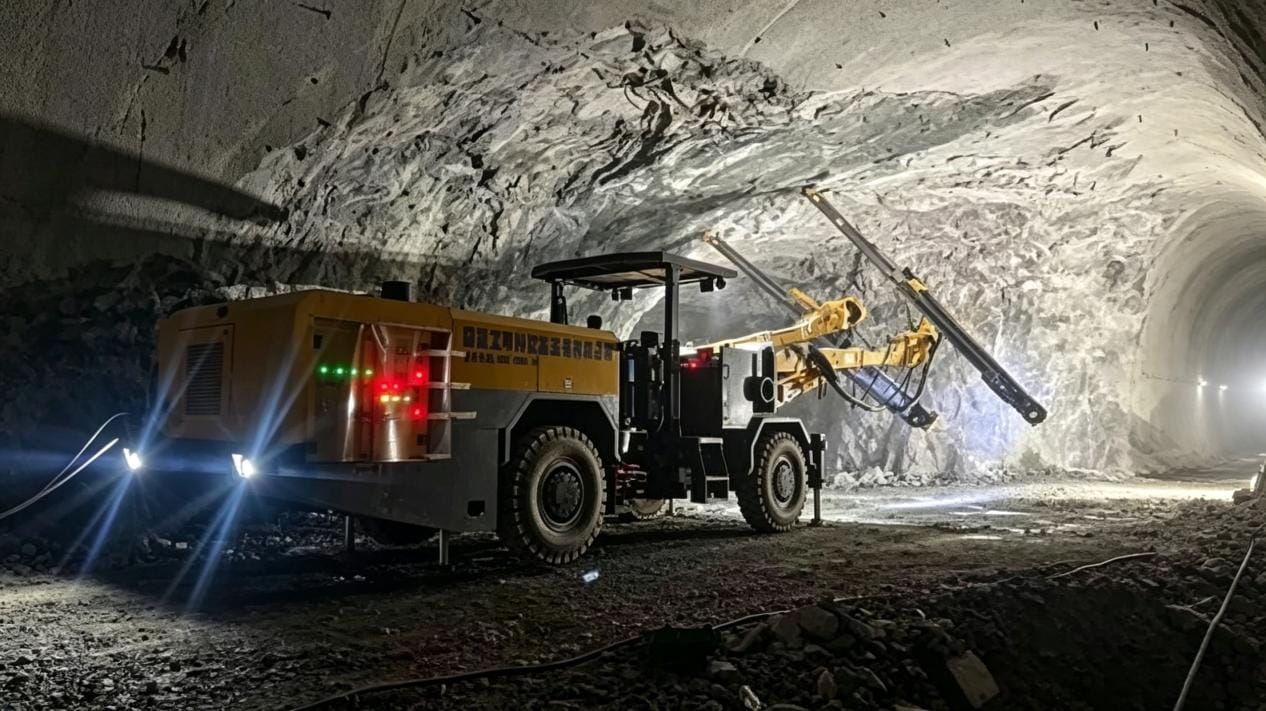
Mine development requires the creation of horizontal or declined access tunnels (drifts and declines). Development jumbo rigs are engineered for this precise task. Equipped with two to four booms, they bore a predetermined matrix of blast holes into the tunnel face. The precision of these machines directly influences the advance rate per blast. Integrating equipment from trusted manufacturers like Aivyter ensures high parallel holding accuracy, resulting in smoother tunnel walls and reduced concrete lining requirements.
2.2 Production Drilling (Long-hole Drilling)
Once the ore body is accessed, production drilling commences. Long-hole rigs feature highly specialized 360-degree rotational feed mounts, allowing operators to drill vertical or highly inclined holes in a ring pattern (ring drilling). These machines must handle heavy drill strings, often utilizing mechanized rod handling systems (carousels) to drill holes extending up to 50 meters into the ore zone. Hole deviation in long-hole drilling is a critical failure point, resulting in ore dilution or poor fragmentation.
2.3 Rock Reinforcement and Ground Support
Following a blast and subsequent mucking, the exposed rock mass must be stabilized. Specialized bolting rigs install rock bolts, wire mesh, and cable bolts. These rigs utilize split feeds equipped with a rock drill for boring the hole, and a separate mechanism for injecting resin or cement grout and driving the steel bolt into place.
3. Solving Operational Pain Points with Advanced Technology
Deploying an underground mining drill rig involves overcoming severe logistical and environmental constraints. Equipment manufacturers are continuously iterating on machine design to address three primary operational pain points: emissions, operator safety, and drilling precision.
3.1 Ventilation Costs and Thermal Management
In deep subsurface mining, supplying fresh air and cooling the environment constitutes one of the largest operational expenditures (OPEX). Diesel particulate matter (DPM), nitrogen oxides (NOx), and the massive heat rejected by internal combustion engines severely strain mine ventilation infrastructure. The industry’s solution is the rapid adoption of Battery Electric Vehicles (BEVs) and tethered electro-hydraulic rigs. By eliminating diesel engines during the tramming and drilling cycles, mines can drastically reduce auxiliary ventilation requirements, yielding massive energy savings.
3.2 Operator Safety and Ergonomics
Historically, operators were exposed to high decibel noise levels, heavy vibrations, and the constant threat of rockfalls. Modern machinery encloses the operator in ROPS (Roll-Over Protective Structure) and FOPS (Falling Object Protective Structure) certified cabins. These cabins feature positive pressurization to keep out silica dust, HEPA filtration, and vibration-dampened mounts. Furthermore, the implementation of tele-remote technology allows operators to control the rig from surface control rooms, entirely removing human personnel from the hazardous active heading.
3.3 Overbreak and Geotechnical Precision
Overbreak—the excavation of waste rock beyond the planned tunnel profile—dilutes ore grades and requires expensive backfilling or concrete support. Underbreak requires costly secondary blasting. Advanced Measurement While Drilling (MWD) systems collect real-time data on rock hardness, fractures, and drill penetration rates. Coupled with computerized drill plans uploaded via mine-wide Wi-Fi, the machine automatically adjusts feed pressure and percussion to maintain precise hole trajectories, minimizing deviations.
4. Technical Specifications Dictating Procurement Strategy
Capital procurement of an underground mining drill rig requires a strict alignment between the machine’s capabilities and the mine’s geotechnical parameters. A misalignment here results in trapped capital and severely bottlenecked production cycles.
- Heading Dimensions: The physical dimensions of the drift (e.g., 3×3 meters vs. 5×5 meters) dictate the kinematic coverage required from the boom setup. Procuring a rig that is too large will result in wall collisions and restricted turning radii, while an undersized machine will require constant repositioning, drastically reducing the penetration rate per hour.
- Uniaxial Compressive Strength (UCS) of Rock: The UCS of the rock mass, measured in Megapascals (MPa), determines the required percussive power of the drifter. Soft sedimentary rocks (50-100 MPa) require less impact energy, focusing instead on high rotational speed. Conversely, extreme hard rock formations (>200 MPa) necessitate high-impact drifters to efficiently spall the rock face without destroying the tungsten carbide bit inserts.
- Water Pressure and Quality: Subsurface water used for flushing is often highly corrosive or filled with abrasive suspended solids. The rig’s internal water booster pumps and stainless steel hydraulic coolers must be specified to withstand local mine water chemistry to prevent premature component failure.
5. Total Cost of Ownership (TCO) and ROI Analysis
The initial capital expenditure (CapEx) of purchasing heavy mining equipment represents only a fraction of the Total Cost of Ownership over a typical 7 to 10-year lifecycle. The operational expenditure (OpEx)—encompassing consumables, energy, labor, and maintenance—will heavily outweigh the purchase price.
To maximize ROI, operations must meticulously track consumable costs. The drill string components—comprising the shank adapter, coupling sleeves, extension rods, and drill bits—are subjected to extreme abrasive wear. Selecting a premium machine from a reliable manufacturer like Aivyter ensures that the drifter’s internal dampening systems function correctly. High-quality dampening absorbs reflective stress waves that bounce back from the rock face, preventing these destructive forces from micro-fracturing the threaded connections of the drill string. Extending the life of a drill bit from 300 meters to 400 meters across a fleet can save millions of dollars annually in consumable OpEx.
Additionally, predictive maintenance protocols driven by onboard telemetry can drastically reduce unplanned downtime. Sensors monitoring hydraulic oil contamination, pump pressures, and engine operating temperatures allow maintenance crews to replace components just before they fail, ensuring the underground mining drill rig remains highly utilized.
6. Future-Proofing Your Fleet: Automation and Interoperability
The future of metalliferous mining is entirely autonomous. As ore bodies reach depths exceeding 2,500 meters, human access becomes economically and physically unviable due to virgin rock temperatures and seismic stress. The transition toward Level 4 and Level 5 automation in drilling machinery is already underway.
Modern rigs are being equipped with LiDAR scanners and high-definition cameras, allowing the machine to navigate drifts autonomously, scan the face to verify the blast pattern, and execute the drilling cycle without manual intervention. Interoperability protocols, such as the IREDES (International Rock Excavation Data Exchange Standard), ensure that an underground mining drill rig can seamlessly communicate with the mine’s central dispatch system, ventilation on demand (VOD) infrastructure, and autonomous hauling fleets.
7. Frequently Asked Questions (FAQ)
Q1: What defines the optimal penetration rate for an underground mining drill rig?
A1: The optimal penetration rate is highly variable and depends on the rock’s Uniaxial Compressive Strength (UCS), abrasiveness, and the drifter’s percussive power. In medium-hard rock (approx. 150 MPa), a modern 20 kW drifter equipped with a 45mm button bit should achieve a net penetration rate of 1.2 to 1.8 meters per minute. However, operators must balance speed with bit wear; pushing the machine too hard causes excessive thermal degradation of the tungsten carbide inserts.
Q2: How do electro-hydraulic systems compare to diesel-hydraulic setups regarding operational efficiency?
A2: Electro-hydraulic systems are significantly more efficient. During the drilling cycle, the rig connects to the mine’s high-voltage electrical grid (typically 1000V or 690V) to power the main hydraulic pumps. This eliminates local diesel emissions, drastically reduces ambient heat rejection, operates with far less noise, and provides consistent, surge-free power to the drifters, resulting in smoother penetration and longer component life.
Q3: What specific maintenance protocols most effectively extend drifter lifespan?
A3: The most critical maintenance protocol is the rigorous monitoring of hydraulic fluid cleanliness and nitrogen accumulator pressures. Contaminated oil acts as a grinding paste on the microscopic clearances of the drifter’s piston. Furthermore, if the accumulators lose nitrogen charge, high-frequency pressure spikes will rupture hydraulic hoses and damage internal seals. Regular servicing using OEM parts, such as those recommended by Aivyter, is mandatory to achieve the expected 500-hour service intervals between drifter rebuilds.
Q4: Can a face drilling jumbo be effectively utilized for ground support and bolting operations?
A4: While technically feasible, it is highly inefficient. Face jumbos use long, continuous feeds designed for drilling 3 to 5-meter deep blast holes. Rock bolting requires installing mesh, injecting resin, and maneuvering in much tighter roof profiles. Using a face jumbo for bolting often results in awkward boom positioning, reduced installation quality, and slower cycle times compared to dedicated, specialized bolting rigs equipped with split feeds and mechanized bolt carousels.
Q5: How does the choice of water flushing pressure affect drill bit longevity and hole quality?
A5: Flushing pressure is critical. If water pressure is too low (below 8-10 bar), crushed rock cuttings are not cleared efficiently from the face of the bit. This causes “re-crushing,” where the bit wastes impact energy pulverizing already broken rock, leading to rapid wear of the gauge buttons and a high risk of the drill string becoming jammed in the hole. Optimal high-pressure flushing cools the bit and ejects cuttings instantaneously, ensuring maximum energy transfer into fresh rock.
The successful execution of subsurface excavation relies heavily on the mechanical integrity and technological sophistication of the underground mining drill rig. By thoroughly analyzing rock mechanics, carefully managing total cost of ownership, and embracing advancements in automation and electro-hydraulic power, mining enterprises can significantly mitigate operational risks. Ultimately, matching precise geotechnical requirements with the correct machine specifications forms the bedrock of a safe, highly productive, and profitable mining operation in an increasingly demanding global commodities market.
about
Aivyter
We provides trusted air compressors and mining equipment, engineered for durability, efficiency, and demanding industrial applications.