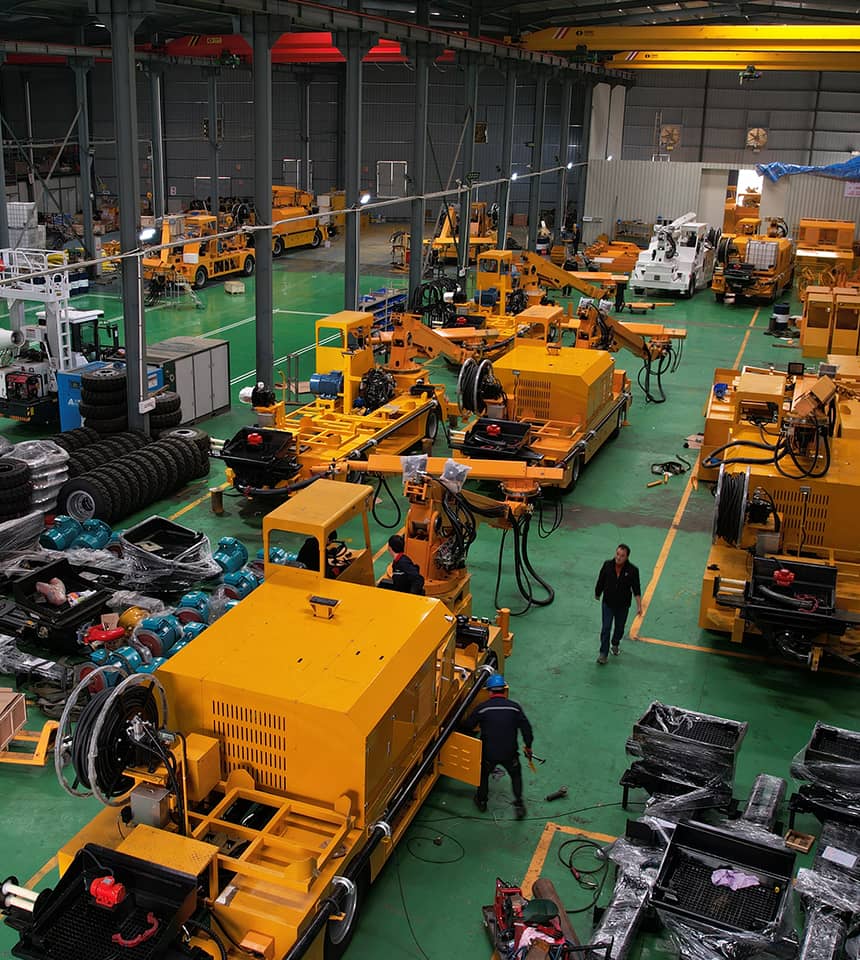
The global mining and tunneling industry operates in some of the most challenging geological environments on the planet. As shallow mineral deposits become exhausted, the necessity to go deeper into the earth’s crust has driven a significant technological evolution. Central to this transition are the underground drill rig factories that design and manufacture the specialized machinery required for hard rock excavation, production drilling, and ground reinforcement. These facilities are no longer mere assembly lines; they are centers of advanced metallurgy, hydraulic engineering, and digital synchronization.
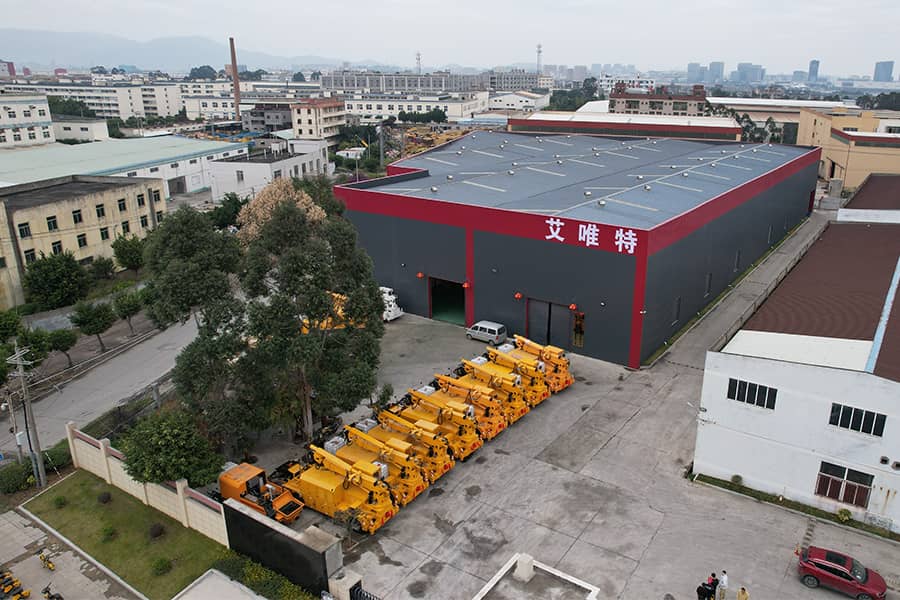
For procurement managers and project engineers, understanding the internal capabilities of these manufacturing hubs is essential for securing equipment that minimizes total cost of ownership (TCO) while maximizing meters drilled per shift. A world-class facility, such as Aivyter, focuses on integrating structural durability with high-precision control systems to ensure that every machine can withstand the corrosive and high-pressure realities of deep-level mining.
The Technical Architecture of Tier-1 underground drill rig factories
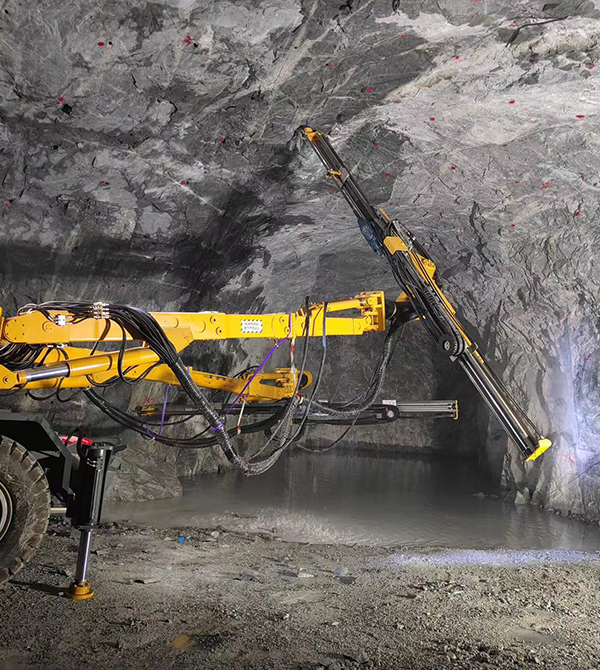
The manufacturing process of an underground drill rig is a multi-disciplinary endeavor. Unlike surface equipment, underground rigs must operate within strict dimensional constraints—often referred to as the “drift envelope”—while providing enough power to penetrate rock with compressive strengths exceeding 250 MPa.
1. Advanced Metallurgy and Structural Integrity
The chassis and booms of a drill rig are subjected to constant high-frequency vibrations and cyclic loading. Leading factories utilize high-strength alloy steels (such as Q460 or higher grades) and employ robotic welding to ensure consistency in weld penetration. Stress-relieving heat treatments are applied to critical components like the boom support and articulation joints to prevent fatigue cracking over thousands of operational hours. Within professional underground drill rig factories, Finite Element Analysis (FEA) is a standard part of the design phase, allowing engineers to simulate load distributions before the first piece of steel is cut.
2. High-Precision Hydraulic Systems
The “drifter” or rock drill is the heart of the machine. It requires a sophisticated hydraulic circuit capable of managing high-flow rates and rapid pressure fluctuations. Factories must maintain clean-room environments for the assembly of hydraulic manifolds and pumps. Even microscopic contamination can lead to catastrophic failure in a high-pressure percussive system. Modern rigs often feature load-sensing hydraulics that adjust pump output based on the resistance encountered by the drill bit, significantly reducing energy consumption and heat generation.
3. Control Systems and CAN-bus Integration
The shift from manual levers to electronic-over-hydraulic control has revolutionized drilling accuracy. Modern underground drill rig factories now integrate CAN-bus (Controller Area Network) systems that allow for real-time diagnostics and automated drilling cycles. This digital backbone enables features like “Auto-Collaring,” which prevents bit wandering at the start of a hole, and “Anti-Jamming” logic, which automatically retracts the drill string if a void or fractured ground is detected.
Addressing Industry Pain Points: The Factory’s Role in Solution Provision
The mining sector faces several critical challenges: rising operational costs, stringent safety regulations, and a shortage of skilled operators. The design choices made within the factory directly impact these variables.
- Reducing Ventilation Costs: In deep mines, the cost of pumping fresh air to disperse diesel particulate matter (DPM) is astronomical. Many factories are responding by developing battery-electric vehicles (BEVs). By eliminating internal combustion engines, these factories help mines reduce their carbon footprint and their electricity bills related to ventilation fans.
- Enhancing Operator Safety: The “red zone” near the face of a tunnel is the most dangerous area. Advanced manufacturers design rigs with full tele-remote capabilities. This allows operators to control the machine from a reinforced cabin or even a surface office, effectively removing personnel from the risk of rockfalls.
- Optimizing Maintenance Cycles: Downtime is the enemy of productivity. Aivyter and other leading providers emphasize modularity. By grouping service points and using standardized hydraulic hoses and electrical connectors, technicians can perform preventative maintenance faster, ensuring the rig returns to the face with minimal delay.
The Evolution of Drilling Applications
The machinery produced by specialized underground drill rig factories is not one-size-fits-all. The engineering must be tailored to specific mining methods:
Face Drilling and Development
Jumbos used for development work require high-speed booms with parallel holding systems. The goal is to drill a blast pattern that ensures maximum “pull” with minimum overbreak. This requires the factory to calibrate sensors with sub-degree accuracy to ensure the boom orientation matches the mine’s digital plan.
Long-Hole Production Drilling
For sublevel stoping, the focus shifts to hole straightness over long distances (up to 30-50 meters). Rigs produced for this application feature specialized tube-handling systems and high-torque rotation motors to manage the weight of long drill strings. Any deviation in these holes can lead to poor fragmentation and increased secondary blasting costs.
Rock Bolting and Ground Support
Safety depends on the integrity of the roof and walls. Specialized bolting rigs automate the process of drilling the hole, injecting resin or grout, and installing the bolt. This automation ensures that every bolt is installed to the correct torque and depth, providing consistent ground stabilization that manual methods cannot match.
Manufacturing Quality Control and E-E-A-T Standards
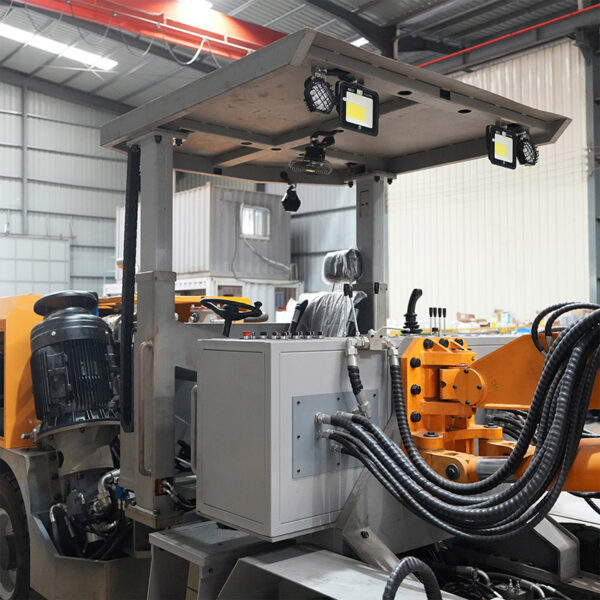
In the international B2B market, credibility is built through transparency and rigorous standards. A reputable underground drill rig factories environment must adhere to ISO 9001 for quality management and ISO 14001 for environmental standards. Furthermore, every machine must comply with ROPS (Roll-Over Protective Structure) and FOPS (Falling Object Protective Structure) international safety codes.
Expertise is also demonstrated through the inclusion of advanced telemetry. Systems that track engine hours, percussion hours, and fuel consumption in real-time allow mine managers to move from reactive to predictive maintenance. This data-driven approach is a hallmark of the modern industrial authority, ensuring that the equipment is not just a tool, but a source of operational intelligence.
Strategic Sourcing from Global Manufacturers
When selecting a partner, the geographic location and supply chain robustness of underground drill rig factories are significant factors. A factory must have a reliable pipeline for high-quality components, such as Sauer Danfoss pumps or Siemens PLC systems. Furthermore, the ability of a brand like Aivyter to provide global after-sales support—including local parts depots and technician training—is often more important than the initial purchase price.
The total cost of ownership (TCO) includes not only the capital expenditure (CAPEX) but also the operational expenditure (OPEX) over a 10-year lifecycle. Factories that focus on energy-efficient designs and durable wear parts provide a much higher return on investment (ROI) for the end-user. This is why a thorough audit of a factory’s manufacturing philosophy is a critical step in the procurement process.
Future Trends in Underground Drill Rig Production
The next decade will see a rapid acceleration in the adoption of AI-driven drilling. We are moving toward a period where the rig can “read” the rock mass as it drills, adjusting its percussive energy and feed pressure in real-time to optimize penetration while protecting the drill bit from premature wear. This level of “intelligent drilling” requires a massive amount of data processing power to be built into the rig’s onboard computer systems.
Furthermore, the move toward interoperability—where rigs from different underground drill rig factories can communicate with a centralized mine management system using protocols like OPC-UA—will become the industry standard. This connectivity allows for the complete synchronization of the mucking, drilling, and hauling cycles, leading to the “autonomous mine” of the future.
The performance of an underground operation is fundamentally linked to the quality of its machinery. The technical rigor, material science, and digital innovation found within leading underground drill rig factories are the primary drivers of modern mining progress. By choosing a manufacturer that prioritizes engineering integrity and operational safety, such as Aivyter, mining enterprises can ensure they remain competitive in an increasingly demanding global market. Precision in the factory translates to productivity in the stope, and in the high-stakes world of underground extraction, there is no substitute for manufacturing excellence.
Frequently Asked Questions
Q1: What defines the reliability of a drifter in an underground drill rig?
A1: Reliability is primarily determined by the quality of the nitrogen accumulators, the precision of the internal tolerances between the piston and the shank, and the effectiveness of the lubrication system. High-quality factories use vacuum-hardened steels to ensure these parts resist wear under high-frequency impact.
Q2: How do underground drill rig factories support the transition to green mining?
A2: Factories are investing heavily in Battery Electric Vehicle (BEV) technology, which eliminates diesel exhaust emissions. They also focus on optimizing hydraulic efficiency to reduce total energy draw and using eco-friendly hydraulic fluids to prevent soil and water contamination.
Q3: Why is CAN-bus technology important for modern drilling equipment?
A3: CAN-bus allows all electronic components of the rig to communicate through a single system. This simplifies the wiring, makes troubleshooting significantly faster via digital diagnostics, and enables the integration of automated drilling features that improve consistency.
Q4: What is the importance of FOPS and ROPS certification in rig manufacturing?
A4: These certifications are vital for operator safety. ROPS ensures the cabin can withstand the weight of the machine in a roll-over, while FOPS ensures the roof can resist the impact of falling rocks. No reputable factory will supply equipment for underground use without these verified certifications.
Q5: How can a mine determine the best rig configuration for their specific geology?
A5: Leading manufacturers provide geotechnical consulting. By analyzing rock samples (RQD and UCS values), the factory can recommend the appropriate drifter power, feed force, and bit type to ensure optimal penetration rates without damaging the machine.
Q6: What should be included in a standard maintenance package from a factory?
A6: A professional package should include a scheduled parts replacement list (filters, seals, shank adapters), access to a digital parts catalog, on-site technician training, and remote diagnostic support to minimize downtime during unexpected failures.
about
Aivyter
We provides trusted air compressors and mining equipment, engineered for durability, efficiency, and demanding industrial applications.