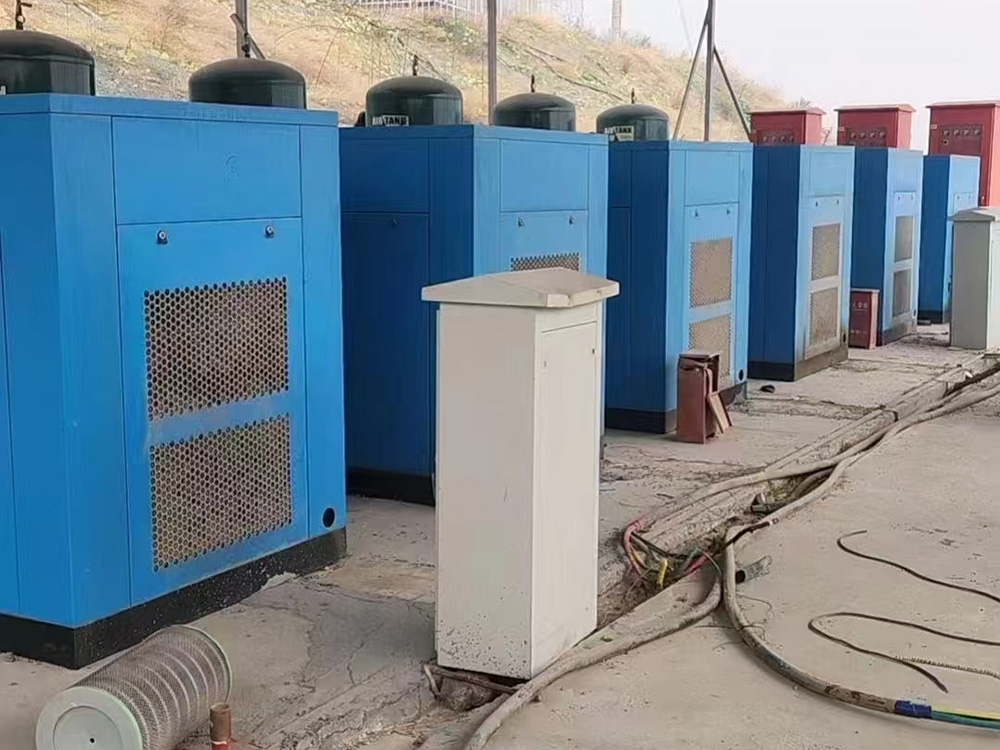
In heavy-duty sectors such as underground mining, tunnel boring, and large-scale civil engineering, the rotary screw compressor operates as a critical utility—powering pneumatic tools, ventilation controls, and material conveying systems. Performance degradation rarely stems from the compressor itself but from suboptimal or worn screw compressor spare parts. This guide provides a component-level analysis, failure root causes in abrasive environments, and selection criteria aligned with ISO 8573-1 Class 0 requirements. Drawing from field data across Australian iron ore sites and Southeast Asian hydropower tunnels, we emphasize precision metallurgy, thermal management, and contamination control.
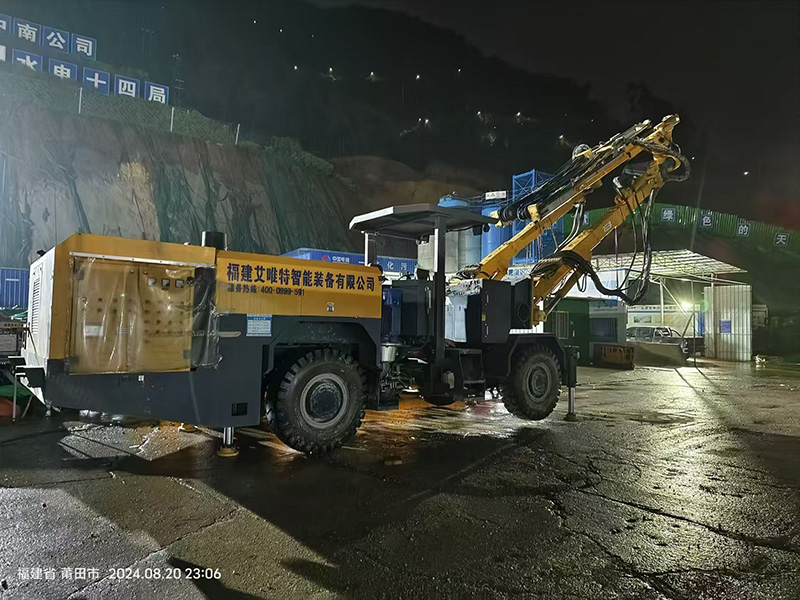
1. Anatomy of a Screw Compressor: Critical Subsystems and Their Wear Interfaces
Modern oil-injected and oil-free screw compressors integrate multiple subsystems where each screw compressor spare part must withstand cyclic stresses, particulate ingress, and lubricant degradation. Below are the high-wear components with direct impact on volumetric efficiency and Mean Time Between Failures (MTBF).
1.1 Airend Assembly: Rotor Profiles, Timing Gears, and Bearing Configurations
- Main screw rotors (male/female): The profile coating (PTFE, PEEK, or stainless steel) erodes when ingesting silica dust from mining faces. A 0.1mm profile loss reduces specific power by 7-12%.
- Thrust and radial bearings: In heavy-load conditions (discharge pressure >13 bar), cylindrical roller bearings experience brinelling and fatigue spalling. Common OEM specifications include SKF Explorer or FAG X-life series.
- Timing gears (oil-free units): Backlash exceeding 0.05mm generates harmonic vibration, leading to premature gear tooth fracture.
For operations using screw compressor spare parts from non-certified suppliers, rotor seizure within 2,000 hours is frequent due to incorrect bearing clearance or poor surface finish. Aivyter provides OEM-matching rotor assemblies with 5-axis CNC-ground profiles and ISO G2.5 dynamic balancing.
1.2 Separation System: Oil Separator Elements and Scavenging Lines
- Fine glass-fiber coalescing media: Saturation with oxidized oil raises differential pressure >0.8 bar, increasing energy consumption by 8-10%.
- Oil return (scavenging) orifice: Plugging by carbon deposits leads to oil carryover, fouling downstream dryers and air tools.
2. Failure Patterns and Root Cause Analysis in Harsh Environments
Mining and tunneling expose screw compressors to three aggressive vectors: high-concentration airborne particulates (up to 50 mg/m³), extreme temperature swings (-20°C to +55°C), and voltage fluctuations from mobile diesel-generator sets. These conditions accelerate the wear of screw compressor spare parts in predictable ways.
2.1 Contamination-Induced Bearing Failure
ISO 4406 cleanliness code drops from 18/16/13 to 23/21/18 within 500 hours when using low-efficiency intake filters. Hard particles (silica, quartz) embed into bearing raceways, initiating subsurface fatigue. A case study from a Chilean copper mine showed that switching to high-beta ratio (β10 ≥ 200) filters extended bearing life from 4,000 to 14,000 hours.
2.2 Thermal Degradation of Non-Metallic Components
- Shaft seals (PTFE/Viton): High discharge temperatures (>105°C) cause extrusion and lip hardening, resulting in oil leakage at the drive shaft.
- Capacity control pistons: O-rings made of NBR become brittle, causing blow-by and unstable pressure delivery.
3. Technical Selection Criteria: Matching OEM Performance with Aftermarket Solutions
Selecting screw compressor spare parts requires verifying three tiers of specifications: material grade (e.g., AISI 8620 for timing gears vs. 4340 for main rotors), heat treatment (carburizing depth ≥1.2mm), and dimensional traceability (original CMM reports). Below is a decision matrix for critical components.
| Component | OEM Equivalent Material | Acceptable Aftermarket Tolerance | Validation Test |
|---|---|---|---|
| Main bearing (angular contact) | FAG 7232B.MP.UA | P6 accuracy, axial runout ≤0.008mm | Vibration analysis (ISO 10816-3) |
| Oil separator element | Mann+Hummel 16-25 bar | Residual oil content ≤3 ppm @ 1μm | Differential pressure decay test |
| Intake filter (heavy-duty) | Donaldson P181038 | Beta ratio β1000 ≥ 200 (ISO 16889) | Gravimetric efficiency >99.9% |
Procurement teams should demand certified test reports. Aivyter supplies screw compressor spare parts with full material certificates (EN 10204 3.1) and 3D laser-scan validation against OEM blueprints.
4. Predictive Maintenance Strategies for Extended Lifecycle
Reactive replacement of screw compressor spare parts increases total ownership cost by 34% (according to a 2023 industry study). Instead, implement a condition-based protocol:
4.1 Vibration Signature Monitoring
- High-frequency band (2-10 kHz) detects bearing race defects 3-5 months before failure.
- Sideband around rotor mesh frequency indicates timing gear wear or rotor contact.
4.2 Oil Analysis Triggers
- Iron (Fe) > 150 ppm → accelerated rotor or bearing wear.
- Silicon (Si) > 30 ppm → air filtration breach.
- Water content > 0.2% → additive depletion and corrosion risk.
5. Application-Centric Approach: Mining, Tunneling, and Heavy Construction
Each environment imposes distinct demands on spare parts:
- Underground coal mining: Flame-retardant seals and anti-static oil separators (ATEX/IECEx certified). Avoid zinc-coated components to prevent catalytic reactions with methane.
- Tunnel boring (TBM) backup systems: Compact, vibration-resistant screw compressor spare parts with enhanced locking mechanisms (Loctite threadlocker on all fasteners).
- High-altitude construction (>3000m): Derated cooler cores and revised oil viscosity (ISO VG 68 vs standard VG 46) to compensate for lower air density.
6. Counterfeit Mitigation: Verifying Authenticity of Screw Compressor Spare Parts
Counterfeit parts account for an estimated 18% of aftermarket compressor failures. Red flags include:
- Missing batch numbers or inconsistent font on nameplates.
- Lower mass (e.g., oil separator canister weight <90% of genuine).
- Weak magnetic response in bearing steel (suspect use of low-grade 400 series stainless).
Aivyter integrates anti-tamper QR codes on every screw compressor spare parts package, linking to factory test reports and chain-of-custody records.
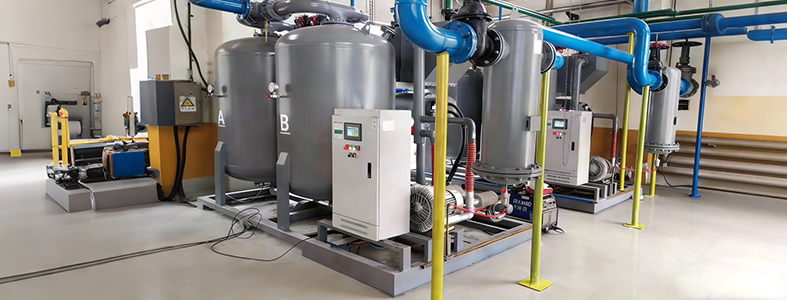
7. Inventory Optimization for Maximum Uptime
Balance holding costs against downtime risks using a criticality matrix:
- Red-list parts (stock onsite): Intake filters, minimum pressure valves, oil separators for primary compressors.
- Yellow-list (regional warehouse): Rotor bearing sets, shaft seals, thermostatic mixing valves.
- Green-list (OEM lead time): Complete airend assemblies, timing gear sets.
Frequently Asked Questions (FAQs)
Q1: How can I identify the correct screw compressor spare parts for my 10-year-old Atlas Copco GA 90+?
A1: Cross-reference the compressor serial number and the OEM part numbers stamped on existing components. For older units without clear markings, measure key dimensions: rotor center distance, bearing shaft journal diameters, and seal groove sizes. Aivyter’s technical team provides reverse-engineering services with 0.01mm accuracy.
Q2: What is the typical lifespan of a screw compressor spare parts kit in a cement plant environment?
A2: In high-dust applications (cement grinding, fly ash handling), air filters require replacement every 500-800 hours instead of the standard 2000 hours. Oil separator elements typically last 1000-1500 hours. Rotor bearings under severe silica ingress may fail within 6000 hours versus 20,000 hours in clean conditions. Use high-efficiency pre-filters (F9 grade) to extend component life. Q3: Are aftermarket screw compressor spare parts legally compliant with warranty terms of original manufacturers?
A3: Yes, under the Magnuson-Moss Warranty Act (US) and similar EU regulations, OEMs cannot void a warranty solely because you use aftermarket parts, unless they prove the part caused the failure. However, keep detailed records of part specifications and installation procedures. Reputable suppliers like Aivyter provide compliance documentation.
Q4: How do I troubleshoot high discharge temperature after replacing screw compressor spare parts?
A4: Common post-replacement causes: (1) Wrong viscosity oil – switch to recommended ISO grade. (2) Restricted oil cooler – flush or replace. (3) Thermostatic bypass valve stuck closed – test in hot water bath (opens at 71°C typically). (4) Air-end bearing preload too high – re-shim according to service manual. Perform a no-load run-in for 30 minutes before full pressure operation. Q5: Can I mix screw compressor spare parts from different brands in one airend assembly?
A5: Not recommended. Rotor pairs are lapped as matched sets – mixing rotors from different manufacturers changes the sealing line contact pattern, causing internal leakage and power spikes. Similarly, bearings from different suppliers may have varying radial internal clearance (C3 vs CN), leading to uneven load distribution. Always source complete kits for airend overhauls.
Conclusion: Securing Operational Continuity Through Technical Precision
Selecting screw compressor spare parts based on price alone creates exponential costs in unplanned downtime and secondary damage. By adopting failure mode analysis, verifying material certifications, and implementing predictive monitoring, engineering teams can achieve 95%+ availability even in the most abrasive mining or tunneling environments. For site-specific recommendations, including custom spare parts kits tailored to your compressor fleet’s duty cycle, reach out directly.
Ready to optimize your screw compressor maintenance strategy? Send an inquiry to Aivyter with your compressor model, operating hours, and contamination challenges. Our application engineers will respond with a detailed parts matrix and lifecycle cost analysis within 24 hours.
about
Aivyter
We provides trusted air compressors and mining equipment, engineered for durability, efficiency, and demanding industrial applications.