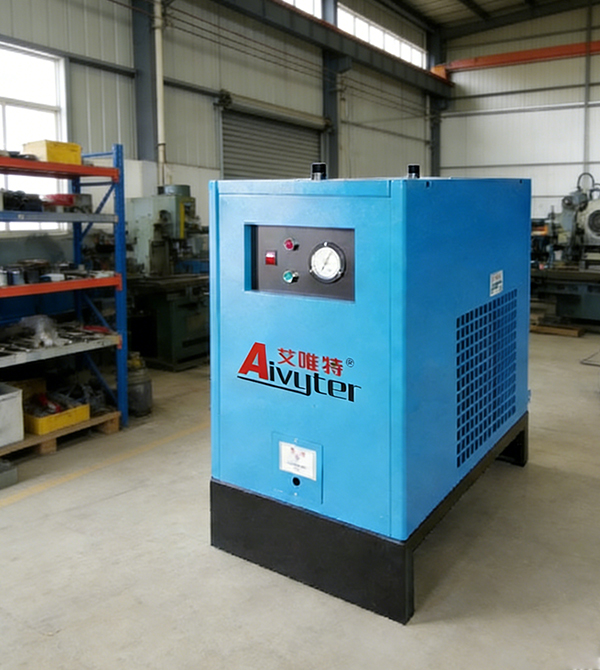
For industrial plants, mining operations, and construction projects, compressed air represents 10–30% of total electricity consumption. Choosing a screw compressor supplier requires evaluating not just the initial purchase price, but volumetric efficiency, part-load behavior, oil carryover, and serviceability. This technical guide provides a structured methodology to assess suppliers based on ISO 1217 (displacement compressors) standards, real field data, and lifecycle cost modeling.
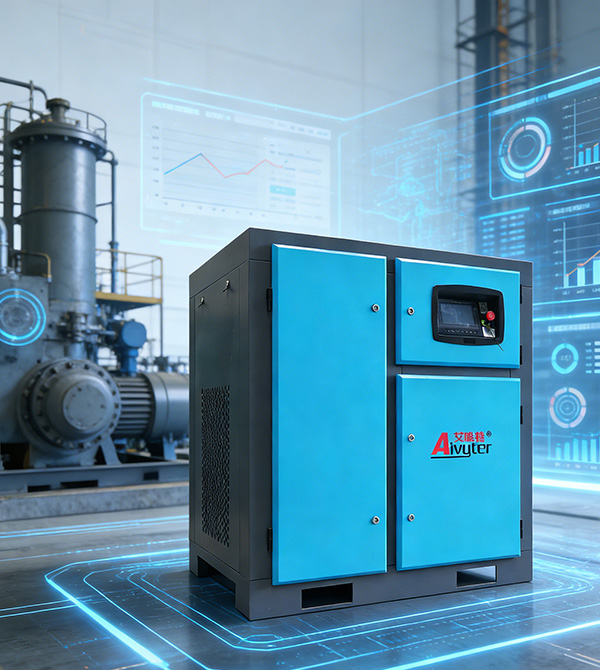
1. Core Technology: Oil-Injected vs. Oil-Free Screw Compressors
Any qualified screw compressor supplier must offer both oil-injected and oil-free platforms. The selection depends on downstream air purity requirements.
- Oil-injected rotary screw compressors – Lubricating oil seals internal clearances, enabling higher pressure (up to 15 bar) and lower rotor speeds. Typical specific power: 6.5–8.5 kW/(m³/min) at 7 bar. Oil carryover after separator: 3–5 ppm (standard), reducible to <0.01 ppm with secondary filtration. Best for general industrial air (pneumatic tools, conveying, blow-off).
- Oil-free (dry) screw compressors – Timing gears maintain rotor clearances without oil in the compression chamber. Class 0 certified (ISO 8573-1) for food/pharma/electronics. Higher initial cost (+60–100%) and lower energy efficiency at full load, but superior at part load with variable speed drive (VSD).
- Water-injected oil-free – Uses water for cooling and sealing. Achieves isothermal compression, very high efficiency (5.5–6.5 kW/(m³/min)) but limited to maximum 10 bar. Requires water treatment system.
Aivyter engineers guide clients through technology selection, providing ISO 1217 test reports for every screw compressor supplier proposal.
2. Performance Metrics: FAD, Specific Power, and Pressure Dew Point
When comparing bids from any screw compressor supplier, demand certified data based on ISO 1217 Annex C or D (intake conditions: 20°C, 1 bar, 0% RH). Key parameters:
- Free Air Delivery (FAD) – Actual volume flow at compressor discharge, corrected to inlet conditions. A 55 kW oil-injected screw should deliver 8.5–9.5 m³/min at 7 bar. Reject suppliers who quote displacement (theoretical) instead of FAD.
- Specific power (kW per m³/min) – The most important energy metric. For 7 bar oil-injected: premium units achieve 6.8–7.2 kW/(m³/min); standard units 7.5–8.2. For oil-free VSD at 70% load, expect 8.5–9.5 kW/(m³/min).
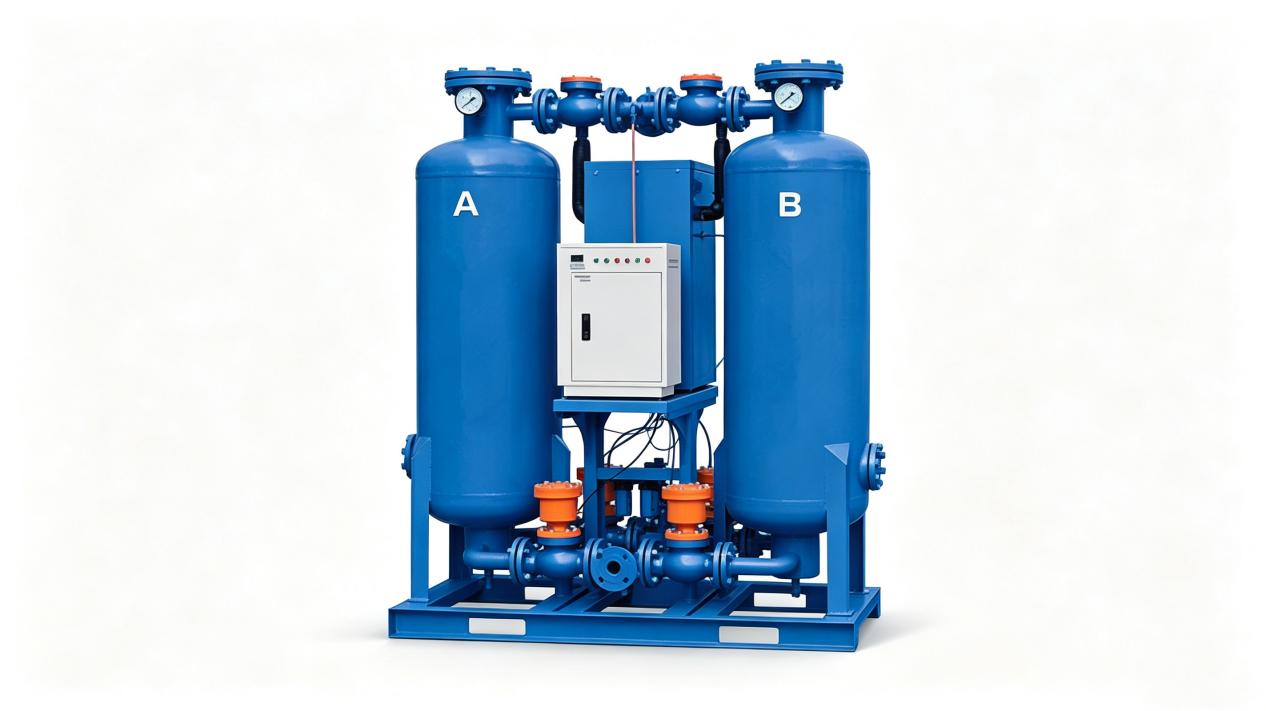
- Pressure dew point (for dryers) – If supplier integrates a refrigerant or desiccant dryer, specify dew point at +3°C (refrigerant) or -40°C (desiccant). Demand measurement at rated flow and ambient 35°C.
- Part-load efficiency – For VSD compressors, require efficiency at 40%, 60%, 80% of full flow. A well-designed VSD maintains >90% of full-load efficiency down to 50% flow. Poor designs drop to 70% efficiency.
Aivyter provides computer-generated performance maps for each screw compressor supplier quote, including specific power at five pressure setpoints.
3. Key Components: Air End, Bearings, and Drive Train
The air end is the heart of the screw compressor. A credible screw compressor supplier specifies rotor profile, bearing type, and gear or direct drive.
- Rotor profile – Asymmetric profiles (SIGMA, Xe-series, etc.) reduce internal leakage. Minimum rotor length-to-diameter ratio (L/D) of 1.6 for oil-injected, 1.2 for oil-free. Hardened and ground rotors (58–62 HRC) maintain efficiency for >60,000 hours.
- Bearings – Oil-injected: tapered roller or angular contact ball bearings on the discharge side, cylindrical roller on intake side. Rated life L10 >50,000 hours at maximum operating pressure. Oil-free: ceramic hybrid bearings or active magnetic bearings for high speeds.
- Drive train – Direct drive (motor shaft connected to air end via coupling) eliminates gear losses (2–3% efficiency gain). Geared drives allow motor speed optimization but introduce maintenance points. VSD compressors require inverter-duty motors (Class F insulation, IP55).
Screw compressor air ends from Aivyter use hardened 20CrMo steel rotors with SKF Explorer series bearings, backed by a 5-year warranty on the air end.
4. Industry Applications: Mining, Construction, and Heavy Manufacturing
Different industries impose unique demands on a screw compressor supplier. Below are typical configurations:
- Mining (underground and surface) – Compressors must be explosion-proof (ATEX or MSHA), with inlet air filtration for high dust loads (≥10 mg/m³). Typical pressure 7–10 bar for drilling, 5–6 bar for aeration. Skid-mounted or containerized units with sound enclosures <85 dBA.
- Construction (mobile applications) – Diesel-driven portable screw compressors with pressure up to 12 bar. Require corrosion-resistant coolers and cold-start capability (-20°C). Suppliers must provide global rental support and parts availability.
- Heavy manufacturing (automotive, steel) – Large central plants with multiple compressors (2–10 units) running on a master controller. Need for heat recovery (water-cooled units can recover 70–90% of input energy as hot water).
- Food and beverage (oil-free) – Class 0 certification, stainless steel piping, and condensate management with oil-water separators.
For industrial screw compressor solutions, Aivyter offers site audits to match pressure and flow profiles, reducing energy waste by 15–35%.
5. Industry Pain Points: Oil Carryover, Overheating, and Pressure Drop
Even from a reputable screw compressor supplier, field issues arise. Diagnose using these patterns:
- Excessive oil carryover (>10 ppm) – Causes: damaged separator element, improper oil level, or collapsed coalescer. Solution: measure pressure drop across separator (<0.8 bar for new, replace if >1.2 bar). Use synthetic oil (PAO or PAG) which resists foaming.
- High discharge temperature (>105°C for oil-injected) – Leads to oil coking and varnish. Check cooler fins for blockage, coolant flow, and thermostat valve. For water-cooled units, ensure flow rate ≥4 L/min per 10 kW of shaft power.
- Pressure drop in piping system – Every 0.5 bar drop increases energy consumption by 4–5%. Measure pressure at compressor discharge and point of use. Oversized filters, undersized pipes, or multiple quick-connects are common causes.
- Short air end life (<30,000 hours) – Often due to poor intake air quality (dust ingestion) or operating above rated pressure. Install intake filter with <1 µm efficiency (MERV 15 or higher) and never exceed maximum working pressure.
Preventive maintenance schedule: change oil and separator every 4,000–8,000 hours (depending on oil type and environment); inspect air filter monthly; record run hours and temperature trends.
6. Selecting the Right Screw Compressor Supplier: Factory Audit and After-Sales Support
Beyond product specifications, evaluate a screw compressor supplier on these operational criteria:
- ISO 9001:2015 certification – Minimum quality standard. Prefer suppliers with ISO 50001 (energy management) and ISO 14001 (environmental).
- Local service network – Response time guarantee (<4 hours for critical breakdowns). Availability of genuine spare parts for at least 10 years after model discontinuation.
- Remote monitoring capability – Modern suppliers offer IoT-enabled controllers (Modbus TCP/IP or Profibus) for real-time performance tracking. Ask for demo of their SCADA integration.
- Training and documentation – Provide full operation & maintenance manuals, electrical schematics, and part number cross-references. On-site training for maintenance staff should be included in the purchase contract.
Aivyter maintains a global service network with 48-hour parts delivery to major industrial hubs, and every screw compressor supplier customer receives access to a dedicated online portal with performance dashboards.
7. Total Cost of Ownership (TCO) Calculation for Screw Compressors
For a 10-year operation, energy accounts for 70–80% of TCO. Initial purchase price is only 10–15%. Use this formula when comparing quotes from any screw compressor supplier:
- Annual energy cost (USD) = FAD (m³/min) × Specific power (kW/(m³/min)) × Operating hours × Electricity rate ($/kWh) × Load factor² (for VSD, use part-load profile).
- Example: A 55 kW compressor delivering 9.0 m³/min at 7 bar, specific power 7.2 kW/(m³/min), 6,000 hours/year, $0.12/kWh → annual energy = 9.0 × 7.2 × 6000 × 0.12 = $46,656.
- If a second supplier offers specific power 7.8 kW/(m³/min) but purchase price $4,000 lower, the higher efficiency unit saves $3,888 per year, payback period <1.5 years.
- Maintenance cost – Include oil, separators, air filters, oil filters, and cooler cleaning. Typical annual maintenance = 8–12% of purchase price for oil-injected, 15–20% for oil-free.
Aivyter provides a free TCO calculator spreadsheet for every screw compressor supplier proposal, helping buyers make data-driven decisions.
Frequently Asked Questions (FAQ)
Q1: What is the typical lifespan of a rotary screw compressor air end?
A1: For a well-maintained oil-injected screw compressor from a reputable screw compressor supplier, the air end lasts 60,000–100,000 operating hours (15–20 years at 8,000 hours/year). Oil-free dry screw air ends typically require overhaul at 25,000–30,000 hours due to coating wear and timing gear backlash. Always use genuine parts and synthetic oil to achieve maximum life.
Q2: How do I determine if I need a variable speed drive (VSD) compressor?
A2: Measure your plant’s air demand profile over a week. If the flow varies by more than 30% between minimum and maximum and low-flow periods exceed 20% of operating time, a VSD compressor pays back within 1–3 years. For stable base loads (>80% constant), fixed-speed compressors are more efficient. A qualified screw compressor supplier will perform a 7-day data logging study before recommending VSD.
Q3: What oil type should I use for an oil-injected screw compressor?
A3: For ambient temperatures 0–40°C, use synthetic PAO (polyalphaolefin) or PAG (polyalkylene glycol) oils. Viscosity grade ISO VG 46. Synthetic oils extend change intervals to 8,000 hours versus 2,000 hours for mineral oils. Never mix different oil chemistries – it causes varnish and seal swelling. Always follow the screw compressor supplier recommendation.
Q4: How often should I replace the air-oil separator element?
A4: Replace when the pressure drop across the separator reaches 0.8–1.0 bar above initial (new separator drop is 0.2–0.4 bar). Typical interval: 4,000–6,000 hours. Operating beyond 1.2 bar differential increases energy consumption by 5–8% and risks element rupture, which dumps oil into the air line. Use OEM or certified aftermarket separators with ≤5 ppm oil carryover.
Q5: Can a screw compressor be installed outdoors?
A5: Yes, if the screw compressor supplier offers a weatherproof enclosure (IP54 or higher) with space heaters for the oil separator and control panel (operating down to -10°C). For colder climates, install in a heated building. Outdoor units require sun shades to prevent oil degradation from high ambient temperatures (>40°C). Outdoor-rated screw compressors from Aivyter include stainless steel fasteners and corrosion-resistant coolers.
Q6: What is the typical pressure drop across a refrigerated air dryer?
A6: A properly sized refrigerated dryer (with integrated separator) adds 0.2–0.4 bar pressure drop. If the dryer is undersized or fouled, drop can exceed 0.8 bar, costing 4–6% extra energy. Measure pressure before and after the dryer monthly. Replace the dryer’s coalescing element every 12 months to maintain low pressure drop.
Request a Compressed Air Audit and Screw Compressor Quotation
Selecting the right screw compressor supplier is a multi-parameter decision involving FAD, specific power, oil carryover, service response, and total lifecycle cost. Aivyter provides turnkey compressed air solutions: site measurement of existing flow and pressure, 7-day demand profiling, proposal of optimized compressor configurations (including heat recovery and air treatment), and post-installation performance verification. Submit your current compressor size, operating hours, electricity rate, and any pressure or purity issues for a free preliminary TCO comparison.
Send your inquiry to Aivyter engineering team → https://www.aivyter.com/contact.html (or use the online form). Include photos of your existing compressor room and a recent electricity bill for an accurate savings estimate.
about
Aivyter
We provides trusted air compressors and mining equipment, engineered for durability, efficiency, and demanding industrial applications.