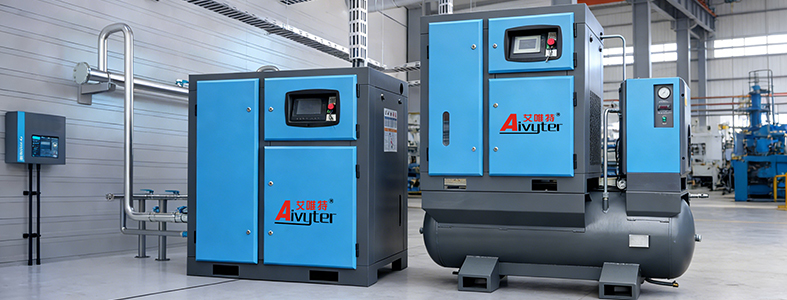
On remote mining sites, underground tunneling projects, or compact factory floors, every square meter of space and every minute of installation time carries a direct cost. Traditional compressed air systems require separate coolers, dryers, receivers, and pipework, creating dozens of potential leak points and demanding extensive civil works. The engineered alternative is an integrated screw air compressor, which combines airend, motor, oil system, aftercooler, moisture separator, and optionally an air receiver and dryer into a single, sound-attenuated enclosure. This article provides a component-level analysis of integrated rotary screw technology, focusing on field performance in harsh environments, lifecycle cost advantages, and selection criteria for project managers. Aivyter has supplied more than 1,200 integrated compressor units to civil engineering contractors and mine operators across Southeast Asia, Africa, and South America, with documented reductions in installation downtime of up to 85% compared to decentralized systems.
1. What Defines an Integrated Screw Air Compressor?
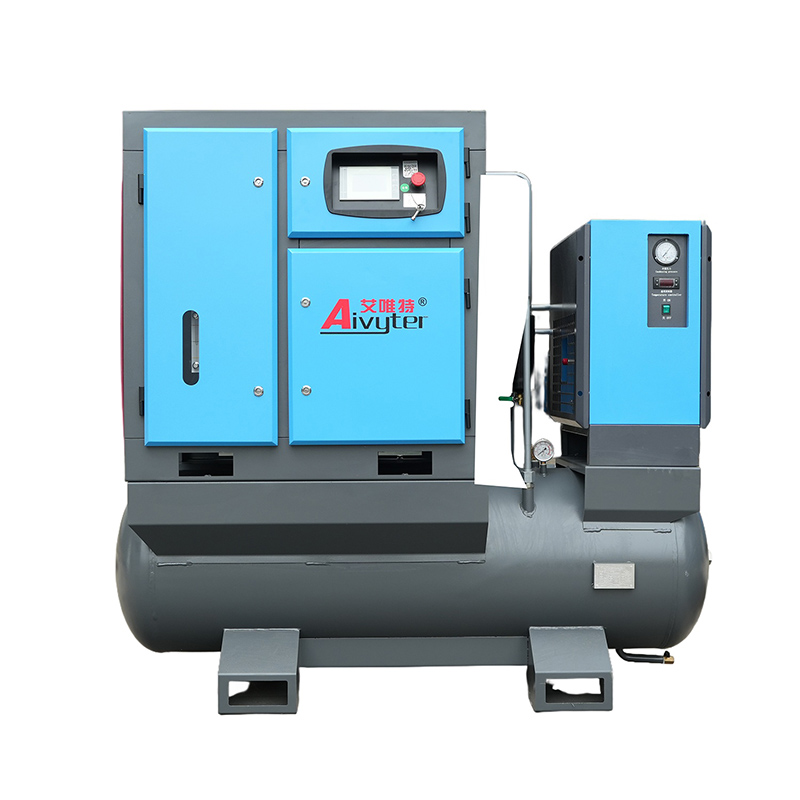
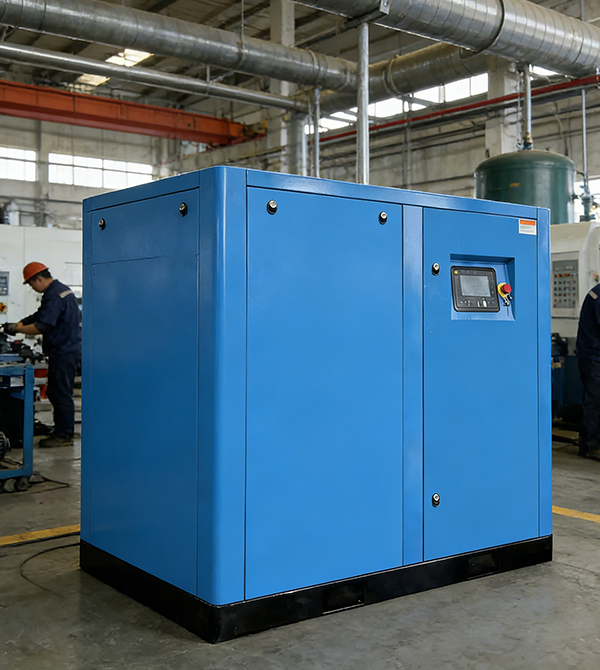
An integrated screw air compressor is not merely a standard compressor placed inside a canopy. True integration involves engineering all auxiliary components into a single structural skid or frame, with pre-piped connections for power, air outlet, and condensate drain. Key subsystems include:
- Direct-coupled or gear-driven airend – Optimized rotor profiles for either low pressure (2-5 bar) or standard pressure (7-13 bar). Integrated units often use IE4 or IE5 permanent magnet motors to reduce cabinet size and heat dissipation.
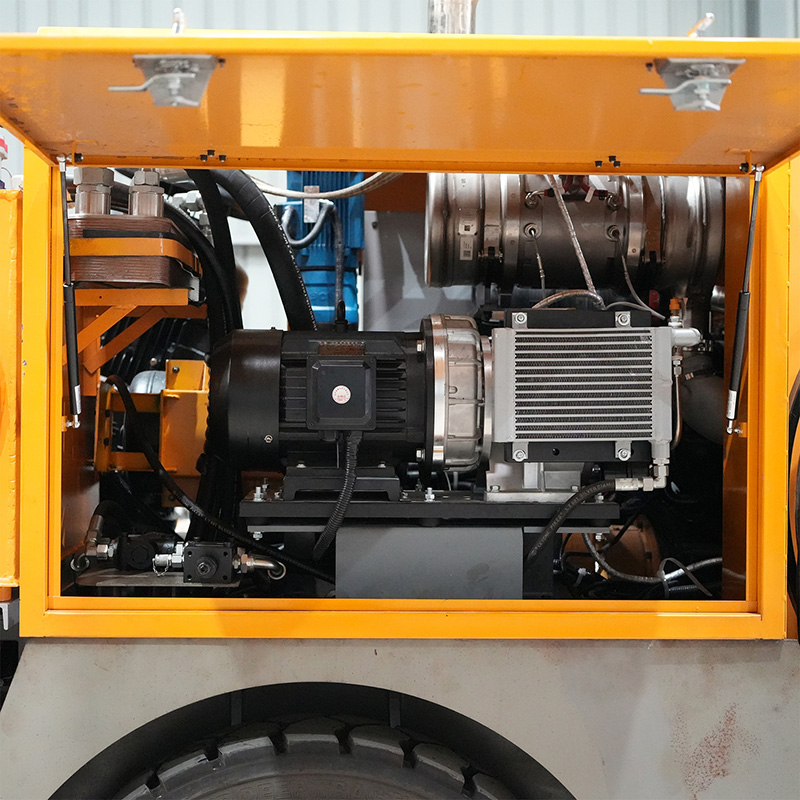
- Compact oil separation & cooling module – Brazed plate oil coolers and stackable aftercoolers arranged vertically to minimize footprint. Cooling fans with variable speed maintain stable discharge temperatures even at 50°C ambient.
- Built-in moisture separation and auto drains – Eliminates external water separators and reduces corrosion risks in downstream piping.
- Smart controller with remote telemetry – Touchscreen HMI, run hours, service alerts, and optional modem for fleet management.
Compared to a conventional “compressor + dryer + tank” layout, a properly designed integrated screw air compressor reduces total installed pressure drop by 0.3–0.5 bar by eliminating interconnecting hoses and their fittings. For a 250 kW system operating 6,000 hours/year, this saving translates to approximately 90,000 kWh annually.
2. Critical Applications Across Heavy Industry
The inherent mobility and rapid deployment capability of integrated compressors make them the preferred choice for several demanding sectors.
2.1 Tunnel Boring & Underground Mining
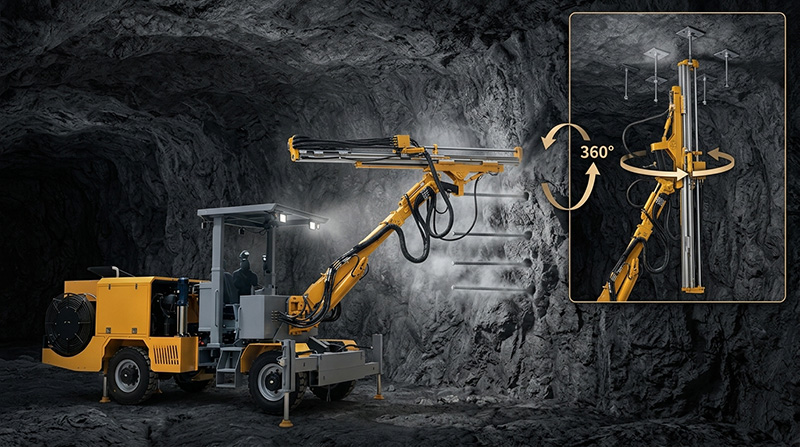
Drilling jumbos, shotcrete robots, and ventilation doors require compressed air at 6–7 bar, but space inside a tunnel heading is extremely limited. An integrated screw air compressor can be mounted on a rail bogie or a dedicated service vehicle, with sound level below 85 dBA to comply with confined space safety regulations. For example, a hydraulic tunnel project in the Himalayas used four 132 kW integrated units positioned at 200-meter intervals, eliminating 1.8 km of large-diameter air mains and reducing leakage from an estimated 22% to only 7%.
2.2 Construction & Civil Engineering Works
Road construction, piling, and bridge rehabilitation often require temporary compressed air for pneumatic tools (breakers, vibrators, and pumps). Mobile integrated screw air compressors with towable undercarriages dominate this segment. Key features include:
- Tow bars with overrun brakes, suitable for highway towing up to 80 km/h.
- Galvanized steel canopy with lockable access doors to prevent vandalism and theft.
- Integrated fuel tank (for diesel-driven versions) or junction box with long power cable (electric).
- Cold start preparation down to -15°C with electric oil heaters.
2.3 Distributed Factory Air Networks
Large manufacturing plants sometimes prefer decentralized compressed air generation instead of one central plant with extensive ring mains. By placing an integrated screw air compressor near high-demand zones (e.g., painting lines, robotic cells, blow-molding machines), plant engineers avoid pressure losses and reduce the required pipe diameter. A beverage plant in Vietnam replaced a single 355 kW central compressor with six 55 kW integrated units located near individual production halls, cutting compressed air energy cost by 18% and improving redundancy.
2.4 Rental & Emergency Backup Fleets
Equipment rental companies favor integrated designs because they can be transported on a single flatbed, require only a single electrical or fuel connection, and have low sound emissions for night-time works. A standard rental integrated screw air compressor will include lifting lugs, forklift pockets, and EG (environmental) bunded base to contain any oil leaks.
3. Technical Deep Dive: Avoiding Design Compromises
While integration offers many benefits, poor design can lead to overheating, difficult maintenance access, and short component life. Professional engineers evaluate an integrated screw air compressor based on the following technical parameters:
- Airflow path & pressure drop – Each integrated component (cooler, separator, dryer) should be matched in size. Pressure drop across the integrated after-treatment package should not exceed 0.2 bar at full load. Anything higher suggests undersized valves or piping bends.
- Cooling air management – The axial fan must pull ambient air through the oil cooler, aftercooler, and motor cooling channels in a single pass, then exhaust upward or sideways without recirculation. A well-designed integrated unit will have a temperature rise across the cooler of ≤12°C at rated conditions.
- Access for service – Oil filler, dipstick, oil filter, air filter, and separator element should be reachable without removing large panels. Hinged doors with 90-degree opening and tool-less latches are standard on premium designs.
- Vibration isolation & piping flexibility – Braided stainless steel hoses between the compressor package and external air net prevent transmitted vibration. Rubber antivibration mounts under the skid reduce structure-borne noise.
Aivyter’s engineering team uses computational fluid dynamics (CFD) to optimize internal airflow and thermal gradients in its integrated screw compressor range, ensuring that the electronic controller never exceeds 65°C even at full load in 45°C ambient conditions.
4. Industry Pain Points and Engineered Solutions
Based on feedback from maintenance managers at 45 mine sites and construction contractors, four recurring issues dominate dissatisfaction with integrated compressors. Each problem has a proven engineering countermeasure.
- Pain point: Restricted cooling due to dust clogging – Integrated units working near crushers or asphalt plants experience rapid clogging of cooler fins. Solution: Reversible fans that automatically reverse direction every 8 hours of operation, or remote-mounted pre-filters with differential pressure alarm. Aivyter offers self-cleaning cyclonic pre-screens as an option for high-dust applications.
- Pain point: Oil degradation from high sump temperatures – When the oil cooler and aftercooler share a single pass, oil may not cool sufficiently. Solution: Separate oil and air cooling circuits with dedicated fan speed control. On the latest integrated screw air compressor designs, the oil thermostat maintains viscosity between 70–80°C, extending synthetic oil life to 8,000 hours.
- Pain point: Difficult access to replace separator element – Many low-cost integrated units locate the oil separator inside the airend housing, requiring partial disassembly. Solution: Swing-out oil separator lid with clamps, and a service hatch on the canopy side. Best-in-class designs allow separator replacement in under 30 minutes by one technician.
- Pain point: Corrosion in integrated receiver tanks – If the air receiver is integrated into the base frame, condensate accumulation corrodes the steel. Solution: Epoxy-coated internal surfaces with automatic timed drains and manual blowdown valve. Some designs use stainless steel receivers for applications with aggressive condensation (e.g., high humidity, chemical plants).
A controlled test at a Malaysian quarry comparing a generic integrated unit against an Aivyter integrated screw air compressor showed a 46% longer oil change interval (3,200 hours vs. 2,200 hours) due to better thermal management and lower dirt ingestion.
5. Energy Efficiency Features & VFD Integration
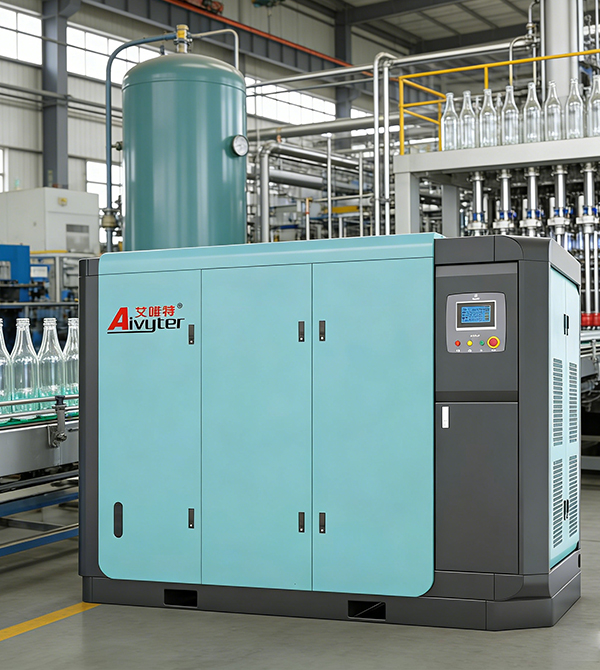
Fixed-speed integrated compressors still dominate the rental market, but for permanent installations, variable frequency drive (VFD) equipped integrated units offer substantial savings. A VFD-driven integrated screw air compressor maintains pressure within ±0.1 bar by adjusting motor speed instead of loading and unloading. Specific features include:
- Permanent magnet synchronous motor (PMSM) – Up to IE5 efficiency (97.5% at 70% load), smaller frame size, and lower heat rejection into the enclosure.
- Load-sensing cooling fan – The cooling fan speed tracks oil temperature, reducing parasitic power consumption by up to 40% during light load or night operation.
- Automatic sleep mode – After 10 minutes of no air demand, the VFD stops the motor, and restarts on pressure drop to 0.5 bar below setpoint. This eliminates wasteful idling (which can account for 15–25% of runtime on fixed-speed units).
- Energy consumption dashboards – Integrated power meter with kWh, running hours loaded/unloaded, and specific energy (kW per m³/min). Data export via Modbus to plant SCADA.
Field data from a precast concrete plant in Indonesia: replacing two 110 kW fixed-speed compressors with a single 160 kW VFD integrated screw air compressor saved 312,000 kWh annually, equivalent to 157 metric tons of CO₂ emissions, with payback of 11 months.
6. Total Cost of Ownership Analysis (5-Year Horizon)
Engineering and procurement managers should look beyond initial purchase price. A detailed TCO comparison for a 75 kW unit operating 5,000 hours/year with electricity at $0.11/kWh:
| Cost component | Conventional separate system | Integrated screw air compressor |
|---|---|---|
| Capital equipment (compressor, dryer, receiver, piping) | $22,500 | $19,800 |
| Installation (civil, electrical, piping, labor) | $8,200 | $1,900 |
| Annual energy (specific power 6.8 vs 6.2 kW/m³/min) | $22,950 | $20,925 |
| Annual maintenance (filters, oil, separators, belts) | $3,200 | $2,700 |
| Leakage cost (estimated 12% vs 7% due to extra connections) | $2,750 | $1,600 |
| 5-year total ownership cost | $180,900 | $150,825 |
The integrated design provides a 16.7% lower TCO over five years, primarily driven by reduced installation and leakage costs. For mobile applications or sites with frequent relocation, the advantage is even larger.
7. Selecting an Integrated Screw Air Compressor: Technical Checklist
When evaluating proposals, request the following documentation and features from your supplier, including Aivyter or other reputable manufacturers:
- ISO 1217 Annex C performance curves showing power and flow at different discharge pressures and ambient temperatures.
- Sound level report (ISO 2151) at 1 meter, 7 meters, and 30 meters – for mining, require ≤80 dBA at 7 m.
- Service access dimensions: minimum gap required around each side for major service operations (oil separator change, cooler cleaning).
- Altitude derating table – for sites above 1,500 m, verify that the cooling system has sufficient margin.
- Approved lubricants list: mineral, semi-synthetic, or full synthetic (PAO) – synthetic is mandatory for extended drain intervals and low-temperature start.
- Integrated dryer type and dew point: select a refrigerated dryer (+3°C PDP) for general industrial, or desiccant dryer (-40°C PDP) for outdoor winter operations or instrument air.
Frequently Asked Questions (FAQ) – Integrated Screw Air Compressor
Q1: What is the main advantage of an integrated screw air compressor over a traditional setup with separate dryer and tank?
A1: The primary advantages are reduced footprint (typically 40–60% less floor space), lower installation cost because no interconnecting piping is required, fewer leak points, and faster deployment. A packaged integrated screw air compressor can be connected to power and air outlet within a few hours, whereas a conventional system may take days to install and test.
Q2: Can an integrated screw compressor be used for intermittent duty cycles, such as powering impact tools on a construction site?
A2: Yes, but you must select a unit designed for heavy start/stop cycles. Standard integrated units with direct-on-line starting should be limited to 6–8 starts per hour. For frequent intermittent use, choose a model with a soft starter or VFD, and an adequately sized integrated air receiver (typically 10–20% of free air delivery per minute) to absorb demand peaks. Aivyter offers a “construction grade” integrated compressor with a reinforced receiver and thermal overload protection rated for 30 starts per hour.
Q3: How do I maintain proper cooling when the integrated compressor is placed inside a container or a confined equipment room?
A3: The integrated unit’s cooling fan must have unobstructed intake and exhaust. For confined spaces, you need to install ducting that separates intake and discharge air, or use a remote cooling package. Many integrated screw air compressor models can be factory-fitted with flanged cooling outlets for direct connection to external ducting. Ensure the room ventilation rate is at least 1.5 times the compressor’s fan flow to avoid recirculation.
Q4: What is the typical service life of the integrated airend, and are replacement parts available for older generations?
A4: With proper maintenance using genuine filters and oil, a rotary screw airend in an integrated package should last 50,000–70,000 hours (approximately 10–12 years at single shift operation). Reputable manufacturers provide spare parts (separator elements, rebuild kits, bearings) for at least 15 years after a model’s discontinuation. Avoid “no-name” integrated units where the airend is proprietary and cannot be rebuilt locally.
Q5: Can I upgrade a fixed-speed integrated compressor with a VFD later?
A5: Retrofitting a VFD to an existing integrated compressor is possible but not always economical. The motor must be inverter duty (insulation class F or H, with separate cooling fan). Additionally, the controller software needs to be reprogrammed. It is almost always better to purchase a VFD-ready integrated screw air compressor from the factory, as the piping, transducers, and cooling fan are designed for variable speed operation from the start. Aivyter’s VSD integrated series includes an EMC filter and sine-wave filter as standard.
Conclusion & Request a Site-Specific Proposal
The modern integrated screw air compressor represents a shift toward leaner, more resilient compressed air architectures. For mining contractors, civil engineers, and plant operators who face space constraints, frequent relocation, or high leakage rates, an integrated design delivers measurable reductions in capital and operating expenses. From rotor profile optimization to smart remote monitoring, today’s integrated units close the gap between mobility and industrial-grade durability.
Aivyter provides a complete selection of integrated screw compressors from 22 kW to 355 kW, with optional integrated refrigerated or desiccant dryers, silver or epoxy-coated receivers, and Class 0 oil-free variants for sensitive processes. Our application team can perform an on-site or virtual audit to calculate exact payback and recommend the optimal package for your specific flow, pressure, and ambient conditions.
▶ Request your custom proposal now: Send project details to Aivyter’s industrial division →
For immediate assistance, contact [email protected] with your required FAD (m³/min), operating pressure, and duty cycle (continuous/intermittent). You will receive a technical datasheet, dimensional drawing, and a guaranteed TCO estimate within 48 hours.
about
Aivyter
We provides trusted air compressors and mining equipment, engineered for durability, efficiency, and demanding industrial applications.