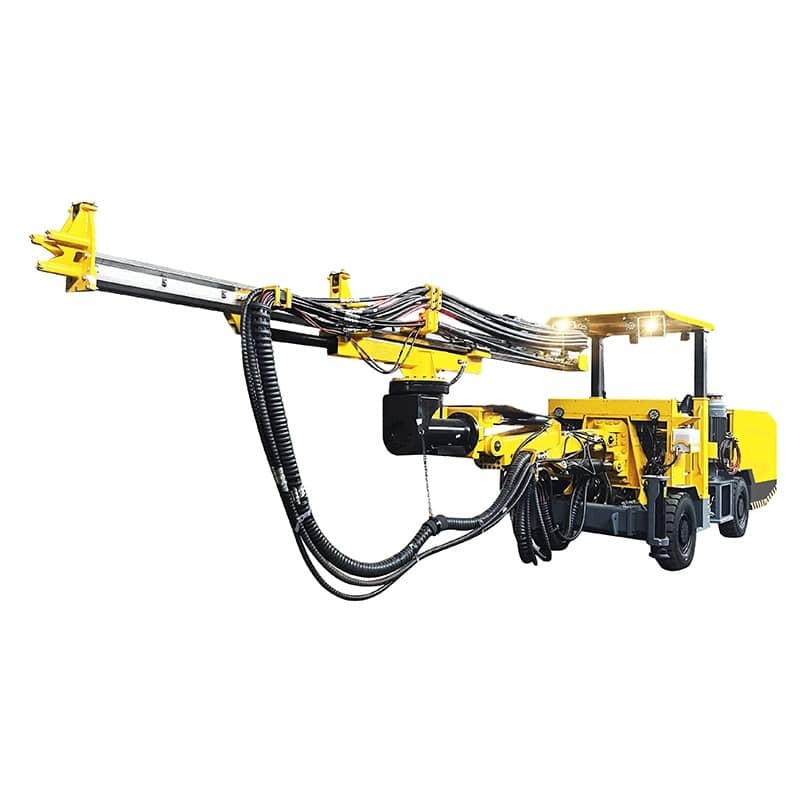
Subterranean engineering demands high structural integrity, mechanical reliability, and precision. Excavating tunnels, extracting mineral resources, and constructing underground infrastructure require specialized machinery capable of penetrating dense geological formations under intense stress. Among these machines, the drilling system serves as the primary tool for creating blast holes, installing rock reinforcement, and facilitating geological exploration.
Modern excavation processes rely heavily on mechanized systems that combine hydraulic power, advanced positioning, and robust structural designs. Manufacturers like Aivyter design equipment engineered to meet these rigorous demands, ensuring high mechanical availability in the most challenging mining environments. Achieving efficient penetration requires a deep understanding of rock mechanics, hydraulic transmission, and structural fatigue.
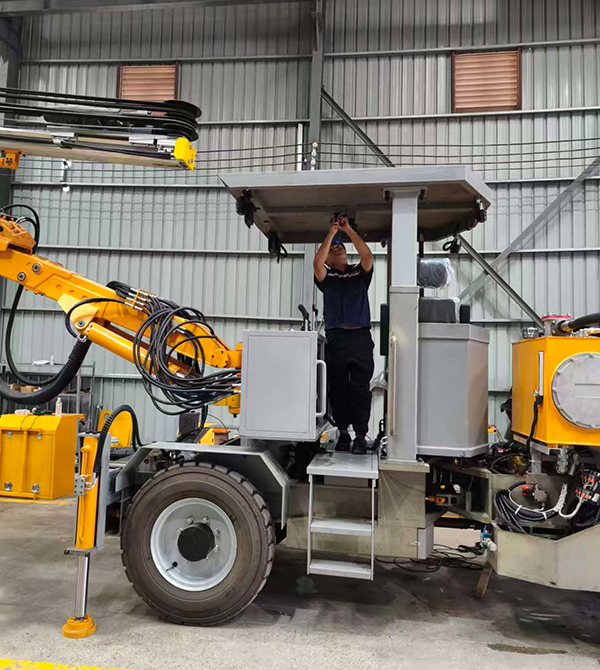
Mechanical Anatomy of Subterranean Drilling Equipment
To understand the performance of a modern underground drill, one must analyze its primary mechanical components. These assemblies work in unison to convert hydraulic energy into physical fracture energy, allowing steel drill bits to shear, crush, and penetrate solid rock faces.
The Hydraulic Drifter
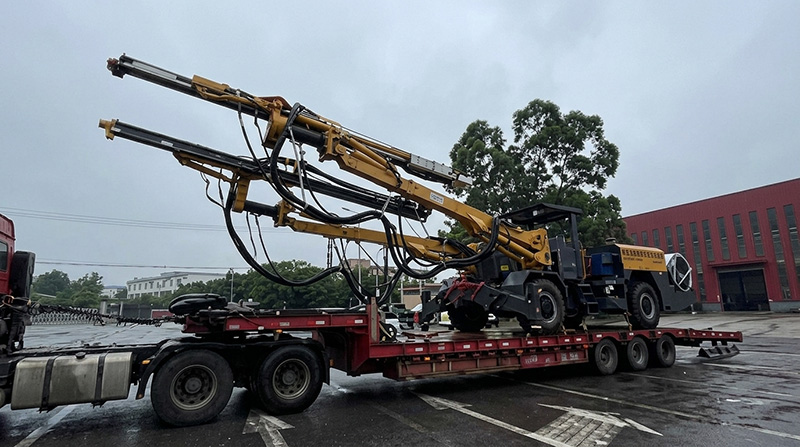
Often referred to as the rock drill, the drifter is the heart of the machine. It operates by delivering high-frequency percussive impacts to the drill string while simultaneously providing rotational torque. The percussive piston, driven by pressurized hydraulic oil, strikes the shank adapter, transmitting a shockwave through the drill steel to the bit. This impact energy crushes the rock face, while the rotation motor turns the bit to present fresh rock surfaces for subsequent strikes.
The Feed Beam and Carriage System
The feed beam provides the thrust necessary to maintain constant contact between the drill bit and the rock. Fabricated from high-tensile steel or heavy-duty aluminum alloys, the feed beam must resist bending forces generated during operation. A hydraulic cylinder or motor-driven chain system advances the carriage along the beam, applying a controlled feed force. Proper balancing of feed force and percussive energy prevents the drill string from bending or binding within the borehole.
Heavy-Duty Booms and Positioning Mechanisms
Multi-directional booms allow operators to position the feed beam accurately across the working face. These booms feature parallel holding capabilities, meaning the feed beam maintains its angle relative to the tunnel axis even as the boom raises, lowers, or swings. This structural design ensures that blast holes are drilled parallel to each other, which is vital for controlled fragmentation and maintaining a uniform tunnel profile.
Geological Adaptability and Rock-Tool Interaction
Rock formations vary widely in hardness, abrasiveness, and structural integrity. Excavation machinery must adapt to these changing conditions to prevent premature component failure and maintain high penetration rates. Engineers classify rock formations using parameters such as Unconfined Compressive Strength (UCS) and Rock Quality Designation (RQD).
High-compressive-strength rock, such as granite or basalt, requires high percussion pressure and high-impact energy. Conversely, drilling in soft or highly fractured ground, such as shale or weathered sandstone, requires reduced percussive force but increased flushing volume to prevent the drill string from becoming trapped. Rotary speed must also be adjusted; abrasive rock requires slower rotation to minimize carbide wear on the drill bit, whereas non-abrasive, softer rock allows for higher rotational speeds to maximize drilling speed.
To manage these variables, advanced systems utilize anti-jamming valves. When the system senses an increase in rotational torque or a sudden drop in feed pressure—signals that the bit has entered fractured ground or a void—the hydraulic circuit automatically reverses the feed direction or reduces percussion pressure. This self-regulating mechanism prevents the drill string from seizing, protecting the internal components of the underground drill from severe mechanical stress.
Operational Modes: Development vs. Production Drilling
Underground heavy machinery is generally categorized by its specific operational application. While the core mechanical principles remain consistent, the configuration of the drilling rig differs based on whether the goal is horizontal tunnel development or vertical ore extraction.
- Face Drilling (Drifting): Used primarily for tunnel development and mine access construction. The equipment utilizes horizontal booms to drill precise patterns of blast holes into a vertical rock face. This application requires high positioning accuracy to ensure the excavated tunnel conforms strictly to civil engineering designs.
- Production Drilling (Long-Hole Drilling): Deployed in stoping operations where large volumes of ore are broken at once. These rigs utilize rotary or heavy percussive drills to create long, deep holes, often in radial or parallel patterns, extending up to 40 meters or more. Maintaining hole straightness over these distances is a primary engineering challenge.
- Rock Bolting and Support: Designed to install mechanical or grouted bolts into the tunnel roof and walls. These specialized rigs secure unstable rock strata, ensuring the structural stability of the excavated opening.
Selecting the appropriate machine configuration directly influences the speed of the excavation cycle. Modern engineering operations often deploy specialized fleets where each unit is tailored to one of these specific functions, maintaining a continuous workflow from blasting to hauling.
Hydraulic Systems and Power Transmission
The performance of a mechanized underground drill depends on the efficiency of its hydraulic system. High-pressure variable displacement pumps deliver hydraulic oil to the various actuators, drifters, and positioning cylinders. Because these systems operate in confined, poorly ventilated environments, thermal management is a vital design focus.
Underground machines utilize water-cooled or heavy-duty air-cooled heat exchangers to keep hydraulic oil within its optimal viscosity range. If the oil temperature rises too high, lubrication properties degrade, leading to accelerated wear of internal valves and seals. Heavy-duty mining equipment developed by manufacturers like Aivyter incorporates sophisticated filtration circuits to remove fine rock dust and metallic wear debris from the hydraulic fluid, preserving system reliability.
Furthermore, the transition toward electro-hydraulic power systems has altered underground operations. While a diesel engine typically drives the machine during tramming (movement between sites), an electric motor plugged into the mine’s electrical grid powers the hydraulic pumps during drilling. This design significantly reduces diesel exhaust emissions and heat generation within the working face, improving subterranean working conditions.
Precision Drilling Control and Automation
The integration of digital control systems has elevated the precision of underground excavation. Modern drilling rigs utilize sensors to monitor drilling parameters in real-time, adjusting variables such as feed force, torque, and impact energy dynamically. This level of automation reduces the reliance on manual operator skill and provides consistent results across shifts.
Positioning systems now employ electronic sensors and angle indicators on the booms to guide operators to the exact coordinates of each planned blast hole. Some systems allow for fully automated drilling sequences, where the machine automatically drills a hole to the pre-programmed depth, performs flushing, retracts the steel, and moves to the next point in the drilling pattern. This precision minimizes overbreak (excavating more rock than intended) and underbreak (leaving excess rock that restricts access), streamlining the subsequent loading and hauling processes.
Consult with Our Engineering Team
Selecting the correct excavation equipment requires a thorough evaluation of geological conditions, excavation dimensions, and operational requirements. Aivyter provides engineered machinery designed to withstand the harsh realities of subterranean mining and tunneling. For detailed structural specifications, application support, or equipment procurement, please submit your technical requirements through our inquiry system. Our engineering specialists are prepared to collaborate with your team to deliver robust equipment solutions tailored to your operational needs.
Frequently Asked Questions
Q1: What are the primary differences between rotary and percussive drilling in underground excavation?
A1: Percussive drilling combines rapid impacts with rotation, making it highly effective for cutting through hard, brittle rock formations where crushing action is required. Rotary drilling, on the other hand, relies purely on high thrust and rotational torque to shear through softer, less abrasive formations, such as coal or soft shale, without the need for impact forces.
Q2: How does flushing influence the lifespan of an underground drill bit?
A2: Flushing introduces water or air through the center of the drill steel to clear rock cuttings from the bottom of the borehole. Efficient flushing prevents these cuttings from being re-drilled, which would otherwise cause severe frictional heat, abrasive wear, and rapid degradation of the tungsten carbide buttons on the bit.
Q3: What parameters determine the selection of a single-boom versus a multi-boom face jumbo?
A3: The selection depends on tunnel dimensions and the required cycle time. Single-boom units are suitable for small-section tunnels and narrow-vein mining where space is restricted. Multi-boom rigs are deployed in larger civil engineering tunnels and massive mine headings to drill multiple holes simultaneously, reducing the overall excavation cycle time.
Q4: How do modern underground drills manage deviation in long-hole drilling?
A4: Hole deviation is managed through rigid guide systems, stabilized tube drilling strings, and precise electronic positioning sensors. Using guide tubes instead of standard rods increases the bending stiffness of the drill string, ensuring that the hole remains straight over distances exceeding 30 meters.
Q5: Why is electro-hydraulic power preferred over pure diesel power during drilling operations?
A5: Electro-hydraulic systems run on electric power sourced from the facility’s grid during drilling, which eliminates diesel exhaust emissions in confined underground chambers. This system also generates less heat and noise compared to diesel engines, creating a safer and more manageable working environment while utilizing a more stable power source.
about
Aivyter
We provides trusted air compressors and mining equipment, engineered for durability, efficiency, and demanding industrial applications.