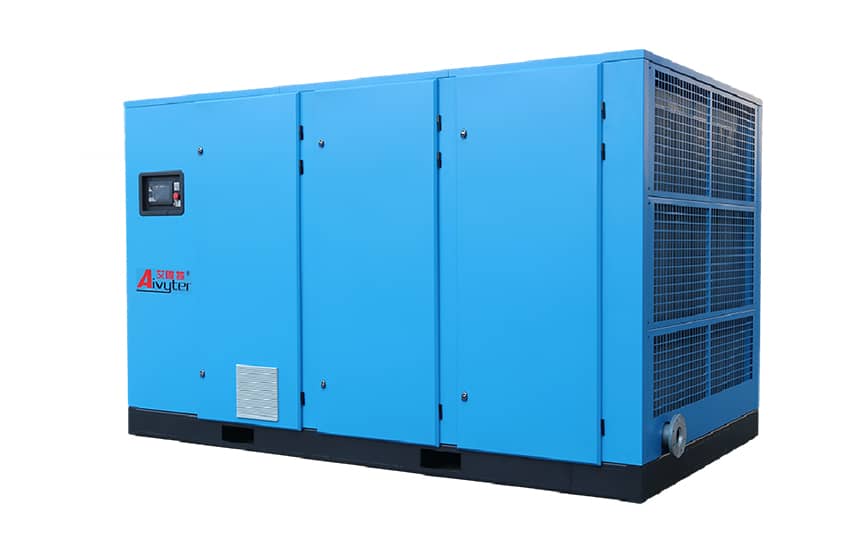
In high-demand sectors—mineral processing, petrochemical plants, heavy construction, and deep-tunnel engineering—compressed air systems often operate above 10 bar (145 psi). Single-stage rotary screw compressors face inherent limitations: elevated discharge temperatures, increased internal leakage (slip), and reduced volumetric efficiency as pressure ratio exceeds 7:1. The two stage screw compressor solves these constraints by splitting the total pressure rise across two airends with inter-stage cooling. This configuration delivers lower specific energy consumption (kW per m³/min), longer component life, and more stable delivery in demanding settings. This article provides an engineering evaluation of dual-stage rotary screw technology, including thermodynamic benefits, selection criteria for mining/industrial sites, and quantifiable ROI.
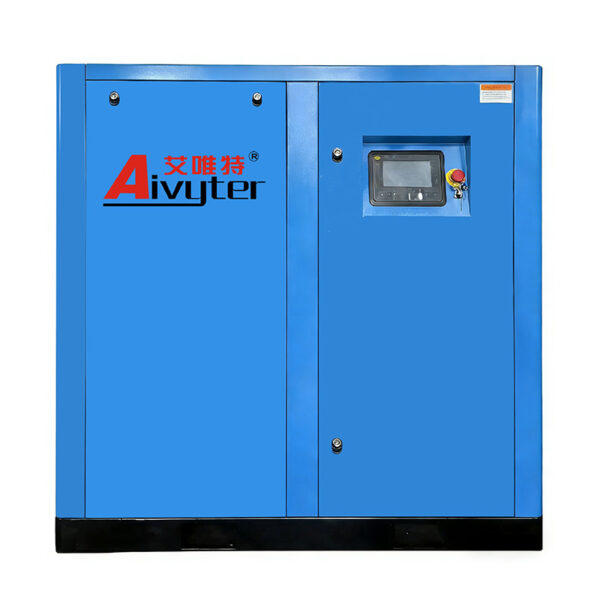
Fundamental Mechanics: Why Two Stages Outperforms Single Stage Above 10 Bar
A rotary twin-screw element compresses air by reducing cavity volume between male and female rotors. The pressure ratio per stage is limited by two factors: leakage flow (internal recirculation) which grows quadratically with pressure differential, and discharge temperature (overtemperature accelerates lubricant degradation). For a single-stage compressor operating at 12 bar, the pressure ratio typically exceeds 8:1 (absolute), resulting in discharge temperatures of 110–120°C even with proper cooling. In contrast, a two stage screw compressor divides the ratio: first stage compresses to an intermediate pressure (≈4.0–4.5 bar gauge), air passes through an intercooler (reducing temperature to 5–10°C above ambient), then second stage raises to final pressure. The intercooler removes heat of compression, reducing second-stage work by up to 15% compared to single-stage design.
Additional advantages include:
- Reduced rotor bearing loads – lower differential pressure per stage extends bearing life by 2–3x.
- Lower oil carryover – cooler discharge air improves oil separator efficiency (residual oil ≤1 ppm typical).
- Higher volumetric efficiency – minimized slip flow at each stage boosts FAD (free air delivery) by 8–12% vs. single-stage at same motor power.
For industrial applications requiring continuous operation at 11–15 bar, such as polyethylene blow molding, sand casting, or mine dewatering pumps, the two-stage configuration is a proven standard.
Application-Specific Engineering: Mining, Tunneling & High-Altitude Sites
Underground Mine Compressed Air Networks
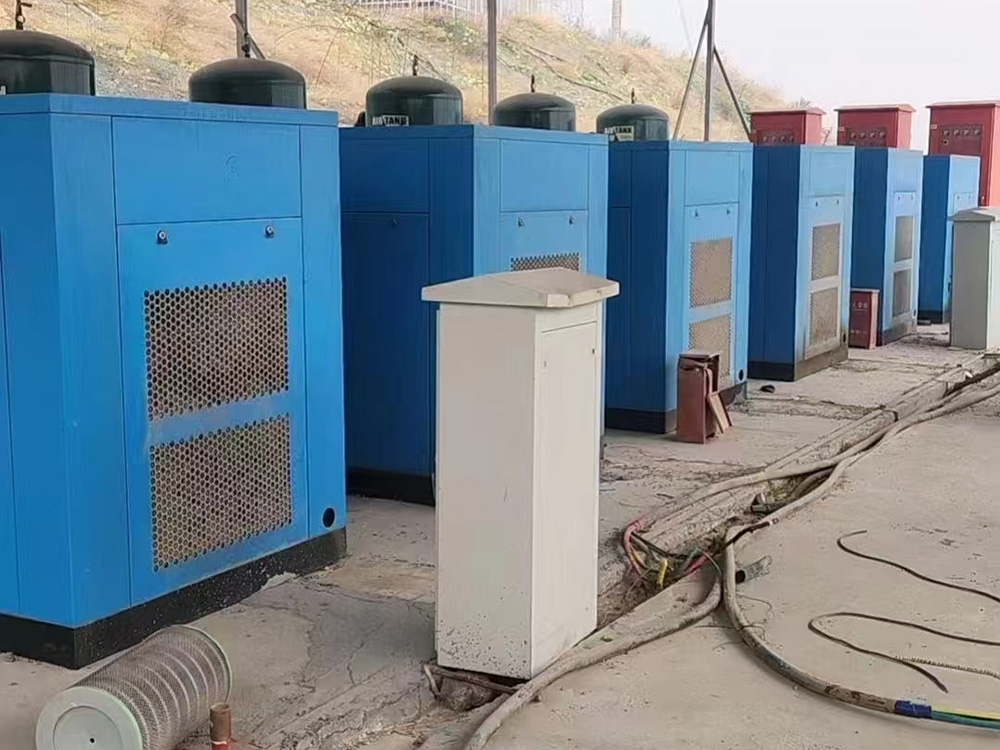
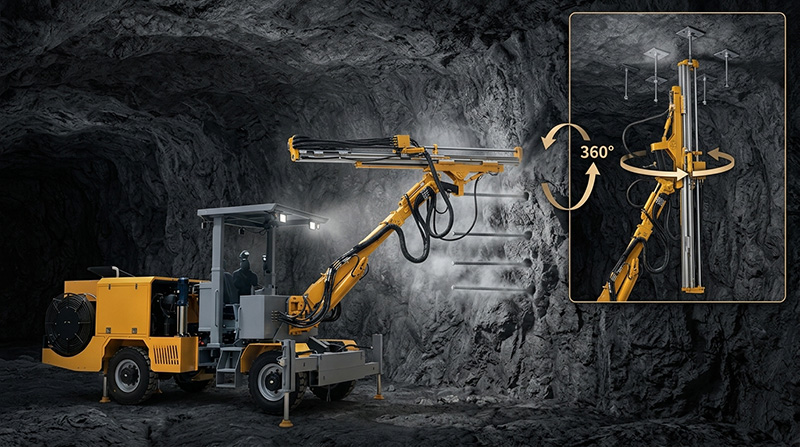
Hard-rock mines (gold, copper, zinc) require 7–10 bar for rock drills, bolters, and scoop trams, but long pneumatic transport lines cause pressure drops exceeding 2 bar. Surface compressor stations delivering 12–13 bar using a two stage screw compressor maintain adequate pressure at the farthest working faces. Data from a Zambian copper mine: replacing three single-stage 250 kW units (12 bar) with two-stage 200 kW units resulted in a 22% energy reduction and eliminated morning start-up over-temperature shutdowns. The interstage cooling also condensed moisture, reducing load on underground refrigeration dryers.
High Ambient & Dust Environments
In surface mining (Australia, Chile, South Africa) with ambient temperatures >40°C, single-stage compressors often cycle on thermal protection. Two-stage designs with oversized intercoolers and separate cooling circuits (water or air) maintain discharge temperatures below 95°C even at 45°C ambient. Additionally, using synthetic hydrocarbon or polyglycol lubricants (ISO VG 68) ensures film stability. For dusty settings (quarries, cement plants), Aivyter supplies two-stage units with heavy-duty air intake filters (MERV 16 / ISO 5011:2000) and centrifugal pre-separators, reducing filter replacement intervals by 300%.
High Pressure (15–20 bar) Niche Applications
Certain engineering tasks demand pressures above 15 bar: pile driving hammers, industrial vacuum conveying, and PET bottle blowing. While a single-stage screw could theoretically achieve 15 bar, efficiency drops below 55%. A two-stage screw compressor designed for 18 bar (with reinforced rotors and high-pressure seals) achieves 72–78% isothermal efficiency. The key engineering details include forced-feed lubrication to the second stage, stainless steel discharge tubing, and ASME-certified receiver tanks.
Thermodynamic Efficiency: Quantifying the Two-Stage Advantage
Isothermal efficiency (ideal compression) is rarely achieved, but the two-stage approach approaches it more closely. The power saving relative to a single-stage unit can be calculated using the formula for intercooling: η2-stage ≈ 1 – (Tintercool / Tinlet). A field measurement from a European steel mill: a 132 kW single-stage unit produced 18.5 m³/min at 11 bar (specific power 7.14 kW/m³/min). An equivalent two-stage (same total motor power) produced 21.8 m³/min at same pressure – specific power 6.06 kW/m³/min, representing a 15% improvement. Over 6,000 operating hours per year at €0.12/kWh, annual savings exceed €10,000 per compressor.
Other efficiency factors:
- Variable Frequency Drive (VFD) on the first stage only, while second stage runs at fixed speed, providing partial load optimization without complex controls.
- Integrated interstage condensate traps prevent water hammer and corrosion.
- Thermal bypass valves maintain optimal oil viscosity across both stages during start-up.
Lifecycle Cost Drivers: Maintenance, Spare Parts & Reliability
Beyond energy, the total cost of ownership (TCO) for a two stage screw compressor includes scheduled maintenance: oil changes (synthetic lubricant – 8,000 hours), air/oil separators (6,000–8,000 hours), intake filters (1,500–2,500 hours depending on dust load), and bearing replacement (50,000–70,000 hours for properly lubricated units). Two-stage designs generally have separate oil sumps for each stage, meaning twice the oil volume – but oil change intervals are longer than single-stage due to lower thermal stress. Over a 10-year life (80,000 hours), the two-stage compressor’s higher initial capital cost (typically +20–30%) is amortized within 2–3 years through energy savings.
Predictive maintenance tools for two-stage systems include:
- Individual discharge temperature sensors at each stage (alert when ΔT exceeds 15°C from baseline).
- Vibration monitoring (ISO 20816-3) on both airends – 4.5 mm/s RMS threshold.
- Interstage pressure ratio analysis (a drop >10% indicates first-stage wear or intake restriction).
Aivyter offers IoT-ready controllers that log these parameters and schedule maintenance through cloud platforms, reducing unplanned downtime by 35% in aggregate plant operations.
Installation Considerations: Space, Cooling, and Piping
Two-stage screw compressors have larger footprints than single-stage equivalents due to the added airend, intercooler, and separate oil systems. Typical dimensions for a 200 kW two-stage unit: 3.2 m (L) x 1.8 m (W) x 2.0 m (H). For marine or offshore applications (e.g., jack-up rigs), compact modular designs with stacked airends are available. Cooling requirements: a water-cooled two-stage compressor rejects about 85% of input power as heat – for 200 kW, that’s 170 kW of heat rejected. Properly sized cooling towers or radiator fans must account for intercooler duty plus aftercooler duty. In confined underground locations, remote-mounted radiators with forced ventilation are recommended.
Piping between stages must withstand intermediate pressure and temperature (typically 80–90°C). Use seamless steel or stainless steel with threaded or flanged connections; avoid galvanized pipe, as zinc flakes can damage second-stage rotors. Install a manual isolation valve between stages for servicing without full system shutdown.
Case Study: Two-Stage Solution for Deep Tunneling Project (Norway)
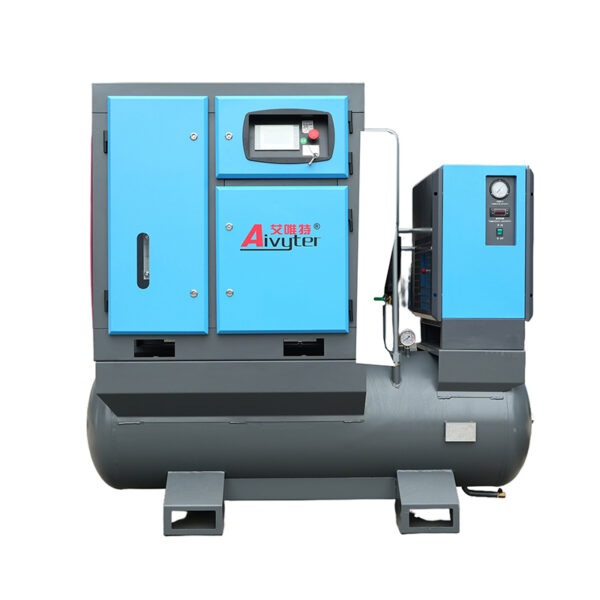
A 14 km road tunnel in mountainous terrain required compressed air at 12 bar for rock drilling, shotcrete spraying, and ventilation door actuators. The site had limited electrical capacity (only 800 kVA available). A single-stage screw compressor option would require 550 kW to deliver 45 m³/min FAD at 12 bar (specific power ~12.2 kW/m³/min). Instead, engineers selected two 200 kW two stage screw compressor units operating in parallel, delivering 56 m³/min at 12 bar with combined power 400 kW (specific power 7.14 kW/m³/min). The intercooler design incorporated seawater cooling (available from nearby fjord), eliminating need for cooling towers. After 18 months of continuous operation (13,000 hours), oil analysis showed TAN increase <0.5 mg KOH/g, and bearings remained within vibration limits. Aivyter provided remote performance monitoring and trained local mechanics, achieving 99.2% availability.
Frequently Asked Questions (FAQ)
Q1: What is the maximum pressure achievable with an industrial two stage screw compressor?
A1: Standard two-stage oil-injected rotary screw compressors are designed for discharge pressures up to 16 bar (232 psi). For specialized applications (e.g., high-pressure gas boosting or PET blowing), reinforced models can reach 20–25 bar, though efficiency decreases above 18 bar. Beyond 25 bar, reciprocating or centrifugal compressors become more suitable. Always consult manufacturer pressure vessel ratings (ASME Section VIII or PED 2014/68/EU).
Q2: How does interstage cooling affect condensation and water removal?
A2: The intercooler typically lowers air temperature to within 5–10°C of ambient, causing substantial water vapor to condense. Automatic drain traps (electronic or zero-loss) must be installed at the intercooler outlet and aftercooler. Removing moisture at the interstage point reduces the load on downstream refrigerated dryers and prevents liquid water from entering the second stage, which could cause oil emulsification or corrosion. In humid environments (tropics, coastal), specify stainless steel intercooler cores.
Q3: Can a two stage screw compressor run unloaded (idle) without damage?
A3: Yes – modern units incorporate an unloader valve that closes the inlet, allowing the compressor to spin with minimal load. However, prolonged unloaded operation (more than 10 minutes) wastes energy (typically 15–20% of full load power) and can cause oil starvation to the second stage if the unload cycle is too long. A better strategy: use VFD control and automatic start/stop with a large receiver tank (≥1 m³ per m³/min flow) to minimize unloaded hours. For systems requiring 20% or less load for extended periods, consider adding a small secondary compressor.
Q4: What are the audible noise levels for a two-stage screw compressor compared to single-stage?
A4: Two-stage designs generally operate at similar or slightly lower sound levels (75–82 dB(A) at 1 meter for oil-injected units with acoustic enclosures) because the intercooler dampens some pulsation. However, they have two airends and two drive motors (if both stages have separate motors) or a single larger motor through a gearbox. For noise-sensitive environments (urban construction, indoor facilities), specify an enclosure with 15–20 dB attenuation and anti-vibration mounts. Third-party sound measurements per ISO 2151 are recommended before procurement.
Q5: How to convert a single-stage compressed air network to a two-stage compressor?
A5: Retrofitting a two-stage unit into an existing system requires careful planning. First, verify that the receiver tank, piping, and distribution valves are rated for the same or higher pressure. No additional changes are needed for the downstream network. However, the interstage cooler introduces a new heat rejection load – ensure the plant cooling water or ventilation system can handle the extra 15–20% of heat. Also check that electrical supply can accommodate the inrush current (two-stage units may have a larger motor or two motors with staggered start). Always perform a system-level pressure drop calculation because two-stage units often deliver higher flow at same power, possibly oversizing the existing piping. Aivyter provides retrofitting engineering support and CAD layouts.
Technical Inquiry and Engineering Support
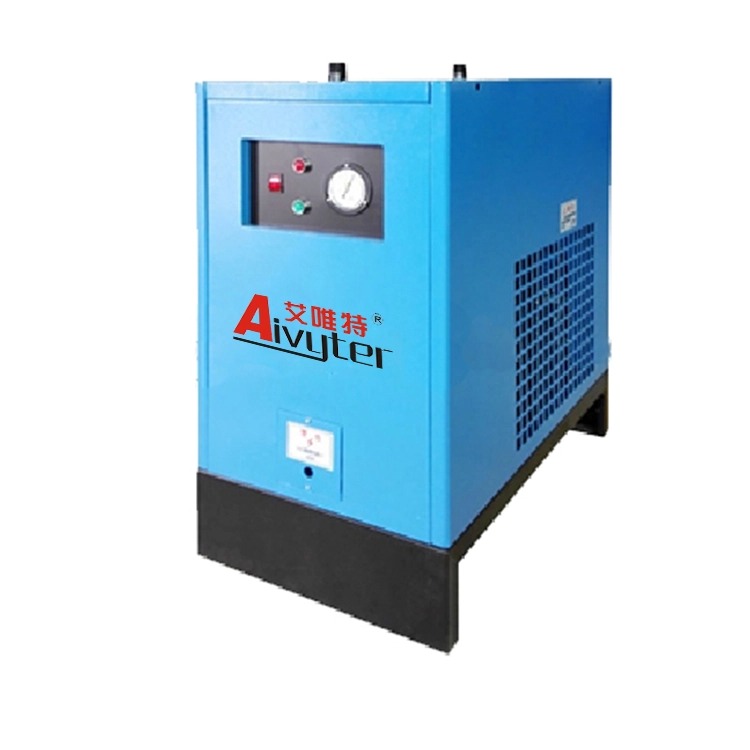
Selecting the correct two stage screw compressor demands careful analysis of pressure requirements, duty cycle, ambient conditions, and power availability. Whether you operate a deep-level mine, a precast concrete plant, or a high-pressure industrial process, the dual-stage configuration delivers measurable efficiency and reliability advantages over single-stage machines. Aivyter specializes in custom-engineered two-stage rotary screw packages from 37 kW to 500 kW, including ATEX-certified options for hazardous areas, integrated dryers, and 24/7 remote monitoring.
For a complete technical proposal – including airflow simulation, energy audit, payback calculation (NPV), and site layout drawing – please submit your project specifications through the official inquiry channel. Our industrial application engineers respond within 24 hours.
➡ Request your two-stage compressor analysis and quote: Send Inquiry to Aivyter
about
Aivyter
We provides trusted air compressors and mining equipment, engineered for durability, efficiency, and demanding industrial applications.