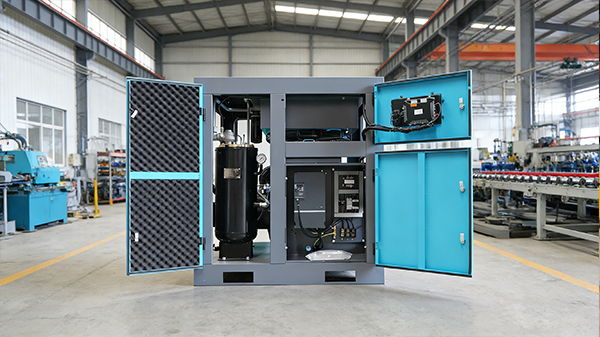
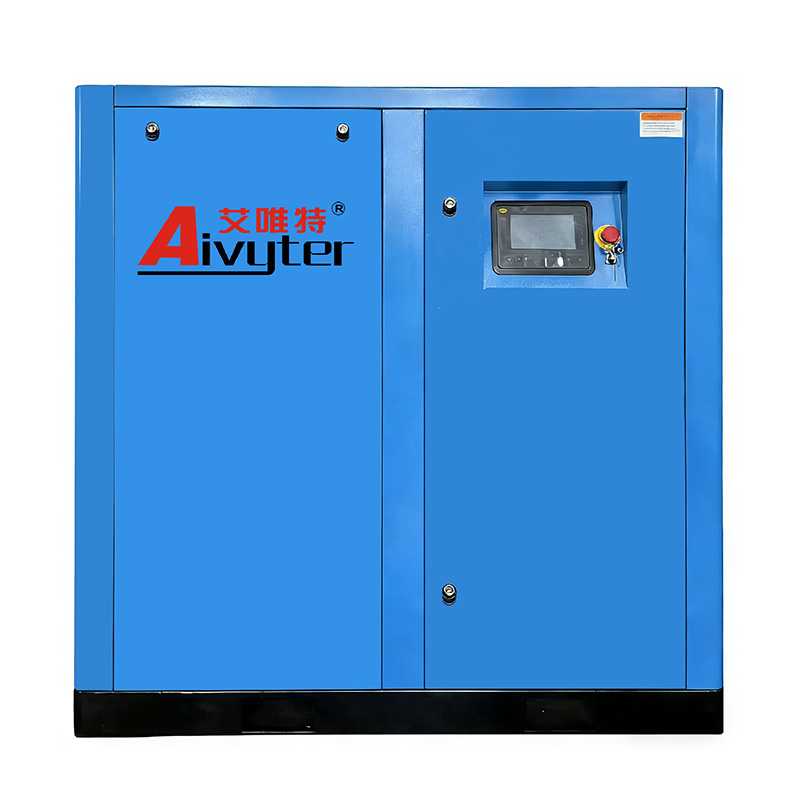
For procurement managers in mining, tunneling, and large-scale construction, acquiring a rotary screw compressor involves evaluating multiple technical parameters that directly influence the equipment’s capability and long-term suitability. The screw compressor price reflects not just a single number but a combination of engineering choices: air-end design, motor efficiency class, integrated drying and filtration stages, control intelligence, and site-specific adaptations for dust, humidity, or extreme temperatures.
This article provides a structured analysis of the technical elements that determine a screw compressor price for industrial applications. We examine how specification choices—from displacement volume to pressure dew point requirements—affect the final equipment configuration. Understanding these factors enables better alignment between purchase decisions and operational demands.
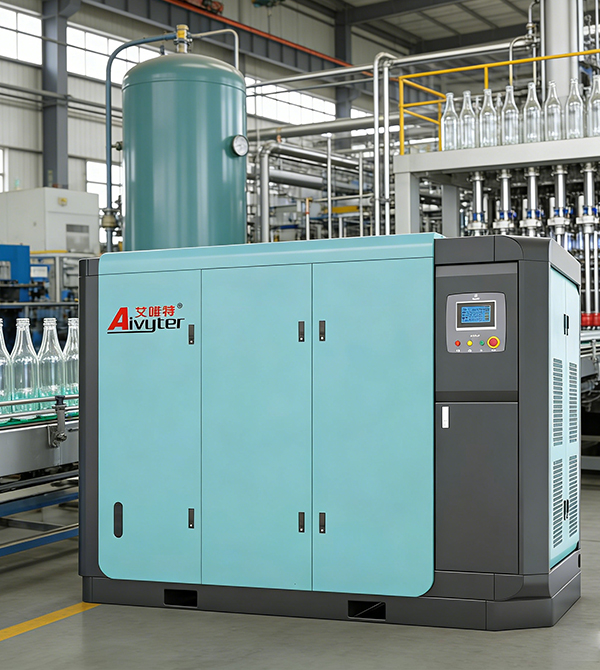
Core Technical Factors That Influence Screw Compressor Price
When engineering teams request quotes for a rotary screw compressor, the following parameters are primary screw compressor price differentiators:
- Free air delivery (FAD) and rated pressure: Compressor size measured in m³/min or cfm at a given discharge pressure (typically 7, 10, or 13 bar). Higher FAD requires larger air-ends, motors, and cooling systems. Pressure capability influences material thickness and sealing technology — 13 bar units use heavier rotors and bearings than 7 bar equivalents.
- Drive type: fixed speed vs. variable speed drive (VSD): Fixed-speed compressors use simple induction motors and star-delta starters. VSD units include a frequency converter, EMC filters, and special motor winding insulation. The VSD option adds components but enables flow modulation between 25-100% of rated capacity.
- Motor efficiency class: IE3 (premium) and IE4 (super premium) motors reduce electrical losses but carry higher procurement cost compared to IE2. For continuous-duty applications (24/7 operations in mining), higher efficiency classes are standard.
- Air-end design and rotor profile: Asymmetric rotor profiles (e.g., 5:6 lobe ratio) provide better volumetric efficiency than older symmetric designs. Coated rotors (PTFE or other anti-friction coatings) reduce internal leakage and extend service intervals — a specification that adds to the screw compressor price but reduces maintenance frequency in abrasive environments.
- Integrated drying and filtration: A basic compressor includes an aftercooler and mechanical moisture separator. Adding a refrigerated dryer, desiccant dryer, or coalescing filters increases the package cost. For construction sites with instrument air requirements, a dryer with pressure dew point control adds significant value.
- Control system sophistication: Basic electromechanical controls (pressure switch, relay logic) are low-cost. Advanced programmable controllers with touchscreen, remote telemetry (Modbus RTU/TCP), and multi-compressor sequencing add to the price but provide monitoring and energy optimization.
- Environment-specific adaptations: High-inlet air filtration (two-stage with cyclone pre-separator) for dusty mines, high-ambient packages (coolers derated for +50°C), or low-ambient kits for arctic sites. These modifications impact the final equipment cost.
Manufacturers like Aivyter provide configurable platforms where each of these parameters can be selected independently, resulting in a compressor specification precisely matched to site conditions.
Application-Specific Requirements and Their Impact on Equipment Configuration
Underground mining
Compressors for underground use must meet flameproof or explosion-proof standards (MSHA, ATEX). This includes flame arrestors on intake and discharge, temperature sensors with automatic shutdown, and special enclosures. These safety features add to the screw compressor price compared to standard industrial units. Additionally, underground units are often equipped with skid-mounted dryers and secondary water separators to handle high humidity levels (often near saturation).
Large-scale civil construction (tunneling, dam projects)
Mobile compressor fleets require robust chassis, forklift pockets, lifting lugs, and weatherproof canopies. For tunnel boring machines (TBM), compressors must operate in confined spaces with high ambient dust from rock cutting. A common specification is an integrated desiccant dryer set to -40°C pressure dew point to prevent ice formation in long compressed air lines that run through cold water inflows.
Industrial manufacturing in high-temperature zones (foundries, cement plants)
Ambient temperatures around cement kilns or foundries often exceed 45°C. Standard compressors require derating. Packages for these environments include larger aftercoolers, forced-draft ventilation, and high-temperature lubricants. The comprehensive modifications result in a different equipment class compared to general workshop compressors.
Technical Specifications That Advanced Buyers Request
- Specific power (kW per m³/min): A key efficiency metric. Modern asymmetric profile air-ends achieve 6.0-6.5 kW/(m³/min) at 7 bar. Lower specific power indicates better internal efficiency.
- Air-end bearing design: Roller bearings (cylindrical or tapered) offer longer life in continuous operation than ball bearings. Some premium compressors specify ceramic hybrid bearings for reduced friction.
- Lubricant compatibility and separation: For applications with food contact or strict environmental discharge (e.g., near water bodies), food-grade or biodegradable lubricants may be required. The separation system (three-stage or two-stage) affects oil carryover — measured in ppm.
- Pressure dew point control method: For integrated dryers, demand-controlled regeneration (dew point sensing) reduces purge air loss compared to fixed-cycle desiccant dryers.
- Acoustic enclosures: Noise levels below 75 dB(A) at 1m require thicker panels, acoustic foam, and vibration-damping mounts — a specification for urban construction sites or underground tunnels with personnel nearby.
Operational Lifetime Considerations That Inform Specification Choices
While the upfront screw compressor price is a primary factor, experienced engineering managers also evaluate:
- Service interval length: Premium air-ends with larger bearings and synthetic lubricants operate 8,000-12,000 hours between overhauls — double the interval of economy units. This reduces downtime in remote mining locations.
- Spare parts availability and standardization: A fleet of multiple compressors benefits from using identical models to reduce inventory of filters, belts, and seals.
- Control system integration capability: For sites with existing SCADA or plant-wide monitoring, the compressor controller must support standard industrial protocols. Non-integrated controllers require later retrofits.
Aivyter provides detailed specification sheets that list all technical parameters, allowing procurement teams to make apple-to-apple comparisons between supplier quotes.
How Site Assessment Prevents Mismatched Specifications
A common procurement error is selecting a compressor based on incomplete site data. Reliable specification requires:
- Air consumption profile: Measured over a full operational cycle, including peak, average, and minimum flow. Oversized compressors cycle excessively, reducing air-end and motor life.
- Inlet air quality: Dust concentration (mg/m³) and particle size distribution determines required filtration stages. Proximity to crushers or unpaved haul roads demands heavy-duty inlet filters.
- Altitude: Above 1,000 meters, air density decreases. The compressor’s free air delivery derates by approximately 3% per 300 meters of altitude. Altitude compensation requires either a larger air-end or motor uprating.
- Electrical supply characteristics: Weak grids (common in remote mining regions) with voltage fluctuations may require line reactors or active front-end drives for VSD compressors.
Field measurements and data logging over 7-14 days provide the foundation for correct compressor sizing and feature selection.
Need a properly specified screw compressor for your mining or construction project? Aivyter engineering team provides site-specific configuration support, including air quality analysis, altitude derating calculations, and filtration design. Submit an inquiry to receive a detailed equipment proposal matched to your operational parameters.
Frequently Asked Questions (FAQs)
Q1: Why do two screw compressors with the same motor power have different price levels?
A1: Differences arise from air-end efficiency (rotor profile, bearings, coatings), motor efficiency class (IE2 vs. IE4), control system sophistication (basic relay vs. programmable controller with telemetry), and integrated components (dryers, filters, acoustic enclosures). The screw compressor price reflects these engineering choices.
Q2: Is a variable speed drive (VSD) compressor always more expensive than a fixed-speed unit?
A2: Yes, the VSD option adds a frequency converter, EMC filtering, and a permanent-magnet or specially insulated motor. However, for applications with highly variable air demand (e.g., multiple pneumatic tools operating intermittently), the added cost is justified by reduced energy consumption and stable discharge pressure. For steady-load operations, fixed-speed may be more economical.
Q3: How does altitude affect compressor specification and price?
A3: At higher altitudes, lower air density reduces mass flow. To achieve the required free air delivery, a larger displacement air-end or higher motor speed is needed. Also, electric motor cooling becomes less effective, requiring motor derating or forced ventilation. These modifications increase the base specification and therefore the equipment price.
Q4: What is the price difference between a standard duty and a heavy-duty screw compressor for mining?
A4: Heavy-duty mining compressors include flameproof enclosures (ATEX/MSHA), high-efficiency inlet filtration (two-stage with differential pressure monitoring), heavy-duty bearings, and larger cooling systems. They also undergo more rigorous factory testing. The price for mining-specified units is typically 30-60% higher than standard industrial compressors of similar FAD.
Q5: Does integrating a dryer increase the screw compressor price significantly?
A5: Adding a refrigerated dryer typically adds 15-25% to the base compressor price. A desiccant dryer (adsorption type) adds 30-45% depending on regeneration method (heatless, heated, or blower-purge). However, an integrated dryer reduces installation piping and pressure drop, and is often required for pneumatic control systems or outdoor pipeline operation.
© Technical Resource for Industrial Compressed Air Equipment. For project-specific inquiries and detailed specifications, contact Aivyter application engineers.
about
Aivyter
We provides trusted air compressors and mining equipment, engineered for durability, efficiency, and demanding industrial applications.