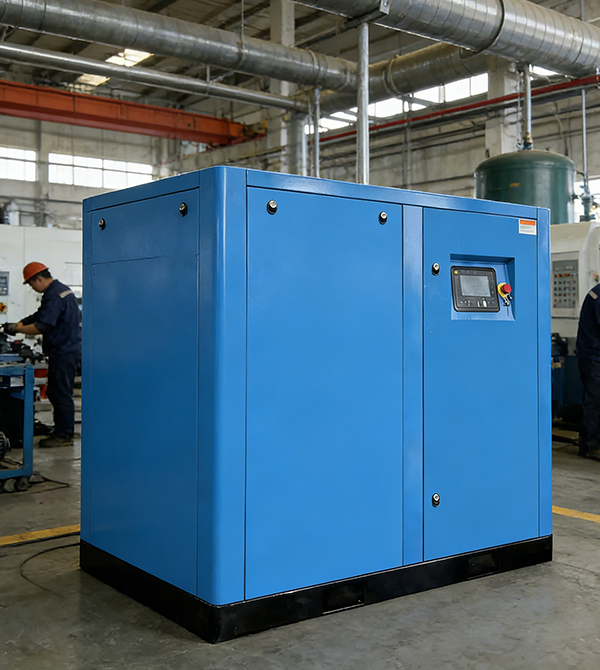
1. The Physics of Pneumatic Noise: Identifying the Dominant Acoustic Sources
Effective noise mitigation in a low noise air compressor begins with accurate source identification. Unlike a simple electric motor, a rotary screw compressor generates a composite noise signature with three distinct frequency bands. Understanding these sources allows for targeted attenuation rather than blanket—and often expensive—soundproofing.
Airborne Noise from the Airend and Cooling System
The meshing rotors inside the airend produce tonal noise at the pocket passing frequency (number of male rotor lobes × rotational speed). This high-frequency component (typically 2,000–4,000 Hz) is highly directional and irritating to the human ear. Additionally, the cooling fan required to dissipate heat of compression generates significant broadband noise. Standard axial fans on a 30 hp compressor can contribute 75–80 dBA alone. Engineering countermeasures in a low noise air compressor include the use of low-tip-speed centrifugal fans and airend enclosures lined with composite acoustic foam that targets these specific octave bands.
Structure-Borne Vibration and Pulsation
Pressure pulsations at the discharge port create mechanical excitation of the receiver tank and attached piping. This energy travels through the building floor as structure-borne noise, radiating as audible rumble in adjacent rooms—a critical concern in medical clinics or research buildings with sensitive imaging equipment. The solution involves vibration isolation mounts with a natural frequency well below the compressor’s operating speed and flexible metal hose connections to decouple the machine from facility hard piping.
2. Quantifying Quiet: Deciphering dBA, Sound Power, and Pressure Ratings
Procurement specifications for a low noise air compressor often conflate sound power and sound pressure, leading to underperforming installations. A rigorous approach requires adherence to ISO 3744 or CAGI-PNEUROP test standards.
- Sound Power Level (LwA): The total acoustic energy radiated by the machine, independent of distance. This is the absolute metric for comparing one compressor model to another. A LwA of 68 dB is typical for a premium quiet rotary screw package, whereas a standard industrial unit may register LwA of 82 dB.
- Sound Pressure Level (LpA): The noise perceived by the operator at a specific distance (usually 1 meter). This is affected by room acoustics, reflections, and the number of machines in the space.
- OSHA Permissible Exposure Limit (PEL): 90 dBA over an 8-hour time-weighted average. However, for office-adjacent compressor rooms or residential construction sites after 6:00 PM, the target is often 60–65 dBA at the property line.
3. Technical Innovations Enabling Ultra-Quiet Compressor Operation
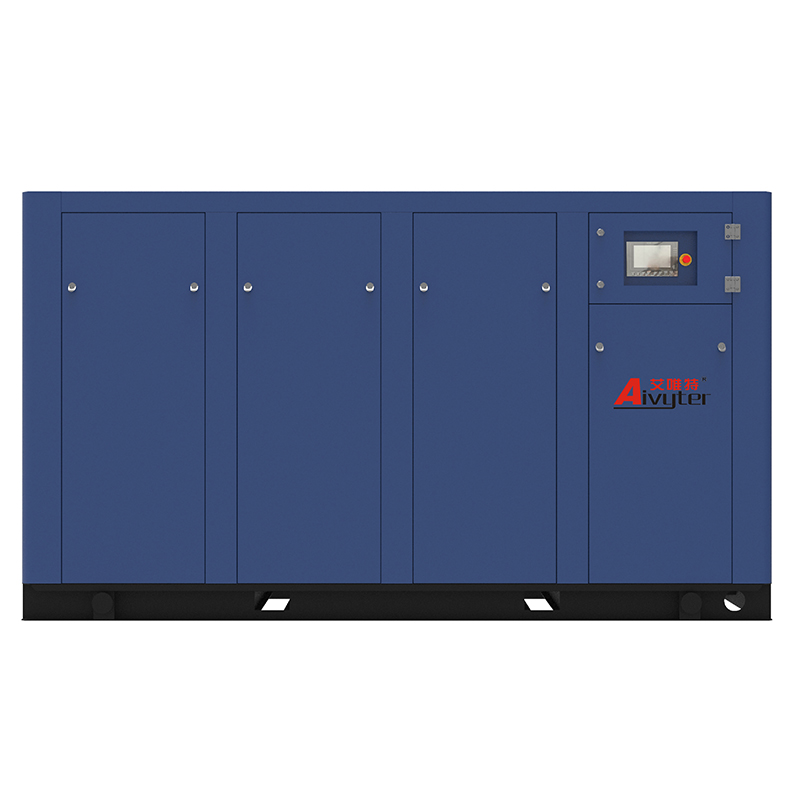
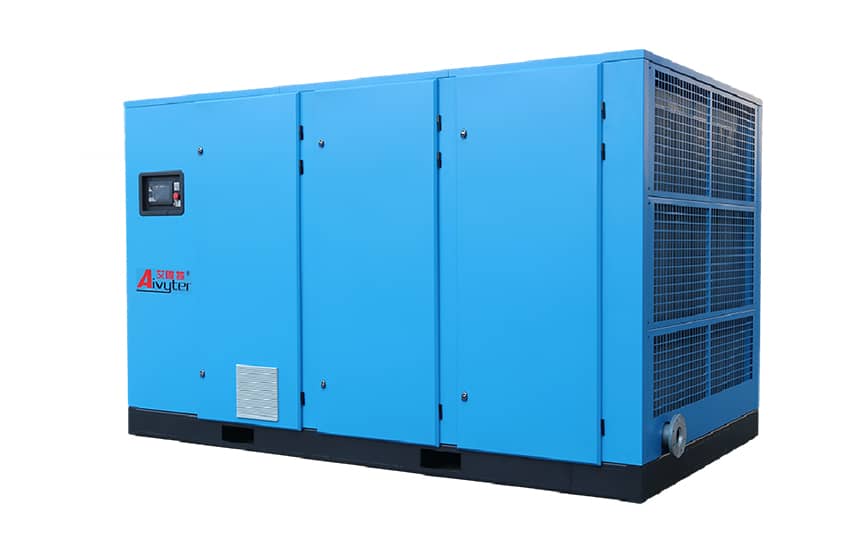
Achieving a low noise air compressor designation requires more than a thicker steel canopy. It demands innovation in core component design, particularly in the motor and drive system.
Variable Speed Drive (VSD) and Permanent Magnet Motors
Fixed-speed compressors run at full rpm regardless of air demand, generating constant noise. In contrast, a variable speed rotary screw compressor equipped with a permanent magnet motor (PMM) modulates speed to match downstream cfm requirements. At 50% flow, the motor speed drops significantly, reducing both mechanical and aerodynamic noise by as much as 5–8 dBA. Furthermore, Aivyter models utilize oil-cooled permanent magnet motors where the compressor lubricant circulates directly around the stator, eliminating the need for a noisy shaft-mounted cooling fan entirely.
Two-Stage Air Intake Silencing
The air intake is a major source of pulsation noise as atmospheric air rushes into the compression chamber. A low noise air compressor incorporates a tuned reactive silencer (expansion chamber) in series with a dissipative absorptive element. This combination attenuates both the low-frequency rumble (125–250 Hz) and the high-frequency hiss (above 1,000 Hz). The result is a measured reduction of inlet noise by 15–20 dB.
Acoustic Enclosures with CFD-Optimized Airflow
A sealed enclosure traps heat as effectively as it traps noise. Poorly designed quiet compressors overheat and shut down. Advanced soundproof compressor enclosures use Computational Fluid Dynamics (CFD) to model cooling air paths. Air enters through a labyrinth-style baffle that blocks line-of-sight sound transmission while allowing low-velocity cooling air to sweep over the motor and aftercooler. The use of multi-layer composite panels (perforated metal facing, acoustic foam core, and mass-loaded vinyl barrier) is standard for achieving a Sound Transmission Class (STC) rating above 35.
4. Critical Applications Where Decibel Levels Define Operational Viability
The justification for specifying a low noise air compressor transcends mere operator comfort; in several sectors, it is a prerequisite for regulatory compliance and product quality.
Healthcare, Dental, and Laboratory Facilities
Medical air compressors power ventilators, surgical tools, and dental handpieces. NFPA 99 medical gas standards require oil-free air, but the acoustic environment of a patient recovery area or a vibration-sensitive microscopy suite demands near-silent operation. A quiet scroll compressor or a sound-attenuated rotary screw is necessary here. Noise levels above 55 dBA in a dental operatory can elevate patient anxiety and interfere with verbal communication during procedures.
Urban Construction and Residential Renovation
Municipal noise ordinances in cities like New York, London, and Singapore restrict construction noise to specific daytime windows, often with strict decibel limits at the nearest sensitive receptor (e.g., 75 dBA at 50 feet). A low noise air compressor towed behind a service truck allows for after-hours emergency utility repairs or interior demolition without generating noise complaints that result in Stop Work Orders.
Food and Beverage Processing
Pneumatic conveying of ingredients, bottle blowing, and packaging machinery rely on compressed air. In dry goods processing, high noise levels contribute to cumulative worker fatigue and increased incident rates. Furthermore, in quality control labs adjacent to production floors, vibration from industrial air systems can affect precision balances and analytical instruments.
5. Integration Strategies for Reducing Noise in Existing Compressor Rooms
For facilities already operating standard compressors, a full replacement with a low noise air compressor may not be immediately budgeted. However, significant decibel reductions are achievable through targeted engineering retrofits.
- Ducted Exhaust Systems: Rather than discharging hot air into the room, duct the exhaust outside using insulated, lined ductwork. Ensure the duct is sized to maintain air velocity below 1,500 ft/min to prevent duct rumble.
- Receiver Tank Pulse Dampening: A larger wet receiver tank installed immediately downstream of the compressor acts as a Helmholtz resonator, smoothing pressure pulsations and reducing pipe vibration noise by up to 10 dBA.
- Pneumatic Timers and Drain Valves: Zero-loss condensate drains with electronic level sensing are significantly quieter than mechanical float drains that emit a sharp, high-decibel “pop” every discharge cycle.
- Barrier Walls: A simple partition constructed of two layers of 5/8″ drywall with a staggered stud frame and acoustic caulk can provide an STC rating of 50, effectively isolating the compressor from adjacent work areas.
6. Maintenance Implications of Sound-Attenuated Systems
A low noise air compressor enclosure is a double-edged sword regarding maintenance. While it protects the machine from ambient dust, it also traps heat and restricts access for visual inspections. Maintenance protocols must adapt to this environment. Aivyter engineering emphasizes hinged, gas-strut assisted canopy doors that allow full access to fluid fills and filter checks without tools. Critically, the acoustic foam lining must be inspected for oil saturation. Hydrocarbon absorption degrades the foam’s NRC (Noise Reduction Coefficient) and creates a fire hazard. Regular replacement of compressor intake filters is also more crucial on quiet units, as a clogged filter forces the motor to work harder, increasing both amp draw and audible tone pitch.
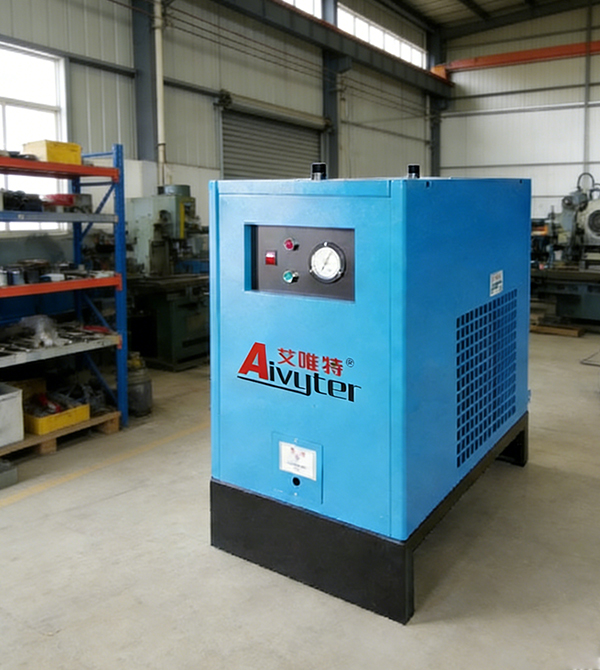
7. The Total Cost of Ownership: Energy Efficiency Meets Acoustic Compliance
There is a common misconception that a low noise air compressor sacrifices efficiency for silence. Data from third-party CAGI performance sheets indicates the opposite. The same Permanent Magnet Variable Speed technology that reduces motor speed and noise also eliminates the electrical losses associated with across-the-line starting and fixed-speed idle running. A VSD compressor operating at 70% average load can reduce electrical consumption by 25–35% compared to a fixed-speed model. Over a 10-year asset life, the energy savings often finance the premium cost of the quiet technology. Additionally, Aivyter units are designed for heat recovery, allowing the thermal energy removed from the airend to be ducted into facility space heating during winter months—a secondary financial offset.
Frequently Asked Questions
A1: In the compressed air industry, a low noise air compressor typically registers between 60 and 68 dBA sound pressure at 1 meter. Standard industrial rotary screw compressors often operate between 75 and 85 dBA. A reduction of just 10 dBA is perceived by the human ear as cutting the noise in half.
A2: Yes, provided the unit is sized appropriately and properly ventilated. For clean rooms, oil-free scroll or water-injected screw compressors are preferred. The key is ensuring the cooling air intake and exhaust are managed to avoid overheating the acoustic enclosure. Consult with an acoustical engineer regarding floor vibration isolation.
A3: Factory-engineered acoustic enclosures from manufacturers like Aivyter are designed to maintain recommended operating temperatures. Aftermarket or DIY enclosures that restrict airflow will void warranties and cause high-temperature shutdowns. Always verify the maximum ambient temperature rating (usually 40°C/104°F) for enclosed operation.
A4: “Silent” is a marketing term, not an engineering standard. No operating compressor is truly silent. A low noise air compressor reduces audible frequencies to a level that does not interfere with speech or cause hearing fatigue. Typically, this means below 70 dBA. Units marketed as “ultra-quiet” for dental or lab use may operate as low as 45-50 dBA.
A5: Acoustic foam is subject to degradation from heat cycling and oil mist exposure. In a well-maintained compressor room, foam should be inspected annually. If the material becomes brittle, discolored with oil, or loses its “spring” when pressed, it must be replaced. Degraded foam offers negligible noise reduction and becomes a potential source of airborne particulates.
Selecting the correct low noise air compressor is an investment in regulatory compliance, workforce productivity, and operational flexibility. For a detailed acoustic performance data sheet or to schedule a site noise audit with a Aivyter application engineer, please contact our industrial solutions team. We provide specific decibel measurements under varying load profiles to ensure your installation meets both local noise ordinances and air demand requirements.
Submit an inquiry below to receive a customized sound level projection for your facility layout.
about
Aivyter
We provides trusted air compressors and mining equipment, engineered for durability, efficiency, and demanding industrial applications.