Industrial facility design has shifted significantly toward decentralized air supply systems. Historically, noisy machinery was isolated in dedicated utility rooms located far from the main production floor. While this arrangement effectively managed workplace noise, it introduced complications such as extensive piping networks, pressure drops, and increased condensation accumulation. Modern operational strategies favor localized air generation, placing the air supply directly adjacent to the application or workstation. This transition requires a drastic reduction in mechanical noise levels, making the installation of a quiet air supply system a high priority for facility managers and design engineers.
Implementing decentralized air generation requires equipment capable of operating without disrupting nearby personnel or sensitive analytical instrumentation. Occupational health standards, such as those established by OSHA and international environmental agencies, place strict limitations on daily noise exposure to protect workforce hearing and maintain safe working environments. Consequently, integrating a silent compressor into your facility has become a recognized method for achieving compliance while maintaining a highly productive, localized work environment.

Mechanical Sources of Air Compressor Noise
To implement an effective noise-reduction strategy, engineers must first understand the mechanical origins of noise within standard compressed air systems. Air compressors generate noise through several distinct mechanical and aerodynamic pathways. Identifying these sources allows for targeted acoustic engineering and systematic dampening.
Pressure Pulsation and Aerodynamic Intake
As the compression chamber opens and closes, it creates rapid pressure fluctuations in the surrounding air. In reciprocating piston designs, the intake and exhaust valves open and close at high frequencies, creating pulsating air columns that manifest as low-frequency airborne noise. This intake air noise is often the most prominent sound emitted by unsilenced machines, as the sound waves travel directly out of the intake port into the open environment.
Mechanical Vibration and Structural Resonance
The movement of pistons, connecting rods, and rotary components produces kinetic energy that vibrates the compressor chassis. If these vibrations are not isolated, they transfer directly to the mounting frame, receiver tank, and floor. This structural connection turns the entire assembly into an acoustic radiator, amplifying low-frequency hums. Over time, unchecked vibration can also cause physical wear on pipe joints and electrical connections, highlighting the need for robust vibration isolation systems.
Displacement Mechanics and Frictional Contact
The mechanical architecture of a silent compressor relies on rotational mechanisms that minimize direct impact. Unlike reciprocating models, where the piston constantly reverses direction and strikes internal components, rotary screw and scroll designs utilize continuous, unidirectional motion. This continuous operation eliminates the heavy inertia shifts that cause intense mechanical thumping, resulting in a much smoother and quieter mechanical profile.
Acoustic Design and Sound Mitigation Engineering
Developing a quiet compressed air system requires a combination of structural dampening, acoustic barriers, and precision manufacturing tolerances. Manufacturers focus on several key areas to lower operational sound levels to acceptable limits, typically below 65 dB(A).
- Precision-Balanced Rotary Components: Ensuring that rotors and scroll wraps are balanced to sub-millimeter tolerances minimizes dynamic unbalance, which is a primary driver of mechanical vibration.
- Acoustic Enclosures: Heavy-gauge steel cabinets lined with specialized sound-absorbing materials form a physical barrier around the compression block. Melamine foam or open-cell polyurethane is applied to absorb high-frequency sound waves, while mass-loaded vinyl layers help block low-frequency noise.
- Baffled Air Inlets and Outlets: Airflow pathways designed with internal baffles force sound waves to bounce off multiple dampening surfaces before escaping, significantly reducing aerodynamic noise from the cooling fans and air intake.
- Elastomeric Isolation Mounts: Placing rubber or spring-based isolators under the motor, compressor block, and receiver tank prevents kinetic energy from transferring to the floor or outer enclosure.
Acoustic performance relies heavily on maintaining a sealed enclosure. Even minor gaps or unsealed penetrations for piping and electrical lines can allow sound waves to escape, reducing the effectiveness of the soundproof cabinet. Therefore, high-quality manufacturing utilizes tight-fitting panel seals and specialized cable glands to preserve the integrity of the acoustic barrier.
Industrial and Engineering Applications
Low-noise air systems are valuable across a wide range of industries where high-decibel machinery is unacceptable or impractical. These applications require a continuous, reliable flow of compressed air without the disruptive noise of standard industrial compressors.
Laboratory and Analytical Environments
Scientific research laboratories operate highly sensitive equipment, including mass spectrometers, gas chromatographs, and electron microscopes. These instruments are susceptible to both high-frequency sound waves and structural vibrations, which can distort analytical readings. Utilizing a quiet, vibration-isolated air supply ensures that these delicate processes remain undisturbed, allowing researchers to work safely and productively alongside their equipment.
Medical and Dental Facilities
In medical clinics and dental offices, patient comfort is closely linked to the acoustic environment. High-pitched mechanical noise can increase patient anxiety and disrupt professional communication. Because dental chairs and surgical tools rely on a steady supply of clean, compressed air, installing a low-noise unit nearby allows medical professionals to operate efficiently without subjecting patients to loud, intrusive background noise.
Electronics Assembly and Cleanrooms
The manufacturing of semiconductors, printed circuit boards, and microelectronics demands a pristine, controlled environment. Specialized manufacturers like Aivyter have engineered systems that integrate quiet operation with advanced air filtration, delivering high-purity air that meets ISO 8573-1 Class 0 standards. When deploying a silent compressor within cleanrooms, managing both noise output and airborne particulate emission is essential to protecting sensitive components during assembly.
System Integration and Thermal Balance
While isolating sound is beneficial for noise control, placing a compressor inside an acoustic cabinet presents thermal challenges. The compression of air naturally generates substantial thermal energy, which must be managed to prevent overheating and component degradation. Designing a system with an effective thermal balance is key to ensuring long-term reliability.
To prevent heat buildup, engineering teams design dedicated airflow pathways inside the enclosure. High-efficiency cooling fans pull cool ambient air through baffled inlets, direct it across the motor, compression element, and aftercooler, and then expel the heated air through exhaust baffles. This forced ventilation system must be carefully balanced; the air velocity must be high enough to dissipate heat effectively, yet low enough to prevent excessive wind noise and maintain the unit’s quiet operation.
In addition to cooling, managing moisture is a vital part of system integration. Compression squeezes water vapor out of the ambient air, which then condenses inside the system. Quiet systems often incorporate integrated refrigerated air dryers and automatic condensate drains inside the enclosure. These components work together to remove moisture before the air reaches the distribution line, protecting downstream tools and pneumatic valves from corrosion without requiring manual maintenance or venting steps that could create loud noise bursts.
Comparing Compression Technologies: Scroll vs. Rotary Screw
When selecting a low-noise system, engineers typically choose between scroll and enclosed rotary screw designs. Both technologies offer quiet performance but are suited to different operational demands and duty cycles.
| Operational Parameter | Scroll Compression Technology | Enclosed Rotary Screw Technology |
|---|---|---|
| Typical Noise Spectrum | 45 to 58 dB(A) – Extremely quiet | 60 to 68 dB(A) – Moderately quiet |
| Duty Cycle Suitability | Intermittent to continuous duty | Continuous 100% duty cycle preferred |
| Mechanical Complexity | Low (minimal moving components) | Moderate (rotors, gears, and drive belts) |
| Air Purity Capability | Inherently oil-free design | Available in oil-injected or oil-free configurations |
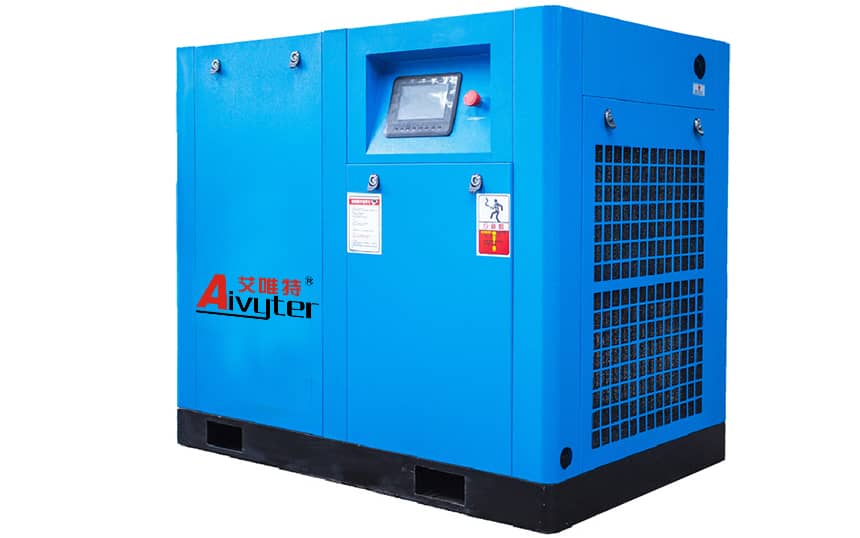
Understanding how a silent compressor maintains continuous duty cycles is important for matching the equipment to your specific process. For example, the advanced scroll systems developed by Aivyter balance quiet operation with consistent performance, making them an excellent fit for demanding laboratory and medical environments that require high air purity and minimal noise. Rotary screw systems, on the other hand, are often preferred for larger industrial workshops where high-volume, continuous airflow is needed alongside effective sound reduction.
Long-Term Maintenance and Acoustic Integrity
Maintaining a low noise level over the lifespan of a compressor requires systematic preventive maintenance. Over time, physical wear on internal components can cause vibration and noise levels to rise, even with high-quality acoustic cabinets.
Regular maintenance should include inspecting the elastomeric vibration isolators for signs of cracking, hardening, or settling. When these mounts degrade, they lose their ability to absorb kinetic energy, allowing vibrations to transfer to the floor and create low-frequency hums. Additionally, acoustic foam panels inside the cabinet should be inspected for dust buildup or physical wear, as clean, intact foam is necessary to maintain proper sound absorption.
Inlet filters also require regular cleaning or replacement. When filters become clogged, the compression element must work harder to draw in air, which increases intake noise and puts extra strain on the motor. Keeping the intake path clear and maintaining proper belt tension or coupling alignment ensures that the system operates at its designed efficiency and noise levels throughout its service life.
Submit Your Technical Specifications
Selecting the right quiet compressed air system involves evaluating several operational factors, including required flow rate (CFM), pressure (PSI), air purity standards, and space constraints. Consulting with specialized providers like Aivyter allows engineering teams to find a configured solution tailored to their specific facility requirements. Contact our application engineering team today to share your system specifications, ask questions about acoustic performance, and request a detailed project proposal.
Frequently Asked Questions
Q1: What is the average decibel rating of a high-performance silent compressor?
A1: High-performance quiet systems typically operate within a sound range of 45 to 65 dB(A) at a distance of one meter. In comparison, standard reciprocating piston compressors often exceed 80 to 90 dB(A). A 10 dB(A) reduction represents a 50% decrease in perceived loudness, making these quiet units much safer and more comfortable for indoor installations near active workspaces.
Q2: How do quiet air compressors handle internal heat dissipation?
A2: These systems use internal cooling channels and baffled ventilation pathways to manage heat. High-velocity cooling fans pull air through baffled inlets, direct it over the warm motor and compression chambers, and vent it through sound-dampening exhaust ports. This design allows heat to dissipate effectively while keeping sound waves trapped inside the enclosure.
Q3: Are silent compressors suitable for continuous 100% duty cycle applications?
A3: Yes, both scroll and enclosed rotary screw designs are engineered for continuous duty cycles. Unlike standard piston compressors that require cool-down periods to prevent overheating, rotary screw and scroll systems can run continuously under full load. This makes them highly reliable for demanding industrial processes and laboratory work.
Q4: What filtration is required for oil-free quiet models in medical labs?
A4: Medical and laboratory applications typically require high-purity air that meets ISO 8573-1 Class 0 or Class 1 standards. Achieving this standard requires combining an oil-free compression design with coalescing filters to capture fine particulates, a desiccant dryer to remove moisture, and an activated carbon filter to eliminate residual odors and vapors.
Q5: How often do the sound-dampening components require maintenance?
A5: Sound-dampening components should be inspected annually to ensure consistent performance. Maintenance teams should check the cabinet door seals, inspect the internal acoustic foam for dust or wear, and verify that the rubber vibration isolators are intact. Keeping these components in good condition is key to ensuring your silent compressor remains within its original decibel limits over the long term.
about
Aivyter
We provides trusted air compressors and mining equipment, engineered for durability, efficiency, and demanding industrial applications.