Introduction to Positive Displacement Technology in Heavy Industry
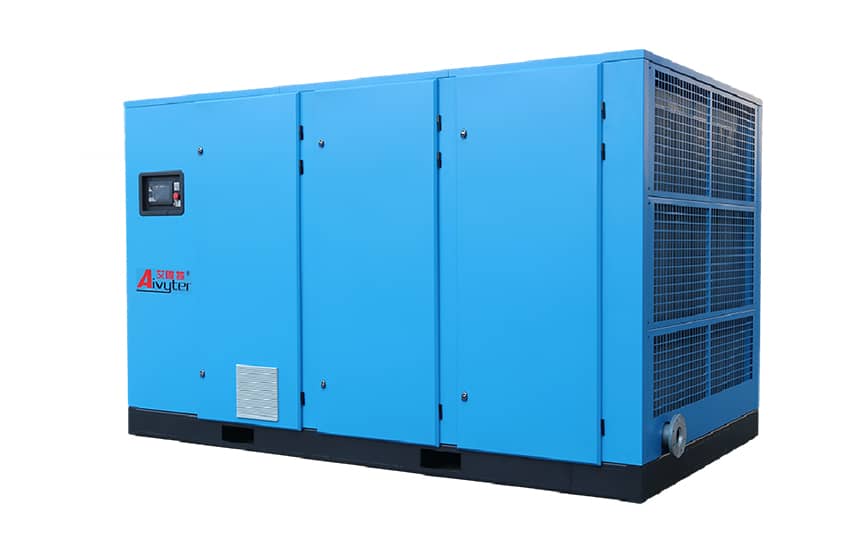
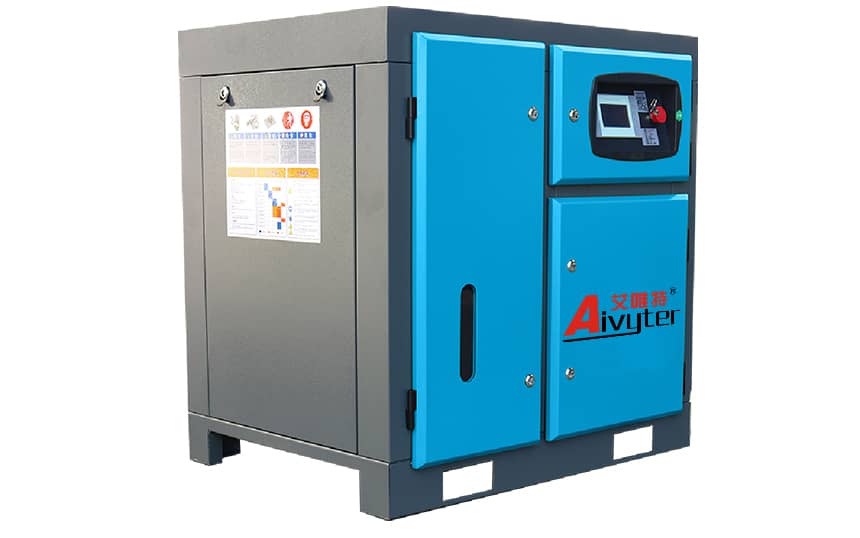
Industrial operations require continuous, dependable power sources to drive pneumatic machinery, heavy tools, and complex automation systems. In deep-well mining, heavy civil engineering, and large manufacturing facilities, compressed air functions as a primary utility alongside water and electricity. For these high-demand sectors, selecting the appropriate machinery to generate this utility determines the overall efficiency and reliability of the operational workflow. A primary choice for heavy-duty, continuous-duty applications is the rotary compressor, a positive-displacement machine capable of operating around the clock without thermal decay.
Engineers and project managers frequently evaluate different mechanical options when designing compressed air stations. While reciprocating designs serve smaller, intermittent demands, they struggle under continuous loads. Modern industrial facilities rely on manufacturers like Aivyter to supply industrial-grade air systems designed to withstand harsh ambient environments while maintaining a steady output pressure. This analysis examines the mechanics, applications, and operating challenges of these systems in demanding sectors.
Operating Principles of Rotary Screw Machinery
Understanding the internal dynamics of these machines requires a look at positive-displacement engineering. A standard rotary compressor utilizes two intermeshing helical screws, known as rotors, housed within a precision-machined casing. As these rotors turn, the space between their lobes decreases, drawing in atmospheric air and compressing it continuously.
The male rotor typically features helical lobes that fit into corresponding grooved flutes on the female rotor. In most industrial configurations, the male rotor drives the female rotor, or both are synchronized via timing gears. This continuous rotational movement avoids the pressure pulsations common in piston-based systems, delivering a smooth, uninterrupted stream of compressed air.
Operational efficiency depends heavily on the clearance between these rotors. High-quality manufacturing standards from developers such as Aivyter ensure that these clearances are kept to a minimum, reducing internal backflow or slippage. To seal these microscopic gaps and dissipate the heat generated during compression, many industrial models inject lubrication oil directly into the compression chamber. This oil-injected design serves three functions:
- Sealing: The lubricant forms a thin film between the moving rotors to prevent air leakage back to the intake.
- Cooling: The fluid absorbs the heat of compression, allowing the machine to operate at lower internal temperatures than reciprocating counterparts.
- Lubrication: It protects the bearings and rotor surfaces from friction-induced wear.
After compression, the air-oil mixture exits the air-end and passes into a separation vessel, where mechanical filtration removes the oil droplets, leaving clean, pressurized air ready for downstream applications.
Demanding Applications: Mining, Construction, and Industrial Manufacturing
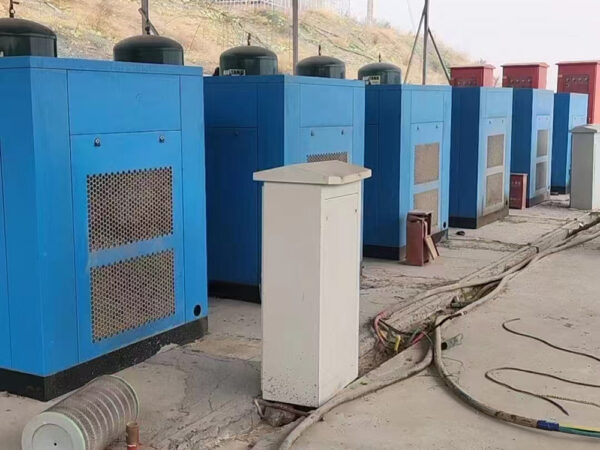
In mining operations, the environment presents severe operational challenges, including high concentrations of airborne dust, variable ambient temperatures, and remote, inaccessible locations. Compressed air is used to power pneumatic drills, ventilation systems, slurry pumps, and rock-dusting equipment. Under these conditions, a robust rotary compressor is required to ensure uninterrupted production.
Pneumatic Power in Underground and Surface Mining
In underground mining, the air quality and system reliability are paramount. If a compression system stops operating, drilling activities halt, and air quality can quickly degrade. Heavy-duty units are engineered with multi-stage filtration systems that prevent abrasive particles from entering the compression chamber, protecting the rotors from premature wear.
Rigorous Construction Site Requirements
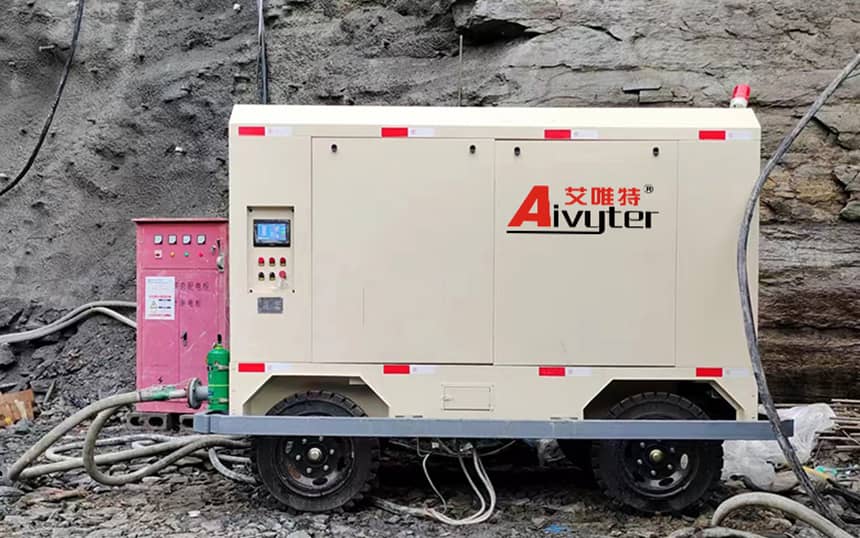
Civil engineering and infrastructure construction projects present a different set of challenges. These jobsites are often temporary, requiring mobile, diesel-driven compression units that can be moved across rugged terrain. Applications include:
- Pneumatic piling and drilling for foundations.
- Shotcrete spraying for slope stabilization and tunnel lining.
- Sandblasting and surface preparation for structural steel.
- Driving high-torque impact wrenches and demolition tools.
These environments demand equipment that can tolerate extreme vibration, tilt, and fluctuating weather. The mechanical design of a modern rotary compressor makes it naturally suited for mobile mounting, as it lacks the heavy reciprocating masses that cause excessive structural vibration in other compressor styles.
Continuous-Duty Factory Automation
Continuous operation in manufacturing plants, such as automotive assembly, chemical processing, and metal fabrication, introduces different challenges. Here, the focus is on constant pressure regulation and air purity. Fluctuating air pressure can lead to pneumatic tool malfunction, inconsistent product quality, or automated line stoppages.
To address these issues, many plants employ advanced control systems, such as variable speed drives (VSD). By adjusting the rotational speed of the motor to match the real-time air demand, a VSD-equipped rotary compressor minimizes energy waste during periods of low usage. Additionally, incorporating reliable mechanical designs from reputable manufacturers like Aivyter helps maintain precise pressure control, preventing pressure drops that disrupt automated manufacturing sequences.
Solving Common Operational Bottlenecks in Compressed Air Systems
Another common concern is moisture in the compressed air system. When air is compressed, its moisture-holding capacity drops, leading to condensation in the piping network. This water can rust pipes, ruin pneumatic actuators, and contaminate product batches. Industrial operators resolve this by integrating downstream treatment systems:
- Aftercoolers: Reduce the temperature of the discharged air, forcing moisture to condense so it can be drained.
- Coalescing Filters: Remove sub-micron oil aerosols and liquid water droplets.
- Desiccant or Refrigerated Dryers: Lower the dew point of the air to prevent condensation in downstream distribution lines.
Proper system integration is required to maintain production uptime. Dust ingestion, fluid degradation, and inadequate cooling are the primary causes of premature equipment wear. High-efficiency inlet valves, heavy-duty air intake filters, and synthetic lubricants are typically deployed to mitigate these field issues, ensuring long service intervals even in continuous-duty profiles.
Key Selection Metrics for Heavy-Duty Engineering Projects
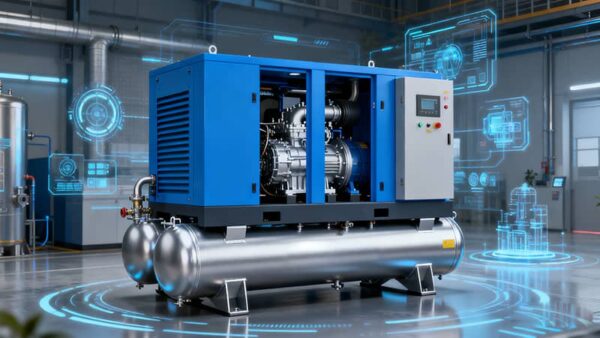
Selecting the correct equipment for an industrial site requires a detailed evaluation of several operational parameters. Project planners must look beyond basic sizing to ensure long-term reliability and compatibility with the surrounding processes.
- Flow Rate (CFM/m³/min): The total volume of air required by all pneumatic devices operating simultaneously, factoring in a margin for future expansion.
- Operating Pressure (PSI/Bar): The minimum pressure required to operate the most demanding tool on the line, accounting for pressure drops across the piping system.
- Duty Cycle: Unlike reciprocating machines that require cool-down periods, screw-type systems are built for a 100% duty cycle, meaning they can run continuously without damage.
- Environmental Tolerances: The unit must be rated for the local ambient conditions, whether that involves freezing sub-zero winter temperatures on an outdoor construction site or high ambient heat inside a factory engine room.
By matching these parameters to the mechanical capabilities of the machine, engineering teams can build a reliable compressed air infrastructure that minimizes unexpected downtime and maintains consistent factory or jobsite output.
Frequently Asked Questions
Q1: What is the main difference between a rotary compressor and a reciprocating compressor?
A1: A reciprocating compressor uses pistons to compress air in a stop-and-start motion, which requires cool-down periods and generates pulsation in the air line. In contrast, a rotary compressor uses continuous helical rotor rotation, allowing for 100% duty cycle operation, lower vibration levels, and a continuous, pulse-free air supply suitable for heavy-duty industrial needs.
Q2: How does moisture get into the compressed air line, and how can it be managed?
A2: Atmospheric air naturally contains water vapor. When air is compressed, its volume decreases, causing the water vapor to condense into liquid. This liquid water is managed by installing downstream equipment such as aftercoolers, moisture separators, refrigerated air dryers, and coalescing filtration units to extract moisture before it reaches pneumatic equipment.
Q3: Why is lubrication important in oil-injected rotary screw systems?
A3: Lubrication fluid acts as a sealant between the fine clearances of the spinning rotors, preventing air backflow. It also absorbs the high temperatures generated during the compression process and provides vital lubrication to the bearings and rotor contact areas, reducing overall mechanical wear.
Q4: What are the advantages of using a variable speed drive (VSD) in an air system?
A4: A variable speed drive system monitors the air pressure and adjusts the drive motor’s rotational speed to match the precise, real-time demand of the facility. This prevents energy waste associated with running a compressor at full load when air consumption is low, stabilizing system pressure and reducing physical wear on mechanical components.
Q5: What maintenance steps are necessary to protect air quality in dusty working environments?
A5: In dusty conditions like mining or construction sites, maintaining clean air intake filters is a primary requirement. Regular replacement of pre-filters and main intake filters prevents abrasive dust from entering the screw mechanism. Additionally, monitoring the oil separator element and performing routine lubricant changes will ensure air quality remains high and mechanical parts remain protected from abrasive wear.
System Engineering and Support
Designing a balanced compressed air network requires matching equipment specifications with the specific requirements of the jobsite. The team of experienced engineers at Aivyter is available to provide tailored engineering recommendations and equipment configurations for your industrial operations. For detailed product inquiries, technical specifications, or to discuss your project requirements, please contact our support team to request a formal quotation.
about
Aivyter
We provides trusted air compressors and mining equipment, engineered for durability, efficiency, and demanding industrial applications.